

Opinion
One day, early on in my work life with my father-in-law at his ranch, he turned and pointed out the two rifles hanging just above our heads in the cab of the pickup. “You see a coyote, you take one of these and shoot it,” he said. “They’re always loaded.”
I spent much of my childhood on my grandmother’s dairy farm where I learned to shoot with a .22 rifle my uncle had given me. We’d set tin cans on a rock or a chunk of wood or a fence post and he’d coach me. I didn’t mind the shooting. In fact, I liked trying to be good at it. But I didn’t connect it to killing and when it was time to hunt rabbits, I told my uncle I’d rather not.
It wasn’t just the killing of animals. I felt cautious about guns in general, about accidents, and about the way some of the men got into a rage with a recalcitrant cow or a disobedient dog. Even as a young boy, I was aware that many shootings occur in moments of sudden anger when, if there’d been no gun available, things might not have gone so wrong. And I knew how often guns had a role in suicides.
So as an adult, my inclination has been to favor pretty vigorous gun control. For much of our history, U.S. courts have largely supported this view even as many of us have disagreed on how much gun control is appropriate. The arguments have often swirled around the brief but maddeningly unclear language in the Second Amendment to the Constitution: “A well regulated Militia, being necessary to the security of a free State, the right of the people to keep and bear Arms, shall not be infringed.”
That’s not very helpful. In 1792, Congress passed the Militia Act, requiring that “every free able-bodied white male citizen, who is or shall be of age eighteen years, and under the age of forty-five years” be enrolled in the Militia. But the Militia is long gone, and we don’t have Militiamen with guns in the house to be used in times of active duty. Could the language now pertain to National Guard members keeping a gun at home with its use limited to analogous times of active duty? What exactly about the people’s right to bear arms shall not be infringed? And who are the people — free able-bodied white males?
In the 1939 United States v. Miller case, the Supreme Court, in an 8-0 decision, ruled that the National Firearms Act, which required registration of short-barreled shotguns, was constitutional. The eight justices, speaking unanimously, wrote that a militia was composed of civilians sometimes acting as soldiers who were expected to report for service bearing arms supplied by themselves and of a type in common use by the military at the time. With this in mind, the justices held that in the absence of any evidence pointing to the use of short-barreled shotguns in the maintenance of a well-regulated militia, the Second Amendment did not protect such weapons from regulation. Later Supreme Court rulings upheld this view, notably in the 1980 Lewis v. United States case, when by a 6-3 vote the court ruled that it was constitutional to prohibit a convicted felon from possessing a firearm that does not have “some reasonable relationship to the preservation or efficiency of a well regulated militia.”
These and other judicial precedents have been repeatedly overturned in the past two decades, with courts interpreting the Second Amendment as guaranteeing the right of all individuals to keep and bear arms of just about any kind in just about any circumstances and just about anywhere with little or no regulation. And we have an epidemic of mass shootings and killings in this country. In schools, in churches and synagogues, in bars and nightclubs.
The Mass Tracker database defines a mass shooting as one in which four or more persons are shot in one incident, at one location, at roughly the same time. Using this definition, there were 454 mass shootings in the United States between Jan. 1 and Oct.28, 2026. That’s slightly more than 1.5 mass shootings per day. Five hundred people were killed and 1,865 wounded. Given these numbers, I’m surprised by our reluctance to control the manufacture, distribution, sale, use and permitting of guns. Indeed, we seem to accept a society awash in guns as ordinary, perhaps even desirable.
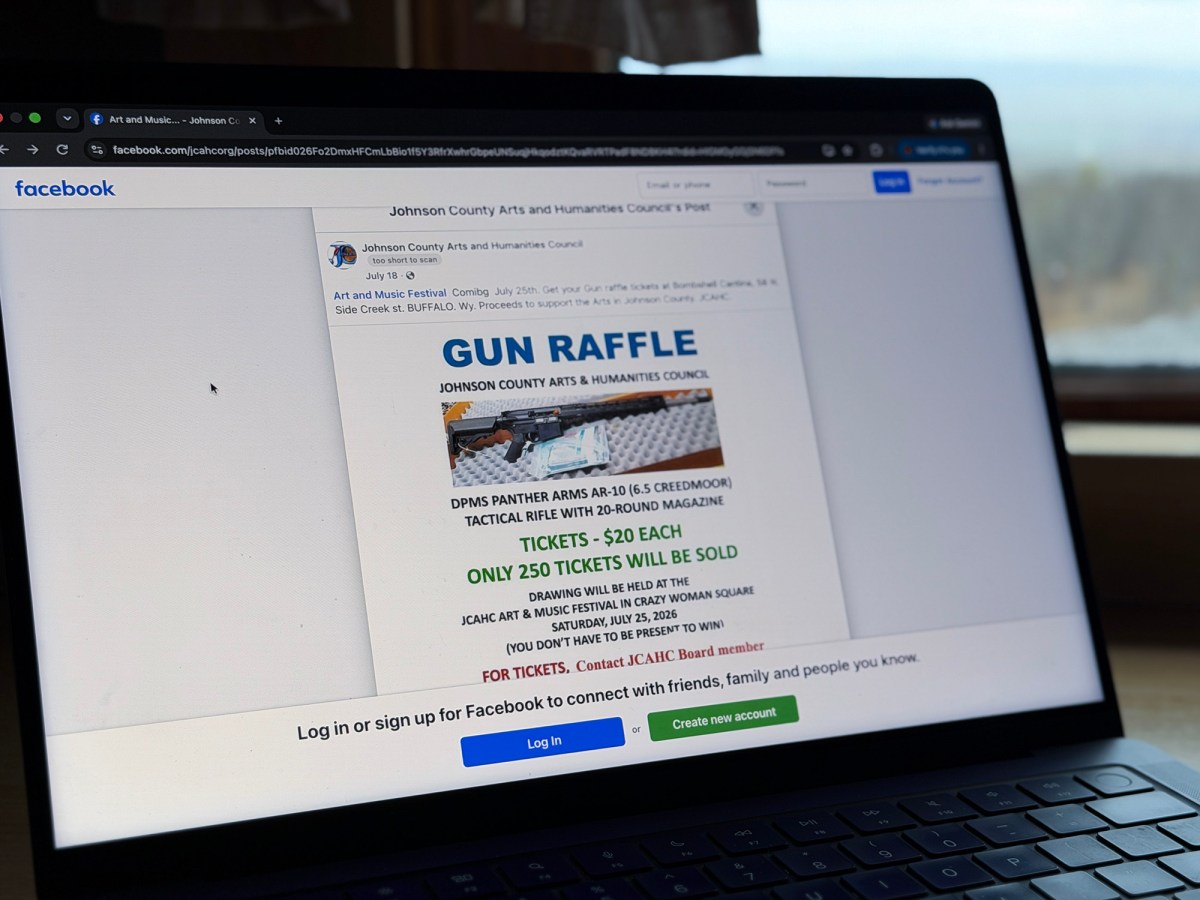
Where I live, a local pharmacy promotes itself as “Mixing guns and drugs since ’22” and offers 20-minute in-and-out sales of firearms suppressors — silencers. And to raise funds this year, my local Arts and Humanities Council raffled off a DPMS Panther Arms AR-10 (6.5 Creedmoor) tactical rifle with 20-round magazine.
I think that’s where I’ll end. You decide what to do.
