


The car thermometer read minus 17 degrees as we clicked into our skis at the Antelope Ski Area in the Bighorn Mountains. But the sun was out and the snow was soft and deep. I’d already shed a layer by the time we reached the abandoned lodge a short skin from Highway 14 west of Sheridan.
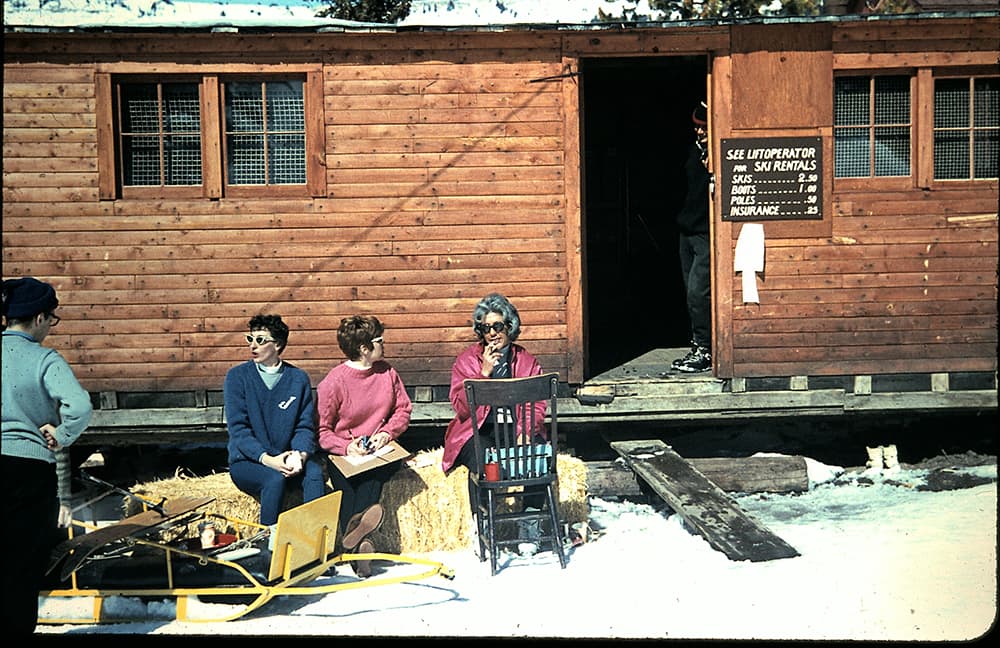
Antelope Butte Ski Area opened in 1960 with a rope tow, said Mark Weitz, with the Antelope Butte Foundation. The ski area added a T-bar in 1964. Staff sold lift tickets and chili out of an old garage until the lodge opened in 1968. It wasn’t until about 1987 it added a chair lift.
For decades it was the place that local kids, including Weitz’s, came to learn how to ski. It closed in 2004, despite reaching a record number of skier days — more than 12,000 — just three years earlier. The closure was due to personal issues with the owners, Weitz said.

(Kelsey Dayton/WyoFile)
In 2011, Weitz and a dedicated group of locals started work to reopen the hill as a nonprofit. The effort continues today. The group recently brought in a fundraising expert to help raise the $4.3 million needed to restore the infrastructure, add a magic carpet to the beginner hill, hire staff and build a stockpile of rental equipment. The next six months will be crucial in determining if Antelope Butte will ever reopen, Weitz said.
Jamie Schectman, of Mountain Rider’s Alliance, arrived in Sheridan in early March to help shepherd the project forward.
A life-long skier, Schectman co-founded Mountain Rider’s Alliance in 2010 to help save small ski areas. He said it was a response to witnessing corporations buying up resorts and focusing on the real estate and theme park-like attractions, instead of skiing.
“And at the same time, these smaller, funky, family-run ski areas are dying,” he said. “This Wal-Mart homogenization of the ski industry is terrible. For those who are passionate about skiing, we don’t want these expensive big resorts, we want the funky, no-frills, all about the skiing places.”

The alliance focuses on small ski areas with strong community support, that are dedicated to environmental stewardship and fostering a love of skiing in the next generation.
“These are the type of mountain playgrounds we want to be involved with,” he said.
Community ski hills are not just assets to those who live in the area, they are important to the entire ski industry, Schectman said. They are “breeder-feeder” ski areas where kids can learn the sport before graduating to mega resorts where lift tickets can cost more than $100.
One of the criteria Mountain Rider’s Alliance looks for in its partnerships is mountains where lift tickets will be around $50 or less. The alliance creates a consortium among the small hills to drive down costs of bulk purchases like rental and grooming equipment.
“We want each ski area to be unique and soulful, but we want them to practice the same core values,” which include affordable lift ticket prices, he said.
Antelope Butte is the third project the alliance has taken on, after working in Maine and Oregon. Both projects are still ongoing. The nonprofit will need to have the money by early September, depending on when it signs a purchase agreement with the Forest Service, Weitz said. The Antelope Butte Foundation will own the infrastructure and manage operations. It would lease the land from the Forest Service.

When open, the two lifts and magic carpet will service about 125 acres across 23 runs and offer a 1,000-foot descent from the 9,400-foot summit. The skiable terrain could easily be expanded in the future to about 250 acres, Weitz said.
For now, locals use skins to climb the 1,000 feet to the 9,400-foot summit. On our recent trip, we passed the deserted lodge as we made our way up. Alongside our skin trail the chairs hung, unmoving and laden with snow. Weitz noted the names of runs and pointed out features, such as “Big Bertha,” a favorite jump. It felt almost post-apocalyptic, like one day people were there and the next they never returned.
Many community ski areas across the country have closed, and more will shutter soon. Ski industry executive Bill Jensen reported at the Snowsports Industries America trade show in January that 150 ski areas, or 31 percent of North America’s hills, are in danger of closing.
Some closures make sense, Weitz said. They don’t get enough snow, or enough skier days to justify staying open.

“But this place is special,” he said. “It’s not meant for the bulldozer.”
The foundation will host a mountain music festival this summer to raise money, in addition to other fundraising campaigns. If everything moves as quickly as possible, the hill could open in 2016, Weitz said. The worst-case scenario is the project won’t garner enough community support to raise the money and the hill will never reopen.
Correction: This story was corrected on 3/12/15 to represent the correct acreage of currently skiable and potentially skiable acreage. — Ed

Perhaps too much is being attempted in the current effort to rehabilitate Antelope Butte. The target price of $50 is high for a beginner’s hill. I learned to ski in 1960 on a small hill with a rope tow, and the price (in today’s dollars) was about $2 for six runs. At that rate, I could afford to go after school once or twice a week. Of course, the drive to Antelope Butte is long enough that there won’t be a lot of after school skiing. But the price is high enough that there won’t be a lot of casual weekend skiing either.
Chris Smith
Dayton, WY