



Fat bikes, sometimes known as snow bikes, may not be allowed in Yellowstone National Park in the winter, due in part to concerns of wildlife-human conflicts.
The Draft Winter Use Adaptive Management Plan for the park instead focuses on motorized travel — snowmobiles and snowcoaches — despite efforts by Wyoming Pathways and others to convince the park to include non-motorized fat bikes. Advocates say they are not giving up, however. Public comment is still open for the draft plan, until August 21.
Fat bikes are equipped with large tires, and can travel groomed snow trails and other soft surfaces without making deep tracks. The park considered allowing fat bikes when finalizing its winter use plan, which was implemented in 2013. But at the time the sport was still new and didn’t seem to include a large number of users. Even in nearby Jackson where the sport was gaining popularity there were only a handful of enthusiasts.

Anytime the park introduces a new activity it must undergo extensive study, and it seemed like an expensive and labor-intensive effort for a small user-group, said Wade Vagias, a Yellowstone management assistant.
The park also has concerns regarding wildlife and safety when it comes to using fat bikes in the winter months, Vagias said. Wildlife tends to congregate in river bottoms near roads. People riding bikes might suddenly find themselves in a herd of bison, he said.
Bikes are also able to travel farther faster than cross-country skiers and snowshoers. The weather in Yellowstone changes quickly, increasing the chances of changing travel conditions that could leave bikers stranded, according to Vagias.
Since the park’s winter use plan only dealt with machine travel, now seems like the perfect time to evaluate human-powered recreation in the park, especially with the continued growth in popularity of fat biking, said Tim Young, executive director of Wyoming Pathways. And if this isn’t the right time, he wonders when will the park look at human-powered recreation?
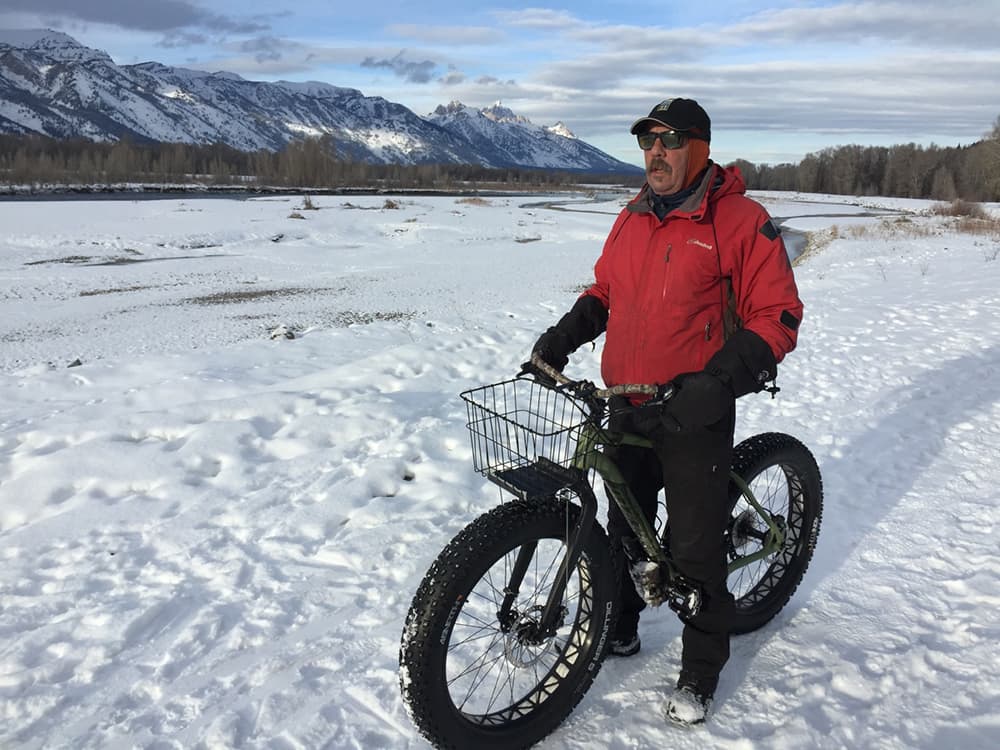
Yellowstone has huge potential to allow more human-powered recreation, yet motorized use gets all the time and money, he said. “I think this [adaptive management draft and public comment period] is a chance to fix that oversight by really studying and considering opportunities for human-powered winter use,” he said.
Young said allowing fat bikes from West Yellowstone, Montana, to Madison Junction — about a 14-mile route — would be a great road to evaluate fat bike use in the winter. It’s a relatively flat stretch with good access, and it’s beautiful, said Young. The roads are wide, and cross-country skiers already use it. Fat bikers aren’t any wider and they are more maneuverable and have brakes, he added.
“You could make the case that fat bikes would be less a concern than snowshoers or skiers,” Young said. And both of those user groups have successfully shared park roads with snowmobiles and snowcoaches. Fat biking is a much more intimate way to experience the park. “You can feel the snow. You can feel the wind. You can hear the sounds of winter. It’s a healthy activity for visitors. And just about everyone can ride a bike.”
Fat bikes are just another in a long line of new uses proposed to the park, Vagias said. A few years ago it was snowkiting. Most recently it’s paddling in the summer. Yellowstone National Park is only a small percentage of the whole ecosystem. There are plenty of other places people can do these activities in the area, he said.
The park will continually evaluate its winter plan based on new technology and use, Vagias said. And just because the park isn’t going to consider fat bikes now, doesn’t mean it’s totally out of the question one day.
“Nothing is ever totally off the table,” Vagias said. “Times change, perspectives change.”
At the conclusion of the public comment period, the National Park Service will analyze and consider all feedback received for inclusion in the final Adaptive Management Plan, scheduled for release in 2016.
Get involved
Public meeting:
10 a.m. Aug. 10 at the Visitor Center in West Yellowstone, Montana.
Park officials will provide an update on the plan and accept public feedback.
Send comments:
Comment online, or mail comments to:
Christina Mills, Office of the Superintendent, Adaptive Management Plan
P.O. Box 168
Yellowstone National Park, WY 82190
Deadline to submit comments is August 21.

Having been riding two wheelers in the parks since the 60s, I fail to see what all the brou-ha-ha is over the same thing I have done all along. When the trail is packed I,ve ridden for years in the winter on a standard mountain bike. Nobody has even raised an eyebrow until last year when it was suddenly verboten. Don’t freak out, parkies, it’s just a bicycle. I have been surrounded, cut off and turned back dozens of times over the decades by bison while I was cycling. At least the bears are asleep!
Keith Benefiel