


The reality of a permanently shrinking Powder River Basin coal industry came into sharper focus on Tuesday with Arch Resources announcing it is speeding up preparations to close its Coal Creek mine.
The mine employed about 100 people in the fall of 2020, according to federal data.
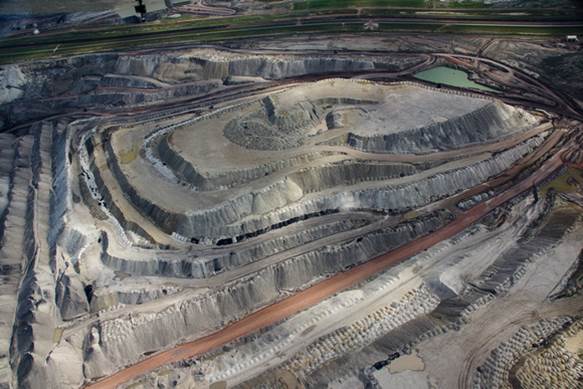
The mine will ship about 2 million tons of coal this year then commence full reclamation work in 2022, including “the demolition of the facilities,” Arch CEO and President Paul Lang said in a press call Tuesday morning outlining the company’s Fourth Quarter 2020 earnings.
Meantime, the St. Louis-based mining giant is also stepping up efforts to reduce operations at its nearby Black Thunder mine, also in the heart of Wyoming’s coal country, although no target date has been set for final closure there.
“Of course, the closure of Coal Creek will necessitate further reductions in our Wyoming workforce, but we expect to achieve that in an employee-sensitive way, principally through normal attrition,” Lang said. “While Coal Creek will be our near-term focus, we’re also in the process of developing an accelerated plan for the Black Thunder mine. We have not finalized the details as yet, but our plan will be to maintain strong cash flows in order to provide funding for the ultimate closure.”
Arch reported a net loss of $78.5 million in the fourth quarter of 2020, including a $45 million write-down related to plans to shutter and reclaim the Coal Creek mine.
In December, Lighthouse Resources ceased production at its Decker coal mine just across the Montana border. The majority of its employees lived in nearby Sheridan. Its parent company filed for bankruptcy and has asked the court’s approval to shed pension and healthcare obligations to employees.
Gov. Mark Gordon described Arch’s announcement as an “unfortunate, but not surprising” sign of the economic realities facing the coal industry. “Arch, and other coal companies, have provided jobs and revenue for many years and I expect they will continue to do so, but at reduced levels,” he said in a statement.
Coal Creek is one of the smallest coal mines in the basin, while Arch’s Black Thunder mine is the second largest in the U.S., by volume. About 1,000 miners were employed at Black Thunder in the fall of 2020.
PRB coal ‘consolidation’ now a reality
For several years, coal industry experts have warned that crashing demand for Powder River Basin coal — “thermal” coal primarily burned to generate electricity at U.S. power plants — would eventually force the closure of one or more mines in the region.
“People are now beginning to say what used to be unspeakable: The end is now potentially in sight,” said University of Wyoming coal industry expert Rob Godby. “The good news is we’re finally seeing consolidation, and so far it’s happening in orderly fashion.”

It’s likely there are only two coal operators in the basin today that can afford to close operations without declaring bankruptcy, Godby said: Arch Resources and Peabody Energy. That’s because both companies are publicly traded with access to capital. Each also owns multiple mines in the basin, with the largest mines still producing at a profit.
“The hope was those companies might be the first to close their smaller mines, and that looks like what we’re seeing play out,” Godby said.
The alternative might have been smaller mining companies in the basin filing bankruptcy and quickly shuttering operations, Godby said, leaving some doubt they might not fulfill obligations to reclaim mines. That’s still a possibility, however, with the continuing retirement of coal-fired power plants across the U.S. — the only reliable market for Powder River Basin coal.
Arch’s accelerated plan to close Coal Creek isn’t “surprising,” Godby said. “But it’s still sort of surprising in Wyoming when somebody actually breaks down and says, ‘This mine is actually going to close.’ But everybody knew that this was just an unsustainable situation.”
Arch first announced in October its intention to exit the Powder River Basin and instead focus on its metallurgic coal mines outside the state. Metallurgic coal is used to make steel. The company has said it is open to “options” that include the potential sale of Coal Creek or Black Thunder or both mines. But for now, it is proceeding with closure and reclamation plans.
Reclamation assurances
Arch noted that one reason for wanting to speed up the process of closing Coal Creek is to minimize the cost of reclamation at the mine; the sooner it can complete the work, the smaller the expense. The company also described Wyoming’s surety requirements — financial backing to guarantee reclamation work — as “highly inflated.”
“That’s really concerning,” Godby said.
The indication, according to Godby, is that the surety requirements might be too financially onerous for a prospective buyer. If Arch and other Powder River Basin operators pressure the state to lower its surety requirements for reclamation, and the state relents, that could create a precarious situation, he said.
“The possibility that a mine might change hands to a more speculative owner, that’s exactly the time that you want to absolutely ensure that you have appropriate reclamation [bonding],” Godby said, “to make sure the state, the feds and the locals aren’t left holding the bag.”
Support independent reporting — donate to WyoFile today
The Sheridan-based landowner advocacy group Powder River Basin Resource Council was a driving force behind recent efforts in Wyoming to replace self-bonding for coal mine reclamation with stronger surety requirements.
“We remain concerned that the reclamation plan is not aligned with the closure date of the mine [Coal Creek], and we call on our regulators to ensure timely and effective reclamation at the mine,” PRBRC Chairwoman Marcia Westkott said in a prepared statement.
Westkott noted that, in 2020, the Wyoming Department of Environmental Quality renewed Coal Creek’s mining permit without asking for an updated reclamation plan.
“Coal Creek is just one more indication that coal mines throughout the Powder River Basin are facing significant losses, so it’s high time that bonds and sureties are reviewed — and secured — so Wyoming taxpayers are not left paying the cost for inevitable reclamation,” Westkott said.
Also critical, Westkott said, is the need for a state plan to provide more assistance to Wyoming miners facing layoffs and a transition into new careers.
In his press statement following Arch’s announcement Tuesday, Gordon applauded Arch’s stepped-up plans to begin full reclamation at its Wyoming mines. “It is very important that reclamation is completed on all mines when appropriate, and Arch has made an internal business decision to do so at Coal Creek,” he said.

Coal Creek coal is of poor quality – about 225 BTUs per ton less than Black Thunder Coal – and it has a scalping problem with significant coal/shale discarded. Several mines in Gillette are not competitive due to poor quality coal. Coal Creek has been closed before due to poor coal quality. Sheridan Coal on the other hand is of much better quality than Gillette Coal. Its natural for the mines with poor quality to be closed first. North Dakota has some very low quality coal called lignite or brown coal that can be burned locally but not worth shipping to other states. BTU content is of primary importance as is ash content – especially silica or sand which causes major problems at the power plants – the so called clean coal factor. Sulpher content is the well known factor – low sulphur Wyoming coal. Water content is also important – Gillette coal catches on fire by spontaneous combustion.. All of these factors are in play when evaluating whether to close a mine. Poor quality coal is very difficult to sell. I’m not surprised Coal Creek is being closed and reclaimed.