


CHEYENNE—The “One Big Beautiful Bill Act,” a sweeping congressional legislative package that became law in 2025, drastically cut spending for Medicaid and the Supplemental Nutrition Assistance Program while increasing work requirements and further limiting eligibility for the programs. These welfare programs are now limited to U.S. citizens and lawful permanent residents, nixing eligibility for other lawful immigrants.
Wyoming already complies with these increased checks and requirements. But lawmakers are moving to codify them into state statute while also adding another requirement for hospitals to report uncompensated care costs for people who are noncitizens or undocumented. Senate File 106, “Welfare Fraud Prevention Act Amendments,” would also require the Wyoming Department of Family Services to check the citizenship or residency status of every SNAP applicant, rather than just for those who identify as noncitizens or as being born outside the U.S.
Senate President Bo Biteman, the bill sponsor, acknowledged that Wyoming’s fraud rates are “pretty low.”
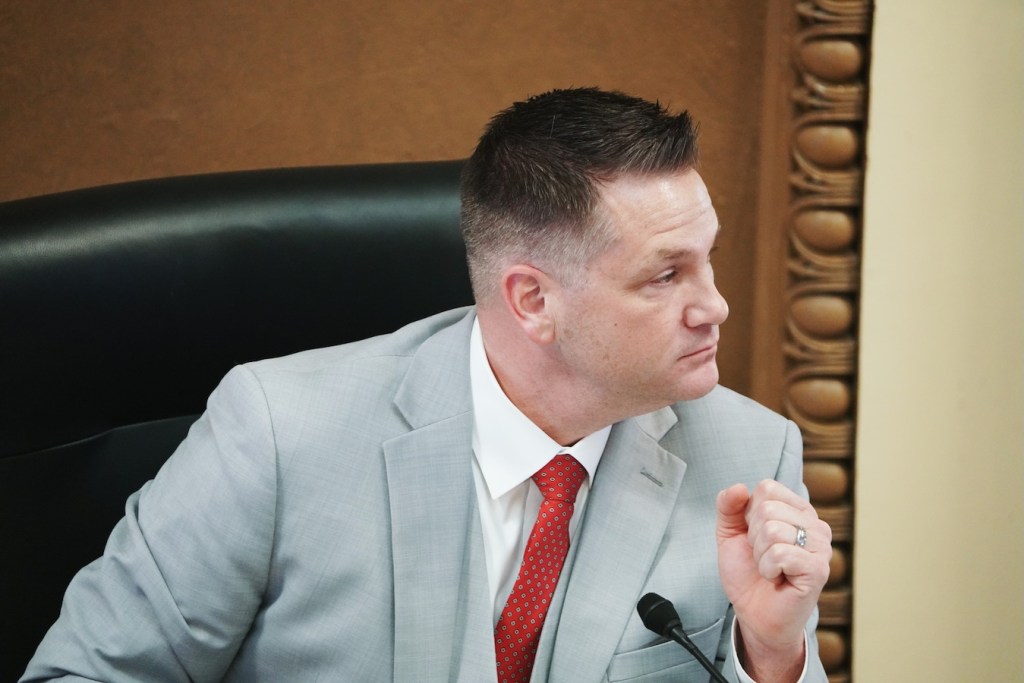
“This is not an indictment on Wyoming’s welfare fraud prevention efforts,” he told lawmakers on the House Health, Labor and Social Services Committee on Monday. “This is more just getting things in line with the ‘One Big Beautiful Bill’ and making sure that we’re codifying things that need to be codified at the state level.”
The bill as introduced originally would have gone further by increasing the frequency of eligibility checks. But significant changes to the measure, which Biteman said he worked on in consultation with state agencies and associations, now would mostly align state requirements with federal statute. An amendment up for consideration for the bill’s final vote in the House could, however, reinsert more frequent eligibility checks than what is required now under federal law.
Uncompensated care reports
Tens of thousands of Wyomingites use Medicaid, a joint federal-state government program that covers medical care for some low-income and medically needy people. From the beginning of 2025 through August of that year, the program served almost 73,000 people in the state, according to a Wyoming Department of Health report. That’s about 12% of the state’s population.
Senate File 106 doesn’t change anything for Medicaid eligibility in Wyoming, since the state’s Medicaid program is already compliant with the “One Big Beautiful Bill Act,” Wyoming State Medicaid Agent Jesse Springer told lawmakers.
But the bill would add a new requirement for hospitals to report uncompensated care tied with citizenship and resident status to the health department.
Lawmakers adopted a number of suggested changes from the Wyoming Hospital Association that reduced the frequency of hospital reporting from quarterly to annually, limited reporting requirements to people who are noncitizens or undocumented and increased confidentiality guardrails.
There’s currently a designated fund under Medicaid that pays for medical costs when someone who is undocumented gets emergency care at a hospital, Wyoming Hospital Association President Eric Boley told lawmakers Monday. That fund also covers childbirth for undocumented mothers.
Boley estimated there are only about 80 such cases a year in Wyoming. But he thinks “a lot of that probably ends up on our uncompensated care line.” The reporting requirement, he added, could “be a good tool” for hospitals to track uncompensated care.

“I would also expect that with education, they may realize that they can probably bill for some of those emergency cases that right now they’re just writing off,” Boley said of Wyoming hospitals.
The association’s amendment, which lawmakers adopted, aims to keep patients’ identity confidential by specifying that hospitals must deidentify the uncompensated care information, which means removing or obscuring personally identifiable information and protected health information. The health department would then aggregate the information into one report before sending it off to the Joint Labor, Health and Social Services Committee.
“There was some concern from our members that people may not seek care because they were worried about us collecting the data and finding out if they’re citizens or not,” Boley explained. “Obviously, we want to take care of people. That’s the mission of our hospitals, just to make sure people stay healthy.”
Citizenship checks for everyone on SNAP
SNAP is a federal program that helps people with low incomes buy food. On average, more than 28,000 residents get SNAP benefits each month, according to data from the Wyoming Department of Family Services. In 2025, Wyomingites received about $62 million in benefits from the program.
Wyoming’s SNAP program runs what’s called a Systematic Alien Verification for Entitlements — or SAVE — check for applicants who identify as noncitizens or as having been born outside of the U.S., a spokesperson for the Department of Family Services said. SAVE is an online service run by the U.S. Citizenship and Immigration Services to check immigration and citizenship status. Senate File 106 would require the department to run SAVE checks on every applicant.
The bill has one more vote in the House before it can head to the governor’s desk. Lawmakers will consider an amendment brought by Rep. Marlene Brady, R-Green River, that seeks to reinsert more frequent eligibility checks.
For more legislative coverage, click here.

American taxpayer funded benefits should only go to American citizens. Please donate to the charity of your choice if you think otherwise.
No end to this cruelty. Folks who do our work, often under compensated, contribute to our economy.