

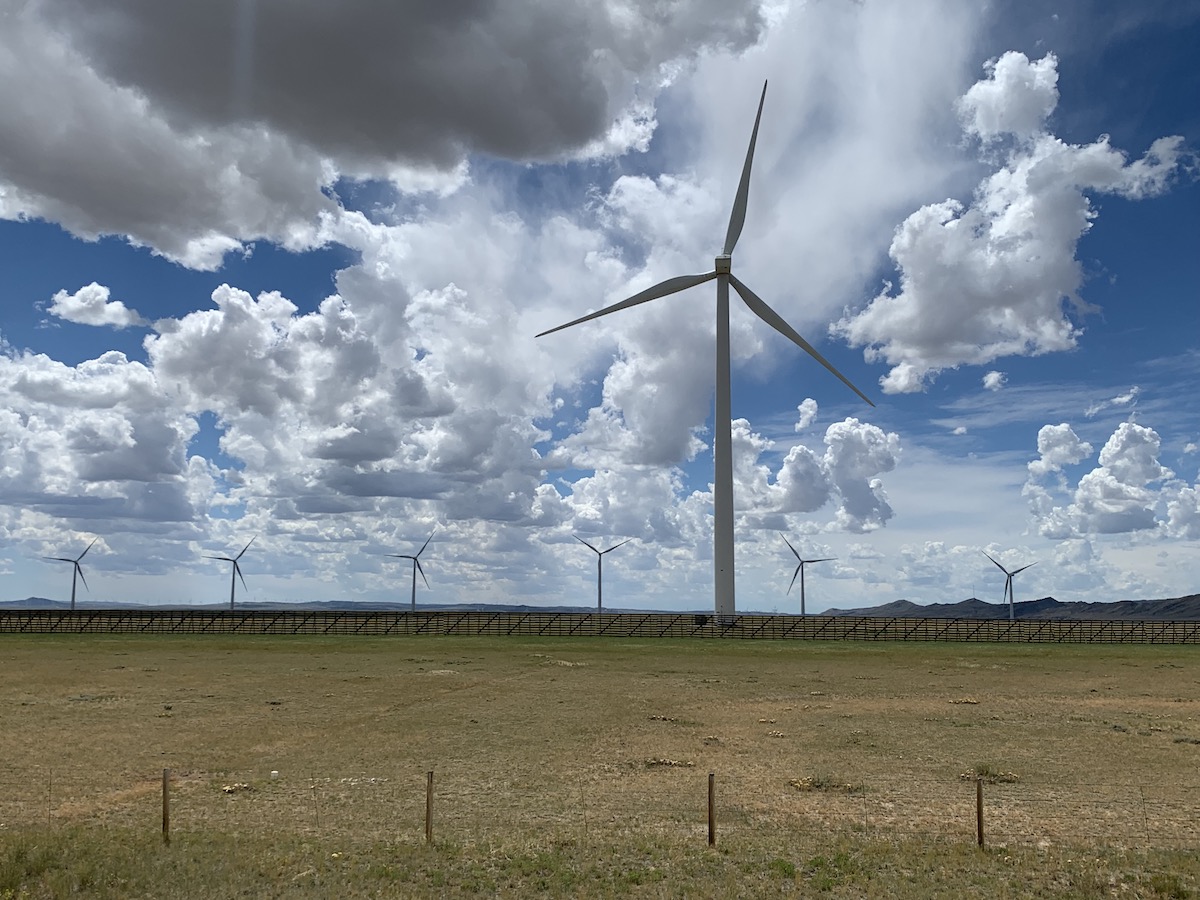
One of Wyoming’s biggest sources of pride is that we power the country. The nation’s largest producer of coal and a leading energy-producing state, we also have some of the nation’s best wind resources — nearly 50% of the best quality wind in the entire U.S. Recognizing the economic opportunity to harness this resource, in 2008 the Anschutz Corporation began to permit the world’s largest on-shore wind energy project — the over-3,000 megawatt Chokecherry and Sierra Madre Wind Energy Project in Carbon County — as well as the TransWest Express Transmission Project . Combined, these projects were designed to deliver Wyoming-generated clean electricity to California and other parts of the southwestern U.S. Both energy projects are located primarily on federal land that is administered by the Bureau of Land Management.
Opinion
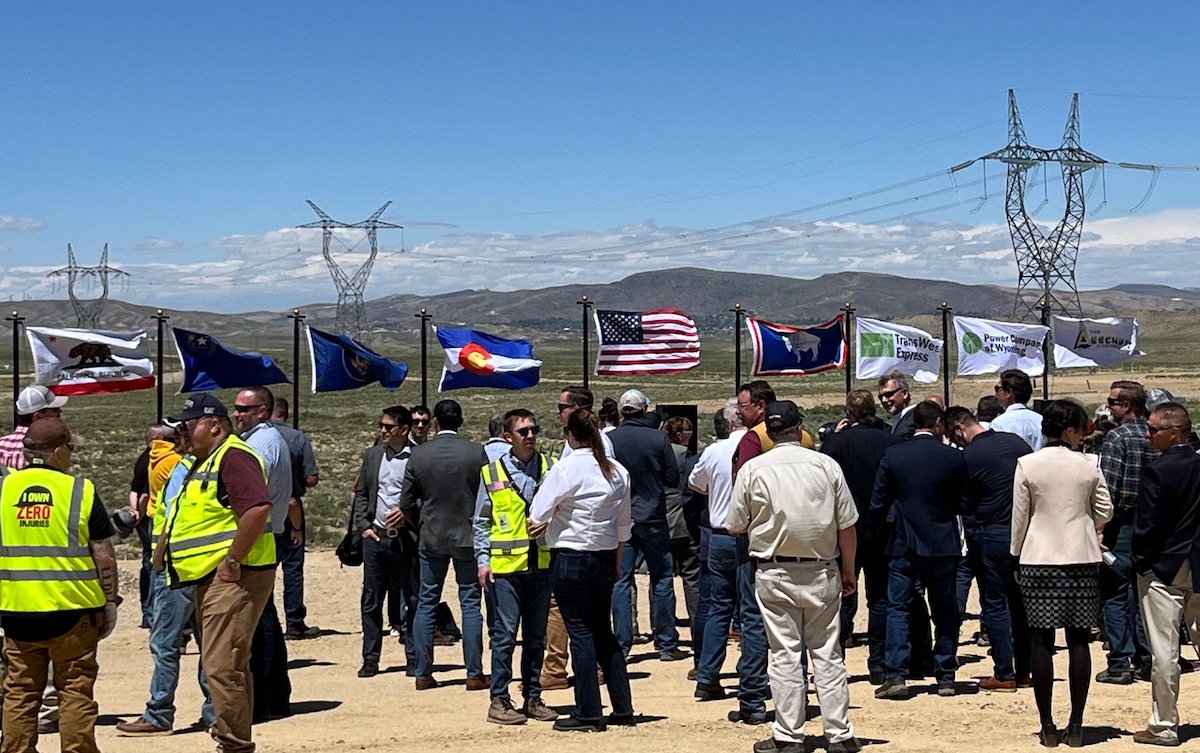
Fifteen years later, the TWE Project officially broke ground in June with a ceremony at Overland Trail Ranch in Carbon County. If this project was a person, it would be a teenager now, heading to the DMV soon for a learner’s permit. Jokes aside, 15 years is concerning for any project proposal, but it’s especially concerning given the national demand for rapid clean energy deployment.
Leaders from the Biden administration and Gov. Mark Gordon came out in strong support of this project. Gordon praised the project as an example of how Wyoming can lead a new energy future that recognizes the “urgency of addressing climate change” through innovation. There’s good reason for this broad support. The wind project is going to be an economic driver and jobs creator too, particularly for Carbon County, creating thousands of construction jobs and approximately 115 permanent ones. In state and local tax revenues, the wind project will have a major economic impact. It’s anticipated to generate:
- $406.3 million in property taxes over 20 years;
- $232.4 million in sales taxes over the approximately eight-year construction period; and
- because we’re the only state that taxes wind, another $207.8 million to the state over 20 years.
TransWest Express estimates that $900 million will be paid in property taxes over the TWE Project’s timeline, with about $260 million going to Wyoming – the majority of which funds Wyoming schools.
The challenge before the nation now is to do this again and again, but a whole lot faster. This project is one of the first, but it can’t be the last. There may be few transmission projects that follow if changes aren’t made to the process to reach the finish line. TransWest’s 15 years are not unique. Multiple other projects on federal land have also faced decades-long federal permitting timelines: Gateway West, Gateway South, SunZia and the Boardman to Hemingway transmission projects. All of these projects spent years undergoing federal permit review as well.
Time is not on our side. Consider this: The TWE project’s right-of-way application was filed with the BLM in December 2008. That year, the Keeling Curve, which measures carbon dioxide in the atmosphere in parts per million read 385.46 ppm. Today, there are 422.37 ppm, an increase of 36.91 ppm just during the 15-year life of this project.
Out west, scaling up clean energy means that many projects will involve federal lands, so reforms to the permitting process need to happen at the federal level. Some common sense approaches and changes could include:
- People: Analyze the most common bottlenecks that occur within the BLM’s permitting decision-making process and aim to reduce those drastically. The BLM’s implementation of the National Environmental Policy Act results in an ongoing and time-intensive process. In the TWE project example, it took BLM two years just to start public scoping. After the BLM held a 90-day public scoping period in early 2011, it did not complete its final environmental impact statement until May 2015.
- Processes: Despite efforts like the Obama administration’s 2011 Rapid Response Team for Transmission, whose goal was to improve coordination and fast-track permitting among federal agencies, BLM has no hard deadlines when meeting its NEPA requirements. Setting practical deadlines for review, like what was proposed in the American Energy Independence and Security Act of 2022, could be key for major energy and natural resource projects.
- Incentives: Implementing an interregional transmission tax credit could strengthen the interregional electrical transmission network. This tax credit would incentivize investments in interregional transmission infrastructure, just as the incentives of the Inflation Reduction Act stand to benefit clean energy projects in wind, solar, carbon capture and more.
- Authority: Strengthening the Federal Energy Regulatory Commission’s direct authority to permit new transmission facilities within national corridors could set a tone for quick action to be taken by states and local governments.
- National Importance Designation: The Energy Independence and Security Act also proposed that the president designate energy projects of strategic national importance for priority federal reviews. President Biden could use his executive authority to do this right away, and I hope he does.
With the historic bipartisan laws passed during the last Congress, we have a unique opportunity to meet our climate goals, expand Wyoming’s economic opportunity and reinvent America’s economy. These projects in Carbon County are the first of their kind, but they can’t be the last. Lessons learned and reforms to permitting will ensure that the next project doesn’t take 15 years.

All of these comments are valid. Regarding clean up, less so. If Wyoming was particularly concerned with what is unsightly, they might not have allowed what oil & gas has done to our backyards & viewscapes. I have faith that the clean energy industry can find solutions to the negative aspects of its impacts. Used blades may be ugly and problematic to dispose of, but at least they are not toxic like nuclear waste. Yes, fossil fuels are convenient, it took MANY decades for their infrastructures to be devised, implemented and streamlined. We need to support a new industry that won’t leave our planet choked with toxins that insidiously threaten life. I would bet that those who scoff at my last statement, are over 50…..young people CARE about this, they hold us oldies responsible for this toxic soup that surrounds all of us, and they want clean energy.
Although Mr. Wendt qualified his opening statement with “one of Wyoming’s biggest sources of pride”, I don’t believe the general public — either in WY, the nation, or around the world – immediately associate the name of our state with our significant energy contributions. Of far greater pride and significance are Wyoming’s natural resources — vast native rangelands, spectacular scenery, recreational opportunities, and incredible wildlife diversity. Resources in rapid decline is some portions of our state, thanks in large part to yet another more recent, and even more sinister energy boom. Wyoming has a history of mineral exploitation, often without long range understandings of potential consequences or proper planning. Where wind farms overlay native Wyoming habitats, this form of energy represents the single greatest threat to avian and bat populations — more so than other forms of energy extraction ever did! I feel I am sufficiently knowledgeable to speak to this issue, given years of work as a biologist helping assess wind development impacts on wildlife, especially golden eagles.
I must also qualify my discussion with a dual conviction that climate change is the most ominous environmental issue our world has ever faced, and that green energy expansion is imperative! Nevertheless, the current rush to wind energy industrialization in Wyoming is borne more out of dollars to be made than true concern for climate change, nor conservation of Wyoming’s important natural resources. The impacts of wind development must be weighed and planned from a much broader national perspective, and generation capacity needs can be fully met by siting wind projects throughout larger areas of far less ecological importance. Wind farms should be sited in areas where native habitats are already largely lost, and are much farther removed from sensitive wildlife areas such as key migration corridors — areas of much more contiguous and uniform farmland farther East, for example.
In an effort to minimize the significance of wind impacts on certain wildlife species, industry and agency representatives often broadly suggest there are always some forms of impact that occur from wind energy development. While obviously true, such statements represent an enormous false equivalency and diminish the profound consequences of wind turbine strikes on golden eagles and a host of other flying wildlife species, for example; and, where specific wind farms overlay some of the most critical nesting, foraging and migration habitats in North America, and found right here in our state. And while the principal purpose of Mr. Wendt’s opinion piece was to highlight the need for expediting permitting processes to allow more rapid development of wind projects and powerlines, I am personally horrified by the lack of conservation oversight currently exhibited by those Federal agencies most responsible for the management and conservation of golden eagles and other species. Federal policies are now driving overly rapid wind energy development at the expense of other sensitive resources that those same agencies are also lawfully charged to protect, and which will likely result in permanent population losses of some declining species.
So yes, we do need to accelerate green energy development, streamline permitting processes, and support better expansion of the national electric grid. But we need to do it more smartly and focus development where impacts to highly sensitive wildlife resources can be absolutely avoided. Both the U.S. Fish and Wildlife and the Bureau of Land Management should identify large zones of habitats critical to eagles and other migratory birds and bats, and proactively identify those areas as off-limits to future permitting consideration. And although, powerlines have some impacts of their own, they are of less consequence to wildlife than the wind farms being used to help justify development of those same transmission corridors across Wyoming. Those powerlines should be connected to generating facilities farther East, both inside and outside of Wyoming, but well away from critically important wildlife habitats.
The level of impacts of existing wind projects in Wyoming is already too severe and will have significant, long-range consequences for eagles and a host of other wildlife populations. And there is no amount of purported mitigation or seasonal/visual turbine shutdowns performed for eagles that can adequately offset those losses. But, these impacts will be exponentially magnified if proposed new wind industrialization actually occurs, and not one more wind project overlaying critical Wyoming wildlife habitat is justified!
In addition to ‘taxing the wind’ Wyoming also does not allow large electrical customers to contract with a specific electrical supplier. Most state utility commissions have implemented policies and regulations that allows the dozens of new ($1+ Billion each), data centers being built with ‘clean’ energy on the fiber-optic backbones like the one that runs on the Union Pacific Railroad right-of-way across Wyoming. Each of these data centers consume about 300 MW – 500 MW each, the capacity of a medium size power plant. The Chokecherry and Sierra Madre Wind Energy Project could provide clean electricity for 6-10 of these data centers, consuming the electricity in Wyoming and providing significant economy benefits to Wyoming without having to wait 15 years for a new transmission line which can only go west because of the regional grid systems.
Papillion, Nebraska, is building a third expansion to a $1.5 Billion data center for Facebook. Another example, a $750 Million net-zero carbon fertilizer plant is being built in my home town of Gothenburg, Nebraska pop. 3,500, which received $800,00 to assist in new housing for plant workers. The plant is using waste CO2 from ethanol plants, the utility is investing $100 Million in transmission lines, wind, and solar to supply the clean electricity. A total investment of almost $2.5 Billion for 2 small towns in Nebraska, plus the economic multiplier and tax revenue. Much of this funding is coming from the IRA 2022.
Wyoming MUST invest in industries that consume clean electricity IN Wyoming, and export the products.
I am for wind generated clean energy. I feel it has to be a priority with the Department of Interior and the BLM. Stop wasting time rounding up wild horses and work on our environment. It shouldn’t take years for research and approval. NEPA is an important process and chopping it down to an EA is unacceptable. Our environment is fragile. It does need to be protected. We can have both if organizations would work together not against each other.
If the wind project does not work, are there any provisions in the contracts who will pay for the clean up of all the mess that will be left behind?
what a load of double talk.
i have a bridge to hawaii that needs financing
maybe the federal government could float a bond.
What about the philosophy that by painting one blade of a wind turbine black, you reduce or remove the dangers to bird life?
It is preposterous that permitting should take so long. We must, however, make sure that all stakeholders are heard. Once. No protracted arguments. Bureaucratic delays only help bureaucrats’ job security. I would think that 3 months would be sufficient for a thorough permitting process, if you remove the time-wasting. Side issues like recycling wind turbines and wildlife safety should be addressed separately.
I heard that if one blade is painted black, and the other two are painted camouflaged, you reduce the bird deaths by 66%. Seems odd to me how that logic works. Wouldn’t it be 67% if you round to the nearest whole digit?
It’s not easy to think critically about abstract absurdity that defies any sort of logistical statistics that even my calculator knows better.
It’s so easy to skew data to slant towards whatever viewpoint one hopes to justify.
Other huge problem and growing daily is proper disposal/recycling of Turbine Blades/scrap solar panels. Right now 2 huge blade junk yards are growing. 1. Newton Iowa. 2. Sweet water Texas. Taxpayers will get stuck on clean up of these two places.
– I’m guessing you’ve never seen a landscape full of abandoned oil field junk, orphaned wells, unreclaimed pit mines and rutted haul roads, denuded land , even a mothballed oil refinery or two here in Wyoming. Oh by the way , solar panels are routinely recycled. Or else you buy them used at a real steal and start tiptoeing off the grid… and nearly 100 percent of the lithium metal in lithium batteries is recoverable and reusable since it is not chemically consumed.