

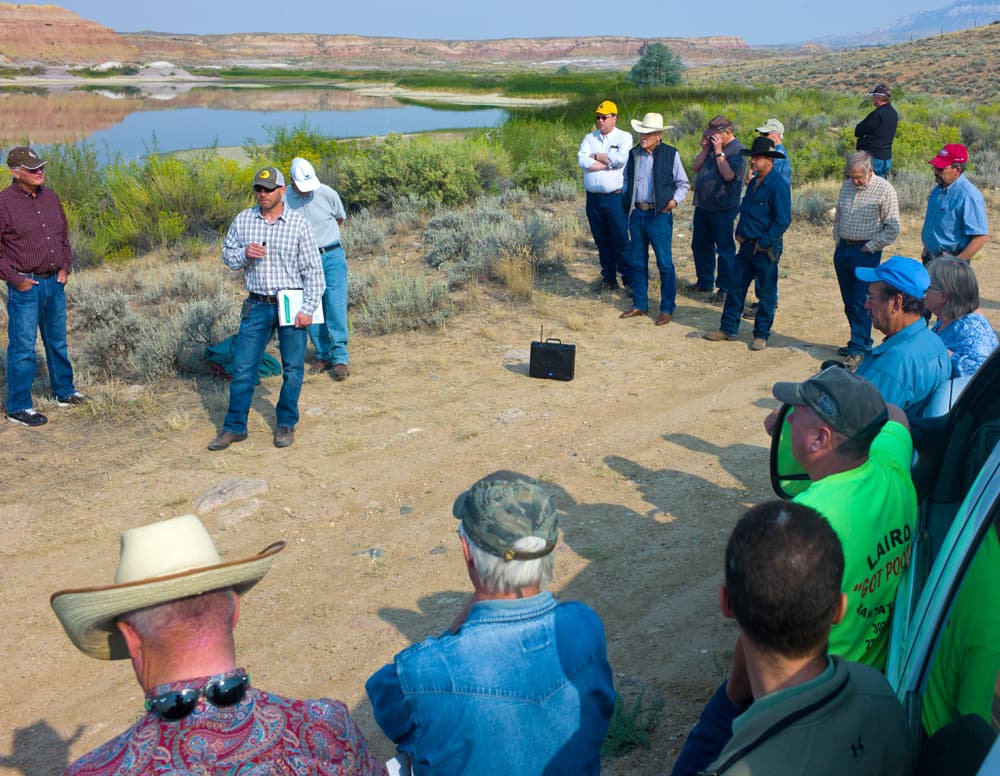
Water developers are seeking nearly $11 million more from state coffers to raise a dam in Big Horn County while absolving irrigators of any additional costs for the $88.9 million project.
The Legislature’s Select Water Committee on Wednesday recommended the state appropriate an additional $10.8 million for the Upper Leavitt Reservoir expansion, plus another $20 million for a dam-construction contingency fund.
The cost for raising the height of the Upper Leavitt Reservoir embankment is now budgeted at $88.9 million — more than double the $39.8 million price estimated in 2015. The Select Water Committee will seek that increase in the 2024 legislative budget session that begins Feb. 12.
“It’s a lot of money”
Sen. Cheri Steinmetz
The committee rejected a suggestion that irrigators also pony up more money.
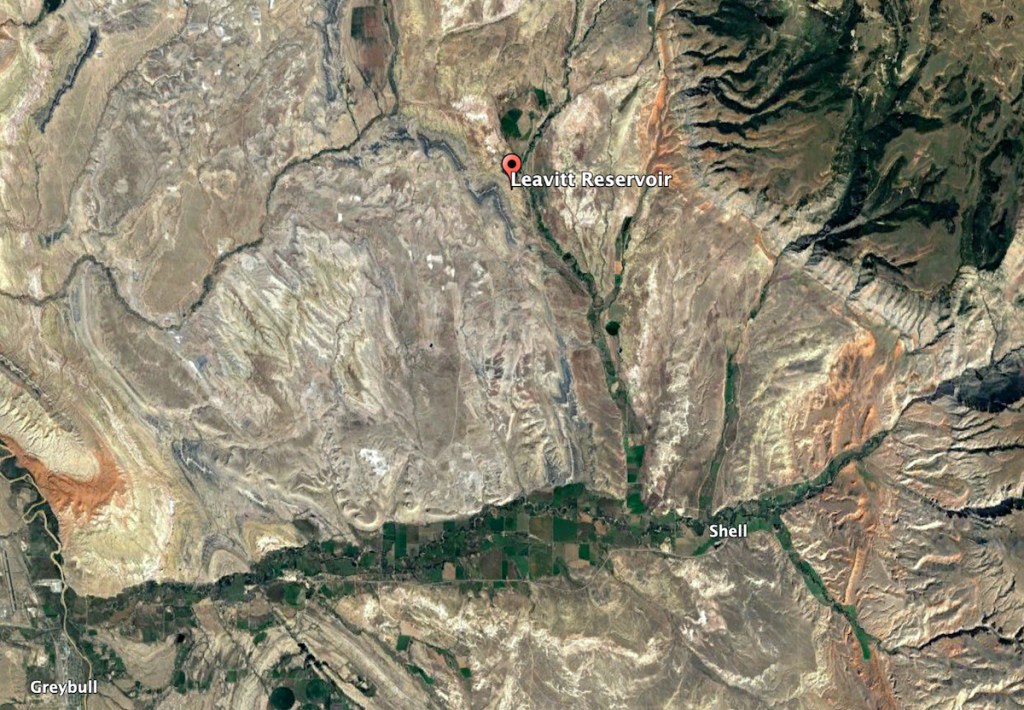
The enlarged reservoir would belong to and serve the Shell Irrigation District, increasing storage 10 times to 6,604 acre feet. The 1,800-foot-long dam would be 96 feet high, and the state would pay for more than 98% of its cost.
In addition to the nearly $11 million appropriation, the committee added another $20 million to a dam construction contingency fund to cover unexpected Leavitt costs and those for the Middle Piney Dam, a Sublette County project that’s being constructed on a landslide.
Wyoming Water Development Office Director Jason Mead said Shell irrigators in 2015 set a limit on their contributions.
“The affordability and willingness to pay of the sponsor is based on a $25 per acre-foot cost assessment to their users, and we’ve tried to stick to that,” he told the committee.
Soaring inflation, higher costs
“Unprecedented inflation and higher-than-expected construction costs” contributed to the project’s increase, Mead told the committee in a report. The irrigation district in Big Horn County would own and maintain the structure.
The higher dam would create a pool covering 194 acres and provide late-season irrigation to some of the 13,143 acres of agricultural land nearby. It would create 34 new acres of wetlands, according to proponents.
Committee co-chair Sen. Cheri Steinmetz (R-Lingle) said the request for state money “is a pretty big ask.
“Have you talked about a little bit more of the burden shifting toward the [irrigation] district — at least some of it — because it’s a lot of money?” she asked.
Mead said polling of irrigators almost a decade ago indicated they were willing to assess only so much.
“That’s how they came up with the $25 per acre-foot,” he said. “They would have to go back to the drawing board to figure out ‘would everybody be willing to … pay an assessment of $30 or $35.’”
He explained the arrangement in an email to WyoFile after the meeting. “The Shell Valley [Watershed Improvement District] offered shares to their members,” he wrote. “Each share is 1 acre-foot. The shareholder would be required to pay into the District each year that $25/AF, regardless of whether they use their water in a given year or not.”
Mead told committee members irrigation district representatives were present to answer questions, but committee members shifted the subject to the water rights in the reservoir’s designated conservation pool. Shell irrigators were never called to answer Steinmetz’s query.
Because the state will pay for so much of the project, committee members asked whether Wyoming should own the dam and reservoir to ensure the state investment is properly maintained. Mead said the irrigation district would likely be responsible.
“It’s a high-hazard structure, and if they don’t maintain it, then it’s their liability if something goes wrong,” he told the committee. “So that’s pretty good incentive, in my opinion, to keep it operating and maintained to the best of their ability.”

One of the primary reasons the cost has jumped so much is the enormous time it takes to get a project permitted these days, which is not the ranchers’ fault. With water, all things are possible, and without water, nothing will ever be accomplished. Anything that could be done to streamline the process will help prevent this from happening with every future big water project. Biden’s war on American energy, together with massive federal government overspending has created this inflationary spiral, and this is but another sad example (also not the Ranchers’ fault).
Sounds like favored treatment for ag types…very California of them…
Good for you Rick Harrison.
It seems people think a rancher only puts protein into our food system in the ratio of one family to one family. Note that one rancher puts enough protein out to feed hundreds or thousands of families. Perhaps a better rate for the water would be to tack on cents per pound of vegetables and meat at the grocery store. Then the public could make the choice to eat more food from other countries, farmed or caught from depleting oceans. Ireland pays $400 Euros per year per head of ewe sheep they run (the rate in 1999). Now that is a subsidy. But they all recognize, after WWII, the threat of starvation is real if you don’t raise at least some of your own food.
Another fact about flood irrigation and water use: A percentage of it is return flow and gets reused again downstream. Perhaps by famillies in California or Arizona. Or the next subdivision.
Whether or not a cost benefit analysis of this dam proposal is positive is one thing. For people to assume ranchers are welfare recipients when they can get a resident Elk License for $67 is hypocritical. And I now more ranchers who prefer folgers to Starbucks.
Sounds like welfare to me, maybe they should have a few less starbucks and new iphones and pay for it themselves.
Well, this seems like a good time for the irrigators to (in Mr. Mead’s words) “go back to the drawing board” and figure out if they’re willing to pay more. If they can’t, or won’t, then this project is too expensive. As for Mr. Mead’s apparent confidence that the Shell Valley District will be responsible if something goes wrong with this high-risk dam: that seems overly optimistic. I hope that nothing goes wrong (if the dam ever gets built), but if it does, I doubt that the irrigators who put up only a tiny fraction of the cost of the project will have the money to fix it. The state will be asked to pony up money, again.
socialist ranchers!
You nailed it, Mica. Bravo! Benefits for those on the low end of the economic spectrum – like expanded Medicaid or continuation of the Child Tax Credit put us on the slippery slope leading to the specter of Socialism. But the ranchers who also benefit from grazing on Federal lands for less than market rates, expect their lifestyle to be subsidized.
Why should taxpayers subsidize the irrigators? How are the taxpayers going to benefit?
Hmmm. So what’s in it for the public, as it’s costing them 90 million dollars? Is it a good fishing reservoir or a new waterfowl or wildlife area? Is it supplying water to several miles of public fishing on Shell Creek? Is it providing water for a big game wintering area?
Most members of the public would rather see 90 million spent on something that benefits them–rather than just a handful of irrigators. To be clear, I don’t mind the public working with agriculture on projects that benefit everyone. I think ag is a critical part of our economy. But so is public recreational spending, and I don’t see the legislature handing out a hundred million dollars to Game and Fish to support or purchase access or crucial winter range, which would generate economic return for the taxpayers. So what’s in this massive spending project for the public? Why should they not object to this crazy spending that benefits so few? Again, what’s in it for the public?
Good comments Robert. If the irrigators want this project to advance they need to show benefits for the public and wildlife. Depth of the proposed reservoir is really important we don’t want to see extensive mud flats like at Glendo. Keyhole is an example of an irrigation reservoir which has numerous public benefits as does Boysen Reservoir. The proposed Leavitt Reservoir is in an isolated area of the State where the Buffalo Bill dam, Boysen and Yellowtail reservoirs already serve the public but there’s always demand for more recreational water – but not for a mud flat.
How many irrigators will benefit from the project? Wouldn’t it be more cost effective to just buy them out and leave that land fallow, or as conservation easement and public land?
infinitely
Those that benefit the most should carry the cost load.
Sounds kinda like the right hand giving the government the middle finger while the left hand is ready for the handout. Obviously, it isn’t that simple, but it sure seems there is an overabundance of bitching about the government in Wyoming when we are benefiting from a lot of government help.
I went back and read the 29015 article. Commenter Dewey Vanderhoff concluded with this, “Run the numbers in this article…. a few thousand acres of new cultivation costing the taxpayer many millions of dollars to build and operate. What’s the rate of return?” It would seem this is still the pertinent question.
Of course that should be 2019 not 29015.
Whom are the primary beneficiaries of the additional water storage? The ranchers of course. Why should they not pay for the additional cost in a rate hike? For those that don’t know, a typical residential family will use 0.5 acre feet of water per year. Is your water bill more than $50 per year? Ranchers are paying $25 per year per acre foot. This is another subsidy to ag water users at tax payer expense. This cost should not be passed down to the Wyoming tax payer.
Good comparison. We also need to put our residential taxes on an AUM basis to see how it compares to public land grazing leases.
I was not aware of the water amount used by a typical residential family (0.5 acre feet/year). If that is accurate, at a rate of $25/acre feet, the annual bill would be even more AMAZING – $12.50 per year! In all honesty, it seems reasonable for the user to proportionately pay for what is used and the cost of providing it.
Just say NO.
You must all be vegetarian’s , what about the wildlife they support in the winter , I would much rather see this area in ranches then a suburban!