


Citing concerns over the separation of powers between the legislative and executive branches, Gov. Mark Gordon vetoed a bill Friday afternoon that would have earmarked $75 million for lawmakers to bring legal action against the federal government over land-use plans.
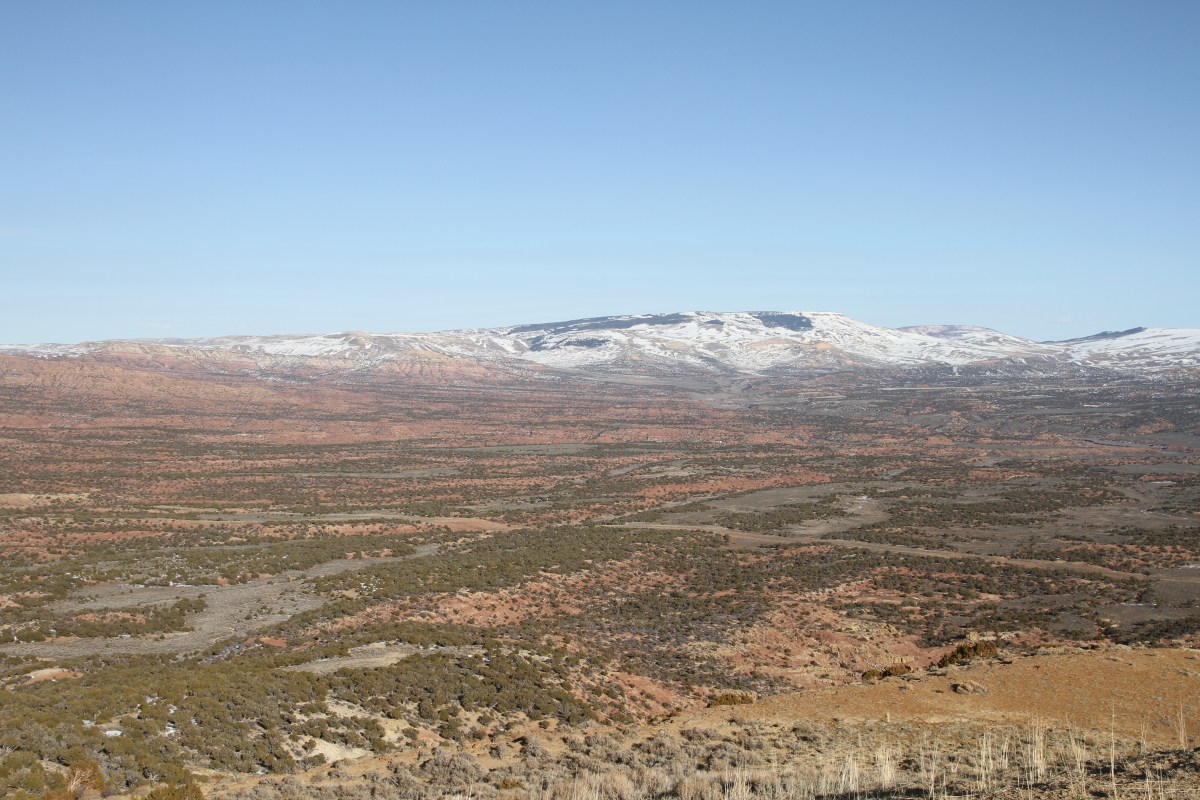
Senate File 13 – Federal land use plans-legal actions authorized was spurred by the state’s ongoing fight over the Bureau of Land Management’s draft resource management plan for 3.5 million acres in southwest Wyoming. But taking on the federal government in court — however necessary — is not the job of lawmakers, Gordon wrote in his veto letter.
“I respect the concerns of the Legislature; however, they do not overcome the fact that this bill represents a clear attempt to cross, blur and trample the line of separation between our equal, but separate, branches of government,” the governor said.
Gordon’s reasoning should not come as a surprise to lawmakers. As the bill worked its way through the lawmaking process, much of the debate centered on its constitutionality.
“Our job is to make laws, that’s what we do. The executive branch, their job is to enforce those laws. And the judicial branch’s [job] is to interpret those laws,” Rep. Barry Crago (R-Buffalo), an attorney, said last month in a House Agriculture, State and Public Lands and Water Resources Committee meeting. “That’s why I struggle with this particular bill, because we might be overstepping our bounds.”
Ultimately, Crago voted for the bill, which passed both chambers with considerable support.

The legislation’s price tag was another issue for the governor.
Spending that amount of money would not be fiscally conservative, Gordon wrote. In fact, it would amount to approximately 67% of the biennial budget of the attorney general’s office — the agency in the executive branch charged with heading up Wyoming’s legal interests.
“Such litigation is costly, and there is no financial reason to double the cost to the Wyoming taxpayer with two parties, both claiming to represent the state of Wyoming,” he wrote
The bill’s appropriation would only serve “to enable duplicative Legislative litigation safaris that would be counterproductive and contrary to Wyoming’s well established practice of cooperation between branches and respect for the Constitutionally enshrined principle of the separation of powers between the branches,” Gordon wrote.
The attorney general, according to Gordon, is currently involved in more than 30 cases “protecting the rights of our citizens.”
“I have not shied away from issues involving federal overreach into our management of Wyoming fossil fuels, wildlife and water, and will continue to do so,” Gordon wrote.
The hard-line Wyoming Freedom Caucus, which is often critical of the governor, released a statement late Friday afternoon accusing Gordon of failing to stand up to federal overreach.
“The Wyoming Freedom Caucus will always relentlessly pursue the protection of Wyoming and her interests, and we are disappointed that Governor Gordon has neglected to do the same,” the statement said in part.
Since ending the 2024 session last week, lawmakers no longer can override Gordon’s veto. The governor still has to take action on dozens of bills passed during the session.


Well, that’s good. Don’t bite the hand that feeds you, Wyoming.
My concerns are, we see a lot of people moving in from out of State. Some are deciding to run for Political Offices. Which is fine and totally Legal, but they have zero concepts and understanding of Wyoming. Wyoming is very unique. I never understood why someone would relocate from one State, because of failed ideologies, and political greed. Move to another and then push similar failed and greedy concepts, on a State they relocated to. As Gordon mentioned, stick to Constitutional guidelines. Do your research on up and coming candidates.
Thank you Governor Gordon for vetoing this legislation. The Wyoming Legislature seems to have caught a fever, and neglected some vital issues that are essential. I am glad that our tripartite system is working.
Its much more important for the State of Wyoming, the counties, the cities and other concerned parties to methodically submit meaningful comments to the BLM documenting their concerns and recommendations. One of the basic rules is that you can’t appeal the decision of the federal agency if you didn’t participate in the open public land planning process – you can’t challenge the decision later. Example, federal planning regulations require a cumulative effects analysis – well, if the State wants to claim the Federal action causes a significant cumulative effect – then you must submit documentation such as economic impact studies to support your position – and, the documentation must be professionally prepared by recognized experts such that it will stand up in Federal court later.
Another example – NEPA has a provision stated as ” reasonably significant adverse impact on the human environment”. You can’t just invoke this matter unless you have professional documentation. At this stage of the game with the Rock Springs RMP revision the State’s top priority should be submitting comments, backed by studies, which establish the State’s position. It makes no sense to anticipate having to go to court over the Rock Springs RMP at this stage of the game – talk of legal action only distracts from the necessity of submitting meaningful comments and backup studies. The economic experts at the University of Wyoming are some of the best at producing the necessary studies and therein should the State’s priority be right now. Unsubstantiated comments and unfounded opinions mean nothing during the public comment/participation process – the info must be irrefutable in a Federal court room – call it best available science.
Another way to look at it is – we’ll do such a good job building our case and submitting so much meaningful backup, that if we should have to go to court, our argument is fully established and documented in the public record during the comment period. However, before even considering going to court, the decisions in the Final RMP can and should be appealed to the BLM’s State Director – he/she will review the preferred alternative to determine if the decision was correct based on Federal law and the comments submitted to the BLM.
Its all about documentation at his stage, and more documentation, and more documentation.
A lot of these Bills are designed for Legislators to make these votes in advance of the election season as well as burnish their so-called credentials when one or many choose to run for Governor.
I may be wrong but I’d bet the repeal of gun free zones gets the veto as well.