

Wyoming’s Powder River Basin, the largest coal-producing region in North America, suffered two major coal supply disruptions in the span of three weeks.
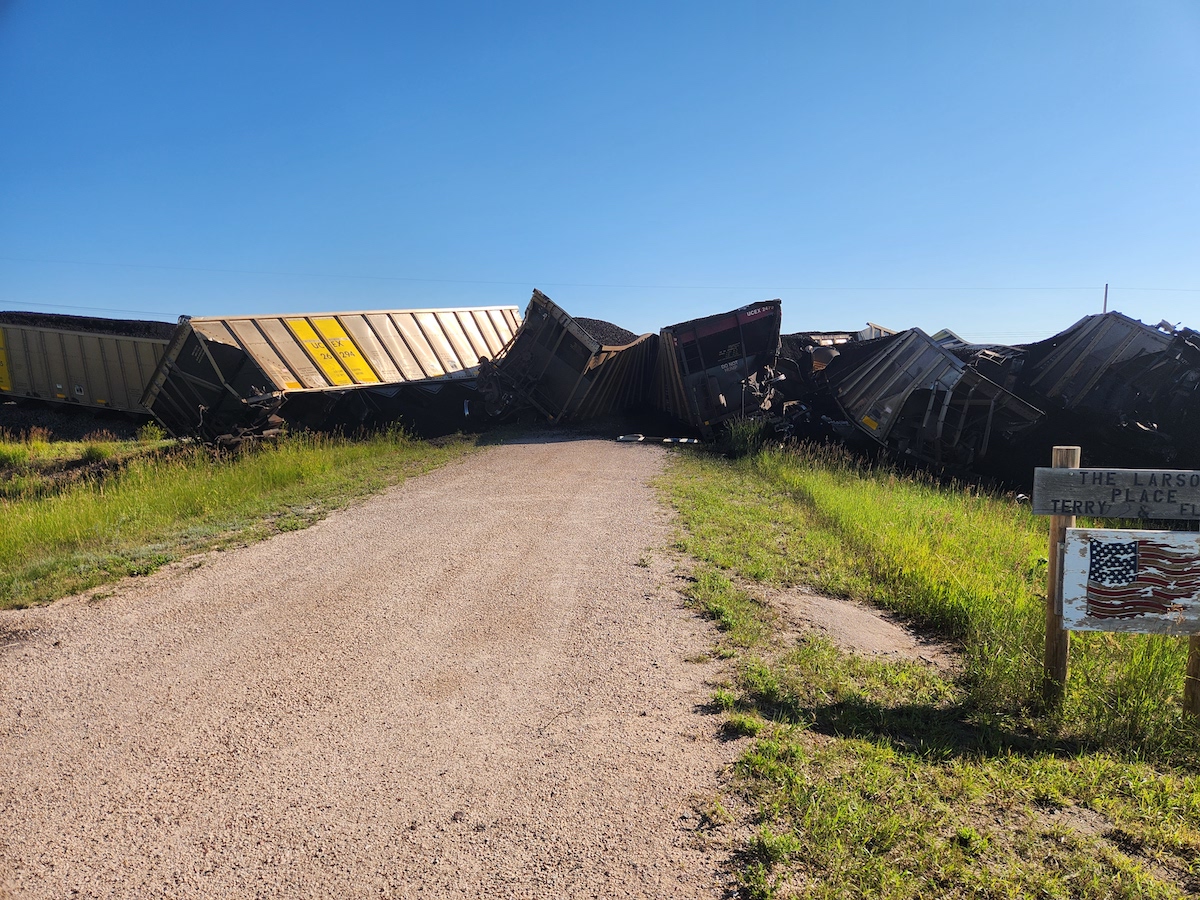
A loaded coal train derailed four miles southeast of Lusk on Monday morning, overturning 21 rail cars and temporarily closing two “main lines.” No injuries were reported, and both rail lines were back in operation by late Tuesday, according to Union Pacific Railway.
On June 23, a tornado struck the North Antelope Rochelle mine — the largest coal mine in the nation — causing severe structural damage, injuring eight workers and hobbling the mine’s ability to load coal trains for several days.
Union Pacific hasn’t yet determined the cause of Monday’s derailment, and the tornado strike at the mine was a random severe weather event, but both incidents revealed the vulnerability of a coal-by-rail infrastructure that the nation still relies on for about 15% of its electrical power generation capacity, according to the U.S. Energy Information Administration.
Industry analysts doubt that either event seriously threatened coal-power electricity generation. But, any prolonged Powder River Basin coal supply disruption could quickly become a problem for the power sector. Especially considering that UP and Burlington Northern Santa Fe Railway — the only two railroad companies serving the region — both have struggled to meet Powder River Basin coal demand in recent years.

“Any new delivery challenges are coming on top of problems with rail deliveries over the past year or so, and will only add to coal supply concerns in the power sector,” Seth Feaster told WyoFile in June.
Feaster, an energy data analyst for the Institute for Energy Economics and Financial Analysis, said even delays of less than a week could impact the nation’s power sector, and would “not be welcome news for customers.
“Capacity constraints in the rail system may make it challenging to easily recover from missed shipments,” Feaster added.
The still lingering failure by the rail companies to meet demand — which both blame on workforce struggles after massive layoffs and the COVID-19 pandemic — resulted in an estimated loss of 50 million tons in Wyoming coal sales in 2022, according to the Wyoming Mining Association. That’s a loss of about $100 million in revenue to the state.
The issue has also resulted in millions of dollars in fuel replacement costs at some utilities, at least one Wyoming-related lawsuit, a closed-door meeting between BNSF and Wyoming lawmakers and a call for Union Pacific to appear before the Interim Minerals, Business and Economic Development Committee on July 18 in Rock Springs.
Wyoming efforts
Minerals committee co-chairman Rep. Donald Burkhart Jr. (R-Rawlins) — who convened the closed-door meeting with BNSF in February — said the committee merely wants to hear an update from UP when the body convenes next week.
“Any new delivery challenges are coming on top of problems with rail deliveries over the past year or so, and will only add to coal supply concerns in the power sector.”
Seth Feaster, Energy Economics and Financial Analysis
“At this time, I know of no legislation being proposed regarding the railroads,” Burkhart told WyoFile via email this week.
Railroad labor unions have suggested possible measures to help counter what they claim is a headlong determination among railroads to reduce crew sizes, increase train lengths, defer maintenance and demand “inhuman” scheduling policies for their employees. None of those lobbying efforts have resulted in successful bills in Wyoming — so far.
Most recently, House Bill 204 – Allowable train lengths introduced this year would have limited the length of trains in Wyoming to prevent congestion. The measure was voted down in the House Corporations, Elections and Political Subdivisions Committee. Efforts to impose a minimum two-person train crew have also failed in the Legislature.
Though railroads appear to be improving performance to meet the demand to ship Wyoming coal in recent months, the situation appears a precarious, potential threat to the state’s mining industries, said Wyoming Mining Association Executive Director Travis Deti.
“Things have improved,” Deti told WyoFile regarding meeting demand for Wyoming coal-by-rail deliveries. “It’s not where it needs to be yet. But it has improved significantly over the past year. The train issues are still there.”
The minerals committee is scheduled to hear testimony from Union Pacific — and hear public comment on the issue — beginning at 2:15 p.m. July 18 at Western Wyoming Community College in Rock Springs. Click here to join a livestream of the hearing.

The monopolistic snub by BNSF and UP continues to hurt Wyoming’s bottom line. Rail service of coal shipment has not improved in “the last year.” It has improved since Wyoming’s rail workers brought House Bill 204. We need the Wyoming legislature to take on these rail barons, not timidly ask for updates. The funding for our schools, the safety of our communities, and the livelihoods of rail workers are all at stake. It’s time the legislature stood up to these companies and thereby putting Wyoming’s people first!