

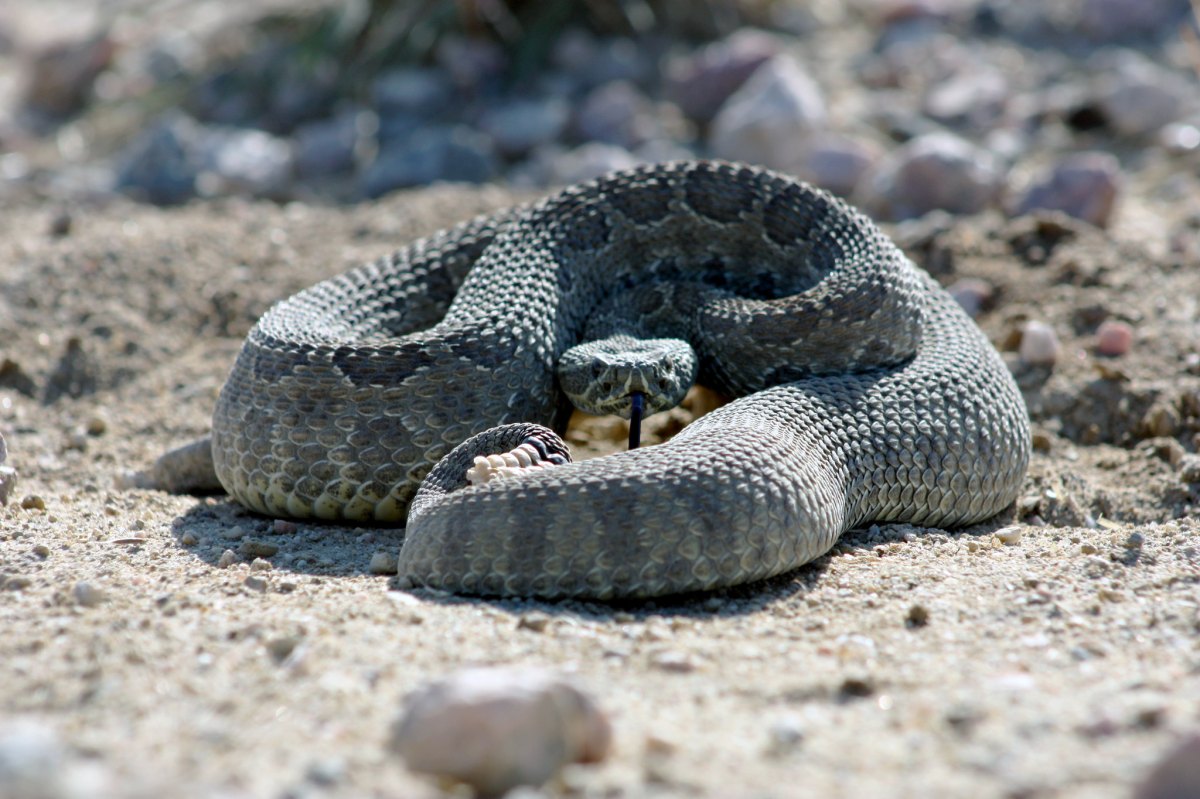
I grew up in the densest concentration of pit vipers on the planet. I shared my home with literally millions of rattlesnakes.
Opinion
The ID ranch, my early home north of Rawlins, features a long chain of dry mountains called the Haystacks that runs south to north through our winter range. The Haystacks are about 10 miles long, and are incised with a dozen deep canyons that run east to west. The parent stone in the Haystacks is sandstone, and the fractures in it are many and deep.
Over eons, cold-blooded rattlesnakes have evolved to learn that they can survive the bitterest of winters if they den up in those deep fractures. Thermal inertia deep underground keeps ‘em warm and toasty while everything on the surface freezes hard and cold.
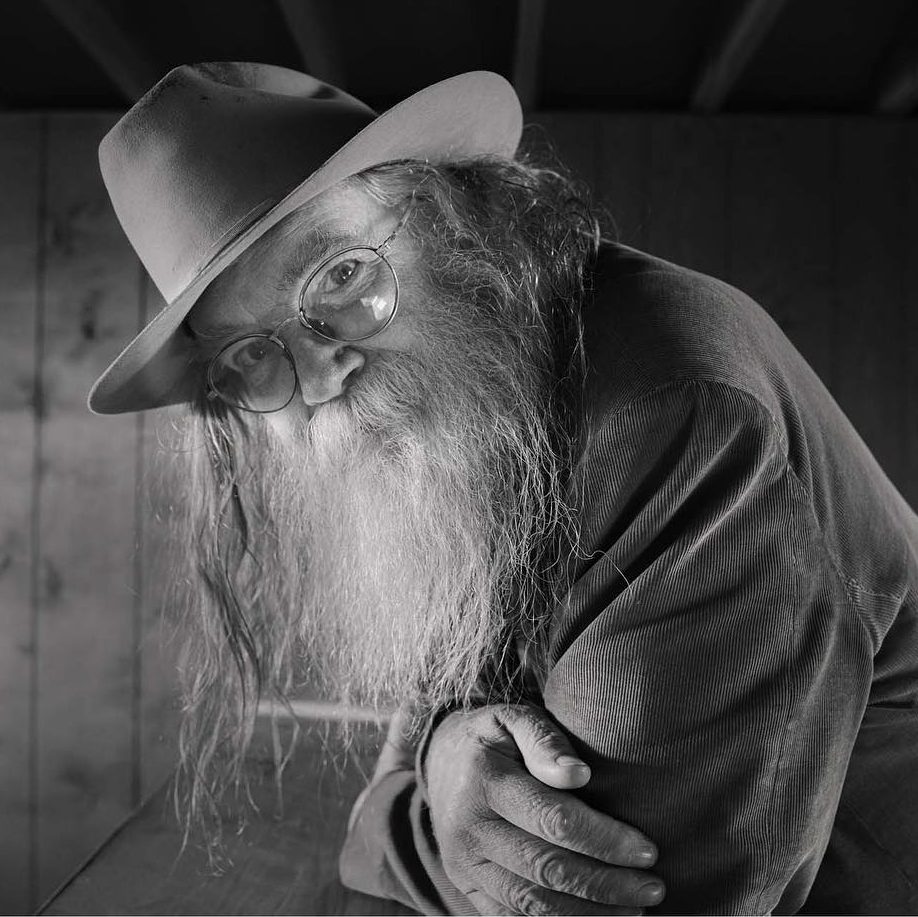
In the late 1970s, a couple of University of Wyoming biologists came out to the ID to study our buzztails. Dr. Dave Duval and his sidekick, Mike King, lived in a sheep wagon that I hauled up to the Haystacks for their headquarters. Mike and Dave spent a few years researching rattlesnake behavior, and I learned a lot from them.
They both helped us move and work cattle when they weren’t chasing danger noodles and developed into fair-to-middlin’ cowhands. I taught them some cowboying, and they taught me a lot about a critter that had occupied the landscape for a lot longer than humans.
Our prairie rattlesnakes — or if you want to be fancy Crotalus viridis viridis — are the only rattlesnakes in Wyoming except for the midget faded, a nasty little booger that only lives along the Green River. While they are fierce predators, prairie rattlesnakes are purely defensive when confronted with something too big to eat.
They can meter their venom so that, when they bite a prey species, it dies on the spot and they don’t have to chase it on their bellies through the cactus. But when they bite a human, horse or cow, they only inject enough venom to back it off.
An old hand who worked at the ID when I was a kid, Fred Wise, had been bitten several times. His advice was to shade up or lie in a creek to cool the body if a snake bit us and then drink a bottle of whiskey. The next morning, the hangover would make the pain of the snakebite pale to insignificance.
Readers are admonished to heed Fred’s advice at their own peril; I’m only passing along what he told me.
There are probably a couple hundred rattlesnake dens on the ID, and each den can shelter tens of thousands of snakes. Riding horseback in those canyons, I was treated to stereophonic rattling. I got pretty good at killing snakes without dismounting my horse, swinging my rope to cold-cock ‘em with the honda.
But I stopped killing rattlesnakes after talking with those snake wranglin’ apprentice cowboys from UW.
Their research showed that snakes would emerge from their dens when the days got warm. They’d sun themselves to heat their blood, then they’d beeline out into the sagebrush flats to gorge themselves on white-footed deer mice, their meat of choice. They’d spend all summer eating rodents, then wander back to the den to sleep for another winter.
That, to me, seems like a pretty unexciting life for the serpents that stalk us in our nightmares, but that’s what rattlesnakes do.
I stopped killing rattlesnakes because Duval and King taught me about the eating habits of the white-footed deer mouse. They are ravenous little vermin, and eat a couple times their body weight in grass a day. And they outnumber both cows and snakes by a huuuuge margin. The only thing that puts a dent in their population is rattlesnakes.
Duval and King sat me down one day and showed me the math. If we had zero rattlesnakes on the ID, we could maybe run only a dozen cows. The goddam mice would eat all the grass on what otherwise is fine cow country. I could raise more beef with rattlesnakes around than without ‘em. So, I quit killing rattlesnakes.
Mind you, I never tamed a snake for a pet, or even got accustomed to the primordial shiver in my amygdala when I heard one rattle. But I quit killing them, for the sake of my cows.
It’s just one of those little life lessons that sneak up on us from time to time — one of those secret truths hidden under the sagebrush in the Big Empty. Everything is connected to everything else.


Rattlesnakes. Great prairie dog eliminators. They crawl into the burrows and eat the babies. Keeps the population under check. BTW. Prairie dogs destroy the grass like deer mice. Thanks Rod. Great article.
Interesting. I grew up in Santa Barbara county, California, in an isolated valley that’s a lot like Wyoming: high desert, sagebrush, rocks and mountains. And rattlesnakes….we killed every SOB we saw. But they were Pacific timber rattlers (?) and they didn’t den up at all. The do hibernate from October-May. It seems like they weren’t nearly so numerous as in your area, but some got to be 5’ long (not many, fortunately) (average was probably 3 1/2 feet. Not sure what their primary prey was, but probably had to be rodents, including rabbits. There are lots of rabbits, both cottontails and jacks.
I’ve been following your writing and it’s great! Thanks.
Crotalus viridis viridis is also an excellent purgative, and folk practitioners have no doubt been enamored with C virdis virdis since it was first discovered in the Garden mentioned in Genesis. Inadvertently stepping on, near, or over a coil of C. virdis virdis will often instantaneously induce a colon cleansing cascade of uncontrollable relief in the stepee. Frequent and/or chronic use of C. virdis virdis is discouraged however due to its cumulative and deleterious effects on good saddle leather. Please seek the advice of a licensed medical provider before beginning any new treatment for your current condition.
Thank you Mr. Rod Miller. This really helped me understand from a farmer with experience with snakes. I live close to the Franklin Mountains in El Paso TX. We love to go hiking but stay close to the valley for fear of rattlesnakes. Learning this, now I can understand they have a purpose in this life and we are stepping in their habitat. We must seem like giants to them. Thank you for sharing this story. It’s helping millions understand they too are part of this ecosystem. We don’t have to pet em but we should respect em. Thanks for sharing Mr Miller
I am 82 years old. When I was a child, I vaguely remember a Fred Wise, whom I think my parents (Robert “Bob” Robinson, “Teddy” Robinson, and Bob’s father John Robinson) fished with at Williams Lake, Idaho. We lived in Burley, ID, but kept in touch. I can’t remember if the gentleman’s first name was Fred.
I enjoyed this article. It is so hard for me to appreciate snakes (I am afraid of them), but your article reminds me of their ecological contribution.
We used to live with copper heads and I am now petrified of snakes because I enountered one when black berry picking it was a big one and scared me silly. Mom said they jumped at her on the mower. Last one I saw was a big black snake my four year old came in to tell me about it was about five feet and I screamed so loud my husband got off the mower to get rid of it. I don’t like them and they don’t like me 😔 Deb
Hello from Indiana.. I just found you and wanted to thank you for the great article. I used to live in Colorado and I just retired. I hope to make a western state my home again some day. Learning about these rattlers was so interesting. We have two or three different ones here in Indiana. The timber rattler being the big one. I don’t know their diet for sure, but I’m told it’s mostly mice, rats and the occasional small rabbit. ( everything eats cottontails ) .. Recently man in my city of 15k had three take up residence in his garage and so the Dept of Natural resources had to come and move them. We have had some dogs bitten on trails in a place called brown county in the Hoosier National forest and there is a YouTube video you can watch of a giant rattler crossing the road in brown county if you do a search for the same. It’s a few years old, but you can see how big they get. They are protected here.
Anyway, I hope to come to your state in the future and maybe even hunt some good ole western deer..
God speed.
Tim…
I worked on a huge ranch in southern Alberta,surveying wellsite’s and pipelines,rattle snake country,its more dangerous twisting your ankle stepping in a gopher hole than being bitten by a rattler,i asked the rancher,and he told me there good for the land and they will let you know when there around,and by the way,have you seen any gophers around here??
Walking slowly and looking around shaded area’s ,gates and fence post’s has kepted everyone safe,and healthy!
Respect what they do,let mother nature take care of the beautiful country we all share!!
Thank you!
So the mountain range mentioned in the article only has prairie rattlesnakes ?? And what makes them different than the western rattlers ive seen here in California ( northern /Norcal ) ?? Also I’m under the impression that a rattlesnake takes on different skin colors and behavior according to their environments , is this true ?? Appreciate any and all feedback
According to science, a western diamondback only injects venom maybe once every 5th bite. However, not knowing if you were a “wet” bite or a “dry” bite is why doctors will always issue diamondback antivenom. In this situation, i am unsure if this species is similar.
I live in the N. GA mountains area and this year we have noticed a lot of rattlesnakes, different sizes, basically in the same area where I have a pile of tin roofing stacked. I have a healthy respect for all snakes and I feel like this was their territory before it was mine.
Last night one of my renters got bitten by something when she bent down to pick up her dog. Her arm was red and swollen and and getting worse quickly. After taking a closer look I saw 2 small “fang” bites. I went to Google and discovered that only bats, black widows, and rattlesnakes leave fang marks. Her whole arm from elbow to hand was getting more red and swollen.
Ive been studying natural treatments for a long time. I came across a study done about if you’re stung or bitten by anything your body will ,within 15 seconds, automatically produce the antivenom and it is excreted in your own urine. Therefore putting your own urine on the bite will eradicate the effects of the bite. Being skeptical, I got a bee sting and tried the urine method and it almost immediately relieved the pain and swelling from the sting. Ive used this method with ant bites, wasp stings and mosquitoe bites. I know it sounds disgusting but remember urine is considered sterile when it leaves the body. And it works.
Back to my friend who was bitten and getting more swollen and redder by the second. I told her to urinate in a cup, take a cotten ball and soak up the urine and apply it liberally to the bite and reddened area. After 15 or 20 mins. She came back over; the swelling was gone and most the redness had faded and she’s been fine ever since.
I was preparing for a trip to the ER, but it wasn’t necessary. I feel like it saved her life.I read that only venomous creatures leave fang marks. Going to the ER would have cost a fortune, not to mention medicines and follow ups.
Unfortunately this is one of those treatments that the medical/pharmaceutical folks don’t want you to know about. They have gone to great lengths to convince society that urine is like feces, just the elimination of wasste. It is not the same.
Ill stop there. My point being that I’d rather put a little of my own anti-venom urine on a snake bite than lie in a cold creek and drink a bottle of whiskey.
Excellent writing that provided education on the snakes impact on the environment plus entertaining to boot! Thanks!
Thanks once again for a great article. I remember numerous times jumping straight into the air at the buzzing….may have been why I decided to locate in an area where they do not abound
I have never had a fear of snakes, but I will kill rattlers that come within 100 feet of my house. It’s good to know about the deer mice!
Thanks for your excellent piece.
I have a fear of rattlers because of a possible encounter when i was 5 years old. I was in central idaho outside lewiston, climbed a hill, turn to sit down, and began screaming from a pain in my tail end.
Im too old to remember now, but since then, i have been completely terrified of rattlers.
Good reading…the column and comments. Thank you.
Another life lesson worth thinking about.
I too grew up with rattlesnakes. My cousin and I had a contest to kill the most. Of course our parents did not know that how literal we took their admonition, “watch out for the rattlesnakes. ”
My husband and I built a home at the base of the uplift. There was a den up behind it here in Rawlins. We regularly killed them. But then I found out that the deer mice infesting our homes and out buildings carried a deadly virus. Rattlesnakes kept their numbers down. And like Rod I had an informative visit with one of the biologists he hosted.
We have a strange culture out here that has labeled animals good or bad with very little knowledge or understanding of their often important role in the ecosystem.
Rod, you’re endlessly informative and entertaining. After reading this piece about snakes I now know more than I did before about their behavior. Now, if I could figure out what our three snakes in Washington were up to I’d have it made.
Thanks for being you Rod!
I’m, from Arizona and deal with multiple types of rattles. Everything from the timber to the western Diamondbacks to even the sidewinder. Other than a meal here and there i generally leave the snakes alone for just that reason. They eat the abundant supply of gophers,packrats,and other species of rodents. But on the whole snake makes a good meal as well as keep the rodents to a tolerable level.
I really enjoyed your rattlesnakes column. I grew up in Wyoming learning to fear them, but now I see how they fit into the ecology. Most interesting! And I wrestled at Rock Springs High School, so our paths may have crossed back in the day.
Thank you.
Another fine write, Rod. I happen to have killed a rattlesnake in my front yard last summer, about 25 ft. from the front door. There were a half dozen that wandered into our tiny town for better or worse and they all met the same end. In a town of 90 there is hardly enough money to keep the water and lights on, let alone any for animal control or law enforcement for that matter–so “animal control” is usually a six gun loaded with bird shot. I had a friend back in the 80’s (rest his soul) who used to eat ’em. Kept inviting me to his BBQ’s, so I finally told him: “When I think of eatin’ a rattlesnake, I can’t help but remember what they eat.” His reply was: “Well ya eat eggs dontcha and look where they come from.” I’m sure there are still plenty of buzzworms and deer mice on the old ID range, but my front yard isn’t in need of preserving any grass, as it seems to need mowed every time I turn around. I should probably add a bum lamb to the ecosystem next year and eventually eat him.