

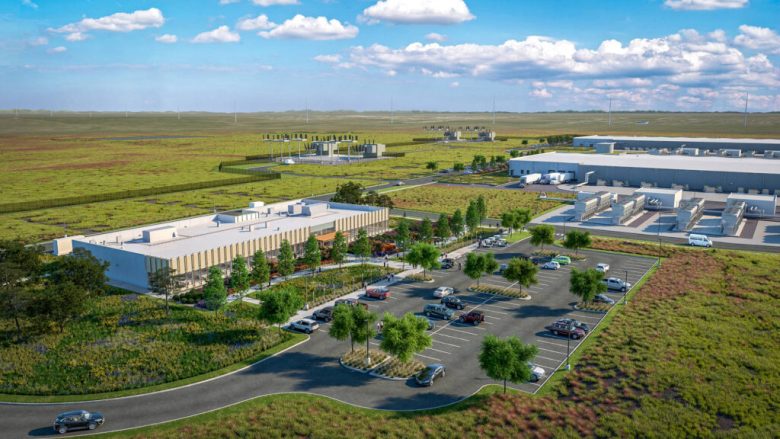
Among the many data center developers with sights on Wyoming, two of them alone — Microsoft and Prometheus Hyperscale — could require more power than double the state’s existing electricity consumption, according to estimates.
Where that power will come from is still under consideration. And the water required to cool all those hot computing servers — a growing concern, according to local officials — is surprisingly smaller than one might expect. Thanks to direct-chip and geothermal cooling, along with an industry-wide move to a closed-loop mix of propylene glycol and water that needs refilling only once every six years, each new computing center will use little more than a retail store, according to some industry representatives.
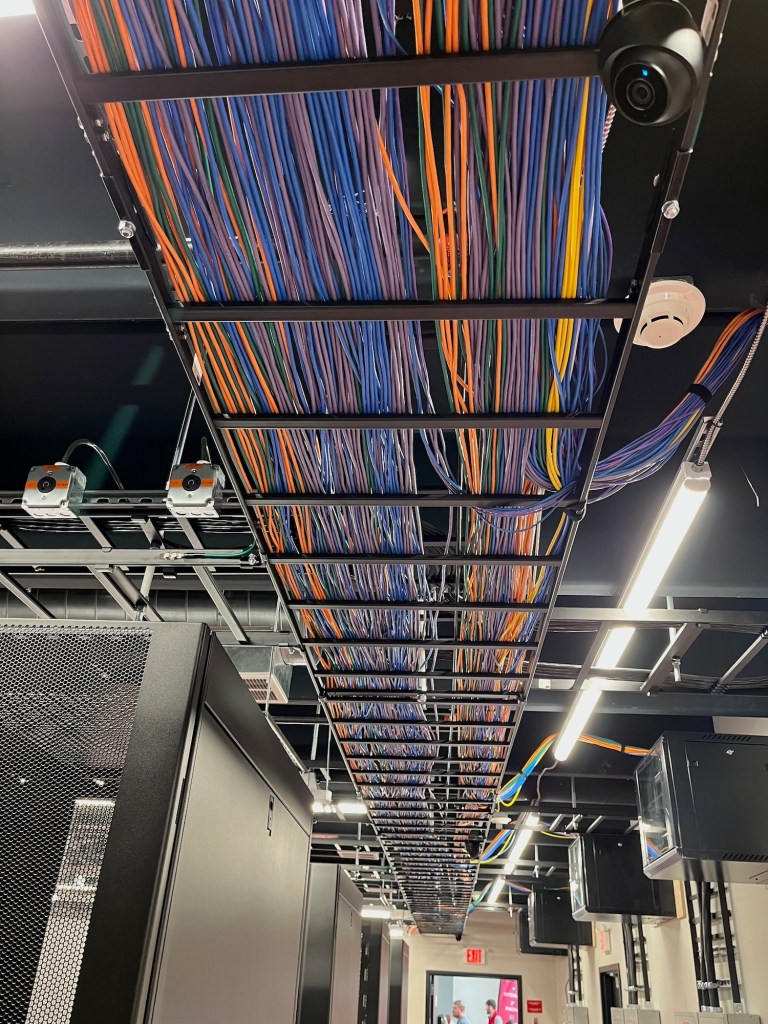
The scale of planned computing centers is so massive, Prometheus Hyperscale says, that the industry is simply forced to turn to advanced cooling systems that don’t rely on evaporating large volumes of water. “It just so happens that [Prometheus Hyperscale’s technology] doesn’t consume water on a continuous basis,” founder and Chief Executive Officer Trenton Thornock told a legislative panel earlier this month.
The Legislature’s Select Water Committee quizzed Prometheus officials, along with representatives for Microsoft and Cheyenne Mayor Patrick Collins, noting mounting concerns for the industry’s reputation as a huge drain on water resources. Some local governments across the nation are even considering banning or placing moratoriums on new data center construction until there’s more transparency and certainty regarding water consumption. Concerns stem from the water needed not only for cooling servers, but also for the massive volumes of new electrical generation required to power them.
Such a drastic policy move would be an economic misstep, Collins said.
Data center boom, benefits and concerns
The drive for more data centers to power artificial intelligence and myriad other computations is so large that some compare it to the nation’s past buildout of railroads and the interstate highway system. In modern-day dollars, companies are investing about $756 billion this year on the “AI build-out,” according to Goldman Sachs, and they’ll spend a projected $1.6 trillion in 2031. That’s about 22% of what the federal government spends in a year.
Cheyenne is already home to 13 large data centers, including the National Center for Atmospheric Research supercomputer. Microsoft planted its first of 11 data centers in Cheyenne in 2012 and, along with other partners, plans to add three new computing “campuses.” OpenAI, Meta and Crusoe also have plans in the region and speculation abounds about new computing campuses throughout the state from Evanston to Casper.
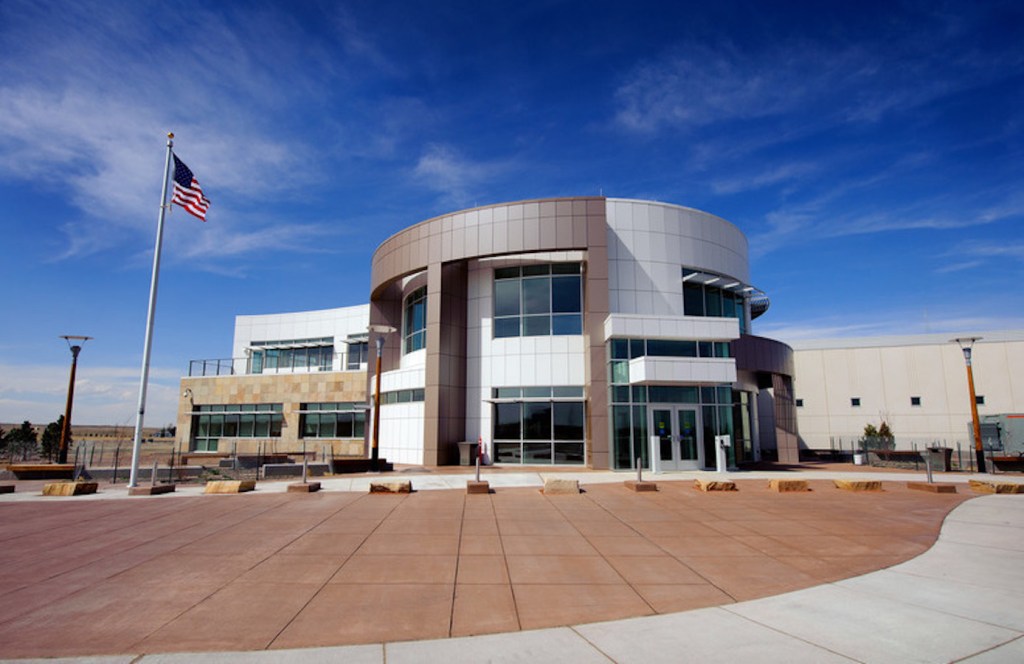
Mayor Collins said he’s heard an increasing volume of concerns over data centers in his hometown. Some residents are irked at the recent wave of annexation to accommodate the buildout. But each new annex that city officials consider is surrounded by city property and is brought to them by willing landowners, he said.
Light pollution, unchecked growth, skyrocketing electric bills are also concerns. “Our biggest conversation is about water,” Collins said. None of the concerns, including about water, are insurmountable, he added.
“I want you to know that our expectations of a company will be to do no harm when they come into our community,” Collins testified.
The city has coordinated with the state and Cheyenne Light, Fuel and Power to create a separate electric tariff for data centers. Essentially, it holds average customers harmless by contracting directly with data centers instead of folding them into the larger service territory. Proactive zoning and planning stipulations set standards and limits for things like light and noise pollution.
Rather than being a hindrance, the industry provides hundreds of high-paying jobs and has been a boost to the economy without placing a strain on local services or the city’s water supply, Collins said.
The current fleet of computer banks in Cheyenne uses about 200 acre-feet of water annually, according to Collins. That’s 1.48% of all water consumed in Cheyenne. Collins recently spoke with a data center developer who claims their closed-loop cooling system will require the same amount of water as eight single-family homes, he said.
“The estimate is that all the [planned] data centers combined would use about 400 acre-feet of water per year. Combined, that’s about 3% of our current water usage, and about 1.8% of the 22,000 acre-feet we have available annually at the City of Cheyenne.”
Residents urge caution
Still, the committee heard pleas from the public to proceed cautiously, particularly with water resources. The rush to build data centers is happening faster than many small towns can handle, Wyoming Outdoor Council Government Relations Manager Auna Kaufmann said. And the potential strain on water resources remains largely unknown, especially regarding the industry’s thirst for massive amounts of new electric power generation.
“We appreciate that the [project developers] that are coming in now are operating in good faith,” Kaufmann said. “But not all of our municipalities have the resources to evaluate those impacts. As a state, we should make sure that we have regulatory frameworks in place that will protect them as well.”


Others urged the panel to demand more transparency from the industry long before deals are made to allow new projects.
“They will claim that [closed-loop cooling systems are] filled once and basically circulated forever,” said Cheyenne Republican Rep. Gary Brown, who does not serve on the Select Water Committee. “Well, that may be true in a laboratory, but we don’t live in a laboratory. We live in Wyoming. We live in a state where water is a big issue.”
The committee took no legislative action on the subject and will take up the topic when it meets again in August.

I don’t know if these data centers will stress the water and electricity, but they certainly will stress the people that live nearby. Meanwhile, dumpy and his billionaire buddies will continue to rake in the money. They’re laughing all the way to the bank.
The very fundamental laws of physics indicates that you can neither create nor destroy energy, only change its form.
And while they indicate they have a closed loop system to transport the heat from the heat generators, the computers, to someplace where it must be allowed to transfer to another medium (See Daniel Cooper May 21). If this is not true then whatever they are cooling the computers with will eventually get so hot they could no longer cool the computers. So my question is what is the mechanism used to remove the heat from the liquid they are using to cool the computers? Is it water? Is it some kind of airflow? Is it dissipated into the earth? Do they just transfer the heat to something that emits infrared radiation? I don’t believe their closed loop statement has any relevance whatsoever to the real concern which is what is the final method of moving the heat out of their units and into the environment (Big Fans)?
You have UW for expertise in HVAV. These thermodynamic questions on the different cooling systems are low level questions, there should be no debate on the engineering questions.
All these valid concerns over power and water are over-looking the obvious dystopian element hiding in plain sight- these are all SURVEILLANCE data centers. Built to store your information- your purchases, your travels, your opinions and your beliefs. Wake-up, folks. None of this ends well for anyone besides the Epstein class.
My name is IOANA ILIES and earlier today, on May 22nd 2026, I have written a long email to all the members of the Cheyenne City Council, to explain to them that Data Centers introduce significant instabilities when connected to the main power grid, especially when they use unprecedented amounts of power, like some of the ones that have already been approved to be built in Cheyenne. I want to share the contents of my email and what I found when I did some research on this topic, because I think this may highlight the most challenging problems that we will have when these new data canters start to operate, and it is not about the amount of energy or water they will be using.
Dear City Council Members,
I am writing to share with you important information about the risks of connecting many data centers to our power grid, based on some research I have done recently on the internet.
I am especially worried about the prospect of connecting Project Jade to our grid, because of the very large 2.7GW of power that it will be designed to use. They may decide to go up to 10GW in the future, according to their representatives. I am aware that they claim they will be generating their own power using natural gas powered turbines and power cells, but I came across a Cowboy State Daily article from 1/6/26 which quotes our Governor’s chief of staff Drew Perkins as follows, referring to Project Jade:
“Perkins indicated the governor’s office is aware that sooner or later the data center will likely want to tie into the grid, just in case there’s a loss of power. “
“That’s not just for this project,” he said. “But as Wyoming moves forward, as we have these data centers, as they build behind the meter, self-power generation to fuel this, that there is a way that this will be meaningful and tie into the grid.”
Connecting this AI data Center to our grid could be a SERIOUS PROBLEM and I will explain why.
I share below some links I researched with some quotes from these articles. The main issue that comes up with AI data centers is that they generate erratic voltage and power variations that can destabilize the power grid, causing cascading outages.
Less powerful data centers can cause smaller instabilities on the grid occasionally, too. If we have MANY of these data centers, the instabilities from several of them could combine and create bigger problems. That is why it is problematic to add more and more data centers to our grid. Even if they generate their own power, for the most part, if many of them are connected to the grid some of the time they can still destabilize the grid and potentially create serious power outages.
First, I want to give you a perspective on the magnitude of the power that Project Jade is designed to handle.
I made a search on the internet on the largest data centers in U.S. currently in operation. By the way, the largest one of these appears to be the largest in the world by power consumption, based on the research I did.
Top 5 Operational U.S. Data Centers by Power Capacity
1. Meta (Altoona, IA) ~ 1,400 MW = 1.4 GW
2. Meta (Prineville, OR) ~ 1,289 MW
3. Meta (Fort Worth, TX) ~ 729 MW
4. Meta (Mesa, AZ) ~ 701 MW
5. Meta (DeKalb, IL) ~ 673 MW
The 2.7GW the Jade Project will use to begin with is almost DOUBLE the power of the most powerful data center in operation today, ON THE PLANET !!!
This is important to keep in mind, because any problems with grid instability less powerful data centers have right now WOULD BE AMPLIFIED SUBSTANTIALLY for a data center that uses a lot more power.
By the way, I have a degree in Physics and these things make a lot of sense to me.
The easiest analogy to explain this is the following
Think of a deep pool of water. You can generate big waves in it.
If you have a much shallower pool of water, you can only generate much smaller waves.
A 10GW data center is capable of generating much greater variations in voltages and power than a 1.4GW data center. The water analogy is pretty simplistic. What happens in a data center is a lot more complex, but it gives you a sense of the difference in magnitude for any voltage and power instabilities that may be generated. These instabiliries, from what I understand, are very random in AI data centers and, to date, there are no protocols or technology that will insure they will not cause cascading outages and damage the electrical grid very badly, in the worst case scenario. THAT IS WHY IT IS SO PROBLEMATIC TO HAVE AN AI DATA CENTER THAT HANDLES SO MUCH POWER CONNECTED TO THE MAIN POWER GRID THAT SUPPLIES THE ELECTRICITY FOR THE RESIDENTS OF CHEYENNE. Once these instabilities occur in the system, they propagate within a matter of seconds throughout the whole grid and can cause significant damage.
Imagine an event like this, causing significant damage to our power grid, happening in the winter time, when the weather is really cold. In the worst case scenario PEOPLE COULD DIE. You might think that most people use natural gas for heating, but the furnaces and boilers need electricity to function properly.
Just one more note. If the Jade Project will end up being scaled up to 10GW, it will be the 2nd LARGEST ON THE PLANET! The largest will be the Fermi America data center in Texas, with 11GW of power. They will build a nuclear plant to power that one. Below is a link with the 20 largest data centers that have been approved in North America:
https://orennia.com/insights/the-20-largest-data-centers-being-developed-in-north-america?utm_term=data%20center%20project&utm_campaign=&utm_source=bing&utm_medium=ppc&hsa_acc=5463457899&hsa_cam=524093804&hsa_grp=1312819697787792&hsa_ad=&hsa_src=o&hsa_tgt=kwd-82052816127356:loc-190&hsa_kw=data%20center%20project&hsa_mt=b&hsa_net=adwords&hsa_ver=3&msclkid=e5b5c970726c104c516ba37e41579546
It is also important to remember that natural gas turbines, that will be used to generate power for the Jade project, will produce fumes and cause pollution. If they scale up to 10GW, the pollution will increase significantly.
These companies want to build in Cheyenne because they have the infrastructure already in place, like roads and fiber optics cables. However, these are very wealthy corporations and get significant tax bakes from the State of Wyoming to do business here. They could afford to build the infrastructure needed 100 miles or more outside of Cheyenne and we could have what we need for the internet and have peace of mind, too. Sure, the city would not get as much revenue, but we are already getting significant revenue from the data centers that have been approved so far.
I am providing below the links to the articles I found relating to this topic, as well as some
quotes from these articles, to give you an idea how they support what I just explained
above.
The real safety risks of data centers – 9/12/25
https://conimby.org/blog/2025/09/12/the-real-safety-risks-of-data-centers-what-local-communities-need-to-know/
“Data centers create several major safety risks that go beyond just using up resources. Their biggest threat lies in how they affect electrical grid stability. Power grids can experience cascading outages that affect whole regions at the time these facilities suddenly disconnect [1]. Grid operators have documented more than 30 “near-miss” incidents over the last several years since 2020 [1].
The situation becomes more concerning with data centers creating “bad harmonics” – these erratic voltage spikes damage household appliances and raise fire risks. Research shows that 75% of highly distorted power readings show up within 50 miles of major data center operations [2].”
“AI boom sparks rare warning of ‘significant risks’ to the grid” – E&E News by Politico
5/4/26
https://www.eenews.net/articles/ai-boom-sparks-rare-warning-of-significant-risks-to-grid/
“A paper from dozens of scientists from Nvidia, Microsoft and OpenAI scientists warned last year that AI power swings can “cause physical damage” to grid infrastructure.”
Electrical Contractor Website Article from Jan 2026
https://www.ecmag.com/magazine/articles/article-detail/it-s-not-just-the-load–a.i.-data-center-grid-impacts
“A.I. data operations are highly variable, meaning that electricity demand can spike and fall in fractions of a second. This usage profile poses stability and power quality hazards for utilities and their customers throughout the centers’ connected grids.”
“More specifically, A.I. data centers pose challenges to grid operations and other utility customers because of the intense variability of their power use. For utilities, swings of hundreds of megawatts within seconds can disrupt the balance between electricity generation and demand. This can create frequency deviations that lead to transmission instability. Additionally, the high-frequency power electronics used in A.I. hardware can introduce harmonic distortions into the grid. These distortions can lead to voltage instability, which can damage other customers’ household appliances and business equipment, increase the risk of electrical fires and degrade the lifespan of transformers and other utility infrastructure.”
Quartz website article
“What ‘cascading outages’ near AI data centers mean for your electricity”
https://qz.com/cascading-outages-data-centers-grid-load-shedding-risk-051326
“Woody Zhu, an assistant professor at Carnegie Mellon University who studies power systems and data centers, recently told Quartz that rapid data center growth in regions not designed for this level of sustained load can create grids that operate in a “near-permanently stressed regime.”
“For communities near data center clusters, the risk is not a single dramatic failure but a grinding reduction in the margin that separates normal operations from emergency.”
“Long-term sustainability will require more proactive planning,”
“The question is whether planning can keep pace with construction. So far, it has not.”
Thank you so much for your attention!
Sincerely,
Ioana Ilies
Thank you Ioana Ilies for this extensively researched examination of the hazards that data centers pose for the electrical grid. I hope the City Council seriously considers the risks you outline, and that other communities that are considering allowing a data center will understand this information as well. We saw what happened in Texas a few winters ago with cascading collapse of the grid affecting a large and heavily populated area. It took a long time to fix that. Regardless of the time of year, having a widespread lengthy grid failure would result in huge economic losses, as well as human suffering and deaths.
I can’t find any transparency about the environmental impact of these datacenters. There is a lot of talk about “closed loop cooling systems” as if that were a solution. A gasoline powered car has a closed loop cooling system. If that were all you talked about, you could ignore the fact that it has a radiator, a fan, and an exhaust system. There is some talk about cooling by pumping hot water into an aquifer. I can’t find any information about the environmental impact, efficiency, or sustainability of this type of system. I also can’t find any information about it actually being used. As to light pollution, why do they need lights at all? Can’t they keep it dark, and base their security on good fences and guard dogs? We should have a moratorium on data centers, until their builders come forward with detailed plans and there is a complete public review.
Anyone who drives outside Cheyenne at night already sees how our landscape is changing. The once-broken darkness of the Wyoming prairie is now dominated by the rhythmic, mechanical blinking of red warning lights from wind turbines. It is a stark visual of industrial encroachment.
But if our night skies are altered now, we are entirely unprepared for what is looming.
With up to 70 data centers now proposed or floating through local development pipelines, we face an unprecedented digital gold rush. Unlike turbines, these massive computing complexes operate 24/7 under high-intensity security lighting and blazing perimeter arrays.
The cumulative “skyglow” from these sprawling facilities won’t just blink—it will permanently erase the dark prairie skies that define our home. We need strict “Dark Sky” zoning regulations before the stars are gone for good.
The light, air, water and noise pollution of data centers have made the people who live near them miserable all across the country. The massive number of external lights can be seen for miles. The deisel and gas turbine generators that these datacenters use as backup power (or primary power) pump out huge amounts of air pollutants. The noise of the cooling systems and backup generators create an endless amount of intolerable noise pollution. The cooling systems of the datacenters draw significant water and often dump pollutants into the ground water. All of these things lead to poor health outcomes and generally miserable people. This isn’t some new phenomenon. People living near Bitcoin mines have been talking about these sorts of problems for over a decade.
On top of that, the temporary construction jobs are often for out of state workers that leave once the project is completed. Large datacenters have a very small workforce. They are mostly automated after all. Those few high paying jobs are often staffed by people moved into the state by the companies who own the datacenters. Datacenters aren’t the boon to the local economy and community that the billionaires who build them claim they are.
These massive datacenters are hugely unpopular with people on both sides of politics. I can’t wrap my head around how elected officials who are supposed to represent thier constituents can justify these horrible things.
My understanding is these data centers will be using roof top solar to supplement their drawing on existing power grid !
Closed loop cooling requires more energy than open loop systems.
That’s funny.
Beware politicians that don’t represent their constituents. Just take a look at the ‘gravel mines’ that basically ignore the people that live nearby. Some of these politicians didn’t even know the area that they approved for mining. That shows a real disrespect for their constituents.
Read carefully, not all industry reps, some industry reps say these will use little more water than retail store.
As quoted from the article:
“each new computing center will use little more than a retail store, according to some industry representatives”.
The very thought of Datacenters in todays American west is laughable.
There is ZERO chance these developers are telling the truth. Cheyenne will find out the hard way that the water and power usage is huge. Another bad plan for WY with the Republican electeds doing nothing to stop it.