

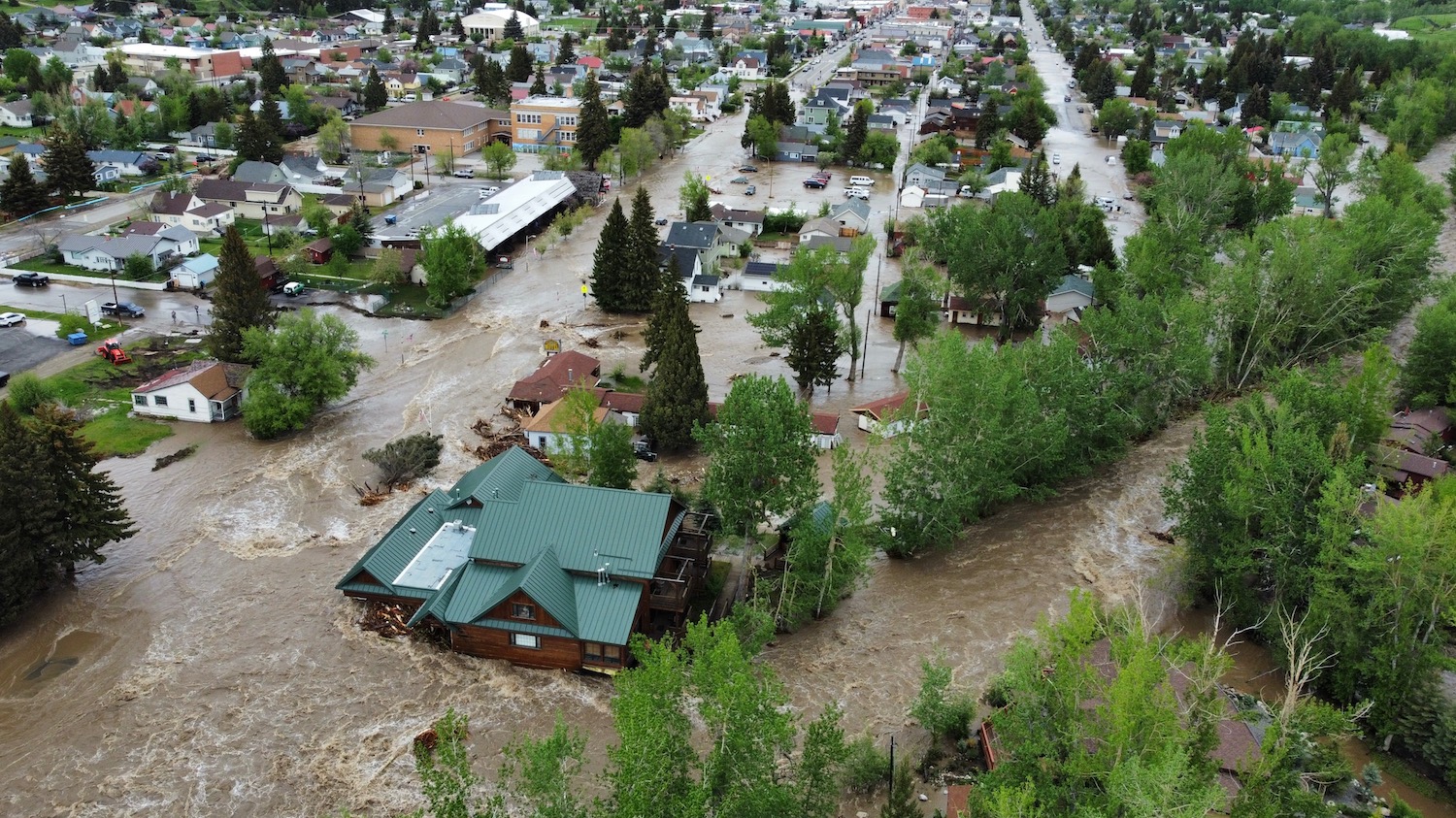
Imagine buying a newly built house, but when Wyoming’s winds start huffing and puffing at its front door, the whole thing falls flat, endangering the lives of those within.
That’s the sort of thing building codes are intended to prevent. They’re requirements for how new structures are supposed to be built to keep the occupants safe and sufficiently withstand the elements, whether that be winds, precipitation, earthquakes or other natural disasters.
Keeping houses and businesses standing amidst climate change is a stated priority for the Biden administration and the Federal Emergency Management Agency, or FEMA.
“Disasters have a devastating impact on communities across the country — destroying homes, loss of lives and causing catastrophic damage,” a 2022 FEMA report on building codes stated. “Moreover, the intensity and frequency of natural disasters will only increase in the coming years due to climate change. Disaster-resistant building codes and standards play a key role in building disaster resilience and mitigating against catastrophic loss.”
FEMA describes the majority of states, including Wyoming, as having a “lower resistance” to such hazards — its lowest classification.
As part of larger efforts to improve the country’s resilience to a changing climate, FEMA announced in October it would be offering more funding to shore up building codes and compliance: up to $2 million to every state and territory, and another $25 million for tribes.
That grant money could go a lot farther here than in states like California or Texas, and the Wyoming Department of Fire Prevention and Electrical Safety plans to apply for it. Fire Marshal Byron Mathews said he intends to use the funds to bolster the state’s fleet of code inspectors by paying for their education. Code inspection is a necessary step in constructing new buildings.
“This opportunity provides us the ability to improve that workforce,” he said. “We can train some younger folks, bring them into an area that maybe they haven’t experienced.”
If the grant is approved, Mathews said, he plans to use the money to train new inspectors as well as further education for those already working in the field.
Bigger picture
A lack of inspectors hasn’t yet led to a dramatic increase in the time it takes to build a structure, Mathews said, but their numbers tend to follow the trend of how many people work in trades like construction.
“What we’re seeing as an overall trend is; as the trades struggle to get filled, we struggled to pull folks from the trades into the inspections,” he said. “Without getting into the weeds of the data, [about] 90% of our [code inspectors] are coming out of the trade.”
Housing has become a concern across Wyoming in recent years, especially after a migration into rural western states early in the pandemic.
What we’re seeing as an overall trend is; as the trades struggle to get filled, we struggled to pull folks from the trades into the inspections.”
Byron Mathews, Wyoming Fire Marshal
Gov. Mark Gordon’s priorities include understanding the problem and helping address it where he can in tandem with local communities, according to Special Project Adviser Chad Auer.
For that reason, Auer said, the governor supports applying for these FEMA funds: It’s just another way to clear a hurdle to build out housing.
“Generally speaking, it’s safe to say that if we have the appropriate amount of inspectors, it can ease the development process,” he said.
The governor’s office is also working with the Harvard Growth Lab, and another statewide housing report is expected to be published before the Legislature begins its budget session on Feb. 12.
How do codes work in WY?
In Wyoming, the Department of Fire Prevention and Electrical Safety oversees the adoption of minimum building code requirements for the state. Those are usually the latest international codes, and the state rarely diverges from them, according to Sen. Stephan Pappas (R-Cheyenne), who retired from architecture three years ago.
“Not too many of the modifications from the basic code happen in Wyoming,” he said.
Compare that to Colorado where, according to FEMA last year, the state hadn’t adopted the latest building codes.
While small Wyoming communities often rely on the state to oversee code inspections, many other communities and counties oversee their own. Those local jurisdictions also have a bit more control over whether they’d like to enhance certain codes.
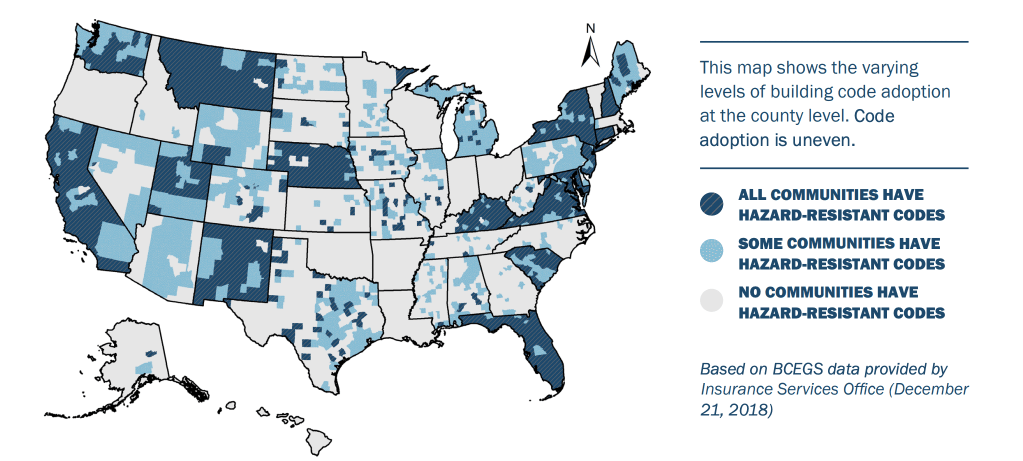
Some of the outcomes of that local control can be seen clearly here in a 2020 report from FEMA, which shows the differences in code adoptions at the county level, and how that could affect resilience after natural disasters.
The National Oceanic and Atmospheric Administration tracks the increasing costs of natural disasters, and estimates U.S. costs of natural disasters over the last seven years exceed $1 trillion.
In Wyoming, FEMA maps show that the main natural disaster affecting homes is flooding and a bit of seismic activity.
That said, a new U.S. Geological Survey report found “nearly 500 additional faults that could produce a damaging quake” across the nation. That includes around half of Wyoming facing at least a 25% chance of an earthquake in the next 100 years. Hot spots around Yellowstone are looking at a 75-95% chance.


What take socialist fed funds? That would be awful. If Wyoming won’t take federal funds to help children in need of food then we certainly wouldn’t want to take this money either, right?
Accept Federal Funding to help our state – Oh No! – you will scare the “accept no science” legislators. This should initiate more state aid to the declining coal industry.
Well it’s climate change OH NO! More tax dollars wasted at the alter of fear based on nonsense. Wyomings 80 mph winds are and always will be.
What’s the catch? Federal money always comes with strings attached and Mathews neglected to say what those strings are.