


Local governments in Wyoming don’t always know how — or have the ability — to compete for federal grants. The state has also at times been at a disadvantage due to a combination of inexperience and a lack of resources and coordination, and critics have lamented this fact in recent years, especially as once-in-a-lifetime funding opportunities have emerged from Washington.
That’s why Gov. Mark Gordon and the Wyoming Budget Department are asking lawmakers for half a million dollars to fund a grants management office. Part of the idea is to continue efforts that kicked off last summer.
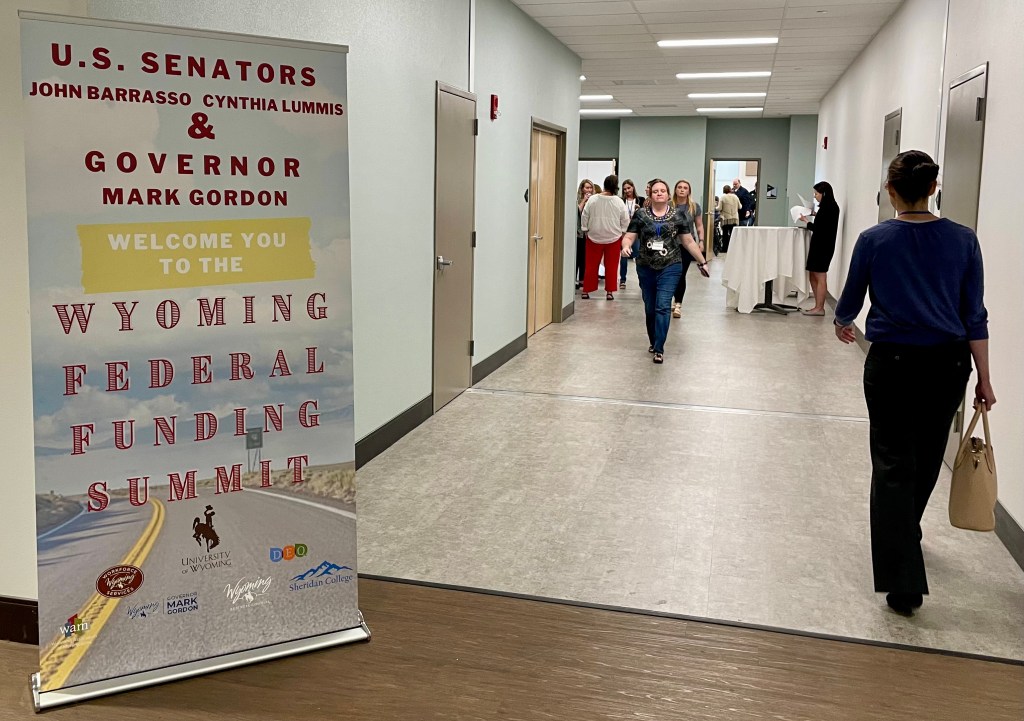
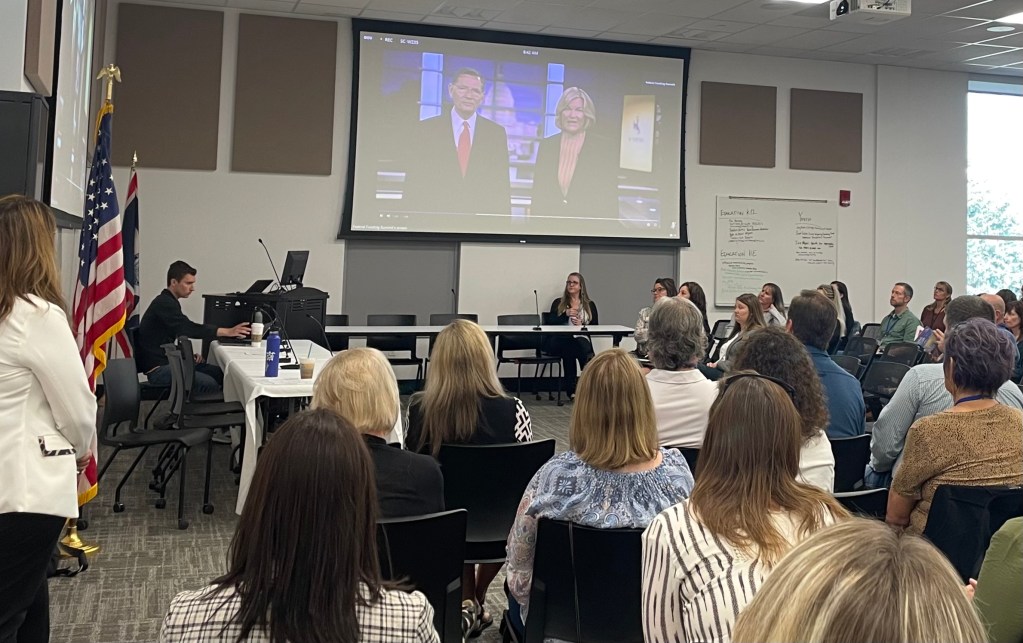
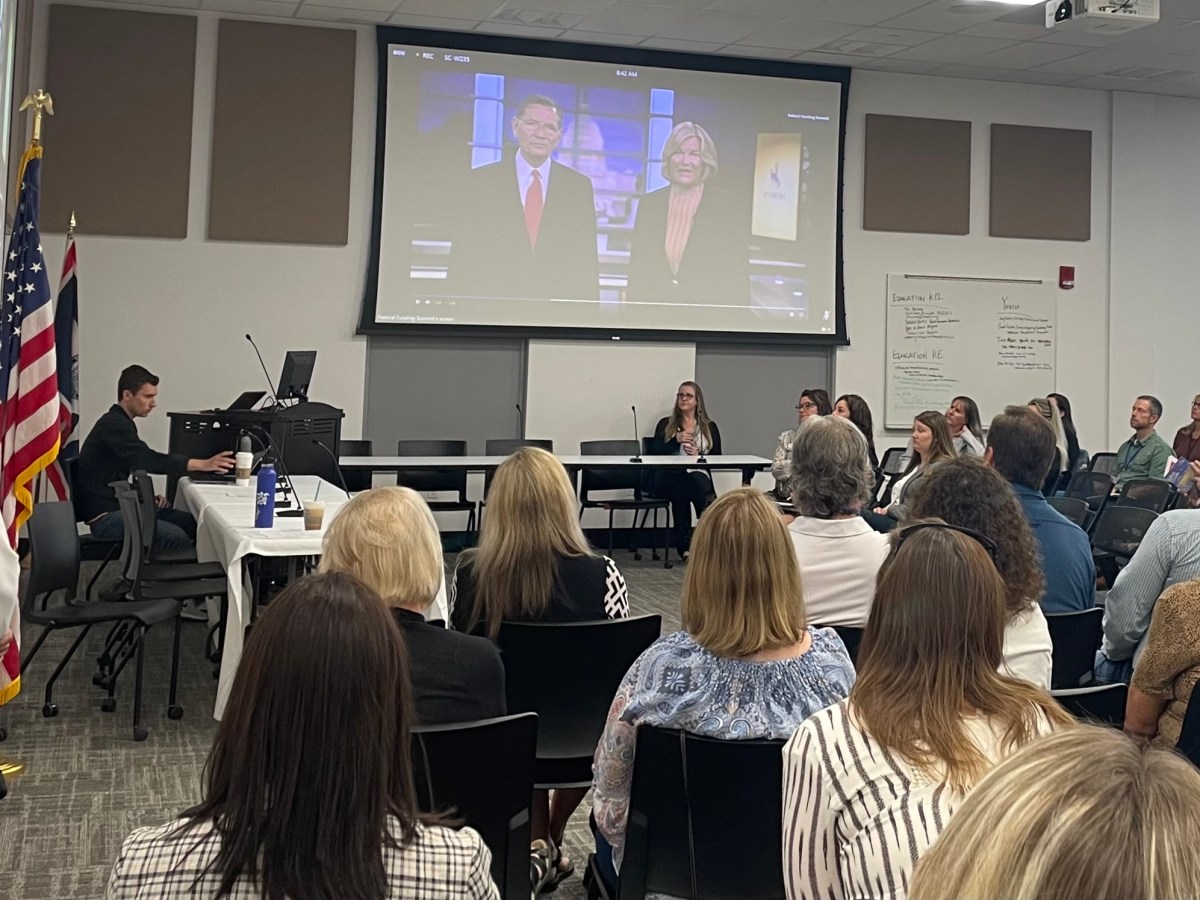
After voting against both the Inflation Reduction Act and the Infrastructure, Investment and Jobs Act, Wyoming’s U.S. Sens. John Barrasso and Cynthia Lummis worked with Gordon to host the state’s inaugural federal funding summit.
“The purpose here is to educate, network and grow the capacities for acquiring grants and the capabilities to be able to administer those,” Gordon told summit attendees in June. For two days, more than 100 representatives from local governments, nonprofits and private enterprises learned how to be more competent and competitive in the federal grant process.
Now, pouring $500,000 into a grants management office would allow it to pick up where the summit left off, advocates say.
“I believe the climate in Washington D.C. is a climate of picking winners, and we want to be the choice,” Budget Department Director Kevin Hibbard told the Wyoming Legislature’s Joint Appropriations Committee in December.
The money would be used in two primary ways — first to continue contracts with a consultant to identify and prioritize grant opportunities “that fit Wyoming,” according to the department’s written budget request, and second, to finish building a repository of grant-writing knowledge and administration amongst local and state government staff.
The details
The grants management office was established in 2023 with roughly $1.2 million “to enhance the state’s opportunities to secure infrastructure grants,” according to the supplemental budget.
That enabled the Budget Department to begin to contract with a consultant, but it wasn’t quite enough to complete the work, according to Hibbard. The $500,000 would close the gap.
“Maintaining this office will increase the access, availability, and distribution of information when it comes to federal, state and private grant opportunities,” the request states.
A critical part of the work will involve facilitating grants cradle to grave, according to Hibbard, since applying for and receiving a federal grant is often less than half of the adventure.
“We have to do the management aspect of it because it just doesn’t end when you get the money,” Hibbard told the appropriations committee. The idea is helping to track grant budgets, spending and reporting will keep local governments compliant and will help them learn the ropes.
“Scary things go on in the world once you get a grant, and there’s risks associated with [it] once you get the grant and you don’t properly report it,” Hibbard said.
To save time up-front, the consultant’s work will involve using a proprietary tool “that removes the task of searching for and filtering through grant opportunities that are and are not worth pursuing,” according to the request.
But since the tool may not always be available, the request states that a critical part of the funding will go toward education — the idea being to teach local governments to fish for grants.
“This will help our state and local communities identify gaps in their current operations and help them build the bench strength, resources and connections to our state departments that they may need to utilize over the next several years to be successful,” the request states.
Lastly, the department plans to establish a public-facing dashboard to track progress, such as the number of grants applied for, received and the total dollar amount, as well as the dispersion of grants services among agencies and entities.
Reaction
Without any vocal opposition, Hibbard’s pitch to Joint Appropriations appeared to go over well, and it caught the attention of at least one member.
“This is a really exciting, innovative initiative that we’re gonna see high return on investment on,” Rep. Trey Sherwood (D-Laramie) told the committee.
“In speaking to the way this will build capacity, my community doesn’t have a grant writer on staff, so anytime we see a federal program we want to go after it’s, ‘Who is going to write it? Who is going to manage it? Who’s gonna track it?’ and we miss opportunities all the time,” Sherwood said. “So this hits really close to home.”
At the same time, the great need for such programming could be overwhelming, she said.
“I just want to make sure that we’re being realistic about the workload and the expectations we’re setting because they are so full of potential,” Sherwood said.
That’s also a concern for Justin Schilling, the member services manager for the Wyoming Association of Municipalities. His organization has considered going down a similar road and offering grant services to its members.
“The problem we always run into is, ‘Well, how do you do this without making people mad?’” Schilling said, pointing to the trickiness of deciding how to prioritize who to serve out of 23 county governments and 99 towns and cities.
Educating folks to help themselves would bear some fruit, Schilling said, but some of the entities that could use federal grant funding the most will still struggle with bandwidth, such as small municipalities with only a handful of employees who already wear a lot of hats.
Overall though, Schilling said taking some kind of action is a long time coming.
“It’s something I’ve been saying for a long time, frankly, is it would be really nice if there was some sort of centralized grants-type resource for local governments,” Schilling said. “It would be fantastic.”
The state lending a hand to local governments would be especially useful for rural communities, Rep. Karlee Provenza (D-Laramie) told WyoFile. Last month, she met with the White House National Economic Council to discuss federal grants.
“Some places in Wyoming that desperately need help with funding like water projects or anything that would fit under these [federal grants] are having a difficult time accessing the money that they need,” Provenza said.
She hasn’t been able to review the budget department’s request yet, but she said it sounds like something she’d support.
The 2024 budget session kicks off Feb. 12.


If the feds are going to some how dole out funds to communities to enhance infrastructure, health care, sanitation or any other project that my or may not not be the hopes and dreams of the citizenry, we should be aware that loans/grants come with some guide lines that are not might not be palatable to all concerned. The fed might look at the tax structure to insure the citizens are paying their fair share to further support any development into the future. Whether from local,state,federal or even private enterprise “A hand full of give me and a mouth full of much obliged” is not something to strive for.
It’s interesting that Wyoming receives the most Federal money per person ($6894) of all states, amounting to 31.9 percent of our total revenue. Bigger states of course receive much more total money – Texas for example gets $68.2 billion.
Great article Maggie as always. It amazes me how the majority of this state with its politics and the socialism scare can even consider accepting dirt money from the pinko Feds. The hypocrisy of our congressional reps and their cronies as they vote against these programs yet line up with their hands out and accept credit when funds for the program become available is insane.
This would be INCREDIBLE! I think this would change the game for so many cities and counties across the State. Great article Maggie!
Pretty sure we know how the game is played… put the bait on the hook and takers get the strings.
The potential constitutional issue is the amount of revenue, stated by Hibbard, of a Half Billion dollars outside of the legislature is a staggering amount. The appropriations committee primarily sets the policies of Wyoming through dollars and FTEs. The Grants department would supplant a big chunk of Wyoming policy with federal policy.