

Opinion
Twenty-four years ago this week, the warm dry fall at the home place vanished in the night. Three inches of fresh snow blanketed the country. That same snow silenced our footfalls in the morning as we worked methodically through the high meadows, then stopped for a snack and a drink of water. That’s when we saw the elk.
They simply appeared as if by magic, way above timberline, just little specks on a grassy shelf above a big rockslide. It was a good place to see a bighorn sheep, but it was full of elk: cows, calves, a couple of spikes and one monster of a bull. There was never any question about if we would go after them. The only question was how, and that question was swiftly put to rest as we slipped into the cover of the timber.
It was a long approach, and a tough one. We moved up through a small meadow, staying in the cover of the scattered spruce at the edges. We slipped through the lower edges of the jumbled scree, boulder-hopping and keeping one eye above us to be sure we were below their line of sight. Then we were into the dense timber on the steep slope below them. We moved slowly, steadily up the slope until we ran out of cover, sweating, huffing and puffing, straining for each painful lungful of air.
We were naked to the world, or at least it felt like we were. There were no trees, not even a bit of stunted whitebark pine. We stashed the daypacks, the jackets and everything else we didn’t absolutely need. We were at almost 11,000 feet when we paused to catch our breath. That’s when I saw her ears. One cow had risen from her bed and walked to the edge of the grassy shelf to look down the slope. There we were, without enough cover to hide a pika. We tried to huddle up and look like rocks, but she made us in one look. She barked once, wheeled on her hind legs and it was all over. We never even heard their footfalls, but we knew they were gone. We heard the big bull bugle one time in the timber below and never saw him again.
Elk hunting is like real life — you learn to deal with disappointment. The plan was to hit the trail in the bottom of the drainage and to drop down, maybe even head for the cabin. We were spent, and heartsick with defeat. But once we got into the timber, we began seeing elk tracks in the snow. A couple at first, then small bunches of a half dozen or so, all made that morning. All moving steadily, not hurrying, but not lingering in any one spot, either. And all headed in one direction.
Elk are creatures of habit in our part of the Wind Rivers, and these elk were starting the same journey they made every year at about this time. They would stay in the old growth timber and skirt the shoulder of the mountain well away from the trail in the bottom of the drainage. They would timber up for a night or two. Then, if the weather didn’t clear up, they would move over into the next basin on their way to their winter range. Generations of them have successfully dodged Newe (Shoshone) hunters, mountain men, tie hacks, my grandfather and my father in this black timber tangle. And now it was our turn.
Lynn and James headed off down the drainage for the cabin, but I couldn’t quite make myself quit hunting just yet. It had been a wonderful day. The disappointment of the failed stalk had disappeared. It was eerily silent. It was still. It was perfect. There was a feeling that I still struggle to explain. The closest I can come is to borrow a term from baseball. Great batters sometimes talk about being “in the zone.” It’s that flow state where your mind, your body and your spirit come together and focus completely. Everything slows down. Your mind is focused, with no thought of anything except the moment. Your body is loose, just tired enough to be content to move slowly, but fresh enough to keep up the pace for as long as it takes. And your spirit is one with the mountain. When everything is right and I’m “in the zone” like that, it’s a feeling almost mystical in nature. I’m not invisible, but I’m not far from it.
I felt it coming that day. I knew without a doubt that it was going to happen soon, it was only a question of when. I eased forward one slow step at a time like a coyote, feeling the ground with my feet to make sure I didn’t make a noise. Slowly, quietly, carefully around the trees. I saw him at the exact instant that he saw me. One squeal and everything erupted into chaos. He seemed to go instantly from placidly standing broadside to full-tilt, all-out run. Things happened way too fast to think about them. At times like this, there is no real thinking. Your brain is simply processing information and reacting by instinct, or it’s over. I remember thinking that he was a bull and a good one. That’s all my brain registered. I don’t remember raising the rifle, I don’t even remember firing the shot, but I remember thinking “Yes! That one was good. That was a lung shot.”
Mostly, I remember him. I remember how he watched me as he ran, not in fear but in calculated tactical retreat. I will never forget watching his left eye as it focused directly on me. I will take to my grave the way the muscles in his massive shoulders rolled and how his powerful hindquarters drove with each lunge, the way he sent great showers of snow and dirt up 10 feet in the air behind him as he sprinted for the timber. The whole thing couldn’t have taken more than a couple of seconds, but it all seems to slow down in my mind. I stood still and listened. I heard him go down in a shattering of branches behind a big granite boulder in the timber a couple hundred yards to my left. He tried to rise once, twice, and then lay still.
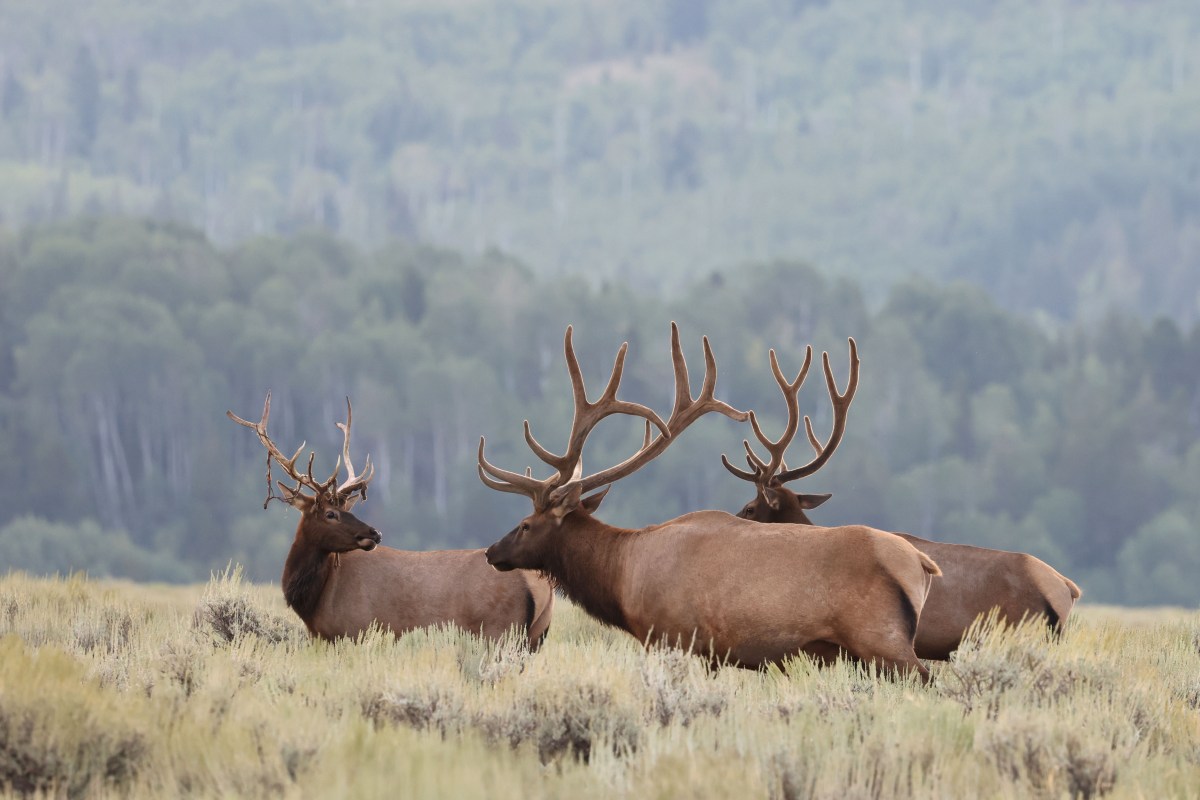
He was an old bull, gray in his mane and undoubtedly on the downhill side of his life. He was a good heavy six-point, but without the long tines he probably carried a couple of years before. He had a bad gore wound between his shoulder and chest, and a collection of old scars from previous years’ battles from the nape of his neck all the way to his rump. Three of his tines were broken. He was as thin as a snake. But he had been a brawler and a commanding presence on this mountain for years, only recently beginning to feel the onset of his old age. His teeth were worn, and he looked tired as he lay there. I sat beside him in the waning light of the afternoon and gave thanks. Suddenly I was tired too, and I felt a little on the downhill side of my years. I took the tenderloins for tomorrow night’s dinner; made sure the tag was in his ear and headed down the trail as the last violet bit of alpenglow hung on the peaks behind me.
When I broke out into the big meadow, I could just make out one of the folks from a camp on the far side as he walked four horses down to the creek to water. One was belled, and I could make out the sound, clear and pure in the gathering dim. I wondered how many times I’d been in this meadow at first and last light. I wondered how many times the bull had been, and if we’d seen one another before today. We might have been old friends, I thought as I got to my feet and headed for the cabin. We would pack him out in the morning.
I am old now, and I carry a lot of scars, just like that old bull back in 2002. Kim and I are officially retired from elk hunting. But we still come back each year, and we revel in the fall as the bulls bugle and aspens turn to gold. We fish and hunt grouse and hike just for the joy of being here. My body cannot do what it once did, but I still need this experience. I need to come with my sweetheart to the cabin in the most perfect time of the year. I need to touch and hear and feel our connection to this land, these elk and this holy place.

Beautiful, Walt. Thanks.
Walt, your story affected me deeply and brought back memories of being a cook and horse wrangler in hunting camps in dubois
Fantastic writing. Thanks