

Many public land advocates credit four Missouri hunters — who spent five years fighting corner-crossing trespassing charges and a civil lawsuit — with opening millions of acres of public land in the West to public access.
The “Missouri Four” contested criminal charges and the civil suit to establish that the public could corner cross to reach public land in six Western states. Aided by the Wyoming chapter of Backcountry Hunters and Anglers, the men won acquittal on criminal charges four years ago today and went on to win a civil suit against them that wended its way to the U.S. Supreme Court before they persevered.

It was a lone hunter from Douglas, however, who broke trail 23 years ago and enabled those more recent courtroom victories.
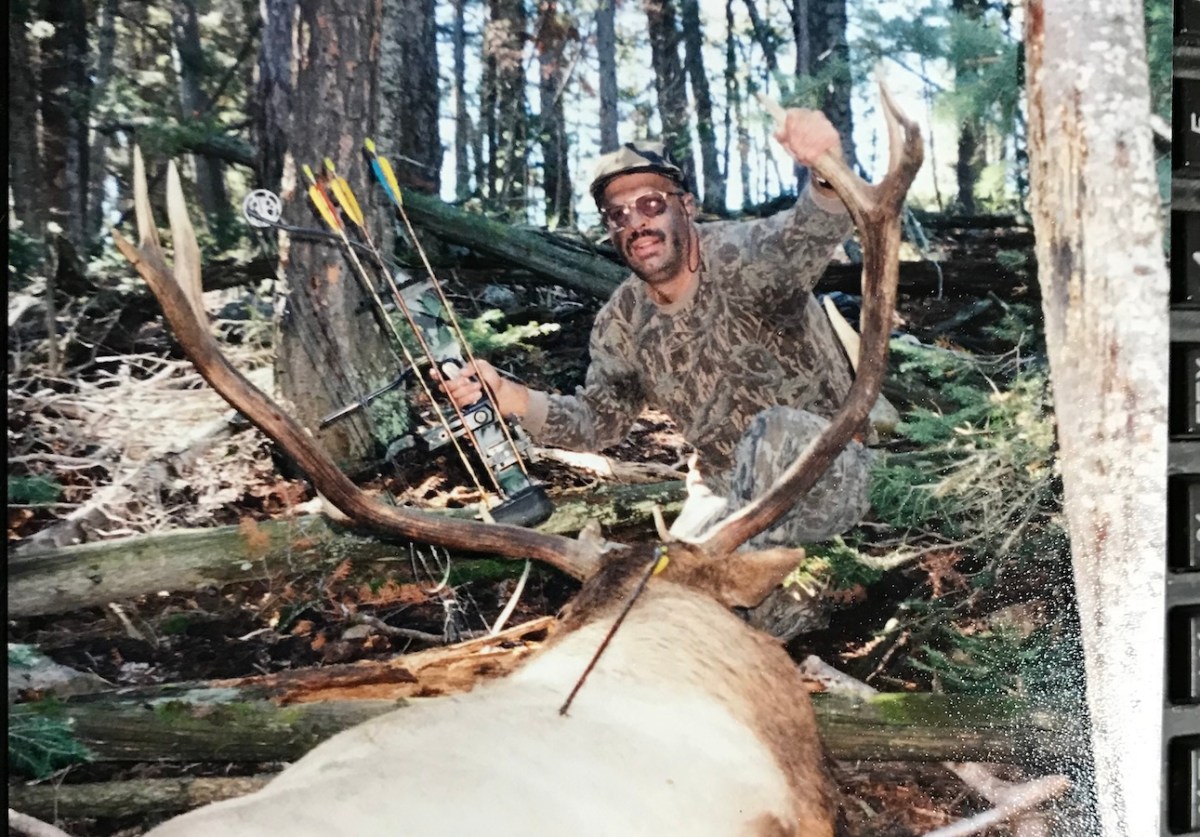
His name was William Francis “Bill” Kearney IV, an outdoorsman who grew up in Pearl River, New York, a hamlet about 20 miles north of Manhattan, and moved West to work on environmental issues for state government and industry.
Kearney died in 2018 at the age of 62. His obituary in the Douglas Budget recalled his love of the outdoors, including “hiking up a mountain in search of the biggest bull elk.
“He was well-known,” the brief obituary said, “for his corner-jumping incident.”
Corner crossing, or corner jumping as the Budget called it, is the act of stepping from one piece of public land to another where they intersect with two pieces of private property, all arranged in a checkerboard pattern. Corner crossers do not set foot on private land, but they necessarily pass through the airspace above it.
On Sept. 3, 2003, a Wyoming Game and Fish warden cited Kearney for hunting on private land without permission. On March 25, 2004, Albany County Circuit Judge Robert Castor, after a bench trial, found him not guilty.
That decision opened a door, though it would be decades before others passed through.
“He was kind of proud of that,” Kearney’s buddy Dennis Brown said. “He thought, ‘Well, I beat the system. I proved that they’ve been prosecuting this wrong all along.’”
He studied maps
Kearney studied watershed and wildlife science at Utah State University and began working for the Wyoming Department of Environmental Quality in Cheyenne in the early 1980s. He made hunting friends and went with them to the Wind River Mountains, where his wildlife knowledge and outdoor skills shone.
“He was a really outstanding hunter,” Brown said, “because he studied the land and he tried to educate himself. He had enough background in wildlife biology and his work that he understood habitat.”
Kearney would noodle over maps and strategize.
“He would come back to camp and get the topos out and look and say, ‘Boy, that looks really good, right there. I’m going there tomorrow. I think there’s going to be elk in there.’ And quite frequently, he was right.”
Kearney was lucky, as well, Brown said, but “he created his own luck through his knowledge.”
Kearney shifted his focus around 1990 from the Wind River Mountains and rifle hunting to bow hunting and the Laramie Peak area, part of the Laramie Range that stretches for about 100 miles from Casper toward Cheyenne. Much of the land is part of the Medicine Bow National Forest, but there’s private land around the range as well.
Kearney lucked out in the annual elk hunting license lotteries, Brown said, and then went to work.
“If you’d ever seen some of the bull elk that he killed by bow and arrow up there in that Laramie Peak period, it was unbelievable,” Brown said. “He knew where to find big, massive elk. He probably killed eight or 10 of the biggest bulls you could ever imagine.”
Access to one of Kearney’s honey holes was tricky — a labyrinth of public and private lands. The hunter had a GPS device, however, and was able to locate a surveyor’s monument marking the common corner of public and private checkerboard property.
Fateful trip
On the fateful trip when he was ticketed for trespassing, Kearney corner crossed to hunt on public land and also to visit the nearby camp of another hunting friend, Brian Woodward. One day, Kearney crossed a public/private corner to visit Woodward’s camp only to discover his friend had left to buy supplies in town.
So Kearney sacked out on a camp cot only to be awakened by the rumbling sound of approaching ATVs. It was the posse from a nearby ranch and a Game and Fish warden “trying to bust us,” Woodward said.
The two groups of hunters were camped on public land and were hunting on public land, but were corner crossing to reach it. Ranch owners and the Game and Fish Department held to the convention that corner crossing was illegal. Even though the hunters never set foot on private land, they passed through the airspace above it.
“He wasn’t going to pay that $250, or whatever it was, trespass [ticket].”
Dennis Brown
Common law and some statutes held that a landowner owns not only the surface property but also everything from the center of the earth to the heavens. Under that convention, breaking the imaginary plane extending up from a private property boundary would be trespassing.
Accusations and explanations at the camp followed and Kearney led the ATV enforcement group back along his path across the corner, Woodward said. More discussion ensued, but the warden was unconvinced by Kearney’s explanations.
Court records show that warden Carol Havlik cited Kearney for hunting on private land without permission on Oct. 24, 2003, alleging he broke the law on Sept. 3 of that year.
Kearney met that ticket with tenacity.
“I’ll see you in court, I’m not paying this,” Brown recalled Kearney saying about the trespass ticket. “He wasn’t going to pay that $250, or whatever it was.”
Not guilty
Kearney pleaded not guilty to the single count alleging he violated state statute 23-3-305 b, which states “No person shall enter upon the private property of any person to hunt, fish or trap without the permission of the owner or person in charge of the property.” The statute is among those empowering Game and Fish wardens and is distinct from simple criminal trespass laws.
Kearney lawyered up and the National Wildlife Federation filed a brief supporting him. On Jan. 16, 2004, Judge Robert Castor presided over a bench trial.
On March 25, 2004, Castor handed down his not-guilty verdict. That sent wardens, Game and Fish brass and the state attorney general scurrying. What was the implication of Castor’s decision?
Attorney General Pat Crank weighed in with an opinion on June 8, 2004. Game and Fish Director Terry Cleveland wrote a memo based on the opinion stating that “to be convicted of the Title 23 statute, a person must hunt or intend to hunt on private property without permission. Simply crossing the corner of private property to reach public lands does not fulfill this requirement.”
That meant that Game and Fish wardens couldn’t cite a person for corner crossing. If a trespassing charge were to be brought, it would have to be by a sheriff or a deputy.
“‘Corner crossing’ may still be a criminal trespass,” Cleveland wrote. “Unfortunately, that leaves the Game and Fish in the position of referring reports of ‘corner crossing’ to the local sheriff’s or county attorney’s office.”
Attorney General Crank’s opinion gave the Wyoming chapter of Backcountry Hunters and Anglers the notion and gumption to support a new, valid corner-crossing case if one were to arise, said Buzz Hettick, co-chair of the group’s Wyoming chapter. That happened when the Missouri hunters corner crossed on Carbon County’s Elk Mountain in 2020 and 2021.
The Carbon County sheriff cited them for criminal trespass, a misdemeanor.
Backcountry Hunters and Anglers carefully considered the case, Hettick said, before deciding to back the hunters. They went to trial in front of a six-person jury in Rawlins four years ago. The jury didn’t take long — less time than it takes for a hungry man to eat a taco salad from Rose’s Lariat restaurant — to find the four not guilty.
The owner of the Elk Mountain Ranch, who spurred the Carbon County prosecutor to charge the hunters, filed a separate civil suit. He sought a ruling that would forever bar the men and anybody else from corner crossing to reach public land enmeshed in his ranch.
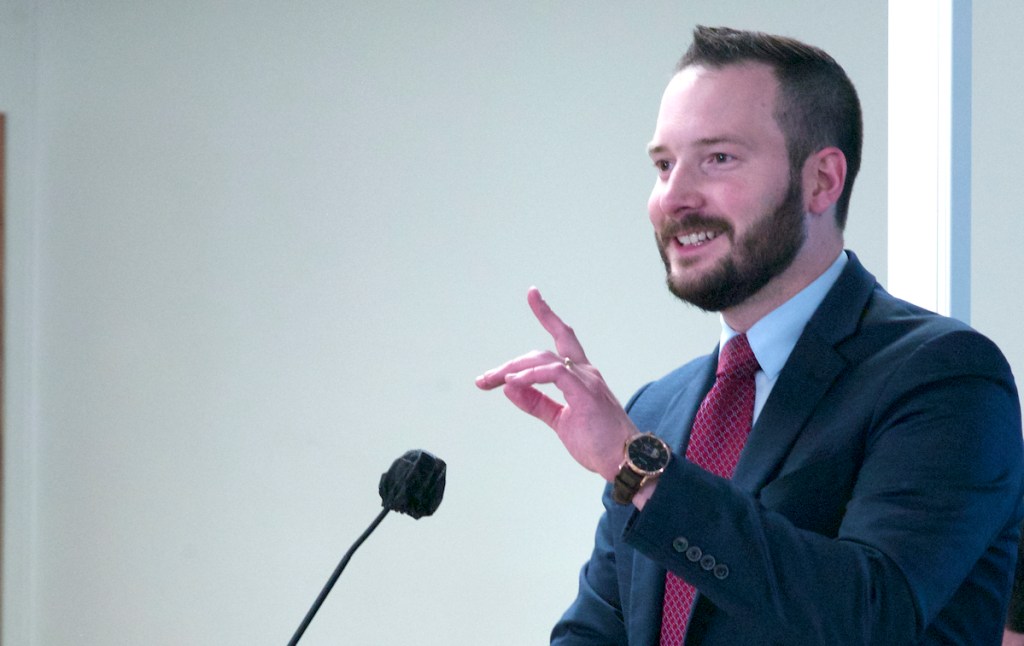
Ranch owner Fred Eshelman pursued his case through federal district court in Wyoming, where he lost, and then through the 10th Circuit Court of Appeals in Denver. Casper attorney Ryan Semerad, with the backing of Backcountry Hunters and Anglers, represented the Missouri Four and hinged their defense on the 1885 Unlawful Enclosures Act.
Congress passed that act to ensure that the public, including stock owners, could reach and use public land in the landscape of checkerboard ownership created by railroad grants. The Unlawful Enclosures Act states that private landowners cannot block access to federal public property.
The Wyoming District Court agreed that the law applied to the checkerboard area 20 miles on either side of the Union Pacific Railroad line across the southern part of the state. The 10th Circuit Court of Appeals upheld that decision, meaning the ruling applied to Wyoming, Colorado, Utah, New Mexico, Oklahoma and Kansas.
Eshelman appealed to the U.S. Supreme Court, which declined to hear the case. The corner-crossing decision reaffirmed public access to 2.4 million acres of public land in Wyoming, plus public land in the other five states.
Evolution of a hunter
Throughout his hunting career, Kearney evolved, Brown said. Early on, “he was actually very competitive,” looking for a big elk, catching many fish.
Once he took up a bow, he never killed an elk with a rifle again, Brown said.
Kearney’s luck ran out after the corner crossing case. He stopped drawing elk licenses in the lottery for Laramie Peak. But there was more.
“We go through those phases in our life where a hunt’s not a success unless you harvest or catch a limit of fish and so on,” Brown said. “And then you start reaching a point where it’s not as important, you know — you’ve done a lot of killing.
“So that probably is why he quit pursuing the Laramie Peak area.”

Bill Kearney was a man who wanted to do things the right way, his daughter Katie Kearney Burns said.
“He wasn’t afraid to let people know when something wasn’t right or safe or okay,” she said. “And he was willing to fight for that.”
“I wish so much that he was alive to have seen the Missouri case.”
Among the last entries in the Kearney court record from 2004 was an order from Judge Castor. He ordered the state to refund Kearney’s $210 cash bond.

It’s shameful how WYGF kowtows to ranchers. Have you ever heard of a rancher being cited for harassment? They can even steal your elk head, and WYGF will do absolutely nothing.
Excellent article Mr. Thuermer! Clear, concise and informative regarding the corner crossing case and a lovely tribute to Bill Kearney for his part in a momentous movement. Cheers to “Fab Four” as I’ve begun to call them, for taking on the rich and powerful !!
Why isn’t it Montana in on the corner crossing.? Same issue public land ??
This is what happens when the American public speaks up.
Great write up. Thank you!
Wonderful article. Thank you. I wish I had met Mr. Kearney while afield in the Laramie Range. Although most of my hunting was solo, our “homework” approach to the sport was similar. I never corner crossed to access public lands, but looking at 7.5′ USGS quadrangle maps over the years, the thought often crossed my mind. Mr. Kearney was a pioneer and clearly a smart critical thinker. We need more like him.
Good article I didn’t know about this gentleman with the corner crossing Trial in 2004. The unlawful enclosure act states that private land owners cannot block access to federal public property. This is a law from the 1800s I am positive. They did not mean you had to step exactly from one piece public land to another in them days People did not have GPS. It only makes common sense that the Wyoming legislature should allow the public to access the property as the law requires. Meaning handicap folks as well or if you want to hunt there you should be able to drive your truck with your camping gear and camp there. I have heard one politician running for Senate Mr. Harshman state that you will not be able to drive your four wheeler to public land I say don’t vote for him. That’s his attitude. We don’t need him.We should vote for people who are for public access to public lands real access not this tippy toe stuff.
Mr Stone, you nor anyone else have the right to “motor” across private property in order to pursue your “public” interests. If you can figure out a way to access public land without infringing on private property rights, then I say fine, do so. Otherwise, maybe “tippy toeing” is the best access you can expect.
Very interesting article.
It’s good to hear the not guilty on this case as far as breaking air space in nothing but a crock.we went through something similar in a fishing trusspass ticket we received years back kind of close to the same area was in the Laramie peak area there was 4of us and we were giving 750tickets to witch we went to court in Laramie Wyoming and we were found not guilty because we traveled in a boat and never got out only to the game warden demanding us to so he could write us all a ticket the laws read nobody owns the water but do own the land below so taken a boat on the water even if you’re on private land as long as you never get out of the boat is legal but if you get out of the boat even in the water is not legal and you are trusspassing be you are touching the land below and breaking air space is no different nobody owns the air.all that was about some rich man from some other state came here and bought that property from the original owner and thinks he can land lock all the public land above him elk mountain has been a on going case for a lot of years and the original owner was forced by the state of Wyoming to leave gates unlocked that crossed his property to the public land that sit above him. But with guidelines that stated that all gates that are gone through needs to be closed back after a person goes through and while on the private property no person shall travel anywhere but on the road and respect the owner rights on the land on either side of the road and this happened a few times in court because the started locking up the gates due to people not closing the gate they went through and the. Man’s cattle were getting out and people were making new roads off the road they were told not to ever get off and also throwing garbage out on the Man’s land so it all went back into the courts to witch Wyoming made him reopen again and that happened a few times. But there are some people that don’t really care and kept doing the same shit time and time again to were Wyoming was not going to force the to keep gates unlocked no more. All that due to a few that couldn’t obay the rules that was easily stated on the first gate that told you so and eventually came to a permanent closer of the road. So it’s good to hear the courts finding the men not guilty on the trusspassing when by law they never broke it because they never touched any of the private property and like I said nobody owns the air and goes to show you money can’t buy everything to were the owner thought because he was so rich that the courts would go his way with no problem like the game and fish did. So a lot of good came out of it. And it’s sad to say but a lot of ranches and big ranches are being sold here in Wyoming due to its a new generation that’s going on and the old are dieing off and the kids from the owner are seeing big dollar signs and know selling is setting them up for life without having to do all the work that ranches have to do to keep them operating. So some chose to sell knowing the money they get for selling is more than enough to see them through the rest of there life’s.
Game and Fish sure do love their ranchers and despise the ordinary citizens.
2003 = 2026
So…even years ago, the Game and Fish was “posse’ing” up with the big landowners as if one of their hired hands?! Still happening today
Good article. I didn’t know about this fellow. Next is access to all reservoirs that were built with public money and access to the high water mark on our rivers and streams.
It’s time for the public to be able to enjoy the natural resources that WE pay for.
Thank you, Angus. It is easy to forget that injustice can have a history.