


After nearly eight years helming the country’s first national park through a global pandemic, historic floods and spiking visitation, Yellowstone National Park Superintendent Cam Sholly is leaving the federal workforce.
Sholly will join the National Fish and Wildlife Foundation, the country’s largest conservation foundation, where he will serve as chief operating officer. He called his job as leader of Yellowstone “the greatest professional honor of my life.”
“I’ve been here almost eight years, so it’s been a good run,” Sholly told WyoFile on Friday. “I think that the park’s in a really good position right now. The team’s doing fantastic. I would have stayed longer, but this was a great opportunity to get out of government. I’m looking forward to it. I’m very excited.”
The move will conclude nearly three decades of federal service for Sholly, who was known for his candid accessibility until 2025, when federal workforce policy implemented by the Trump administration created new communication hurdles at the National Park Service. Those changes also resulted in major staffing cuts and other disruptions within the federal agency, though Yellowstone’s workforce has largely been spared.
“We had more staff last year than the year before,” Sholly said. “I’ve really gotten really good support.”
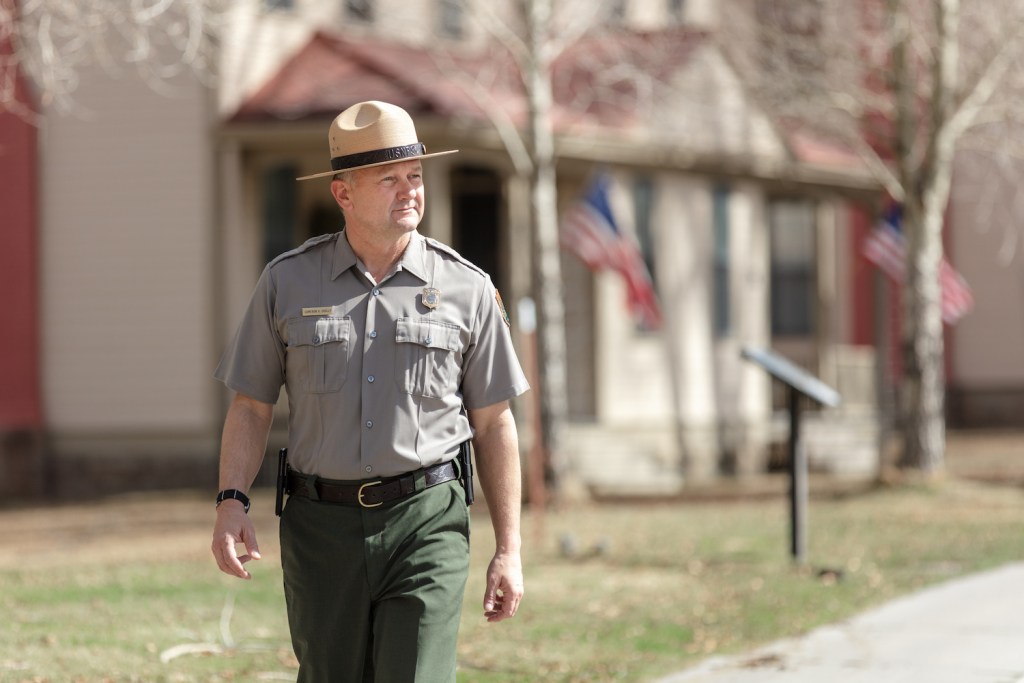
Sholly is the son of a Yellowstone ranger and graduate of Montana’s Gardiner High School. He will be remembered as one of the most impactful leaders in Yellowstone’s history, said Brian Yablonski, CEO of the Property and Environment Research Center. Not only did Sholly accomplish goals he set out to like strengthening infrastructure, addressing worker housing and protecting the park’s wildlife and ecosystems, Yablonski said, Sholly “did it while steering the park through a gauntlet of crises.
“Every so often, a superintendent comes along who doesn’t just run the park well — he redefines what running it well even means,” Yablonski said in a statement. “Cam Sholly has been that ‘once in a generation’ leader.”
Under Sholly’s leadership, Yellowstone completed “a billion dollars worth of conservation and infrastructure projects.” And there’s more investments coming soon, he said.
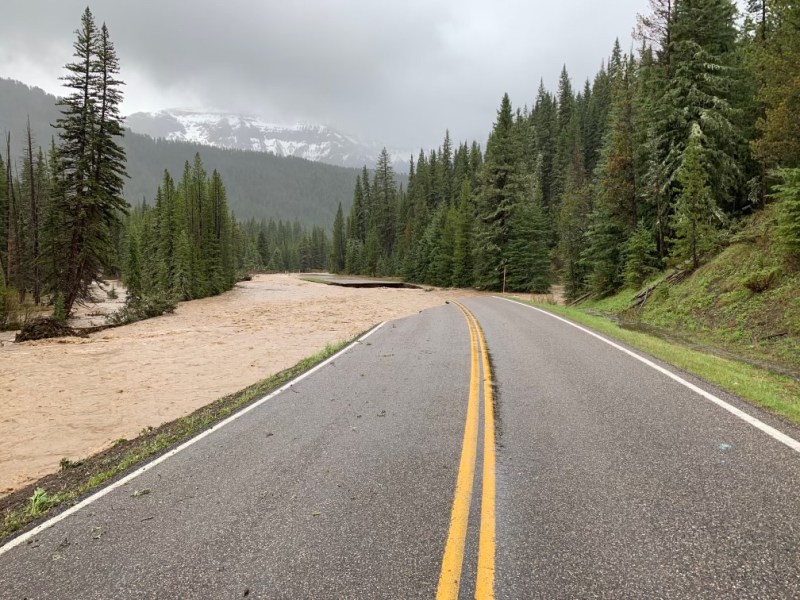
“The good news is we got $700-plus million in the queue for the next five years to do a lot more work,” he said. “We’re going to rebuild this new road, after the flood, to Gardiner, and there’s a lot of long-term flood recovery stuff we’re doing.”
Floods and crowds and bears, oh my
Sholly began his National Park Service career in Yellowstone, where he was hired as a seasonal employee in 1990. Working his way up in rank, he served as the agency’s associate director for visitor and resource protection, superintendent of Natchez Trace Parkway, chief of ranger operations at Yosemite National Park and in several National Park Service headquarters leadership positions. He also directed the agency’s Midwest Region, overseeing 61 national parks in 13 states.
He took the job as Yellowstone’s superintendent in 2018, succeeding Dan Wenk, who retired instead of being involuntarily reassigned during the first Trump administration. Sholly oversaw the vast and complex 2.2-million-acre park during an era marked by the global COVID-19 pandemic, record visitation and President Donald Trump’s DOGE disruptions.
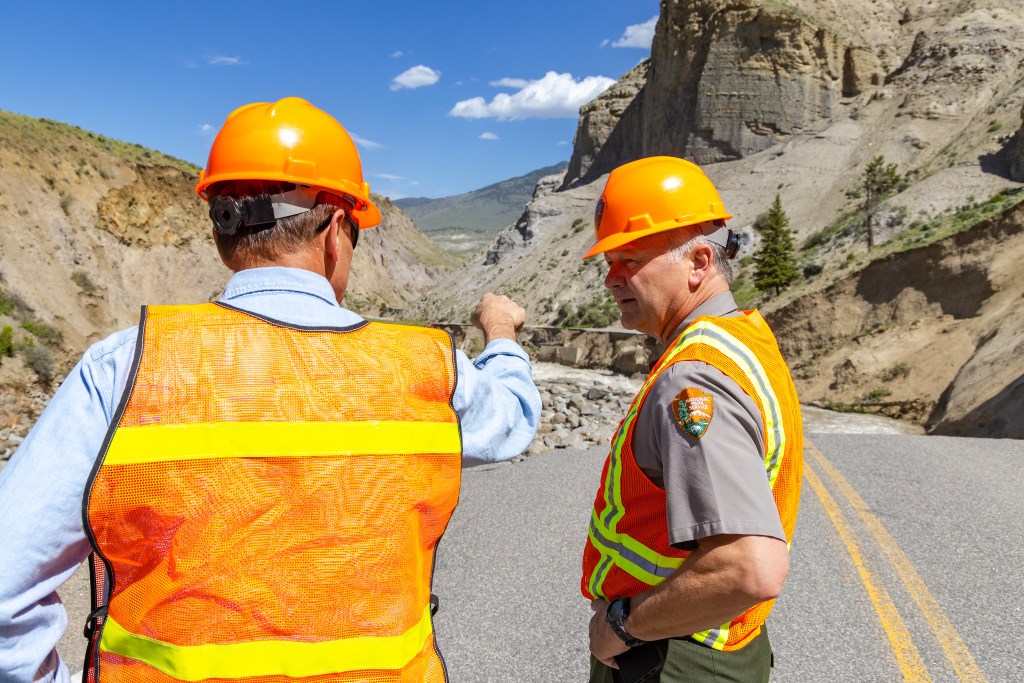
His tenure at Yellowstone also coincided with historic flooding that devastated sections of the park, a mass shooting attempt by an employee at Canyon Village, a geyser explosion in Biscuit Basin and other emergencies, along with more typical mishaps involving bears, bison and tourists.
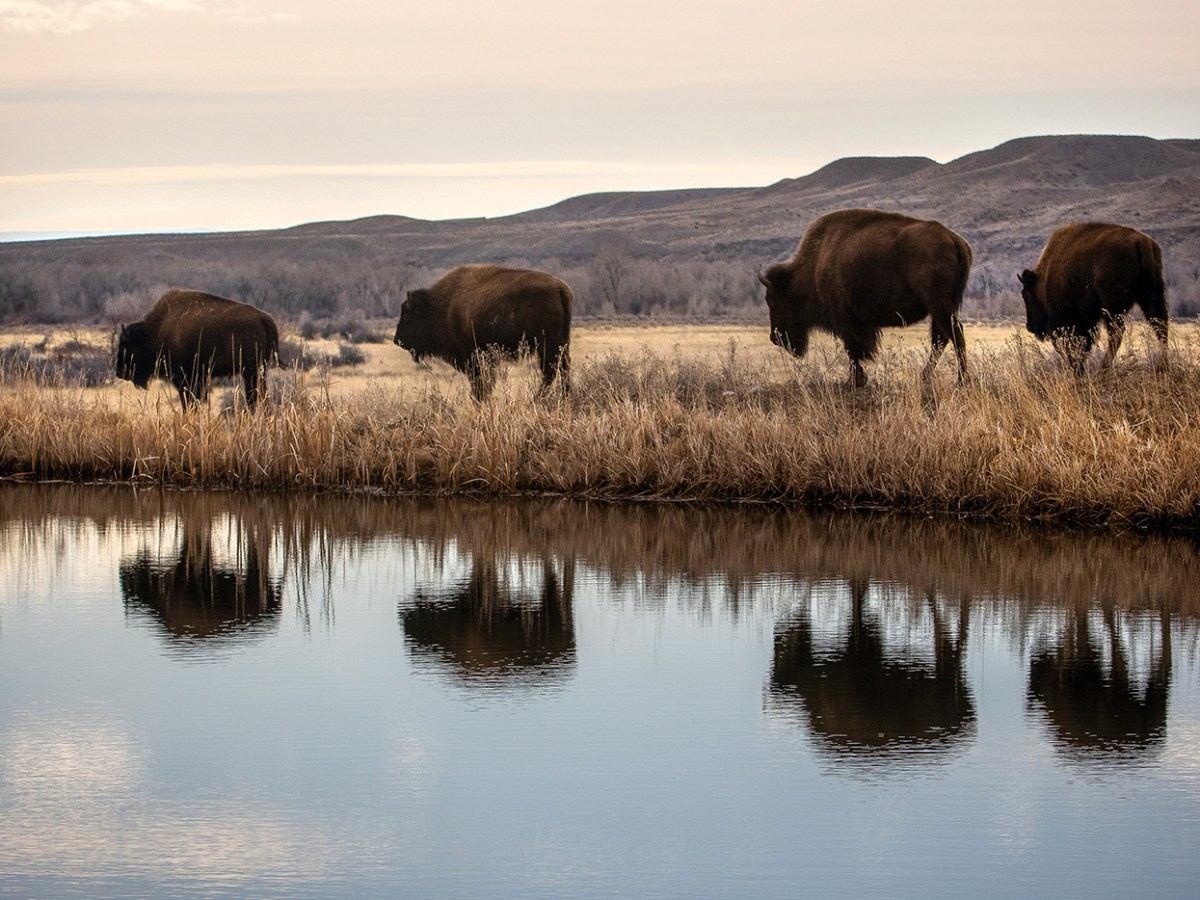
Under his leadership, Yellowstone expanded bison transfers to tribal nations and launched one of the largest public-private employee housing initiatives in National Park Service history.
“Cam is an exceptional leader who delivered extraordinary results for Yellowstone National Park and the American people,” Secretary of the Interior Doug Burgum said in a press release. “His dedicated leadership leaves Yellowstone stronger, safer and better prepared for the future.”
Greater Yellowstone Coalition Executive Director Scott Christensen also showered Sholly with praise as news of his departure broke.
“He has been an excellent steward of Yellowstone, advancing important conservation efforts ranging from bison to native trout,” Christensen said in a statement. “He has also been a consistent advocate for coordinating conservation efforts across the Greater Yellowstone Ecosystem. Cam’s leadership will be missed, but he should be proud of his many accomplishments during his time as superintendent.”
The National Park Service has begun the process of selecting Yellowstone’s next permanent superintendent. Yellowstone’s interim superintendent is yet to be announced.


Thank you for your reporting.