

The American climbers sent the bad news the fastest way they could. In this instance 62 years ago today, it was “carried by runner.”
From Everest’s basecamp, where the mountaineers were preparing to climb the world’s highest peak, a Nepali courier set off at a trot. He carried a message as he wended his way across the fractured detritus below the Khumbu Glacier. His calloused feet padded down the shadowed valley where gravity and time wear the mountain’s granite, gneiss and limestone.
He ran down trails worn smooth by a million soles, following the Lobuche Kosi and Imja Kosi rivers that mill boulders into flour. He jogged by mani stones, past rope bridges, loped by the storied Sherpa villages of Lobuche, Pheriche and Dingboche.
In about 15 miles, the messenger climbed out of the shadows to the hillside hamlet of Tengboche, a holy crossroads between Nepal’s capital Kathmandu and Qomolangma, Sagarmatha — Everest. As the courier arrived, Jackson Hole alpinist David Dornan was inhaling the clear Himalayan air, perhaps scented by a Sherpa’s yak-dung fire or incense drifting from the Tengboche Monastery.
Dornan was on an expedition to the Sherpa homeland, an expedition separate from the American climbers’. He was building a school and waterworks with Sir Edmund Hillary who, with Tenzing Norgay, had been the first to climb Everest 10 years earlier in 1953.
But seven of the 19 Americans who were just up-valley from Tengboche had worked professionally in Wyoming’s Teton Range. That was Jackson Hole native Dornan’s back yard, and Dornan knew and had worked with a bunch of them.
“I instinctively knew that it was Jake.”
David Dornan
The messenger arrived apace at Tengboche, an ethereal world ornamented with Tibetan totems, a world almost touching the heavens. Here temple lions with the eyes of God guard the monastery entrance. A golden spire juts from a bedazzling white stupa. Dozens of prayer flags flutter in the breeze. Inside the lamasery, saffron-robed monks and devotees spin prayer wheels that hold scrolls of Tibetan-script mantras.
In this rare aura, Dornan scanned the top of the world.
“It was a clear, beautiful day, and I was just totally absorbed looking at the mountains and being where I was,” Dornan said. Then came the runner’s dispatch.
“An American had been killed.”
Which American?
But which American?
There were 19. Seven of them had climbed professionally in the Tetons, as had Dornan, a mountain guide with the Exum guide service.
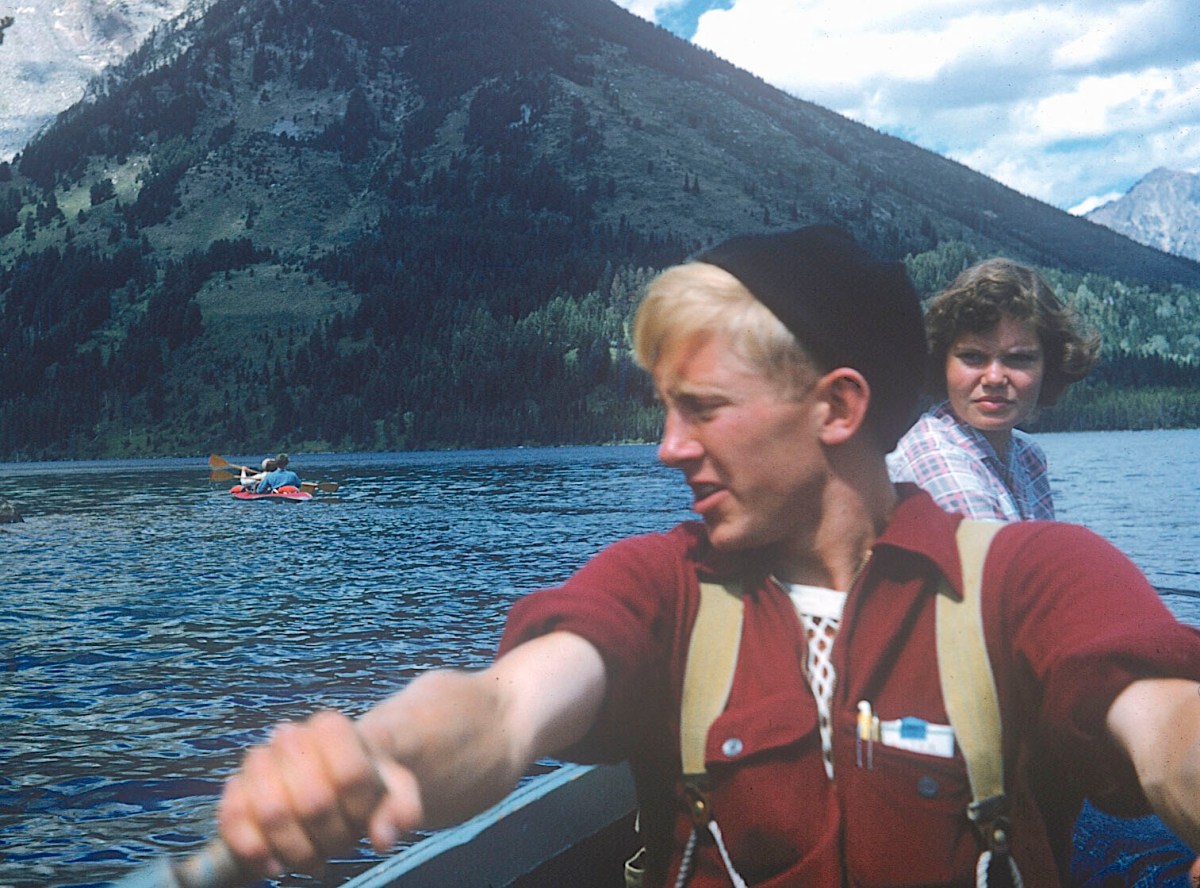
Was it a Teton veteran? Was it Barry Corbet, the handsome Dartmouth dropout and skier; Willi Unsoeld, the gregarious Peace Corps volunteer who would sprout a national forest of a beard, or Jake Breitenbach, the tow-headed mountaineer who wore his alpine beanie at a rakish angle?
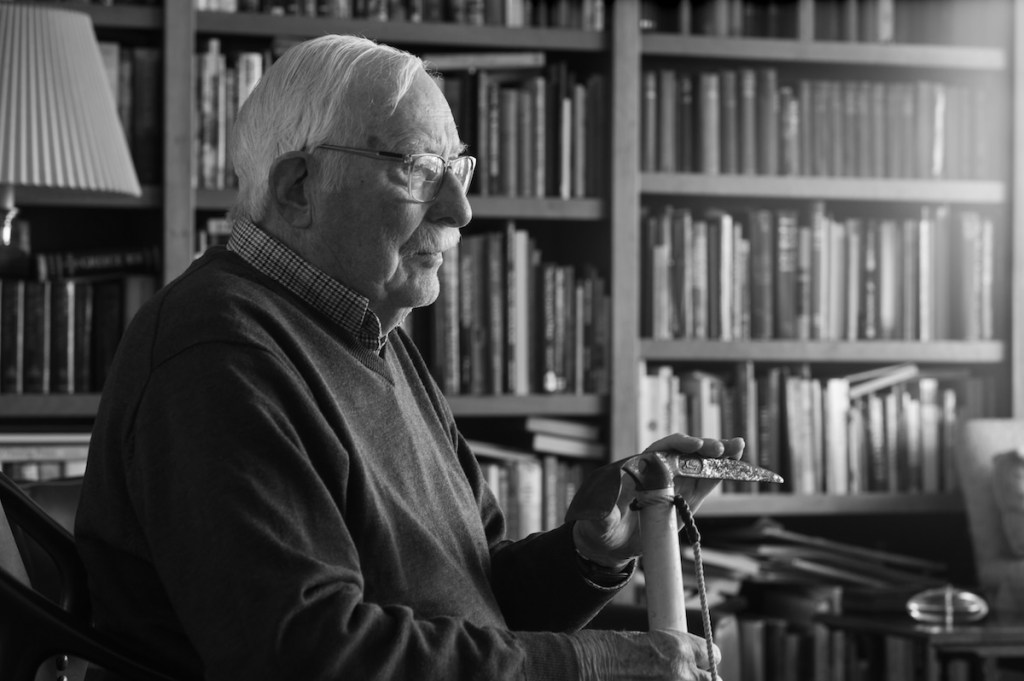
Could it be Dick Pownall, or David Dingman, two more of Dornan’s fellow Exum guides from the Tetons? It could be Richard Emerson, Grand Teton National Park’s chief climbing ranger. Or possibly Tom Hornbein, a Colorado climber, ranger and anesthesiologist who worked with search-and-rescue teams at Grand Teton one summer and had designed the expedition’s oxygen masks.
“I had a rare intuition,” Dornan said. “Jake did have some history of bad luck; he was never able to summit Mount Owen, for example. Once guiding the Grand Teton, he was hit by lightning, “actually knocked out,” Dornan said. “There were other stories where the mountain turned against him.”
“I instinctively knew,” Dornan said, “that it was Jake.”
John Edgar Breitenbach was only 27 when a tower of ice collapsed and entombed his body among the crevasses of the Khumbu Glacier on the first climbing day of the American’s 1963 expedition to Everest. Born in Aberdeen, Washington, in 1935, he graduated from Oregon State College, as it was then known, majoring in mathematics.
Heaven in Jackson Hole
He moved to the climbing crucible of Jackson Hole in the mid 1950s and guided clients up the 13,775-foot high Grand Teton in the summer. There, he met and married Mary Louise McGraw, a transplant from the East Coast. She was Lou to those who knew her, Mary Louise McGraw Breitenbach, M.Ed., of Harvard, to the rest of the world.
“He was blonde and beautiful and adventuresome, and so [Lou] loved all those things about him,” said Joseph Piccoli, Lou Breitenbach’s second husband.
In the Jackson Hole winter, Breitenbach was one of a corps of young skiers and alpinists establishing a ski hub at the base of Snow King Mountain that they hoped would sustain a year-round life in the mountains. Corbet had built the A-frame Alphorn Lodge at the base of the “Town Hill” and ran it with his wife Muffy Moore. Lou Breitenbach ran a restaurant, the White Cupboard, next door. Jake Breitenbach bought and operated a ski shop nearby. “We were all pretty young and trying to find our way,” Moore said.
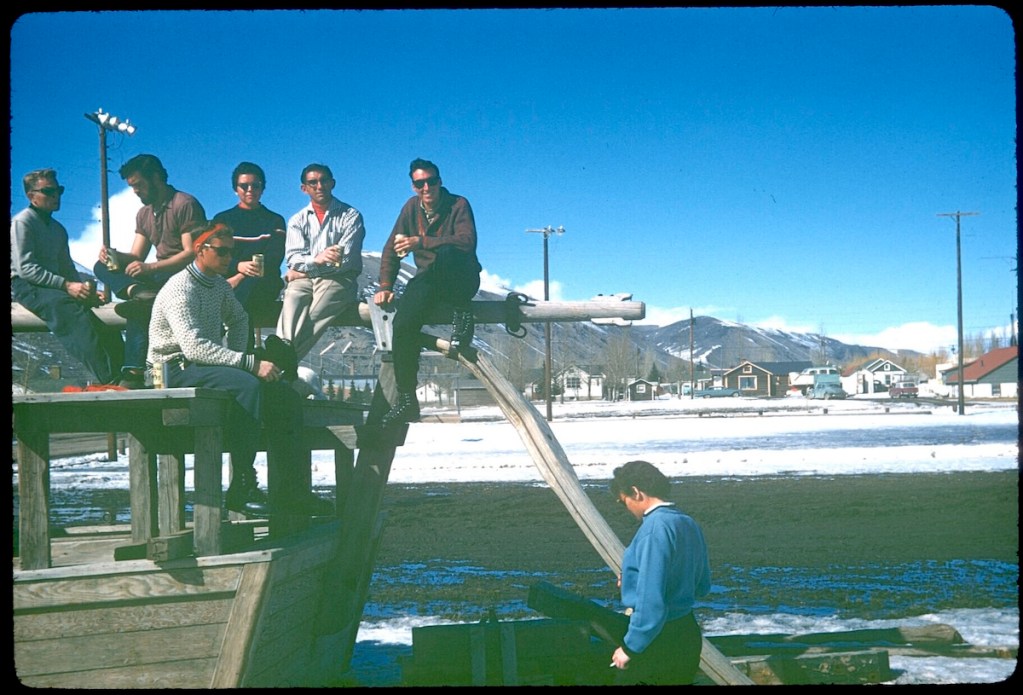
In a cowboy town, the alpinists with their sun glasses and ski sweaters stood out. “I was impressed with these guys,” said Rod Newcomb, who arrived in Jackson Hole around that time and eventually became a guide and co-owner of the Exum guide service. One of Breitenbach’s gang would walk around town in an overstuffed expedition jacket from a groundbreaking climb of Denali, Newcomb said, “and everybody knew who he was.”
Breitenbach himself “was humorous and inventive and had a gaiety of spirit,” said Corbet’s wife Moore. “He was just a delightful person to be around,” even as he fended off depression, something he did best by climbing a mountain.
The Jackson Hole cadre skied where nobody had skied, camped in the snow on extended alpine traverses and probed the corners of the Teton range in summer. “What a gift that was,” Moore said, “having your own personal paradise to spend the winter months in. “Jackson in those years really was just heaven. Young as we were, we even recognized that at the time.
“And then Everest came along,” she said, “and kind of ended it all.”
What Jake wanted
The American mountaineers regrouped on the Khumbu Glacier after Breitenbach died on March 23, 1963.
“These things happen instantaneously,” Corbet said in a taped message he made at the 18,000-foot base camp 10 days after Breitenbach’s death. “And while we were all stunned for a couple of days, we’ve all come back, and we’re doing battle with the mountain again.”
The team would forge on, “just as Jake would have wanted us to,” Corbet said.
Forge on they did, as plotted by expedition leader Norman Dyhrenfurth, a Swiss-American mountaineer who had assembled the team and its bankroll. Dyhrenfurth secured key National Geographic backing only after traveling to Jackson Hole to hand pick team members from the Tetons. At the time, the range was one of a handful of American climbing centers, a town with a mountaineering colony.
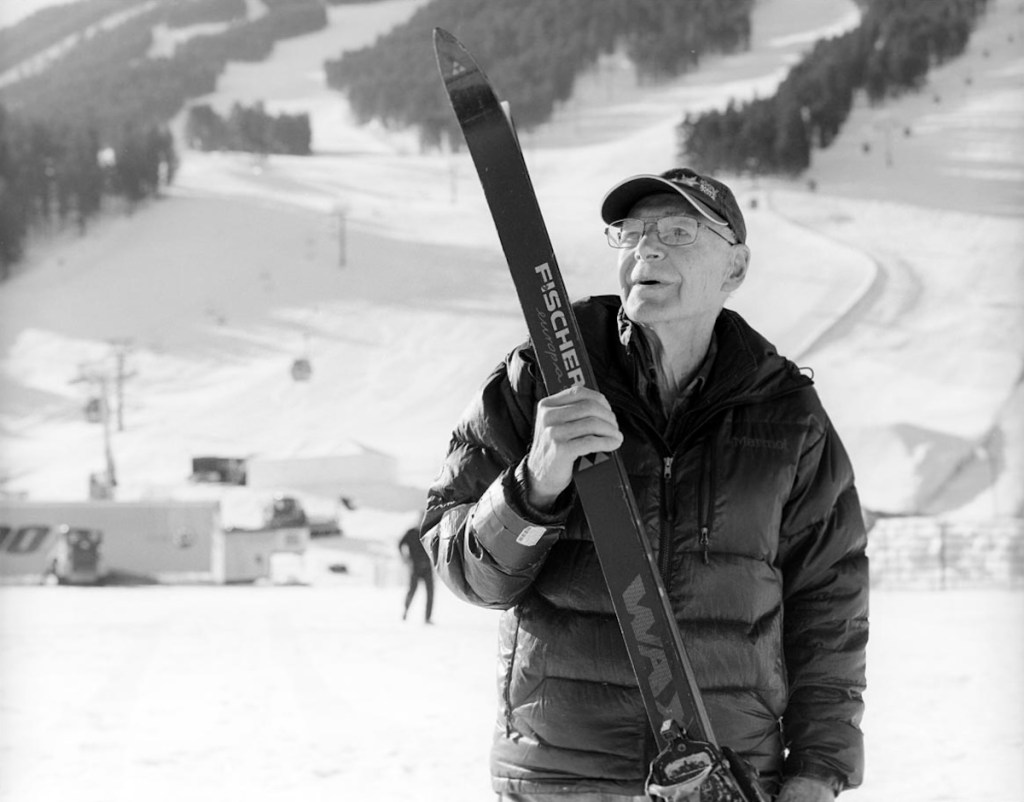
“There was a harmonic convergence between a Swiss-American climber [Dyhrenfurth], this sweet spot of climbing here [in the Tetons] and the possibility that America could actually head off to Everest,” said Brot Coburn, a Wilson resident, Nepal historian and author of “The Vast Unknown: America’s First Ascent of Everest.”
The peak had only been climbed once, perhaps twice before (a Chinese ascent was contested). Dyhrenfurth was bent on putting an American on top, whatever logistics it took.
“So Norman came to the Tetons and he saw the right stuff — Willi Unsoeld, Dick Pownall, Barry Corbet and Jake Breitenbach,” Coburn said, ticking off some of the Teton climbers who would join the team.
“These were scrappy, energetic, innovative climbers. They were more than ready and willing to take on challenges.”
Dyhrenfurth, however, knew where the butter was on his sliced American bread. Above all, he needed a photograph of an American on the top of the world, perhaps hoisting an ice axe with a flag, maybe even a National Geographic banner. That image was best secured by following Hillary and Tenzing’s 1953 line up Everest’s South Col route.
Although that route has little rock climbing, there’s a corniced ridge near the top and a stinger in the tail — the near vertical Hillary Step a snowball’s throw below the summit. Plus, it’s bitterly cold, there’s scant air to breathe and what oxygen is available rips past in the jet stream.
Towering Jim Whittaker, a Seattle volcano climber, was among the Dyhrenfurth contingent and with Sherpa Nawang Gombu became the leader’s choice for the first summit team. Despite the distinction an Everest ascent held, Teton climbers were decidedly unexcited about following Hillary and Norgay’s 10-year-old footsteps.
Beatnicks on belay
Here’s maybe why.
“The young Teton climbers were, perhaps as a function of their youth, their adventuresomeness and their audacity, also intrigued by some of the cultural changes that were just beginning to happen at that time,” Coburn said. “During that period, beatnik sensibilities and creativity was leading into anti-establishment types of thinking, and definitely, these Teton climbers had that.
“They knew that they were different from the rest of straight 1950s American culture,” Coburn said. “They knew they were outliers, almost outlaws in a way, and so they differed from the approach of the National Geographic and the volcanos climbers, rather fundamentally.”

The Teton group also had “mixed mountaineering” skills, Coburn said. They took on, professionally, steep rock bands and serrated ridges, snow gullies walled by granite faces, glaciers and their deadly crevasses. They handled rucksacks of gear — ropes, ice axes, carabiners, pitons, crampons.
Importantly, they hauled those loads to untrammeled places. “They were knocking off new routes like crazy,” Coburn said. They yearned to explore.
On the weeks-long hike into Everest’s base camp, rebellious chatter, especially among what Unsoeld called the Teton Tribe, began. As they approached Everest, one mountain feature looked strikingly familiar. Unsoeld saw the Grand Teton, Hornbein saw Colorado’s Longs Peak, albeit on a larger scale.
This rocky spine jutted above the expedition’s planned 21,350-foot-high advanced base camp. A combination of snowfields, ramps, a huge couloir and an unavoidable Yellow Band of rock — all unexplored mountain — rose 7,678 feet to the summit.
Unsoeld and Hornbein “just had this bug,” said Renny Jackson, Teton guidebook author and former Teton Park climbing ranger, “‘Let’s go check something else out.’”
“They were out for a new experience, and that’s definitely why they were up for the West Ridge,” former Exum owner Newcomb said. “It had never been climbed. It would be a first ascent.”
“We wanted to make America proud and [show we] were as good as the Europeans,” Dornan said of the expedition. “For the first time, they had to start respecting American climbers.”
The West Ridge was a plumb, albeit high on the tree. Nevermind that the climb would require trespassing into China during the heat of the Cold War. The Teton climbers were social bandits in any case. And who would be watching?
Wyoming’s outsized role
On May 1, the mismatched “big Jim and little Gombu,” made good on their Mutt-and-Jeff diversities and climbed Hillary and Tenzing’s South Col route to the 29,028-foot summit [Everest’s elevation is refined somewhat regularly]. Now the West Ridgers were able to claw supplies to their side of the mountain to support their audacious plot, an effort that had caused friction.
“They were denied the resources that they needed,” Dornan said, “not only in personnel, but supplies. It was nasty.”
They spent weeks ferrying loads to a high camp where two of them would climb the last of the West Ridge, meet a second American South Col team on the top, and descend that easier side of the mountain. It would be the first traverse of the peak.
Remarkably, the first ascent of Everest’s West Ridge would be an almost exclusive endeavor of climbers who had been Teton pros. Among those, Breitenbach was gone and Teton guide Pownall, “very beat up,” from the icefall collapse.
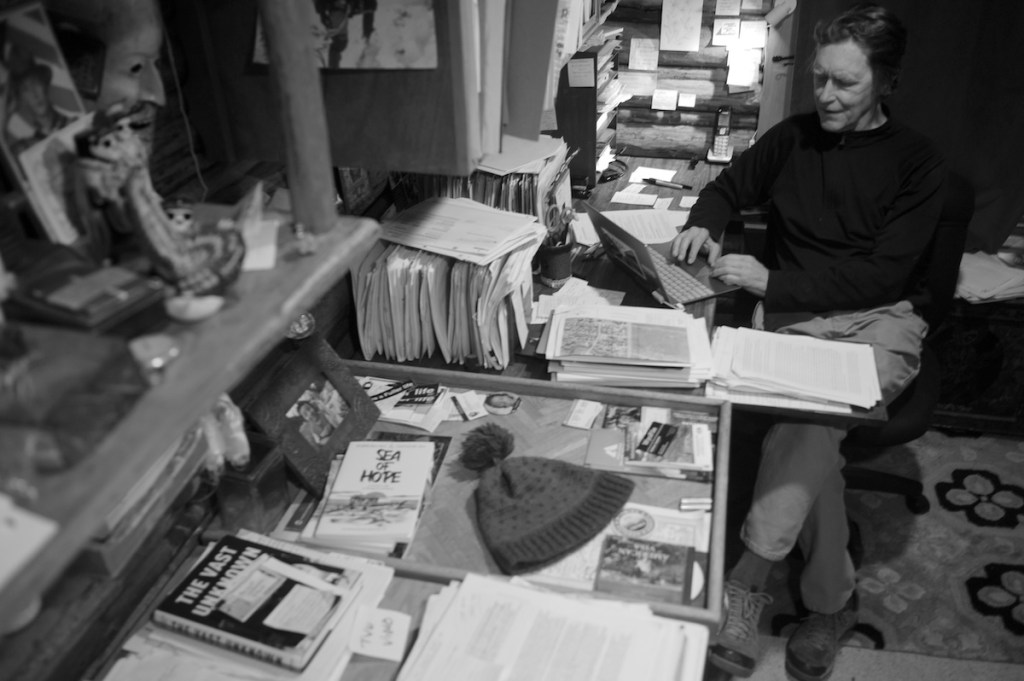
But Teton ranger Emerson hauled loads up the route. Exum guide Dingman was there, too, with Corbet, Unsoeld and Hornbein. Fifteen Sherpas lent heavy support. At Corbet’s insistence, Unsoeld and Hornbein would be the West Ridge summit team.
Corbet, perhaps the strongest of the lot, said later his hardest day in the mountains was when he humped a load up through the huge gash, later named the Hornbein Couloir, to Unsoeld and Hornbein’s high camp 5W at an elevation of 27,250 feet. The supply team left the tented summit pair to spend a night sleeping with oxygen.
On May 22, Unsoeld and Hornbein set off, abandoning their camp for a one-way journey. “The going was a wonderful pleasure,” Hornbein wrote in “Everest, The West Ridge,” “almost like a day in the Rockies.” They summited at 6:30 p.m. and found the footprints of Barry Bishop and Lute Jerstad who had been there hours before. Lower down the South Col route, the four bivouacked for the night in the black void.
The groundbreaking effort cost. National Geographic photographer Bishop lost toes to frostbite. It’s said that Unsoeld also lost nine, but that’s inaccurate. After they came off, he preserved them in a jar and would show them off to his students.
Om mani padme hum
“When someone you know dies young, they remain frozen in time in your memory,” a climber with the social-media handle “rgold,” wrote about Breitenbach on a climbing thread. “He remains forever a golden-haired boy with a smile that could light up the countryside.”
To the world, Breitenbach would always be as the camera caught him, tossing what Coburn called “a mischievous shock of Dennis the Menace blond hair,” drawing elegantly on a cigarette, dashing around a mountain town in Teton toggery behind the wheel of a new Volvo.
Those images stop on March 23, 1963, when Breitenbach’s partners cut his rope where the twisted nylon disappeared under tons of ice. It was the end of a star-crossed affair with the mountains. From that time, the Khumbu Glacier ground unsentimentally on. Seven years later, in 1970, the Khumbu disgorged Breitenbach’s remains.
“There wasn’t much to speak of,” Piccoli said. “They identified him from his clothing.”
Bishop went to Nepal and buried Breitenbach above Tengboche.
Meantime, Lou Breitenbach packed a box of memorabilia including Jake’s letters, condolence notes from around Wyoming and other things and shipped them to the American Heritage Center at the University of Wyoming. More recently, the family of Breitenbach’s friend, Frank Ewing, pulled a cache of about 500 Breitenbach slides from a closet and revived tales of the golden years.
Forty years after Breitenbach’s death, Piccoli convinced Lou Breitenbach to leave Jackson Hole and visit Tengboche. It wasn’t an easy trek. Lou, 66 at the time, battled dysentery, but soldiered on. She passed paddy and pagoda, even a trailside mystic who told her she would live to 83, to arrive at the Buddhist friary.
“She made it all the way to a puja ceremony performed by the monks at the monastery,” Piccoli said. There, she heard the drone of long Tibetan horns, the auspicious ring of Tingsha cymbals, the lamas deep-throated incantations.
“They were burning incense and setting up rice cakes and all kinds of stuff and reading from the scriptures,” Piccoli said. “It was an amazing little ceremony.”
Lou Breitenbach strived to live to her 84th birthday but died in Jackson Hole in 2020, two weeks shy of it. Just as the trailside soothsayer said. But she had managed to visit Jake’s grave, just above the monastery and look down on the site where Jake penned his last letter to her.
“Thyanboche, March 14, 1963,” he scrawled.
He described the carefree path of an adventurous young man in an exotic milieu that the world would soon wash over. A few days before, down the trail at Namche Bazaar, “it turned into quite a night for three of us who ended up eating wild goat and drinking chang in some Sherpa’s house … lots and lots of very good chang.”
Breitenbach looked toward the mountain, too.
“We’ve been divided into two groups now – one for the South Col and the other for an attempt on the West Ridge,” Breitenbach wrote. “Barry [Corbet] and I are both on the West Ridge and happy about it.
“The fact that we’re going to try the West Ridge is definite, but is still not to be public knowledge,” the letter reads. “Attempting this route reduces our chance of climbing the mountain at all and makes it most unlikely that any of us going on the West Ridge will see the summit. Nevertheless, the opportunity of trying a new route cannot be passed up.”
He closed after five pages as the Himalaya became moody.
“The afternoon clouds are coming up now,” Breitenbach wrote. “I probably won’t have another chance to write until base camp. I miss you very much – Love, Jake.”
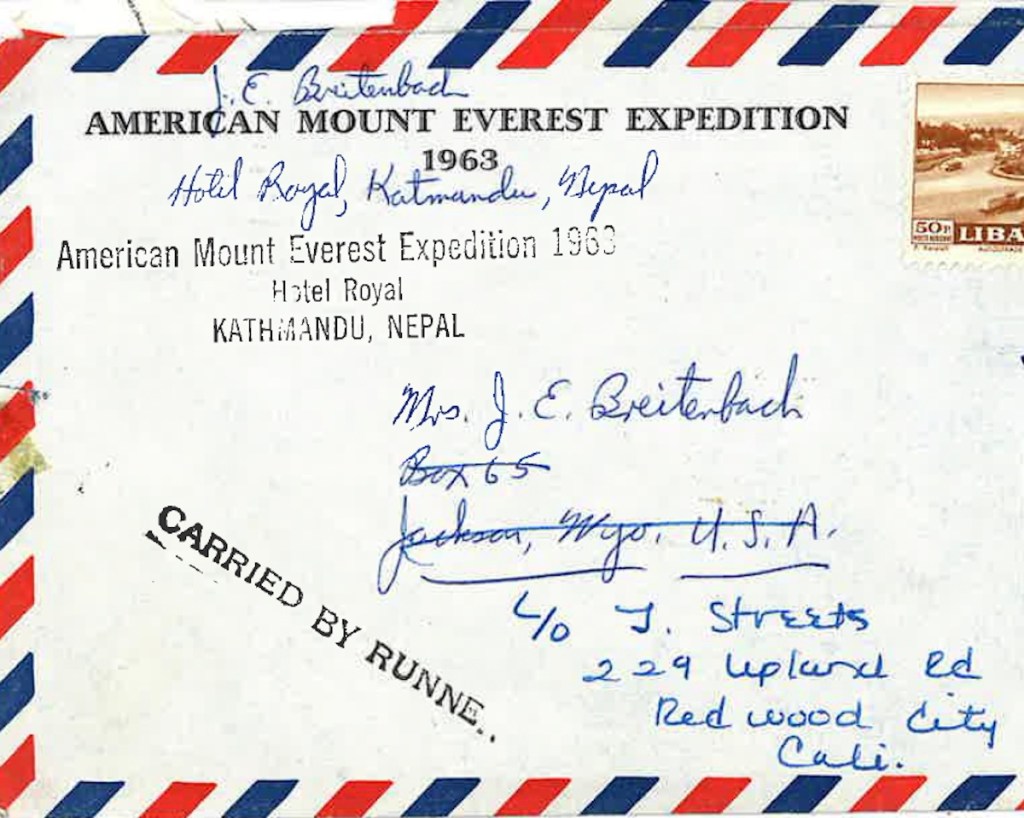
A standard 4 by 9 1/2 inch envelope, addressed to Mrs. J.E. Breitenbach and marked with red, white and blue airmail slashes around its edges carried the letter to the United States. A line drawing of Mount Everest, Lhotse and Nuptse graces the envelope’s bottom, right corner. “American Mount Everest Expedition 1963” is printed on the envelope in three places. “Hotel Royal, Kathmandu, Nepal” is the return address.
Another inscription is stamped at an angle.
“CARRIED BY RUNNER”
Sources: American Alpine Journal; Jackson Hole News&Guide; The Breitenbach Collection at the American Heritage Center, University of Wyoming; James Ramsey Ullman’s, “Americans on Everest,” and other historical material.
The caption in the photograph of the Teton alpinists and skiers has been corrected to identify John Harrington, not Neal Rafferty, next to Pete Sinclair. Also, there were no photograph of Breitenbach taken after March 23, 1963, not May 23 as originally published — Ed.

As a former teacher at Vermont Academy in Saxtons River VT, I have read somewhere that Jake Breitenbach may have been a student there in the class of 1953. Was he also in the 1957 class at Dartmouth College in Hanover, NH? Can anyone confirm?
Thank you, Greg Boardman
I grew up on Stockton St., in Palo Alto, CA next door to an old woman, Lynn Breitenbauch, who would call me over to help her out, cut wood, rake the yard, share some life tips. She was always talking to me over the fence. Aja was a total character, humorous , crotchety, slightly irritable, but she she loved kids and was always incredibly kind to me.
Over time I learned of the many family members she had lost. I came to believe she was tough as nails.
Over the years she saw I had an interest in mountaineering and shared with me her family history in climbing, notably Jake, her deceased brother-in-law who died while on 1963 American attempt of Everest.
The piece about these stories that got me was how she described Jake having repeatedly climbed a peak that she described as being in PNW (but I later discovered was Mt Owen in WY) that he consciously chose to never summit, instead coming a few feet from its high point and stating to his buddies, “maybe next time fellas!”
This sentiment, which I ingested with my then teenage brain, was what I believed climbing was all about. I took it to be about craft and gratitude, and tired to imagine myself having such a great vision of being in wilderness…later seeing that maybe the ego could take back seat.
I wish I had stayed in touch with her after I left for college. She wouldn’t know the impact that she and the stories she shared about the life and times of her family would have on me.
I wish to have the grace to appreciate the land under my feet and goodness of being in the wilderness vs dominating the earth. I hope too to have that strength to see goodness in my neighbors even if I’ve lost all of the people I’ve loved. That was Lynn’s Everest.
This is a great read with information my father or family had never discussed. As I was only about one year old when Jake was killed, I am always interested in more information . My uncle Jake and I would only meet once before going off to train for the expedition. I was lucky enough to meet my aunt Lou once before she passed, only 18 months before her passing . I regret not meeting her before but we did have some conversations with her. My name is William David Breitenbach son of William Davenport Breitenbach. Jake’s older brother. Thank you so much for publishing this article. WDB
As a very amateur climber in my youth , I just love every word written here. It is exciting and exillerating to visualize all of this. The fresh air, the sun, the breeze, and the passion of these adventurous men warms my heart. Thank you for writing this.
Dear Angus,
Thank you for this most endearing article.
Sincerely, Margo Krisjansons
Tetons 1963
In the summer of 1963 I climbed the Grand Teton, guided by Barry Corbet, when I was 13. We met Pete Sinclair and his wife on the summit and through their conversation I learned that Barry was just back from the 1963 American Everest expedition. He had not mentioned it to his party! They talked about Barry’s experience on the West ridge route. I don’t know if I learned about Jake Breitenbach then or when I read Americans on Everest later on that year.
My family started going to Devils Lake and fell in with the local climbing scene, especially others from Chicago. I remember one college kid from the University of Chicago telling me that Richard Goldstone was working out as a gymnast so he could lead 5.7 at Devils Lake! I was lucky enough to climb the Riddle, one of Richard’s routes in the Sylvan Lake portion of the South Dakota Needles not too long ago, it now has bolts, and must have been unprotected back in 1968!
Rock climbing was different then in so many ways. We didn’t have harnesses, we tied in to the end of the rope, rock climbing shoes were not readily available, we protected leads with pitons or not really much at all; chocks, nuts, stoppers, hexes, to say nothing of caming devices were not invented yet and pre-placed bolts were largely unheard of. As Richard wrote earlier, areas like the Tetons were very important to climbers, much more so than local crags like Sinks Canyon, Tensleep Canyon, Veedauwoo and the Needles in the Black Hills are today.
no matter how much we have read about, and spoken with these icons of teton climbing, there is always a bit more to learn and chew over. we are fortunate to have such fascinating lore surrounding our great range and valley. thanks angus.
What wonderful writing recounting an amazing time and group of people. Dave Dornan is a friend I hold in such high esteem.
Angus, Thanks for bringing those guys — my heroes — back to life. David
What a great read…thank you.
Another remarkable story, Angus. Truly beautiful!
“Conquistadors of the Useless” by Lionel Terray! Bouldering is a better pathway to enlightenment!
John Gill: Master(s) of Rock!
Thank you Angus! You paint a wonderful picture of the Teton climbers. You are such a great writer!
Wonderful article, Angus. And a bit sad. I knew many of them, of course, and Gil Roberts, the expedition doctor, went on several treks with me. I always visited Jake’s grave when in Khumbu, hung new prayer flags and lit incense. Now everyone is dead, and that makes me feel strange.
Jack Turner
Thanks Angus, Brot, Dave, Rod
Excellent, engaging article.
No words. The extreme climbing world has always given me the shivers, but I feel this story so deeply. If all expedition climbers are souls as deep, wise and honorable as David Dornan’s, it’s a wonderful place to be. Thank you, Angus.
Thanks Angus, an outstanding article! It is one of the reasons I support WyoFile!
Thank you Angus for relaying this wonderful story and history.
Very enjoyable reading Angus. A great job for a great story. Please do more of these.
I am the “rgold” quoted in the article. At this point in 2025, I’m 81 and have been climbing for 68 years–and still at it. My climbing journey began in 1957 in the Tetons, guided by Exum guides up the Grand Teton. My first few climbs were guided ones with Pownall, Breitenbach, and Corbet. In those days, the Tetons were the epicenter of American mountaineering, and I spent parts of many summers there, before eventually branching out to other areas and different genres of the climbing game. Jake had a luminosity about him, a glow which, in my mind, has survived all these years–I can see him still, cap ajar, laughing, by a stream in Garnet Canyon. His spirit survives, at least a bit longer, in those of us he touched.
Well said Angus. Thank you. Jake, Willie, and Tom are all smiling down on you.
Angus this is one of your very best essays. Thank you for taking us on their adventure.
Epic West Ridge, Everest story, Angus! And Lou 83 – wow. Thank you, Angus!
Wonderful. Thank you Angus for this great research and writing. “Everest the West Ridge” was a beloved book of mine as a teenager, and now I appreciate it even more.
Awesome story, Angus. Those guys were dedicated to sucking the marrow out of life. Carpe diem!