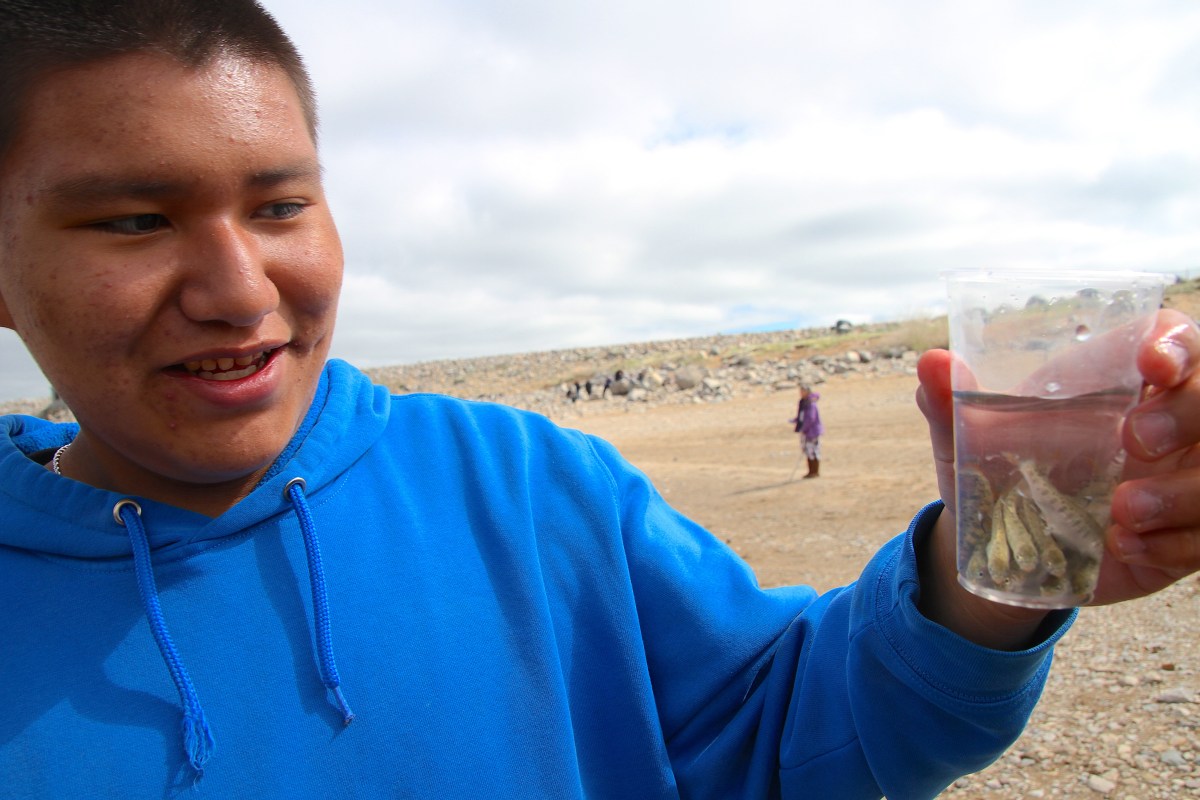
WASHAKIE RESERVOIR—Eliah Duren’s fingers pinched a clear plastic cup. 

Rainbow trout fry writhed inside. 

The classmate critiques started coming. Too many fish. Too little water. They’d been confined for too long. Duren’s fellow seventh graders urged him to complete the release. A reservoir awaited a few dozen yards away. 

“That’s a Travis Scott concert right there,” Eli Washakie said of the crowded cup.
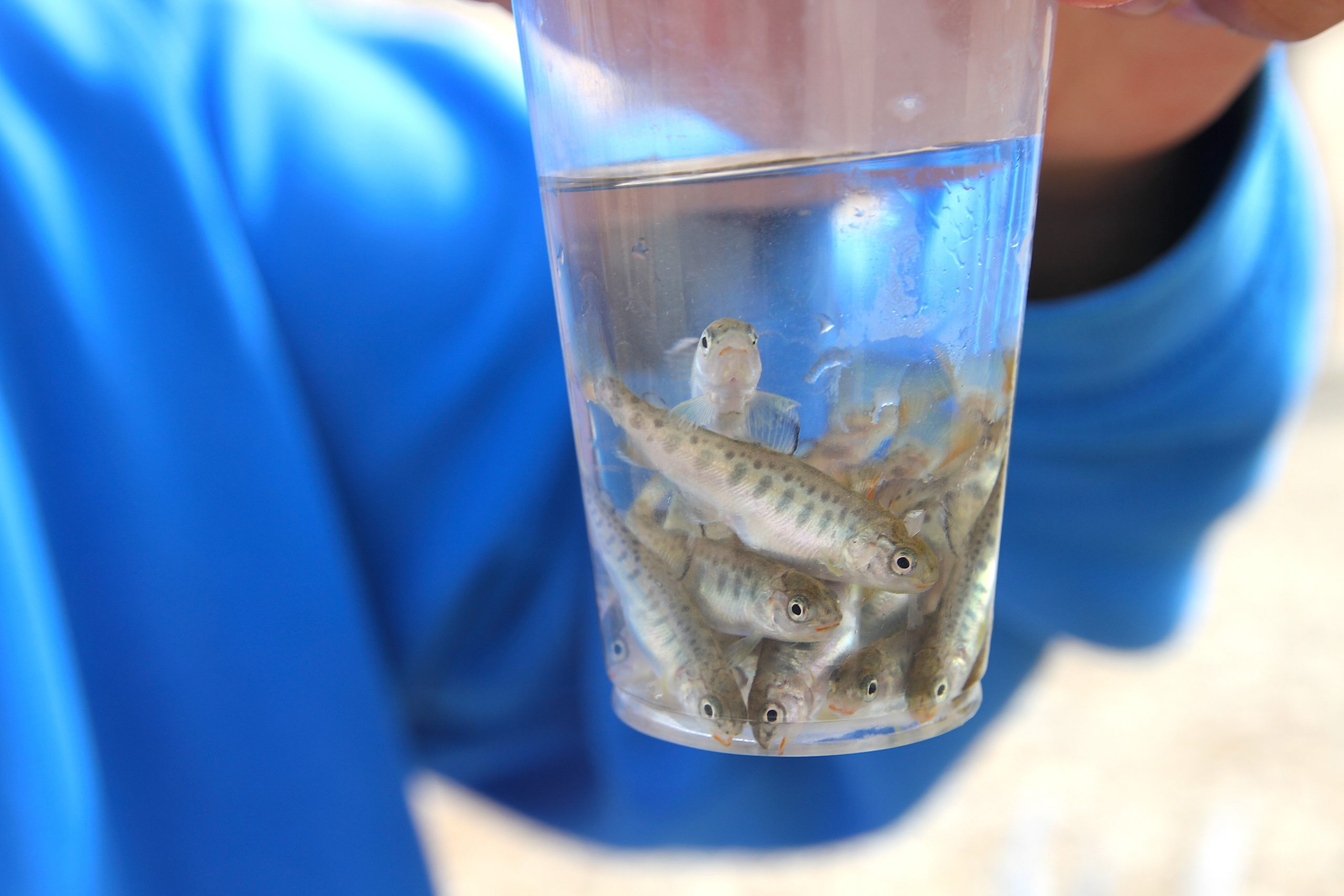
Rainbow trout that were raised inside a Wyoming Indian Middle School classroom get a lift to Washakie Reservoir, where they’ll live out their days. (Mike Koshmrl/WyoFile)

Another youngster was more blunt: “I think they’re gonna die soon.” 

Duren held his ground. 

“They’re part of my family now,” he joked. “I can’t just let them go.” 

The calls to free the fry persisted. Moments later, the diminutive salmonids swam off. 
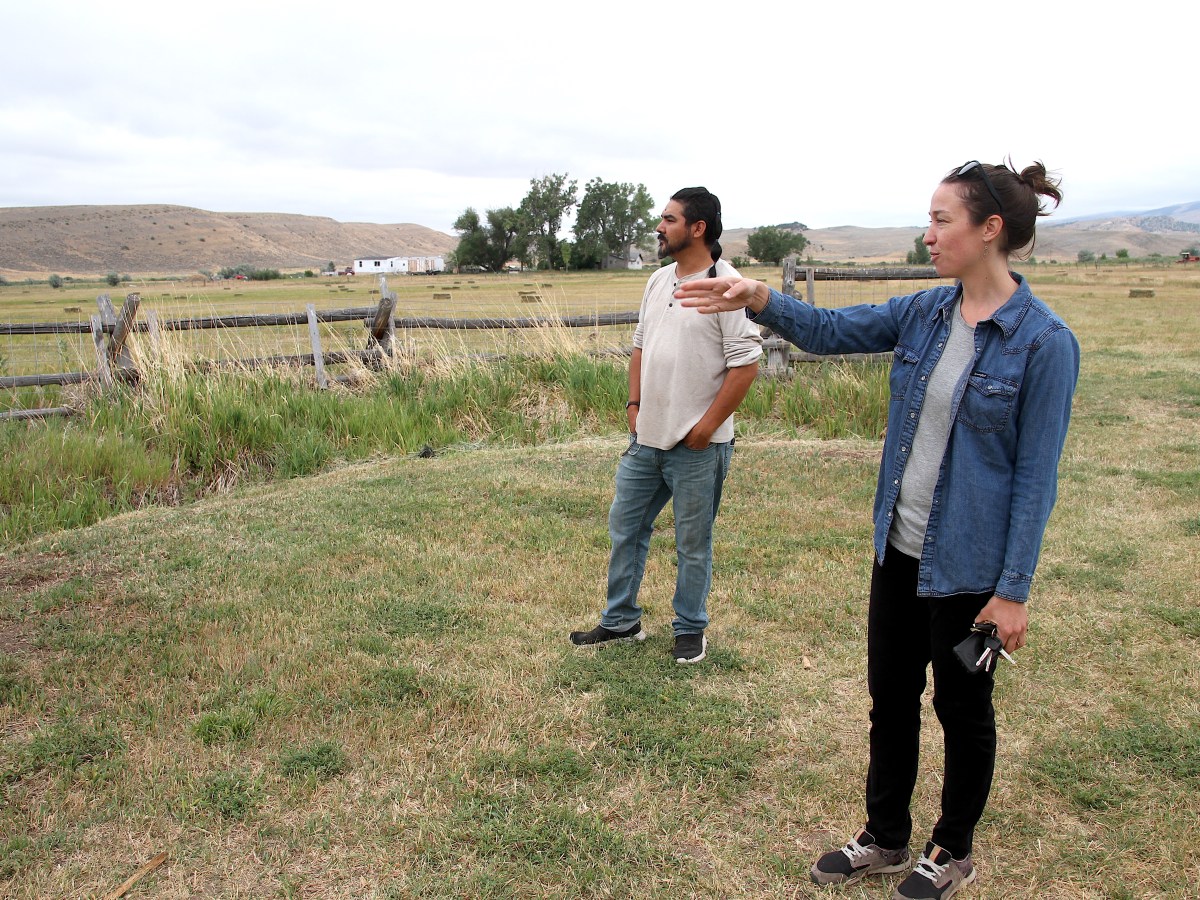
The middle school banter on the banks of Washakie Reservoir was set in motion by Trout Unlimited’s Trout-in-the-classroom program. The swarms of fry that swam off this spring morning spent their earliest days of life in seven tanks distributed around the Wind River Indian Reservation. 

“We have all five reservation schools represented here,” said Jeremy Molt, Shoshone and Arapaho Fish and Game’s youth coordinator. “This is one of the only programs where you’ll see all the reservation schools coming together — usually, they don’t do anything like this.”
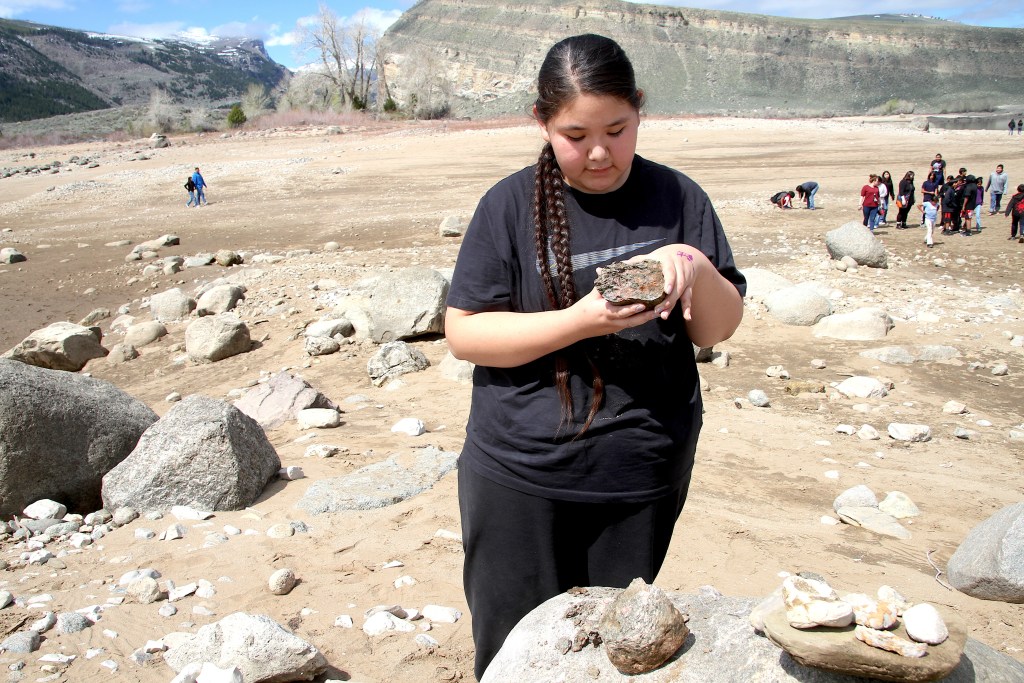
Seventh grader Jaednrainc’h Aiirn shows off her rock collection along the shoreline of Washakie Reservoir in May 2025. (Mike Koshmrl/WyoFile)

Rearing trout in classroom tanks for their eventual release is the bait that gets kids hooked on lesson plans about watersheds and fisheries, Trout Unlimited’s Cory Toye said. Mike Mazur, a U.S. Fish and Wildlife Service fish biologist, commended the effort. 

“They’re trying to reconnect the kids back to natural resources: Get them outside, exposed to something other than a screen,” he said. “Especially for tribal people, the connection to the natural world is really important.”

On May 7, the middle and high school students, usually cooped up in classrooms, relished the chance to get outside.
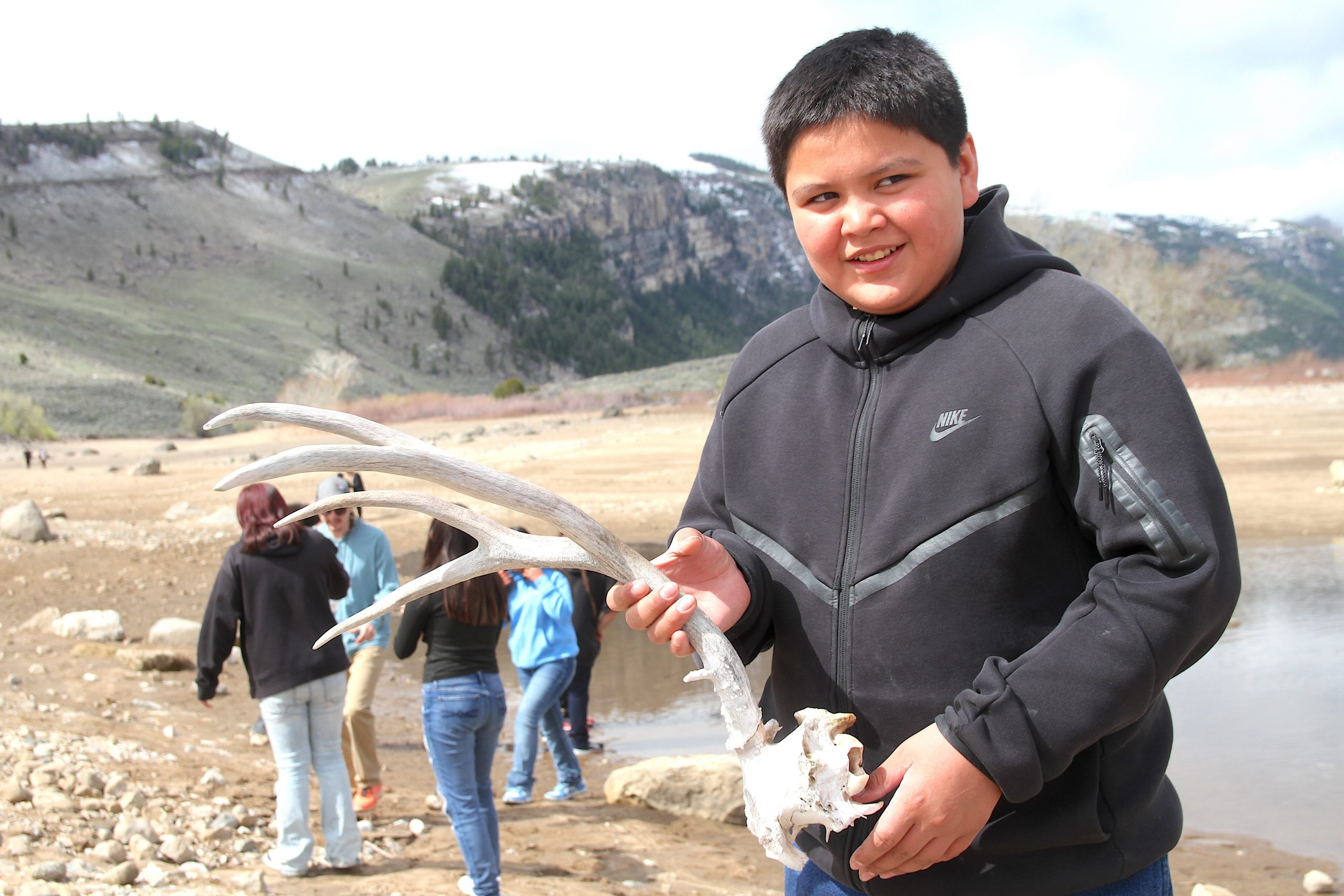
Seventh grader Eli Washakie shows off a mule deer antler he found along the rocky banks of Washakie Reservoir in May 2025. (Mike Koshmrl/WyoFile)

Eli Washakie hiked up the way and found himself a mule deer antler. 

St. Stephen’s seventh grader Jaednrainc’h Aiirn turned her attention to rock collecting. 

Cousins Al-Jay Spoonhunter and Chloe Whiteplume hung out lakeside. Although two grades apart, they were united by the field trip and messed around with fishing rods to bide the time. 
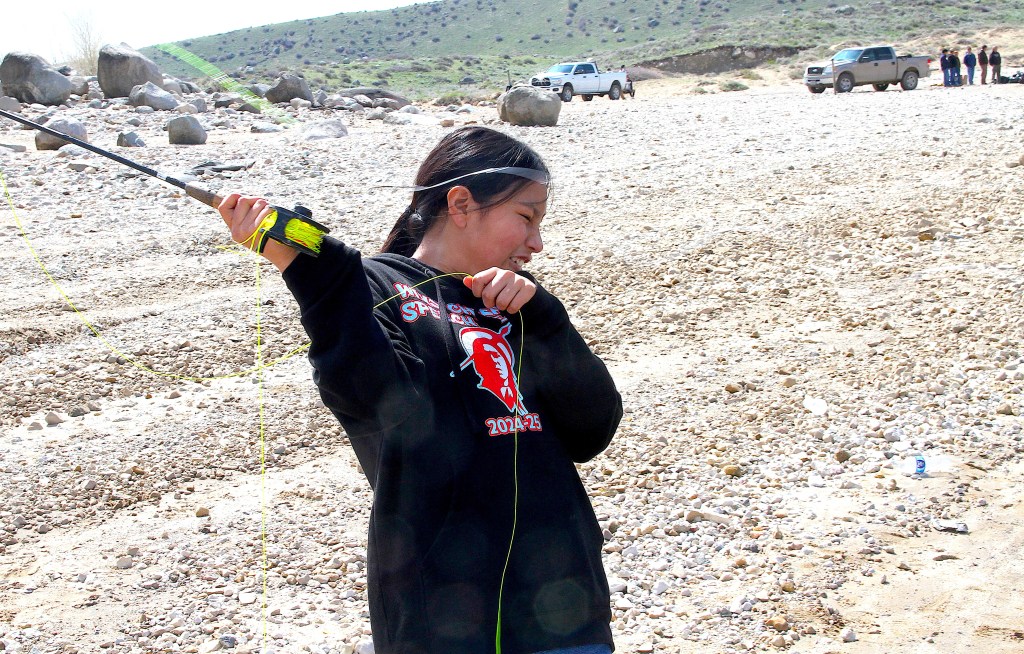
Ninth grader Chloe Whiteplume dodges a nymph and fly line while working on her casting along the bank of Washakie Reservoir in May 2025. (Mike Koshmrl/WyoFile)

Whiteplume, a ninth grader, worked on her fly casting, which she picked up from her science teacher, Mike Duffy. Spoonhunter flung a lure from a spinning rod. No trout took either’s bait, but the cousins cast and cast and then cast some more, keeping each other company. 

Mike Koshmrl reports on Wyoming's wildlife and natural resources. Prior to joining WyoFile, he spent nearly a decade covering the Greater Yellowstone Ecosystem’s wild places and creatures for the Jackson...

Join the Conversation

2 Comments

WyoFile's goal is to provide readers with information and ideas that foster constructive conversations about the issues and opportunities our communities face. One small piece of how we do that is by offering a space below each story for readers to share perspectives, experiences and insights. For this to work, we need your help.

What we're looking for: 

  • Your real name — first and last. 
  • Direct responses to the article. Tell us how your experience relates to the story.
  • The truth. Share factual information that adds context to the reporting.
  • Thoughtful answers to questions raised by the reporting or other commenters.
  • Tips that could advance our reporting on the topic.
  • No more than three comments per story, including replies. 

What we block from our comments section, when we see it:

  • Pseudonyms. WyoFile stands behind everything we publish, and we expect commenters to do the same by using their real name.
  • Comments that are not directly relevant to the article. 
  • Demonstrably false claims, what-about-isms, references to debunked lines of rhetoric, professional political talking points or links to sites trafficking in misinformation.
  • Personal attacks, profanity, discriminatory language or threats.
  • Arguments with other commenters.

Other important things to know: 

  • Appearing in WyoFile’s comments section is a privilege, not a right or entitlement. 
  • We’re a small team and our first priority is reporting. Depending on what’s going on, comments may be moderated 24 to 48 hours from when they’re submitted — or even later. If you comment in the evening or on the weekend, please be patient. We’ll get to it when we’re back in the office.
  • We’re not interested in managing squeaky wheels, and even if we wanted to, we don't have time to address every single commenter’s grievance. 
  • Try as we might, we will make mistakes. We’ll fail to catch aliases, mistakenly allow folks to exceed the comment limit and occasionally miss false statements. If that’s going to upset you, it’s probably best to just stick with our journalism and avoid the comments section.
  • We don’t mediate disputes between commenters. If you have concerns about another commenter, please don’t bring them to us.

The bottom line:

If you repeatedly push the boundaries, make unreasonable demands, get caught lying or generally cause trouble, we will stop approving your comments — maybe forever. Such moderation decisions are not negotiable or subject to explanation. If civil and constructive conversation is not your goal, then our comments section is not for you. 

Your email address will not be published. Required fields are marked *

  1. I think the young person that said that” they,( fish )are going to die soon” may very well be right. Washakie Rresivour and Bull Lake are in very poor condition.

  2. Great article. However, Trout In the Classroom is a cooperative project of Trout Unlimited, Wyoming Trout Unlimited, and Wyoming Game and Fish Dept. 67 schools in WY participated in TIC this year. Contact me if you want more info. Jim Hissong