

PARK CITY, UTAH—The U.S. Forest Service received roughly 300 applications for the 15 new state director jobs created during a major agency reorganization that’s dissolving regional offices the agency’s first chief, Gifford Pinchot, created nearly 120 years ago.
That’s 20 applications per job, on average, for well-paying “senior executive service” positions at a federal agency that employs roughly 30,000 staff.
It’s a figure that, to many, suggests stunningly little interest in the jobs and a reminder that it remains a tough time to be a Forest Service employee tasked with managing 193 million acres of the United States.
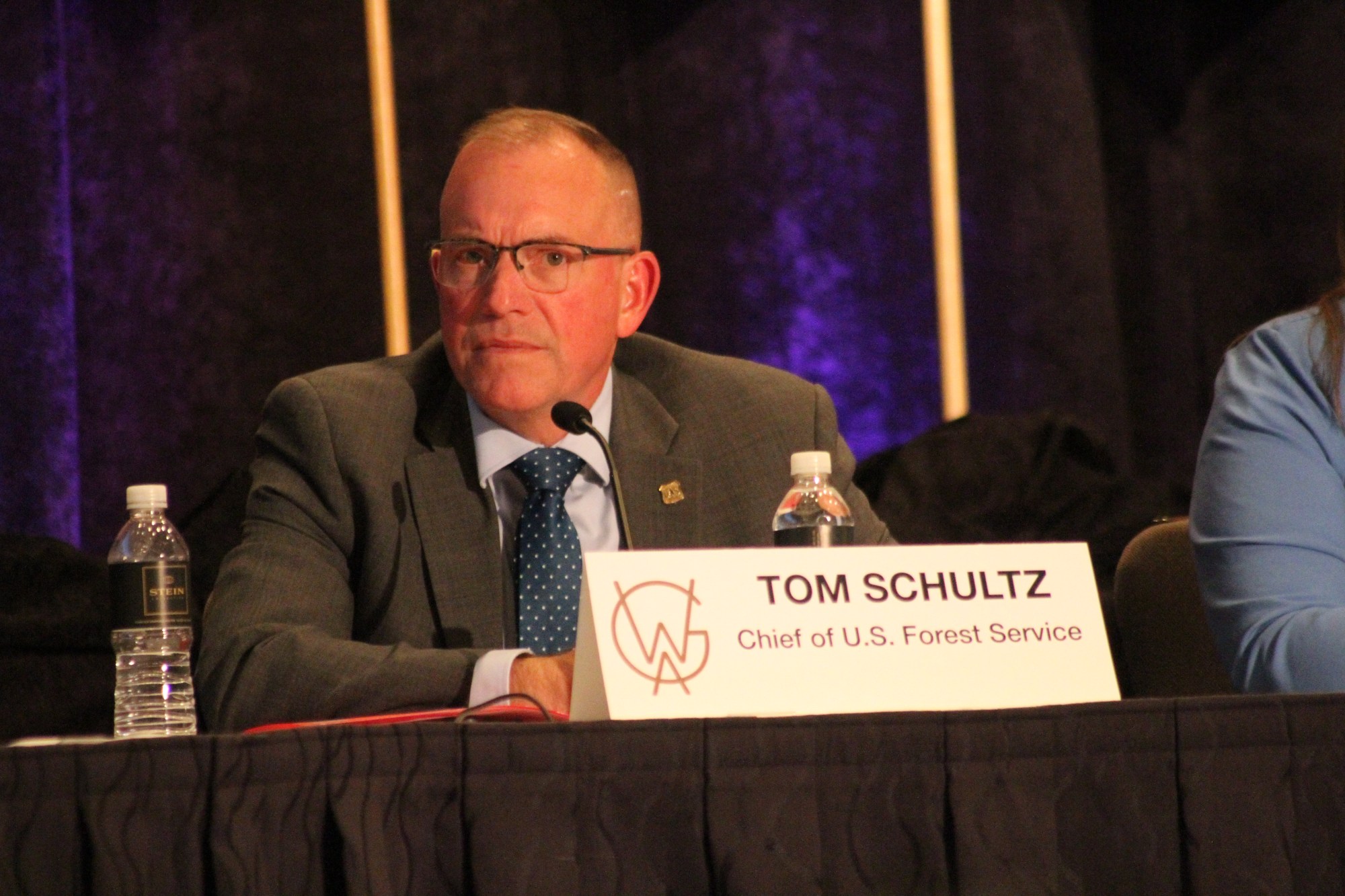
But U.S. Forest Service Chief Tom Schultz on Tuesday sounded upbeat about the 300 applications, a datapoint he offered without prompting. Applicants are a mix of Forest Service veterans and outside candidates, and there are more than he needs to fill the state director jobs and restructure. Schultz’s team has already narrowed the pool of candidates and is starting to arrange for interviews, he told WyoFile from a boardroom at Park City’s Deer Valley Resort.
“I expect [interviews] to begin within the next couple weeks,” Schultz said.
The Trump administration’s pick to lead the Forest Service took a break from the Western Governors’ Association conference and sat down with WyoFile to discuss the status of the agency’s workforce and looming structural changes that were signaled in summer 2025 and formally set in motion this spring. The University of Wyoming graduate spoke just over the Wasatch Range from Salt Lake City, where he’s planning to live and work after relocating the agency’s headquarters from Washington, D.C. Nearly five dozen research and development stations may also be shuttered, and their staff will be clustered at more centralized operations instead.
All these changes are coming quickly.
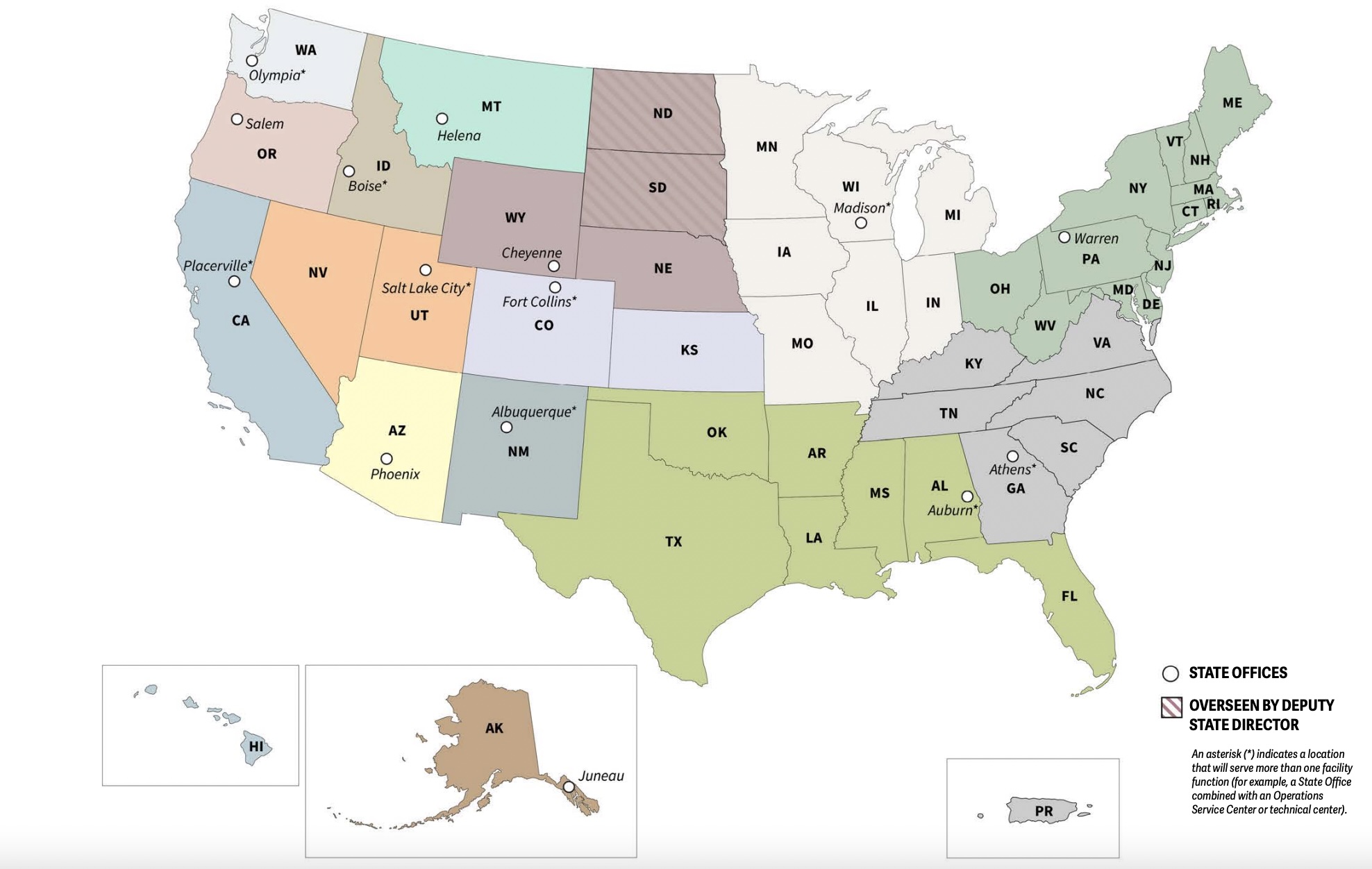
Schultz says he will wait until after the already deadly, active wildfire season dies down before reassigning regional personnel and opening the doors on state offices.
“Sometimes toward the end of October, early November is when we’d be looking at getting those offices operational,” the Forest Service chief said.
Wyoming’s office is coming to Cheyenne, though the building has not been selected. The state offices in the Equality State and elsewhere will house an estimated “six to eight” staff, and will include positions specializing in communications, legislative affairs, tribal affairs and other “liason-type” roles, Schultz said.
“The intent is not to replicate the regional model,” he said. “It’s to have those positions supervise the forest supervisors, and also to be a liaison with states, with counties, with tribes.”
A former Idaho Department of Lands director, Schultz moved to the private sector and was an executive with an Idaho logging company before U.S. Department of Agriculture Secretary Brooke Rollins hired him away in February 2025. Restructuring the Forest Service will concentrate resources and decisionmaking in the states and communities where national forestland is part of the landscape, he said.
“What we’re trying to do is basically bring the Forest Service closer to the people that we serve,” Schultz said. “The change from regional offices to a state director role is to really empower folks closest to the ground — district rangers and others who make decisions.”
It won’t be immediate, but eventually national forests like Wyoming’s Bridger-Teton, Shoshone, Bighorn, Medicine Bow-Routt and Black Hills should experience an increase in staffing and money as resources are diverted away from regional offices in places like Denver and Ogden, Utah, Schultz said.
“That is the intent,” he said.

Yet, the reorganization is also immensely controversial. Partly that’s a product of the administration spearheading the changes.
President Donald Trump’s second term started by bringing a wrecking ball to the federal government. The face of the aggressive, abrupt job cuts, now-trillionaire Elon Musk even wielded a chainsaw on stage to signify the actions of his now-defunct “Department of Government Efficiency,” which trimmed the Forest Service’s workforce by about 18%.
Skepticism and support
Many Forest Service employees are unsettled by the structural changes afoot. Retired White River National Forest supervisor Scott Fitzwilliams, who took a buyout during the DOGE era, criticized how hastily the reorganization was decided and implemented.
“This is turning over 100 years of organization,” Fitzwilliams said. “This is not thought out. And it’s chaotic.”
The Forest Service rolled out its plans in the absence of public review, Fitzwilliams pointed out. Except for stakeholders like the timber and fossil fuels industries, he said the reorganization wasn’t vetted and caught almost everyone off guard.
“I know for a fact, ranking members of resources committees on the Senate side and the House side, they learned about it when you and I learned about,” Fitzwilliams said.
But Schultz argues the concept of restructuring has been kicked around for nearly two decades. There’s been talk of redesigning the Forest Service to a state-focused system since 2008, and the effort became more formal in August 2024, he said.

Retirees who are formally organized have also voiced concerns.
Bill Avey, who chairs the National Association of Forest Service Retirees, told WyoFile that he feels the reorganization is “not in the best interest of the public or the national forests or the Forest Service itself.” He worried that the new structure will lead to the Forest Service becoming beholden to state politics.
“These are national forests, they aren’t state forests,” said Avey, who supervised the Helena-Lewis and Clark National Forest. “The forests are going to be much more influenced by the politics of the state, when they should be managed for the people of the nation.”
The Forest Service state directors will be hired into career positions, and are not political appointees, according to Schultz.
But those assurances didn’t allay the concerns of Avey, who pointed to how state offices and directors function at the Bureau of Land Management.
“State directors are very political positions,” Avey said. “We’re worried about increased politicization of the Forest Service.”
Steve Ellis preceded Avey in chairing the National Association of Forest Service Retirees. His career started at the Forest Service but crossed over to the BLM, where he became the Idaho state director and then deputy director for the whole agency.
“So I know both the structures,” Ellis said. “Democratic and Republican governors in the West, my observation is they always liked the BLM model better.”
Two weeks ago, the bipartisan Western Governors Association pledged its support for the Forest Service restructuring in a letter.
“This state-based model will ensure strong communication between the agency and states and territories, and promote coordination on forest and rangeland management, recreational use, and wildfire mitigation and response,” Utah Republican Gov. Spencer Cox and Hawaii Democrat Gov. Josh Green wrote.
SLC HQ
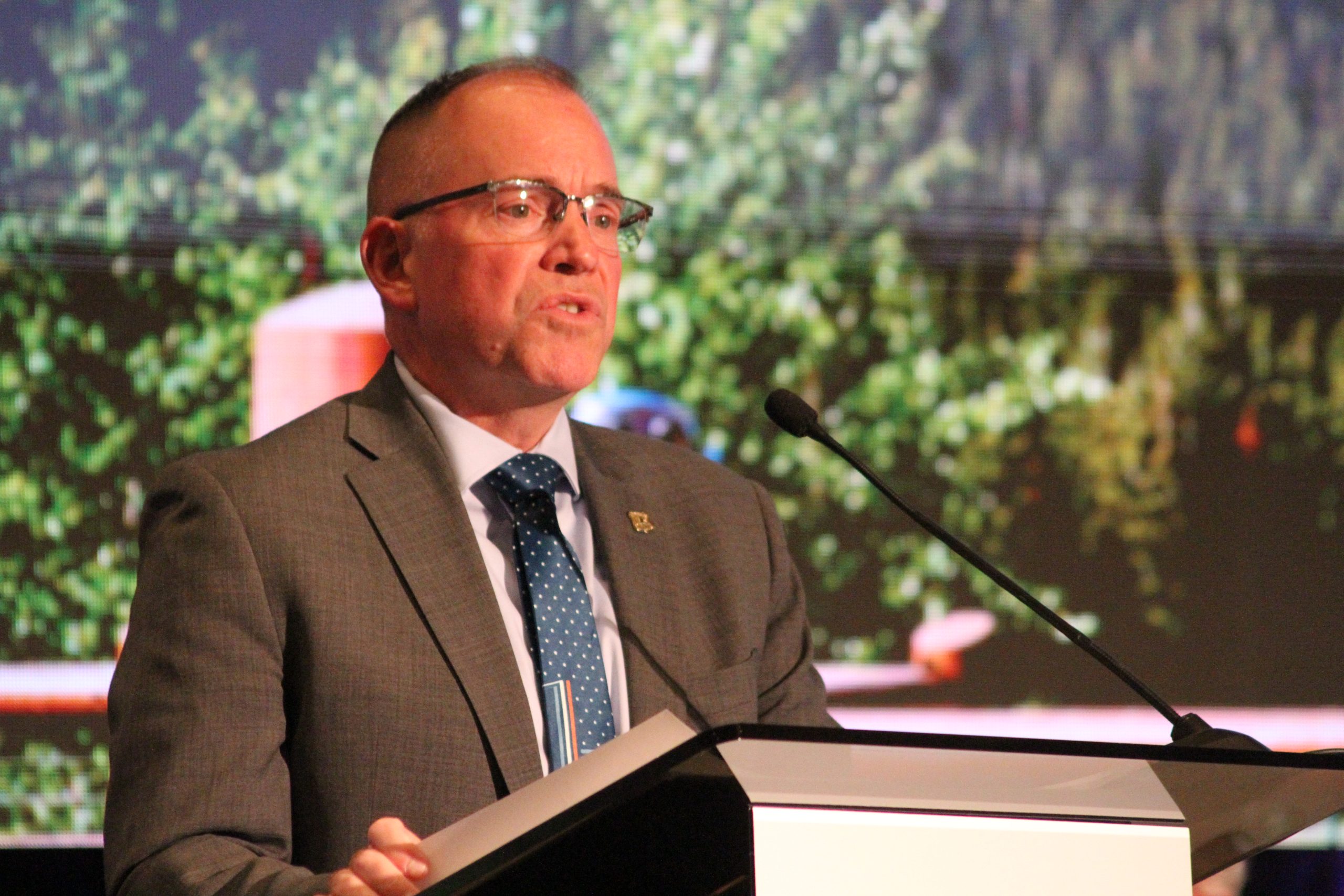
Delivering the keynote address at the Western Governors Association conference this week, Schultz told the crowd that he’s “thinking about” giving the states more national forest management control. And he argued that there will be benefits to the coming headquarters move to Salt Lake City and the broader Forest Service restructuring.
“I currently have 26 direct reports,” Schultz said. “Under this new model, I’m going to have six reports. We’re going to align much like a normal corporate structure.”
Moving Forest Service headquarters to Salt Lake City has been criticized partly because of the first Trump administration’s 2019 reorganization of the BLM, which included moving its headquarters to Grand Junction, Colorado, a mid-sized city about the size of Casper. That effort failed spectacularly. Less than 13% of the 328 employees whose jobs were moved chose to relocate and only three employees ended up moving to Grand Junction, according to High Country News. In fall 2021, the Biden Administration Interior Secretary Deb Haaland moved the office back to Washington.
Schultz is hopeful the Forest Service’s 2026 headquarters relocation will go differently. Salt Lake and Grand Junction are “two fundamentally different communities,” he said.
“Salt Lake is a large metropolitan area — 1.6 million people,” Schultz said. “We’ve already gotten commitments from folks that are willing to go there.”
Asked if the Forest Service has goals for retention during the transitions, Schultz didn’t specify. He pointed out instead that only about 1% of the workforce will be asked to move throughout the entire reorganization.
“There could be fewer than 300 people that have to physically relocate,” the chief said.
Although the headquarters is officially changing locations, most of its employees will actually remain in Washington. Although the Forest Service’s fact sheet about the reorganization indicated that two-thirds of the National Capital Region positions would be relocated, the numbers shared by Schultz looked much different.
Out of the 750 people who are assigned to the Washington office, more than half are already remote, he said. That leaves roughly 350 employees who show up to the brick-and-mortar office on Independence Avenue.
“We’re expecting probably less than 50, at this point, may have to relocate out of the DC area,’ Schultz said. “Some of [the headquarters employees] are going to go to Maryland.”
Forest Service whistleblowers who wrote a letter to Congress have argued that leadership is underestimating the disruption and that mandatory relocations could impact as many as 1,900 employees.
Some 6,500 Forest Service employees were informed in a letter that their job would be affected by the reorganization in some capacity.
“It basically said in that letter that you may have a different supervisor, you may have a different structure, you may have a different job,” Schultz said.
As of Tuesday, those 6,500 employees haven’t been told what’s specifically changing.
“It’s still being worked on,” Schultz said.
Unions for Forest Service employees have called leadership’s communication style “engineered vagueness.” In early June, six congressional Democrats from Colorado wrote Agriculture Secretary Rollins a letter urging the Trump administration to disclose more information about the plans.
State of staffing
At the moment, the Forest Service has roughly 30,000 employees, Schultz said. The agency lost nearly 7,000 staff last year, according to Office of Personnel Management data. The great majority, 6,500 of them, accepted one of the “deferred resignation program” offers, he said.
“So it’s been largely voluntary,” Schultz said.
Current staffing at the Forest Service is at about the same level as it was in 2018, according to the chief. The workforce swelled in 2020 and 2021 due to funding from the Inflation Reduction Act and Infrastructure Investment and Jobs Act, but the Forest Service’s base appropriation didn’t grow enough to support the larger workforce, and in 2024 under the Biden administration the “ball had already started rolling” of how to right the books.
“Decisions had to be made on how to get the budget straight,” Schultz said. “We can’t overspend what Congress has authorized.”
In 2025, the Forest Service went without non-fire seasonal staff because of the budget crunch. That’s changed, however, and the Forest Service so far in 2026 has added more than 1,600 employees, OPM data shows. Most new staffers are seasonals doing recreation work, Schultz said.
While that fits with Schultz’s goal of bringing more resources to forests and ranger districts, the Trump administration’s proposed Forest Service budget for fiscal year 2027 goes in the opposite direction. Proposed funding levels for the National Forest System would fall by $438 million, or 24%, and research, operations and maintenance line items are cut even deeper. Some $620 million for the “forest and rangeland research” and “state private and tribal forestry” would be zeroed out completely.
In a May 13 budget-focused Senate hearing, Schultz did not put up a fight or ask for more funds.
Fitzwilliams, the retired White River National Forest supervisor, struggled to see how Trump’s Forest Service budget fits Schultz’s vision of beefing up resources at forests and ranger districts.
“More resources on the ground, I think we’d all agree that’s really important,” Fitzwilliams said. “You can’t say that and then stand behind the president’s budget proposal, which he does.”
Turmoil in the federal government over the last 18 months has caused the workforce’s job satisfaction to outright plummet, according to a survey of 10,000 workers. At the Forest Service, the depleted staff and the agency’s reorganization has been cause for plenty of bad vibes.
“They’re stressed,” Fitzwilliams said, “and morale is horrendous.”


Sitting down with WyoFile, Schultz spoke to his workforce’s spirits and anxieties, which he said vary over time and by forest, ranger district and program.
“I’m not going to sit here like some Pollyanna and say, ‘Oh, morale’s great,’” Schultz said. “Do people have mistrust in some cases? You bet they do. Are they concerned for their job security? Some of them, very much are.”
The Forest Service’s chief also sensed that many of his employees are eager for the reorganization and change on the horizon. They’re ready to “rip the Bandaid off,” he said, and move on with their lives.
“People may mistrust me in the organization,” Schultz said. “But what they care about is the public that they serve. They care about the job that they do.”
That commitment, he added, “is what carries them through the uncertainty and the disruptions.”

One trusts that the administration (President to USDA Secretary) has provided for the funding, staffing, and focused Forest Service leadership in preparing for, and responding to, wildfire/emergency response within the agency and in support of the rich array of federal and state agencies and their managed lands and wildfire prone landscapes.
Thank you WyoFile for sharing your take on current events in the reorganization of the USFS from the Washington Office to the neighborhood ranger district. You have provided perspective that may be helpful, one that has included a focused analysis on the agency and interagency response to wildland fire and land management emergencies.
One could envision how the administration’s major reorganization of any wildland fire management federal agency approach may prove to be a distraction rather than focused USFS and interagency preparation, emergency response, and effective actions, with every firefighter returning home alive and well.
Over the course of wildland fire emergency response history, one may find distractions at all levels have been factors in select tragedy events. No doubt the senior leadership of interagency wildland fire organizations and management have addressed the concern with both senior management and the administration, identifying potential causal factors for incidents, accidents, and tragic outcomes, and dealing with those potential factors, to prevent incidents, accidents, and tragic outcomes.
One trusts the President, Secretaries (Interior/Agriculture) and Agency Heads with wildland fire management responsibilities for emergency response and public/employee safety have this well in hand. That said, and given the plans for USA Departments and Agencies, outlined to date, it may be appropriate for the Congress to engage in further review and comment to validate the Interior and Agriculture Departments have redeemed their responsibilities in providing for firefighter, aviator, and public safety. If not already concluded, and the preparations for safe, successful response remain undone, my prayers for wildland firefighter and public safety this coming season will continue until the season ends.
The Forest Service has been the leading forest research organization in the world. In the world. And it’s being gutted. Research on diseases, pests, fire, smoke etc. This is not serving the public, this is serving the donors. A tragedy in the making.
Further, most DC staff are not the ones in the field- they are yhe ones connecting to other agencies and the legislature. That work is best done from DC. Moving to SLC just creates barriers.
Cheyenne? Really? Good gravy. What about say Sheridan or Rapid City? You can at least see a forest from those locations.
The reason for relocating offices to western states is because most (80%) of federal land is located there in Alaska, Nevada, Idaho, California, Colorado, Wyoming, Arizona, Oregon, Washington. We want staff that understands the local use of those lands. Washington DC bureaucrats are city people with no connection to rural areas and no understanding of the importance of those lands. If they don’t want to relocate, replace them with locals who are probably much more knowledgeable and competent about rural land management that supports local communities.
The FS bought that building from the Navy in 1999 after the mare island shipyard closed. Purchase price was $1. So it costs nothing, beyond maintenance/upkeep. Why? Because it was far cheaper than the lease on the former downtown SF office.
I grewup in Central Wyoming and was surrounded by US Forest Service lands, it was probably the premier reason that I decided to study zoology and work in the International upstream petroleum Industry for 40 years. I totally support the decentralization of the Forest Service and moving them into the states and closer to the forest lands that they manage, it will cause a connection to the western states, more multiple use land management and I think overall mush better management. This agency does not need to be a political agency, they just need to manage the forest lands
Region Five regional office is on Mare island ca. on the golf course. How much is that costing. They aren’t even close to the land. WHY
Region 1 is on a piece of land that was once used to house Americans of Japanese descent in warehouses.
The USFS should own the land and the buildings that they are using but alas those wanting to grift the US Government come into office and force them into to stupid long term leases with crappy land lords. With that said many Regional functions do not require that expertise to be on the land and in many cases it is far better to be nearer to places where State laws are crafted because many of these laws end up being “stupid” with respect to managing the land and its resources.
Blame Congress for mismanagement not the Land Management Agencies.
My guess is the Chief Schultz has little discretion in the planning and implementation of this Forest Service reorganization scheme. Direction for this reorganization flows from the Trump administration to the Secretary of Agriculture to the Undersecretary of Natural Resources and the Environment to the Chief. The new Forest Service headquarters being relocated from Washington, D.C. to Salt Lake City is likely to have been influenced by the Utah Congressional Delegation.
The BLM organizational model is better than the present Forest Service organization model. Having worked under both in WY & SD, one knows these public lands are federal, that the land itself has local character too often buried in regional and national office bureaucracies. The BLM’s environmental review process is vastly superior to the FS’s ludicrous, almost endless “reviews”. (By contrast the US Navy EIS’s are routinely completed in under 1 year while the FS often prided itself with 5+ year, 1000’s of page reviews.) These federal lands are mulitple-use working landscapes. That reality was oft sidelined by some FS managers who appeared as if they’d be happier working under a refuge or national park or all-wilderness model. The biggest problems and abuses in both BLM and FS lands are the laws governing the uses, especially: non-commercial equivalent grazing fees, and unreformed mineral laws.
“They’re stressed,” Fitzwilliams said, “and morale is horrendous.”
Exactly the way avowed Christian Nationalist and OMB Administrator Russell Vought wants federal workers to feel when they come to work and do the people’s business. Republicans have been itching to get their hands on every bit of value from the taxpayer and our public lands,along with the water and mineral rights, is their goal.
Unfortunately the people of Wyoming seem just fine with giving away these lands as they elect people like Hageman and Gray that will enable legislation to do so.
Meanwhile the dead and down trees are no longer removed and the loss of great personnel will lead to more death and destruction, but hey Salt Lake is a cool place to have a headquarters.
Of course it will be chaos, it’s by design. Our next President will have a lot of undoing to do.
Normalizing Trump as anything but a criminal barred from office should get you charged with treason. TRAITOR