

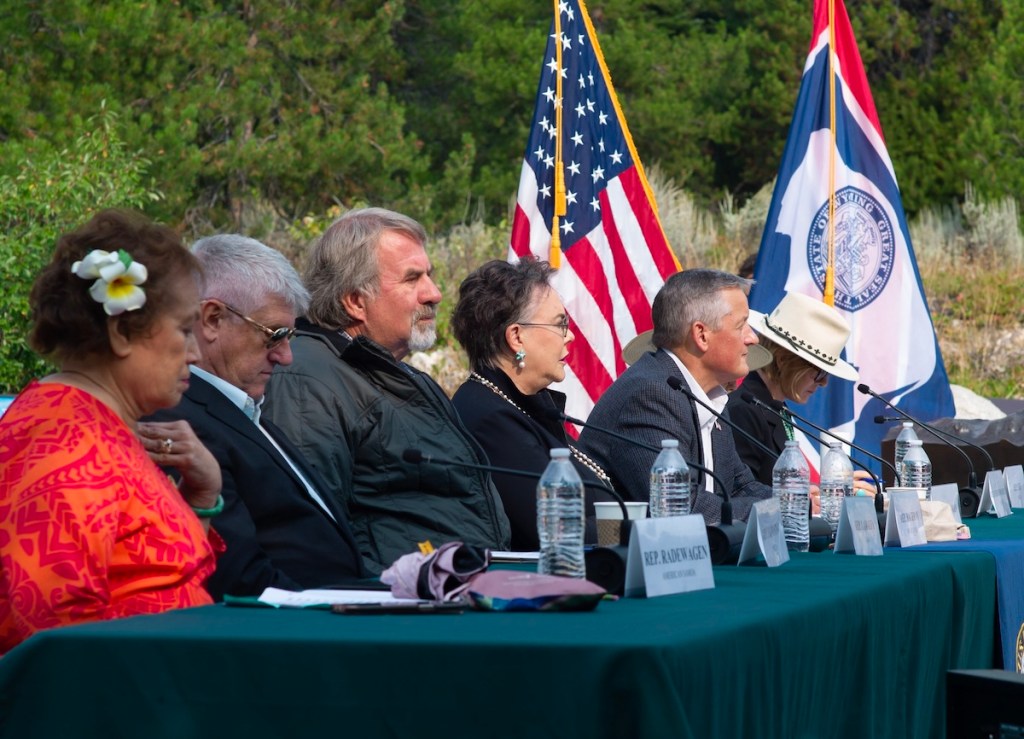
With the Tetons as a backdrop, a congressional panel heard testimony Friday in support of reauthorizing the Great American Outdoors Act, which was passed in 2020 to address $12.7 billion in backlogged maintenance on public lands.
Members of the panel, including U.S. Rep. Harriet Hageman, supported continued funding for the act’s Legacy Restoration Fund that expires this year. But officials need to better distribute the money and also use it to modernize infrastructure in national parks, Hageman said.
“The next iteration of GAOA should concentrate on projects that modernize our parks, enhance public access, improve infrastructure and create new outdoor recreation opportunities,” she said in front of an outdoor audience of about 100 at Grand Teton National Park’s Jenny Lake Plaza.
To date, the act has not “adequately address[ed] some of our smaller parks and the needs that they have, and it disproportionately prioritized urban cities over our rural crown jewels, such as … Grand Teton and Yellowstone national park[s],” she said.
“There’s magic in this place because of these people.”
Chip Jenkins
While the committee focused on the Act’s Legacy Restoration Fund, one witness said the act’s good work could not properly continue without restoring drastic staffing cuts to the National Park Service that have occurred since President Donald Trump took office.
“I also came here to warn you that we won’t be able to continue this success without the planners, engineers, compliance officers, budget experts, landscape architects, maintenance staff, carpenters and so many more Park Service staff who make it possible for the Great American Outdoors Act to fund the work on the ground,” said Kristen Brengel, a senior vice president with the National Parks Conservation Association. “The Park Service has lost 24% of its permanent workforce since January.”
The committee should advocate for restoring Park Service staff and prohibiting further cuts, she said.
‘Magic in this place’
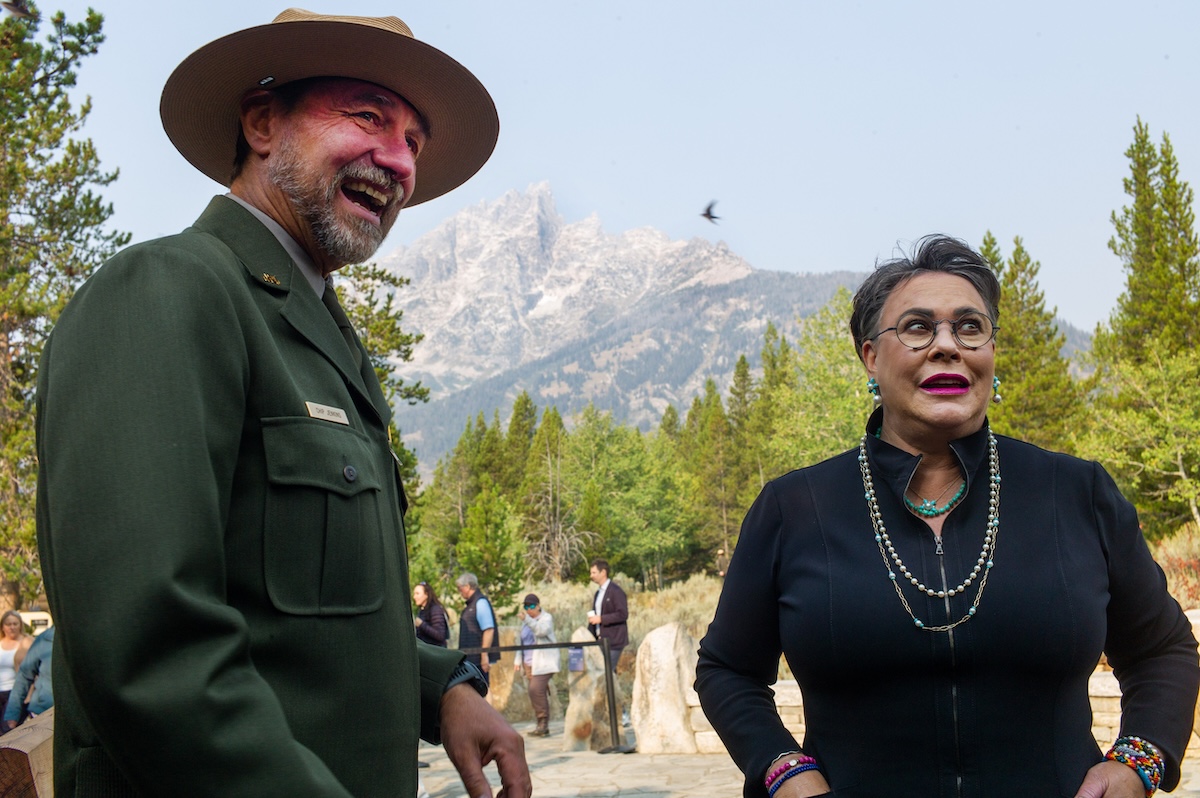
Grand Teton Superintendent Chip Jenkins drew applause after he choked up while testifying about the partnerships that enabled the park to undertake numerous projects that benefit visitors. Those range from construction of a modern visitors’ center to upgraded trailhead parking lots and entrance stations and preservation of more than 1,200 acres of parkland once owned by Wyoming.
“There’s magic in this place because of these people,” he said, referring to local residents, politicians and nonprofit groups who work with park staff. “I think there’s something the committee can learn about the way we work together to be stewards of this place.”
Grand Teton needs help, he said.
“Our infrastructure is not always adequate for current visitation numbers, let alone for increasing future levels,” he said. Grand Teton sorely needs to upgrade Colter Bay Village on the shores of Jackson Lake, a place that attracts up to 11,000 people a day.
“The infrastructure is suffering from over 75 years of wear and tear, and is not meeting our visitors’ needs nor matching the beauty that is Colter Bay,” Jenkins said. “We need to make sure the toilets flush,” he said, calling for “wholesale rejuvenation” of cabins, a restaurant, marina and campground.
With GAOA modernization funds, Grand Teton also would improve pullouts near the Oxbow Bend of the Snake River, haunt of the late world-famous mother grizzly 399. The park would build a bicycle path to connect the park’s largest campground — the Gros Ventre Campground — to the valley’s bicycle trail network.
“The park welcomes close to 4 million visitors annually,” Jenkins said, “and this year, we’re on track to have our second busiest year on record.”
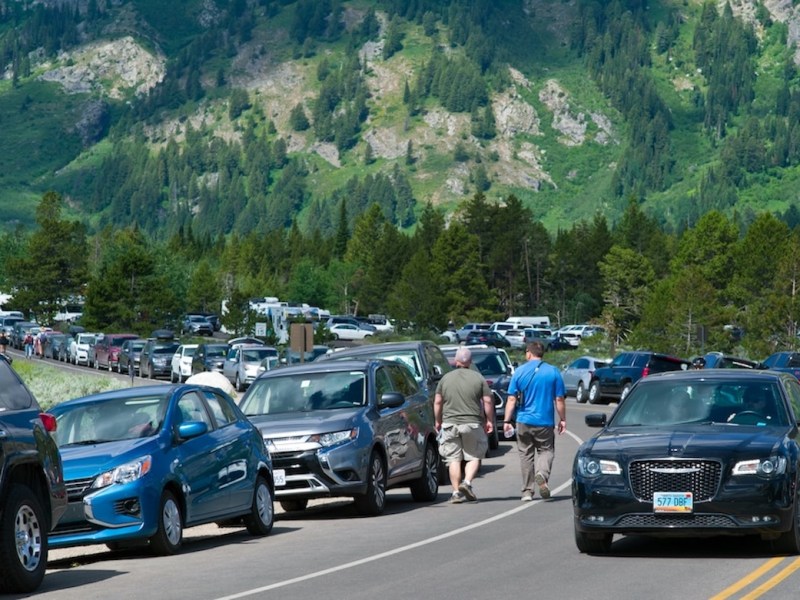
On a post-Labor Day Friday, 157 vehicles overflowed from the Jenny Lake parking area and parked on the sides of the highway to the south. Perhaps a similar number overflowed to the north. Eighty-eight vehicles were queued up at the Moose entrance station at noon, their drivers waiting to show passes or pay fees.
World-class plaza
Reauthorizing the Great American Outdoors Act “can sharpen” an existing partnership between the Grand Teton National Park Foundation and the park, foundation president Leslie Mattson told the panel. About $15 million in private funds augmented $6 million from the feds to upgrade the park’s spotlight draw, where the hearing took place.
Jenny Lake was once a dusty crossroads of trails and desultory log buildings, “marked by congestion and confusion,” Mattson said. “The most commonly asked questions were ‘where is the lake?’ and ‘where is the bathroom?’”
The upgrade created “a world-class, accessible visitor plaza and a sustainable network of backcountry trails that welcomes millions each year,” she said.
Drawing people to Grand Teton and Jackson Hole only to disappoint them with a shabby experience is counterproductive, said Julie Calder, chair of the Jackson Hole Travel and Tourism Board. A vice president at the Jackson Hole Mountain Resort, she advocated for renewal of the act.
Members of the Travel and Tourism Board often say they are in “the dreaming phase,” of visitors’ journeys, she said. “We create a lot of content to make people dream about coming here. We want to ensure that when they arrive, they get the experience that they had hoped for when they dream[ed].”
A wildlife guide who built a small business told the panel how companies like his rely on park infrastructure. Taylor Phillips started Jackson Hole EcoTour Adventures in 2008 and now has 40 employees and a payroll approaching $2 million, he said. His company is one of 70 that last year introduced more than 81,000 visitors to the park, he said.
He pointed to GAOA funds that improved the rural Moose-Wilson road as a worthy investment. Before the improvement, a 260-mile round trip to Yellowstone ended over 10 miles of jarring potholes — “not a lasting impression you want to leave with our guests.”
Brengel, the National Parks Conservation Association representative, reiterated the need for a restored park service staff nationwide.
“It takes people to run the park,” she said. The parks “won’t be protected and preserved without the dedicated staff who honor and care for them.”

The arbitrary and capricious cuts by Musk, DOGE, Trump to federal staffing and budgets is extremely harmful to the country. I am glad Rep. Hageman came to visit and learn. If she pushes back, that’s a political earthquake.
Our national parks are treasures that need to be protected and maintained, and kept public! Let’s take care of them and treat the people who work for the park service decently.
What a total joke this comment by Hageman is “it disproportionately prioritized urban cities over our rural crown jewels”….but it follows MAGA thinking on how bad and dangerous our cities are. Got to keep up the lies
Yes, I am glad to see that this is addressed. As a matter of fact Bruce Westerman is our representative. I knew he had a vested interest in this restoration of our parks and need for re-staffing them with rangers and other people. I had just was just thinking about writing him directly. I hope they can convince the president of the crucial need for our national parks.
My brother is coming out in a couple weeks with his family, and we are hoping that the necessary services are available for our annual trip to Teton National Park! Such a privilege to be able to gather in such grand places!
I don’t trust Harriet Hagemsn to run a bath.
I wasn’t going to comment with a cheap shot on Hageman but that picture makes it looks like she just spotted a turqouis shop.
I grew up camping at Jenny Lake, and I have hiked many trails in this beautiful area. Please do all you can to protect and preserve incredible area! At 78 years old, I cherish all my memories of the Tetons and surrounding environment.