


The federal government bought Wyoming’s 640-acre Kelly Parcel school section for $100 million today, a transaction that will see the wildlife-rich property that lawmakers had proposed for commercial development, instead preserved as part of Grand Teton National Park.
The U.S. Department of the Interior and the Grand Teton National Park Foundation announced the completion of this morning’s sale after the foundation spearheaded a $37.6 million drive for private funds to augment $62.4 million in federal conservation money.
Secretary of the Interior Deb Haaland called the transaction “an incredible milestone, decades in the making.” In a statement, she said the purchase “will benefit our public lands and Wyoming’s public school students for generations to come.”
Grand Teton Superintendent Chip Jenkins, who had traveled the state to lobby residents for the preservation initiative, thanked the foundation. “We simply would not be here today without them and the thousands of people who raised their voice in support of conserving this important part of the park,” he said in a statement.
“We are in awe.”
Leslie Mattson
Three unnamed families made key “lead” gifts, the Grand Teton National Park Foundation said while the National Park Foundation, National Fish and Wildlife Foundation (through Walmart’s Acres for America Program) and the Jackson Hole Land Trust boosted the drive. Almost 400 donors, from 46 states, gave anywhere from $10 to $15 million, the foundation said in a statement.
“We are in awe,” Grand Teton National Park Foundation President Leslie Mattson said of the many contributions. “We are so proud to have helped enable this incredible achievement for the American people, Grand Teton National Park, and the state of Wyoming.”
The parcel lies at the mouth of the Gros Ventre River Valley and is used by migrating pronghorn, mule deer, elk and other species. In considering how to maximize the financial benefit to Wyoming from state-owned property, some officials mulled state commercial development or advocated for a public auction that could have led to private ownership and construction of an exclusive subdivision.
Some Wyoming politicians, wary of federal land management policies and holdings in Wyoming that amount to about 48% of the state, sought unsuccessfully to bargain the parcel for federal coal lands.
To close the sale, The Conservation Fund provided a bridge loan. The loan enabled the Grand Teton National Park Foundation to accept multi-year pledges, the group said.
The U.S. Department of the Interior provided the federal money through the Land and Water Conservation Fund.
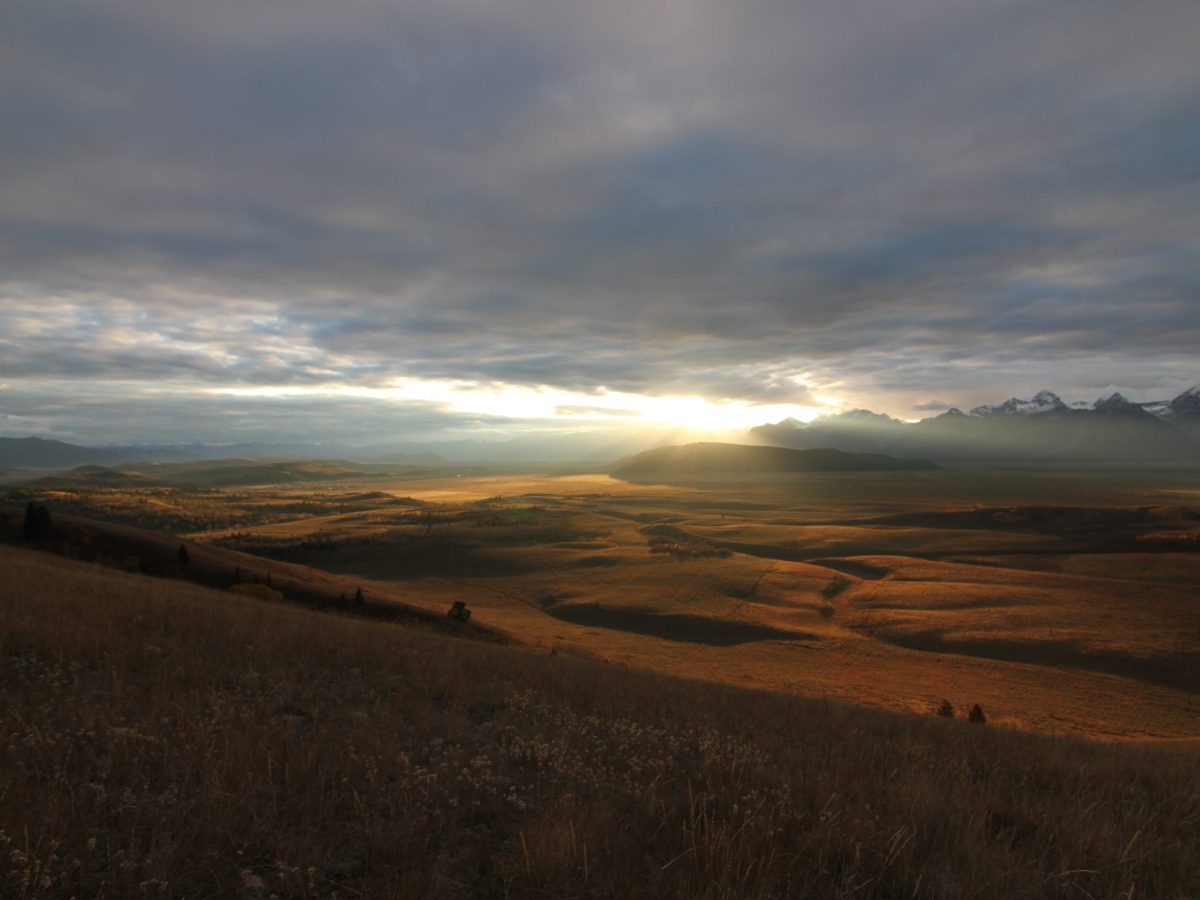
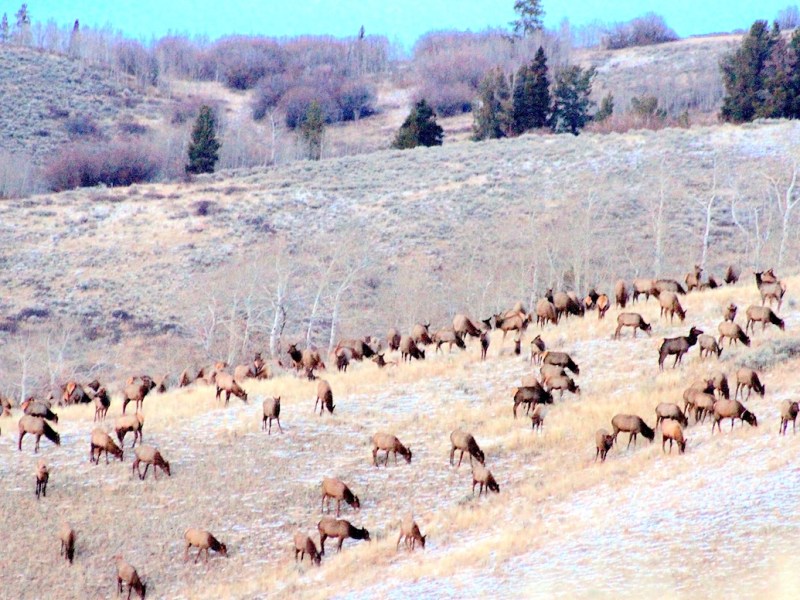
The square-mile section was the largest piece of unprotected land inside Grand Teton, the foundation said, and had been the target of conservation efforts since the 1990s. The late U.S. Sen. Craig Thomas passed federal legislation in 2003 enabling the transaction and the Wyoming Legislature this year conditionally authorized the sale.
The parcel became school trust land upon Wyoming’s statehood on July 10, 1890, and as mandated by the state constitution, was earmarked to generate funds for school children and several institutions.
The foundation thanked supporting stakeholders from across the state, including conservation and sports organizations, state legislators and leaders, Gov. Mark Gordon and Sen. Mike Gierau (D-Jackson).

This article is pretty great news all around. Per the fundraising aspect:
“To close the sale, The Conservation Fund provided a bridge loan. The loan enabled the Grand Teton National Park Foundation to accept multi-year pledges, the group said.”
It’s efforts like that that allow a public purchase of this land to succeed. Let’s hope it’s now secure from timber harvest “Healthy Forests” type initiatives, mining, oil and gas drilling and other extractive and exploitative activities in the future.
News accounts of this $100 million sale mention only parenthetically that the parcel was a school trust section, held in trust since statehood for public k-12 schools, as required by Wyoming’s Act of Admission and Constitution.
That makes it all the worse that politicians’ attempts to leverage the Kelly Parcel to serve their political ends have delayed this sale for years at a cost of an estimated $5 million a year in earnings for the school trust fund.
This is a trust, and it obliges the state to act as a trustee with undivided loyalty to the beneficiaries, the schoolchildren of Wyoming. It exists to support schools. The state may achieve other goals with trust land management, but those objectives must be secondary. The state doesn’t have a perfect record on that account.
So while we celebrate the Kelly Parcel sale and the conservation of 640 acres of some of the most beautiful and important land in the United States, I’m afraid politicians will want to use that $100 million in ways that once again come at the expense of trust fund revenue and Wyoming’s fiduciary duty to the beneficiaries.
Wyoming people must insist that any idea that fails to deposit the $100 in the trust corpus must show that it produces a better deal for the school trust beneficiaries.
Common sense in Wyoming? Thanks to all who helped save this parcel from industrialization and home builders. Your children will bless you.
And while you’re all celebrating this deal, don’t ever forget that our own governor, Mark Gordon has signed up with Utah supporting the transfer of OUR public BLM lands to the states. And Governor Gordon has taken this even farther than Utah. Gordon not only was the federal government to relinquish our BLM lands to the states, Governor Gordon also wants the National Parks and National Forests transferred to state ownership as well. But why would Mark Gordon value public lands? After all he grew up with the silver spoon and inherited his father’s ranch on the North Fork of the Powder River in Johnson County.
Gordon’s actions are deplorable. I’m so happy he is term limited.
Hope springs eternal. Hopefully industrial tourism will not lead to the demise of public lands.
And the greedy Gordon, rapes the public again. Of course if we didn’t buy it there’s plenty greedy contractors that would desecrate everything they can squeeze a dime out of. Collage sold public land in sandpoint that should of been habitat but one year it’s got 30 + multi dwellings on it thanks a holes. Go take your money and go home your not welcome here.
night hawk eggs!! you have sharp eyes angus. when i am on the park-owned (!!!) kelly parcel, i have an image in my mind of the massive bull lake glacier, followed by the yellowstone glacial system stopping just short, but both with huge meltwaters and alluvial fans creating the hilly kelly parcel, the extraordinary common pathway of land. may wyoming’s wildlife thrive.
Great news, thank you to all that helped seal the deal!
It’s a success story for Wyoming – an effort that tapped into the best of us. Enormous thanks go to the leaders and those behind the scenes who worked tirelessly for this New Year’s gift to future generations. Thank you.