My good friend Wes Jackson, who started the nonprofit organization The Land Institute, has an adage that I love. It’s simple: Money finds trouble.
Opinion
When it comes to conservation, I believe Jackson’s adage is mostly true. It’s something to consider more critically for those of us who reside in or care about the Greater Yellowstone Ecosystem. From my home and vantage point along the Upper Hoback River, money is finding trouble — not conservation, as one nearby landowner claims — unless we stretch the definition of “conservation” to the point it is meaningless.
The narrative du jour is that conservation is best done as a joint private/public effort. I won’t argue that there isn’t a place for private conservation — people and organizations engage in setting up land trusts, conservation easements and other mechanisms of conservation on private land all the time. They even buy land and give it back to the state; the strategy of Tompkins Conservation. But the overarching notion that private/public efforts are the best way to effectively conserve land and habitat seems mostly snake oil. Public sector conservation has been a resounding success as attested to by national parks, national forests, wildlife refuges, national monuments, public lands and the myriad ways the government conserves the more-than-human world.
The reality of private sector conservation is that it depends entirely on what the landowner is inclined to do. It becomes most dangerous, most compromising of conservation, when it is bolstered by the foundational belief that business and conservation can weave together the tapestry of the future relationship of humans and earth.
The facts on the ground in the southern reaches of the Greater Yellowstone Ecosystem speak to a different reality of private conservation. This reality is that there are few opportunities of the economic variety that mesh with the mission of conservation. Here the snake oil of private/public conservation is more often than not a losing proposition for conservation. Yet it appears that somehow much of the conservation community has bought into the snake oil being promulgated. A narrative has been sold that there is a magical alchemy taking place where money is not finding trouble and conservation is moving ahead full speed under the watchful eyes of the billionaires. Look again.
Perhaps conservationists have been thrown off their game by the allure of banded birds, biodiversity research, herds of domestic buffalo and “private landowner engagement.” The sales pitch is that these disparate efforts at conservation fold neatly into one big effective package for conservation. They don’t. In the southern reaches of the Greater Yellowstone Ecosystem, private/public conservation partnerships have mostly meant figuring out a way to develop the private part.
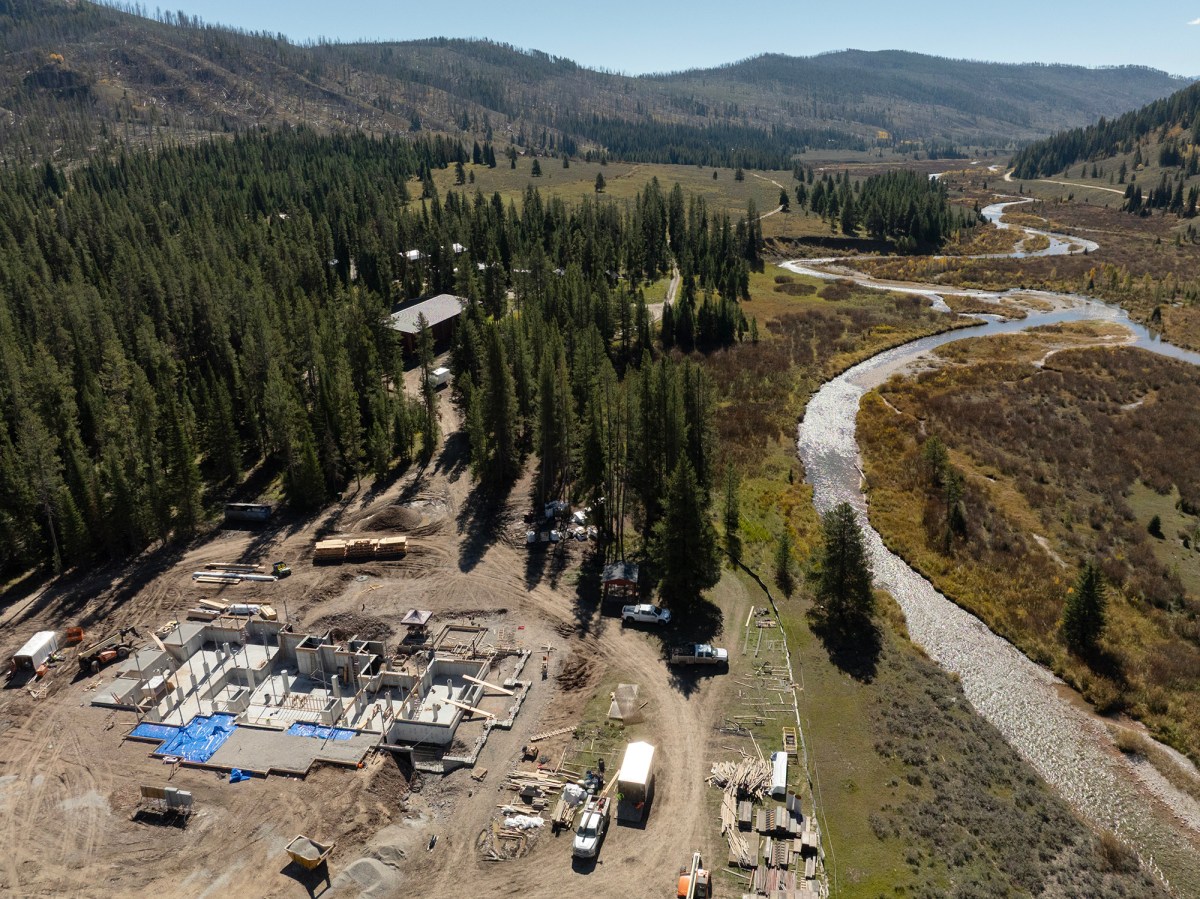
When I zoom in on a more detailed look of the private/public partnerships, what I find is an old story. Just look at the development along Granite Creek in Teton County. Thus far, this private initiative is a matter of heavy trucks and heavy machines moving lots of earth to build an elaborate ecotourism center called “The Hawken” that will cater to the very wealthy and make them feel like mountain men. It has meant massive noise and disruption to all creatures who normally take up any residence in the Granite Creek drainage in the summer, and it will mean cordoning off an area for the very wealthy that could have been brought into the national forest preserve. The U.S. Forest Service would not have engaged this initiative, and I suspect conservation and the general public would have been better served for it.
Then there’s the Upper Hoback River which has been plagued for years by the threat of large-scale ecotourism enterprises catering to the wealthy. Keeping this ilk of private development at bay has been a full-time battle for many conservationists and concerned citizens of the Upper Hoback region. The battle goes on as another ecotourism initiative, “The Confluence” was proposed and problematically given a green light. Thankfully, the Sublette County Board of County Commissioners abided by the zoning laws that govern Sublette County and rescinded the green light, reverting the land back to agricultural zoning.
So I am doling out some advice based on years of experience in the conservation trenches: Conservationists need to think carefully about the snake oil they buy. Understand that there is a massive public relations campaign to sell as conservation these cases of money finding trouble. The truth is there is only one way for conservation and certainly conservation of the wild — migratory paths, breeding grounds, winter range, open space — to take place. Let the words of the essayist and poet Gary Snyder speak to conservation: “Wilderness is a place where the wild potential is fully expressed, a diversity of living and non-living beings flourishing according to their own sorts of order.” My emphasis. Massive ecotourism lodges pretty much eliminate “their own sorts of order” for everything else. Expansive ecotourism sites for the wealthy, up small river valleys, smack dab in the middle of migratory paths don’t qualify as conservation. This is not rocket science.
Private conservation is not a bad thing if it’s really conservation; that is, if it’s conservation given over to the preservation of the wild where we humans and our economic enterprises actually step back, but what I see happening is not conservation — it’s just money finding trouble masked as some sort of cockamamie conservation alchemy that we would all be well served to think twice about.