CHEYENNE—Laramie County is moving toward a new standard for industrial developments that requires construction workers be housed outside the local housing market, whether it be through accommodations on the project site or through another arrangement approved by county officials.
The policy is emerging as the county works through permitting the Laramie Range Wind Project and anticipates a growing number of large-scale energy and data center developments.
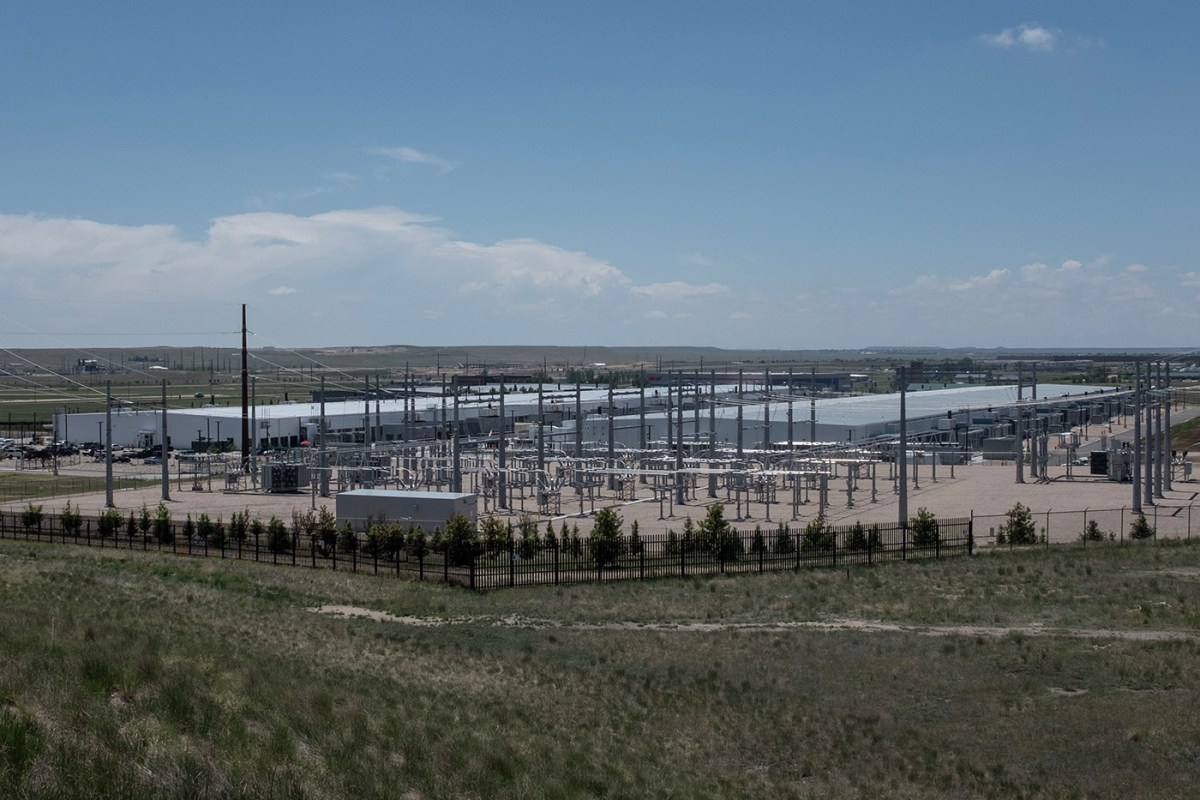
Wyoming’s most populous county has begun requiring workforce accommodations for large projects on a case-by-case basis, according to Justin Arnold, director of Laramie County’s Planning and Development Department. That includes Project Latigo, a proposed data center development by Vantage Data Centers, located 12 miles south of Cheyenne.
The requirement is intended to prevent temporary construction workers from putting additional pressure on Cheyenne and Laramie County’s already low housing supply, Arnold said.
“It mitigates multiple impacts to the community from these large construction projects,” Arnold said, “from traffic sheds to inundating our local housing and rental markets.”
The city and county are seeing multiple large industrial projects proposed or under construction at the same time, he said. This includes data centers, wind farms and solar energy projects.
“Cumulative effects, we don’t have really any other option than to figure out housing outside of our local markets,” Arnold said. “And there’s multiple ways to do that.”
Developers could build workforce housing developments on the project site; build a general workforce housing camp that accommodates construction workers for multiple developers or contractors; or build an RV park on-site, he said.
The requirement would apply only to construction-period workers, rather than full-time employees once the development becomes fully operational.
“Data centers, when it’s all said and done, they’re looking at 250 (full-time) employees versus 2,500 (construction workers),” Arnold said. “… But usually with the wind farms and solar farms, you get them constructed and you have a handful, less than single digits for daily operations and maintenance.”
For wind and solar projects, Arnold said construction workforces generally have around 300 people.
“Three hundred people coming here is 300 less units that the locals have available to themselves from the local supply,” he said.
Laramie Range Wind Project
The housing issue became a more prominent discussion among county officials as the Laramie Range Wind Project makes its way through another round of the permitting process following its approval by the Wyoming Department of Environmental Quality’s Industrial Siting Council last month.
After previous denial from the Laramie County Board of County Commissioners in September 2025, developers announced in January their intention to submit an application to the council to permit the project on private and state lands.
The wind farm is expected to erect 139 turbines on 41,220 acres of Farthing Ranch Co. land and land managed by the Wyoming Office of State Lands and Investments roughly 20 miles northwest of Cheyenne. It’s being developed by ConnectGen Laramie County, an affiliate of Repsol Renewables North America.

The Industrial Siting Council green-lit the permit after a two-day hearing on Aug. 31 and Sept. 1. It was approved with 26 conditions, which are not available to the public due to the document’s status as unfinalized. Jenny Staeben, Industrial Siting Council administrator, previously told the Wyoming Tribune Eagle that the list and all other relevant documents submitted as exhibits during the Sept. 1 hearing would be released approximately 45 days later.
The project is expected to have a peak of 305 workers during its construction period.
Even though the Industrial Siting Council approved the permit, there are still local conditions Repsol has to meet, such as county requirements regarding permits and studies, before construction of the wind farm can begin.
Arnold said county officials have told Repsol representatives that workforce accommodations will be required as part of that process. However, he said it’s not clear yet what form those accommodations will take.
Repsol representatives met with Arnold this week and told him that requiring on-site housing may conflict with existing contracts and agreements with the landowner, he said.
“So I said, ‘Here’s the deal. If you don’t want to renegotiate with the landowner and say everybody needs to stay on site, find alternative means,’” Arnold said. “I’ve been meeting with no less than three or four commercial entities that do workforce accommodation as their specialty. So in lieu of requiring it on-site, they could potentially just say, ‘OK, we’re (contracting) with this other entity who is doing workforce accommodation.’”
Arnold said the project’s recent Industrial Siting Council approval included an unknown condition that Repsol representatives told him could make its current plans unworkable. The company could seek to amend that condition, request the county postpone its local proceedings, or withdraw and resubmit its county application after resolving the issue.
“So, at this point in time, we don’t know,” Arnold said. “… It’s going to be really important they receive that amendment. So let’s just say at this point in time, we don’t know what’s going to be submitted until they figure out what’s going on with the Industrial Siting Division, nor do we know if this application is going to have a public hearing and request postponement.”
The exact solution could also ultimately require approval from county commissioners.
Regardless, Arnold reiterated that the new workforce housing requirement will apply to all proposed industrial developments in the county from here on out.
“Basically, at the end of the day, we said no matter what … we need to just simply require workforce accommodation on-site, regardless of whether (developers) go through the Industrial Siting Division or whether they get a zone change from the county and go through the site plan process,” he said. “That’s just going to be the standard operating procedure on these moving forward.”