

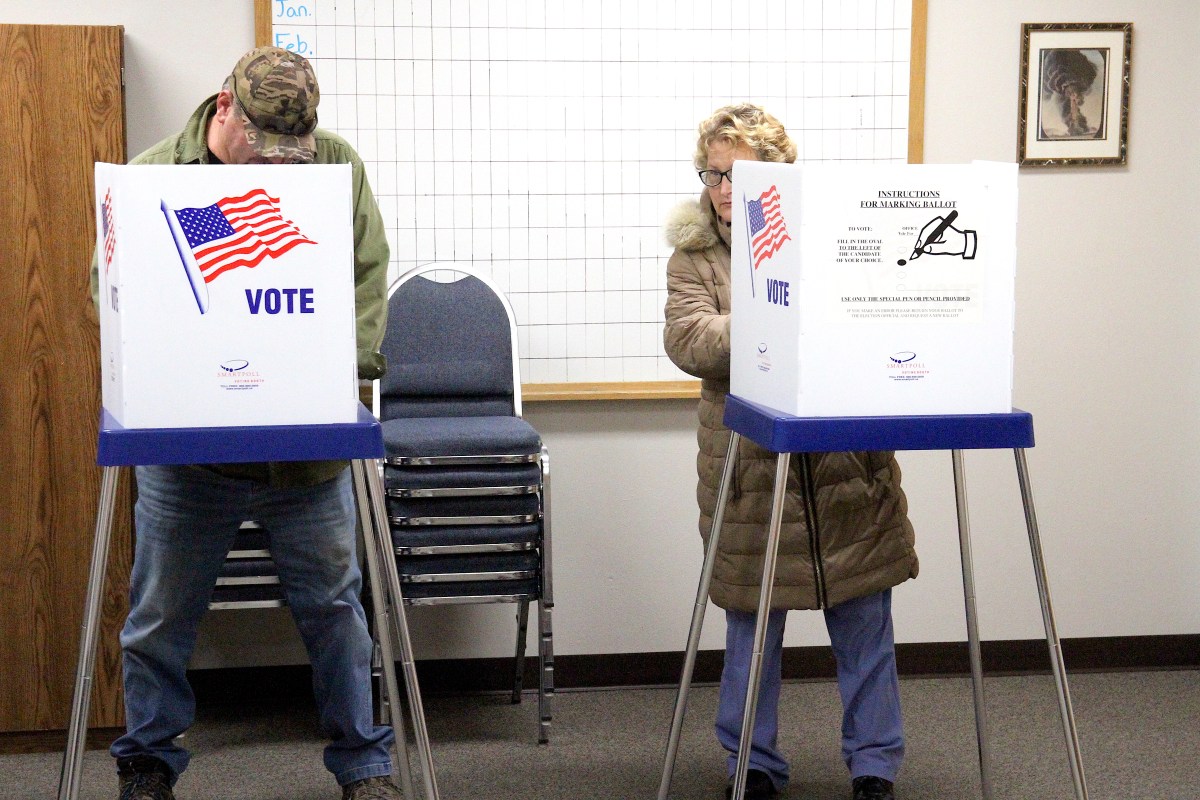
Wyoming’s closed primary election system and its so-called “sore loser” laws do not violate the state’s constitution, a district court judge ruled Friday in a lawsuit brought by a group of voters earlier this year.
“The challenged statutes regulate the manner in which political rights are exercised but do not abridge the rights themselves,” Laramie County District Court Judge Nathaniel S. Hibben wrote in his decision. “The court likewise finds the challenged statutes do not deny Plaintiffs equal protection of the laws.”
First filed in August 2024, the lawsuit initially sought to overturn the state’s prohibition on failed primary candidates appearing on the general election ballot as independents, known as a “sore loser law.”
In April, the complaint expanded to challenge Wyoming’s closed primary election system as well as its crossover voting ban, which limits how and when voters may affiliate with a political party.
The plaintiffs, who included voters, former political candidates and a retired state lawmaker, argued that such laws violate the Wyoming Constitution’s guarantee of “political equality” and “impermissibly discriminate against candidates and voters not affiliated with a major political party.”
Those laws, however, are a “valid exercise of legislative power,” Hibben ruled, adding that his decision is likely not the last in the case.
“As the parties made clear at argument on these motions, this dispute will inevitably be resolved by the Wyoming Supreme Court,” the ruling states.

In the meantime, Wyoming Secretary of State Chuck Gray, who was named as a defendant in his official capacity as the state’s top elections official, called the ruling “a huge win for the integrity of Wyoming’s elections,” in a statement.
“Protecting the election process by banning crossover voting has been a key part of our administration’s election integrity agenda,” Gray wrote. “With this ruling, it is confirmed what we, the citizens of Wyoming, knew all along: these laws are constitutional, and pivotal to ensuring election integrity in Wyoming.”
The ruling
It’s not the court’s job, Hibben wrote, “to question the wisdom of the Legislature’s policy choices,” but rather “to determine whether those choices transgress the clear boundaries established by the Wyoming Constitution.”
The court found the sore loser law does not cross that boundary in part because it does not completely disqualify a candidate from running after losing a primary.
“The availability of the write-in option, explicitly protected by the Wyoming Constitution, ensures that the right to seek office is not extinguished,” Hibben wrote.
For decades, Wyoming had a partially open primary election system. That meant voters were restricted to casting ballots in races that aligned with political party affiliation, which they could change on election day and during most of the early-voting period.
However, that changed in 2023 when lawmakers created a 96-day blackout period leading up to the primary election in order to ban what’s known as crossover voting — a popular practice for Democrats in a state where Republicans dominate politics. Democrats often vote for more moderate Republicans, which has frustrated some on the right.
The new timeline lines up with the candidate filing period, meaning voters must affiliate with a party before the slate of candidates is finalized.
Altogether, plaintiffs argued that the deadline and Wyoming’s closed primary system unconstitutionally burden their fundamental right to vote.
However, “the right to vote in a primary is not an absolute right to vote for any candidate, but rather a right to participate in the selection process of the political party with which one has chosen to affiliate,” Hibben ruled.
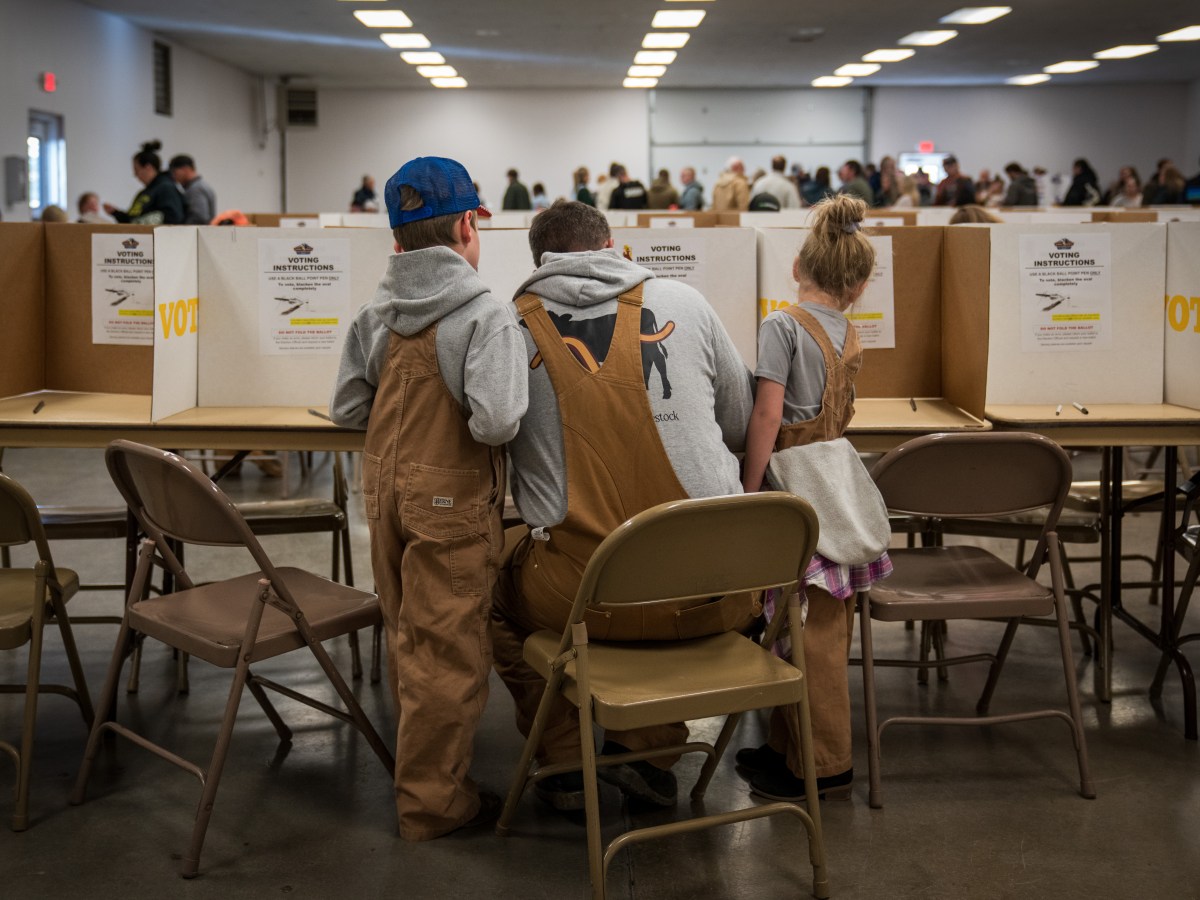

In their filings, the plaintiffs pointed to the political reality that many races in Wyoming are decided in the primary election due to the Republican Party’s dominance.
“This perspective, however, invites the court to step beyond its constitutional bounds. It is not the court’s function to diagnose the causes of the political imbalance, much less to prescribe a remedy,” Hibben wrote. “Rather, the court must champion the very political rights plaintiffs exercised: the freedom to organize, to advocate, to persuade, to seek public office, and to cast a vote for the candidate of their choice. Plaintiffs had, and still have those political rights and privileges.”
Plaintiffs now have 30 days to file an appeal with the Wyoming Supreme Court.

If I don’t know who the candidates are before I declare political affiliation, how can the court say I am able to vote for the candidate of my choice? In the last election the candidate of my choice may have been in one party and in the next election it may be someone from another party. (Remember the good old days when we voted for the best candidate regardless of party?) If candidates haven’t even filed to run for office, how are we to know which one we choose?
The problem is that Republicans want to have it both ways – 1) the taxpayers, all taxpayers, are required to pay for Wyoming primary elections (around $2 million a shot); but 2) only those choosing to affiliate with a recognized party get to play. It’s like an invitations-only wedding, with the public picking up the tab.
The public election process should be designed to elect those who best represent the people of Wyoming – all the people of Wyoming – rather than being designed to corral the vote in favor of one particular political party. An open primary with the top two proceeding to a general election runoff is the best way to do that.
Hello from Big Horn County, Bern. This calls for long discussion. Best regards.
The closed primary system is most unfair to people who don’t neatly fit into either the Republican box or the Democrat box, but would like to participate in our democracy and vote for the most competent individual to represent them. When statewide and local races are decided in the primary, the only way to have any say is to register as a Republican, giving undeserved credibility to a party that has changed dramatically in recent years. The Republican Party in Wyoming is no longer conservative in any way, but people are afraid to give up their party affiliation because they would lose the ability to choose their representatives in many of the smaller races. How many registered “Republicans” feel they are forced to affiliate themselves with a group that does not share their values. The sparse population of WY would be better served by ranked choice voting. We simply don’t have enough candidates for each office to have two competitive slates, one R and one D. When groups of our neighbors are disenfranchised, it harms our democracy as a whole, which harms every one of us who cherish freedom and community.
I’ve often thought that crossover voting is cheating so I am happy with the ruling.
So in your opinion only republicans should be represented. Wyomings political system is unhealthy. What are you people afraid of? Everyone should be able vote for their representative of choice, even if it’s just another right wing goofball.
It is not the fault of the Republican Party that Democrats don’t have enough faith in their own ideals and are not willing to brave up and run as Democrats. Wyoming has had plenty of Democrats in state leadership. But it will take work, and it’s way easier to be a weak-sauce Republican, apparently.
The point is that the people should have as much choice as possible. I have voted Republican and Democrat in the past. There should not be “rules” that reduce choice. In fact, the best solution would be a rank choice ballot. But that would also threaten the Republicans. I will say that the Democratic party is weak.
I’m a full on rhino. Nobody in Wyoming should ever be Democrat. The cards are stacked by the stupid, of which 70-80% of Wyoming residents fall into.
I’ll vote for the least offensive Republican, and if a Dem manages to get in, I’ll vote if I feel they stand a chance, which they rarely do.
Even though I’m a Democrat at heart, I’m not stupid enough to vote on principle, I vote for realistic possibilities.
100% correct