
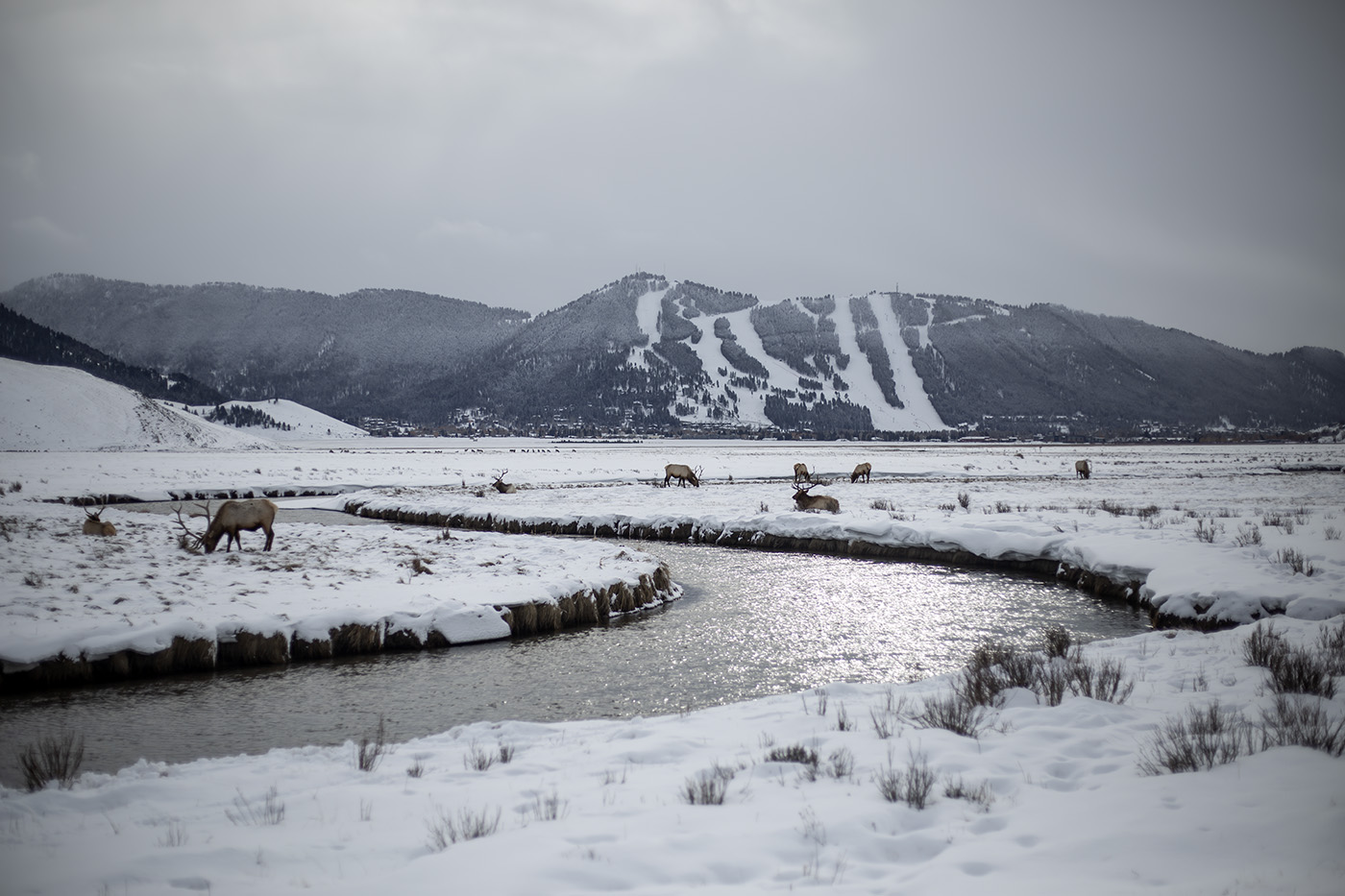

The discovery of chronic wasting disease on the National Elk Refuge adds urgency to a 2021 plan to reexamine the size of the 11,000-strong Jackson Elk Herd, the nation’s largest migratory herd.
The discovery also raises questions about the annual Scouts’ antler collection and auction, other traditions and practices, and even the safety of nearby Jackson’s water supply.
The diagnosis of CWD came after officials killed an ailing cow elk on the refuge just north of Jackson on April 15. Field workers sent biological samples to a Wyoming Game and Fish Department lab, a second lab confirmed the results, and federal and state officials announced the infection Monday.
The lab results document the first case of CWD in an elk on the refuge. Game and Fish tested 50 hunter-harvested elk from the refuge in 2025 and 14 elk that died after the hunt.
“National Elk Refuge staff will increase monitoring and surveillance of herds for CWD, re-evaluate some existing programs and implement additional bio-security protocols to keep people and wildlife safe,” the U.S. Fish and Wildlife Service and Wyoming Game and Fish Department said in a joint statement Monday.
The disease is now embedded in what Game and Fish called “one of the largest and most well-known elk herds in North America … that holds significant ecological, cultural, and economic value for Western Wyoming.”

Concentration of elk at feedgrounds is believed to promote the spread of CWD. The National Elk Refuge supplies supplemental feed to wintering elk and Wyoming Game and Fish operates 21 of its own feedgrounds west of the Continental Divide, stretching from the Gros Ventre River drainage to the southern end of the Wind River Range.
Environmental activist Lloyd Dorsey, who has lived for 50 years in Teton County surrounded by elk feedgrounds, acknowledged foreboding as he tracked the disease over decades from its epicenter in Fort Collins, Colorado, and the Laramie region.
“It is not unexpected, of course,” he said Monday of CWD’s arrival on the National Elk Refuge. “But it’s a shame that the wildlife management agencies allowed the feeding programs to continue this long when they could have, should have, been phased out long, long ago as they were virtually almost everywhere else in North America.”
“It’s a shame that the wildlife management agencies allowed the feeding programs to continue this long.”
Lloyd Dorsey
State and federal officials did not immediately answer questions about whether the discovery so close to Jackson threatens the town’s water supply. The municipality draws drinking water from several wells on the south end of the refuge, where officials said the ailing elk was identified and euthanized, in accordance with protocol.
Always fatal
The always-fatal neurological chronic wasting disease is caused by a malformed protein known as a prion. It is easily transmissible among ungulates; the prions persist in the environment and are only destroyed by very high temperatures or precise application of chemicals, including bleach.
It is akin to Creutzfeldt-Jakob’s disease in humans. Although there’s been no confirmed case of CWD infecting a human, scientists suspect it could jump the species barrier just by a person consuming the muscle meat of an infected animal. Scientists warn against eating infected game.
Dorsey called continued feeding “the height of malfeasance and irresponsibility.” Game and Fish operates its feedgrounds to ensure an abundance of elk for hunters, to separate elk from cattle that could be infected with brucellosis and to keep elk off private property and highways.
Wyoming’s elk feedground program is unique to three counties, generally drawing several hundred elk to each feedground site. As winter begins, feeders, often in horse-drawn sleighs, dole out hay that’s been stacked in anticipation of snow.
Before the feedground program and development of ranches in western Wyoming, elk from the greater Yellowstone area would migrate to natural wintering grounds — frequently windswept hillsides and often desert country south of Jackson Hole.
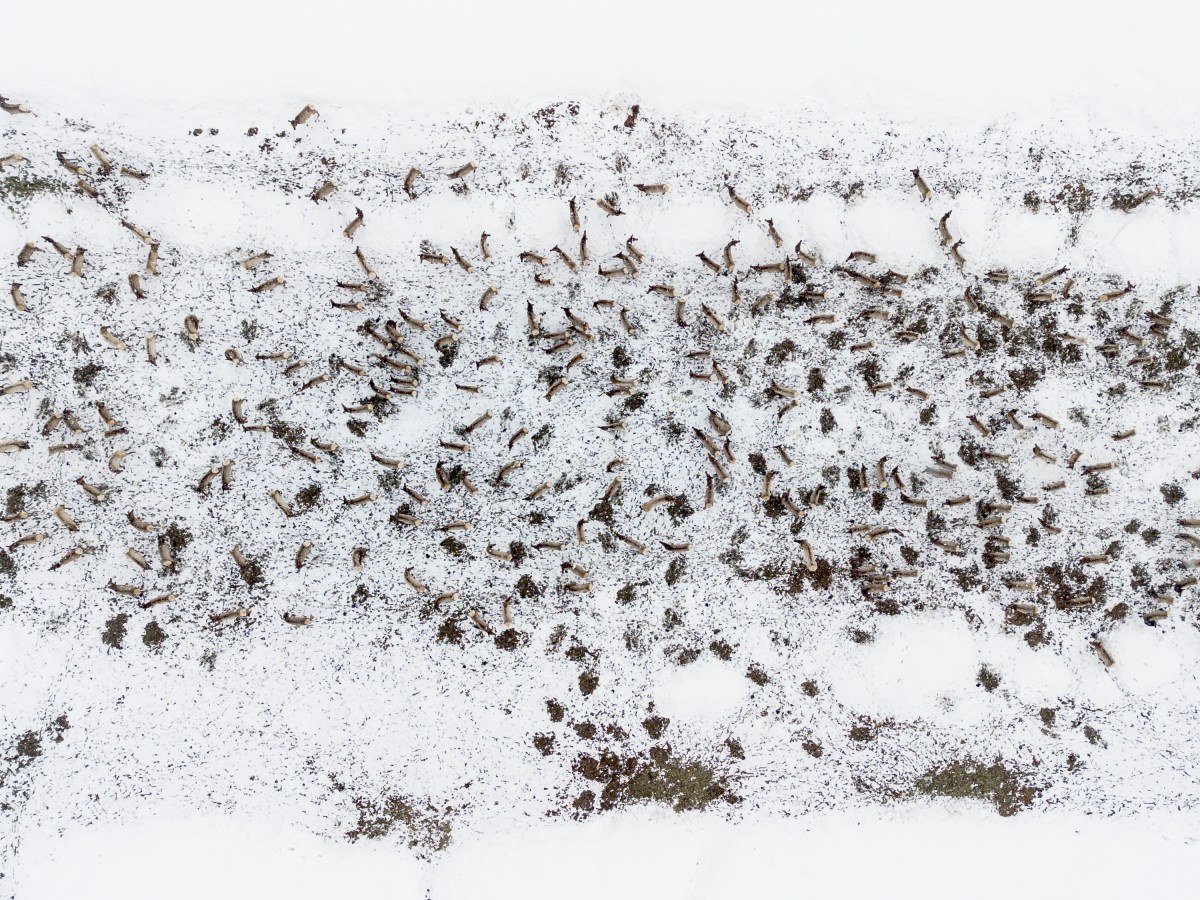
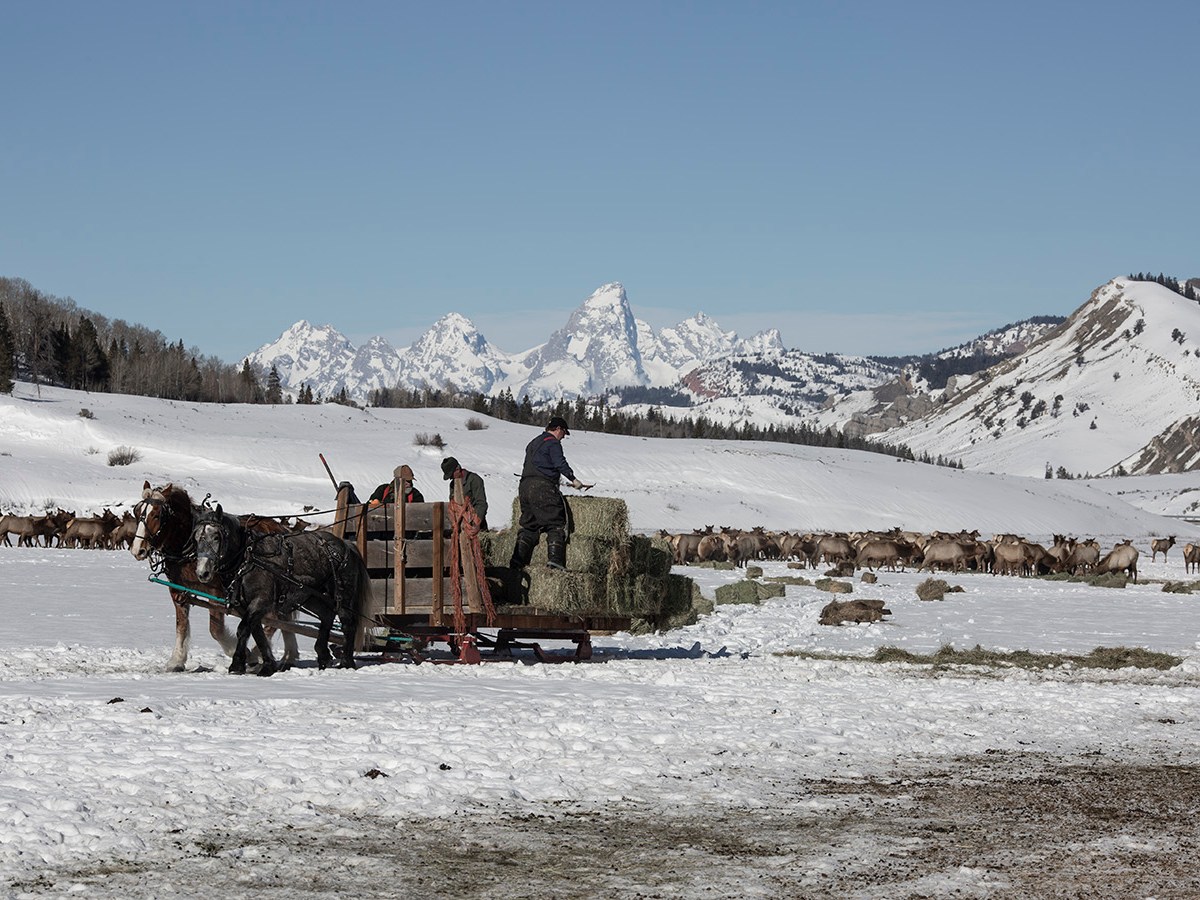
This winter, the National Elk Refuge biologist Eric Cole reported a high count of 6,970 elk on the 24,700-acre refuge. Because of a lack of snow, refuge workers did not dispense supplemental feed to the herd, one of 11 winters since 1912 when no feed was distributed.
The bulk of the Jackson Elk Herd winters on the refuge. Although CWD was detected in an elk from the herd that was killed in Grand Teton National Park, the disease has now crossed the Rubicon that is the Gros Ventre River, and having arrived on the refuge, will prompt new action.
State and federal officials were not available for interviews but pointed to the refuge’s response strategy adopted in 2021. The strategy calls for the federal agency to request that Wyoming consider decreasing the state’s population objectives for the Jackson herd.
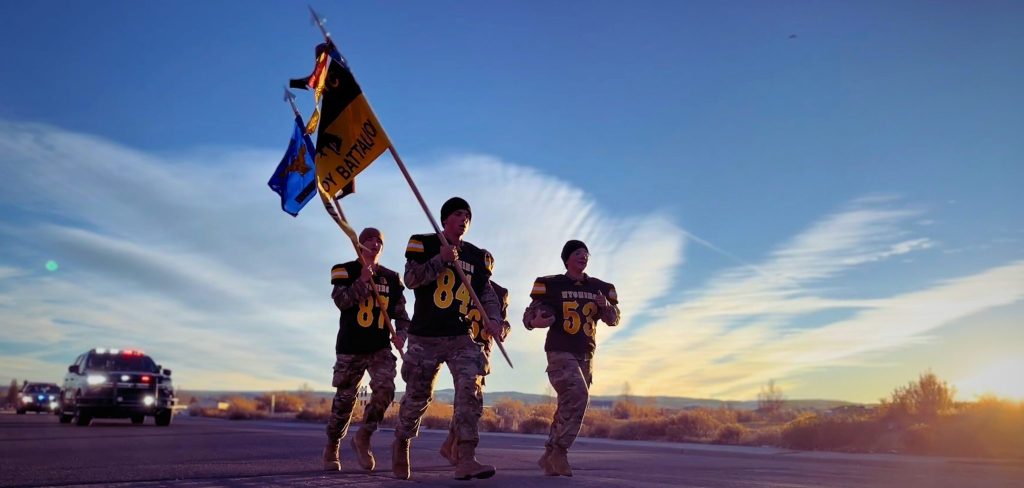
The plan also recommends that the agency review the traditional antler collection on the refuge taken on by Scouting America scouts — previously called the Boy Scouts — and the sale of some 8,000 pounds of antlers annually. This year, Scouts took to the field on April 18.
“Considerations should be made for antler material entering medicinal or food chain,” the strategy states.
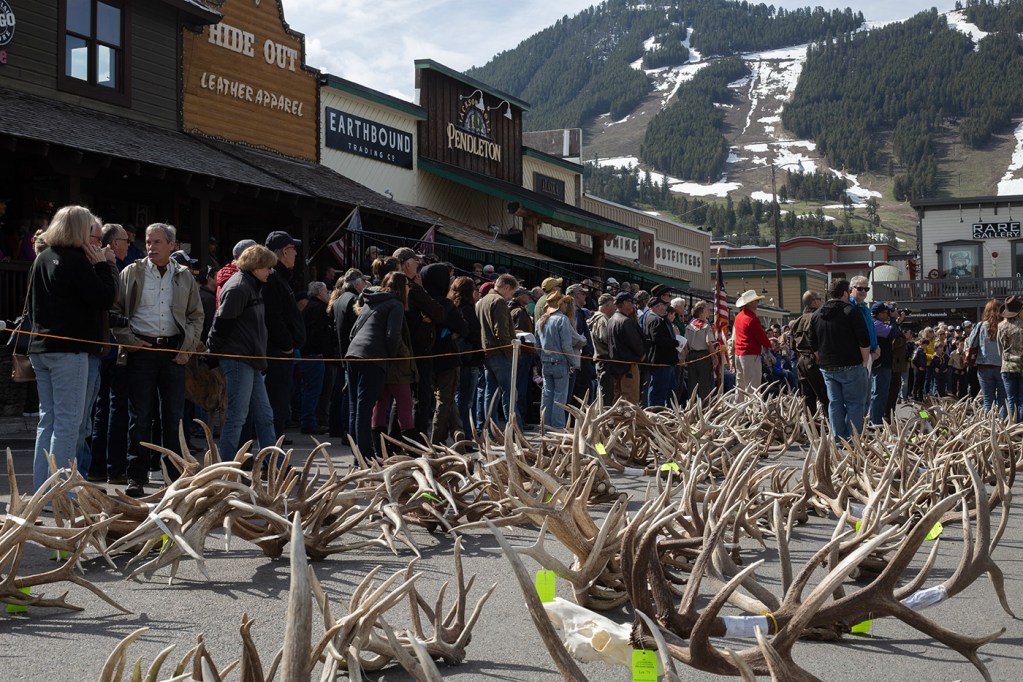
Some antlers are used as nutritional supplements, others are crafted into buttons and other items and also sold as chewies for dogs.
Under the refuge strategy, hunters who use horses need to pick their horses’ hooves before the animals are trailered off the refuge. Other measures call for using protective personal gear and incinerating parts of elk that die on the refuge.
News of the refuge infection comes as Wyoming Game and Fish detected CWD at the Muddy Creek feedground at the southwestern end of the Wind River Range. The agency announced that discovery May 4, making Muddy Creek the fifth state feedground where the disease has been discovered.
The agency detected the disease in a grid search for elk skulls containing testable brain matter conducted after the end of the feeding season.
The agency first discovered CWD on a feedground in 2024. The disease was discovered first in a deer at a wildlife lab in Colorado in 1967 and is a type of transmissible spongiform encephalopathy.
Rebecca Huntington contributed to this story.
Correction: The date of the adoption of the refuge response plan has been corrected. It was adopted in 2021, not 2012 —Ed.

Ask Ted Nugent what he thinks about it.
A lot of misinformation in that article. The fear from government animal scientist is that crosses species barrier with Bovine which could have catastrophic implications to our food supply, among other byproducts of the cattle industry.
It doesnt transfer readily among ungulates and is only found in cervids. If it were as bad of a contagion as virus, or bacteria related illnesses, then it would have reached epidemic proportions decades ago. As it is the disease has effected less than 2% of north American cervids since it was discovered.
Lastly, I am.curious as to where and what was being fed to them? If it was hay, and it was sourced fromCWD infected areas such as Wisconsin, was the hay/feed exposed to the prions? I only know of one study being done by Mississippi State deer lab about prevalence of the prion on the landscape. But certainly it can and has been moved through standard agricultural practices if in fact it has high prevalence on the land. It is nearly impossible to destroy and it has been shown to survive standard refuse incinerator temperatures. The only way that I am aware the prion can be destroyed is through a chemical digestor.
In conclusion I will say that the response to the disease by gobernmental.agencies has been far more detrimental to the populations than the disease ever has been or ever will be. When tax dollars are dangled by the fed, you can bet that agencies nation wide will do what is necessary to get it. Resources be damned.
The disease spread in Wyoming elk has been known for decades and remedy known as well. Avoiding comingling of elk from various locations to the feedground spreads the disease.
Accepting the reality that central feedgrounds contribute to the spread apparently is the problem.
Here is a recent study that investigated two hunters who consumed deer from a CWC infected herd and died from Creutzfeldt-Jakob disease. The researchers were unable to rule out CWD as the cause. Coincidence? Maybe, maybe not. Some rapid testing would be nice so that we don’t waste time or money to process animals.
https://www.neurology.org/doi/10.1212/WNL.0000000000204407
We settled the west and we changed how everything functions. We want management to suit our needs and not the needs of wildlife. Do I have all the answers? Tory doesn’t either, but he has lived and worked in the midst of elk managment for years. And it is exactly his environmental credentials that make him credible. I think his perceptions are pretty accurate.
In this age of miracle medicine I don’t think most people realize how deadly and unpredictable this disease is.
For year, the experts blithely said not to worry about eating infected animals. Then, some unpredictable things happened and they became more cautious.
I hunt, but I never eat an animal without first testing it. And when I butcher I am meticulous about cleanliness(bleach.) I hope the experts are right about its effectiveness. It is very hard to kill..
Thanks for a good story.
No feed this past winter, yet we could see tight packed groups on the refuge much of the winter.
The endless handwringing over CWD and feed grounds is so tiresome when elk naturally pack together in the winter regardless of whether they are fed or not.
At some point will “the experts” ever acknowledge that elk cluster together in the winter regardless of whether they are being fed or not?
Agenda driven hysteria.
All respect to Lloyd Dorsey, but an environmental activist is not who I am listening to about how to manage a National Elk Refuge. To stop feeding on Wyoming’s biggest refuge is not that easy as “I told you so”. First of all I would like to pose this question to Anyone who could answer. Why do elk have consistently have lower CWD rates than Mule deer, Mule deer do not congregate on feed grounds. The fact that CWD was found on the refuge is not a surprise. It is very nearly statewide in deer. To say that it can jump over to a human species is like saying the boy can jump over the moon. Science has not found a way for this to be possible. And to say the disease is “always fatal” Some deer live for years with it. Age is “Always fatal”. CWD has been around since the 60’s. 60 years later we debate over this and try to “fix” nature.
Chancy, you are correct. The Laramie peak herd has had CWD exposure for 40 years and is FAR healthier than the Jackson and Yellowstone herds, that have had to deal with exposure to another disease the past 30 years that has massively cut the herd numbers. Wolves.
I’d be happy to email anyone a few documents (white papers, comments on agency plans, etc.) I’ve written on this issue, and have an in person dialogue. I’ve tried to incorporate the science and legal directives, and offer solutions. My gmail is lloydjdorsey
One more nail in the coffin of a century old program that has served all of Wyoming well. The only reason the search for for CWD has been undertaken is to spread fear and to use that fear as a reason to close the feed grounds. This disease just didn’t pop up on the refuge or any of the feed grounds. Experts know the disease has been here for decades, but we weren’t looking for it until a reason was needed to close the elk feedgrounds. Sadly, our wildlife management agency is playing along.
Why must everything be a conspiracy? No “experts” have known that CWD was present on the refuge or on state feedgrounds for decades; it almost certainly has not. There has been pretty solid surveillance for the disease at those locations for decades. It’s spreading, that’s what diseases do. Your wildlife management agency (WGFD) and USFWS now are between a rock and a hard place as there are no tools to eradicate CWD. There may be tools to slow spread and keep some sort of cap on prevalance, and reducing or closing feedgrounds is one that needs to be considered.
There is the sound science the WG&F is using for instance in deer area 157 to curb CWD. Since there is roughly 30% of Mule deer BUCKS with CWD, KILL them ALL! General season for any deer! That is like saying humans in Europe should have been exterminated during the Black Plague! It was spreading!
I don’t understand your point, can you clarify? Unless caught very early, and at a focal point source, it’s difficult to impossible to kill your way out of CWD. Once established, it’s in soils, plants, etc. for decades. If not longer. It’s a brutal disease and there are no great tools to manage it, at present. There is a recent study that suggests that lowering deer density, especially buck density, may help slow spread and slow prevalence rise in mule deer. https://esajournals.onlinelibrary.wiley.com/doi/10.1002/eap.3089 Science should help guide management efforts.
Amen….
Sad account of inevitable spread of an incurable prion disease. Shame Wildlife Managers have kept winter feeding programme, when science has proven higher densities animals increases transmission between deer.
The future looks bleak for deer, hunting and maybe public health.
Living in New Zealand, our Ministry Primary Industries, Dept of Conservation and Game Animal.Council dont endorse current best methods for cleaning gear to prevent overseas visitors from CWD Zones.
Given prions.remain active in soil, metal and haed to remove porous surfaces. We are.not doing enough….
Need to tax all the ranches that commercialize wildlife for profit and locking the public hunters out, biggest reason for the explosion of elk.
Disease and mother nature going to fix human greed
The only reason for this is Money HOW much Did the game department get Biden ear marked 77 millon to test and there’s a guy in North Dakota that knows what BS this is MONEY AND CONTROL!!!!! SEARCH IT UP THEY ARE FOOLING EVERYONE