


Elwood Mead arrived in Cheyenne in 1888 to sort out Wyoming’s water law before it had any. Territorial Governor Thomas Moonlight had offered the 30-year-old Mead the job sight unseen. When they finally met, Moonlight had second thoughts: “I had no idea you were so young,” he told Mead. “I’m sure you will fail.”
His name now belongs to Lake Mead, the reservoir behind Hoover Dam, roughly 300 miles downstream from Lake Powell. This summer, both reservoirs hit record lows. The two reservoirs are connected by more than geography. In April, the Bureau of Reclamation held back 1.48 million acre-feet bound for Lake Mead, trading Mead’s levels for Powell’s — buying time before Glen Canyon Dam’s turbines stop generating power entirely. Hoover Dam’s own output, meanwhile, is projected to drop by as much as 40 % this year.
The rules that have governed both reservoirs for nearly two decades are expiring, and the seven river states never reached a deal to replace them. So, on Aug. 21, the federal government stepped in on its own: Lower Basin states must cut back sharply, while Wyoming and the other Upper Basin states face no mandatory reductions — yet. To understand today’s fight over who bears the cuts, it helps to go back to where Elwood Mead’s own story started.
A system from scratch
Back in Cheyenne, what Mead found was chaos. Territorial settlers, borrowing a mining-camp rule called “prior appropriation” (aka “first in time, first in right”), posted handwritten claims to entire streams, sometimes claiming more than the state really had. “The virtue of self-denial had not been conspicuous” among claimants, Mead later wrote. One judge decided a Cheyenne case by granting water rights unmoored from any ditch or acre of land, then told Mead, who’d asked how to enforce it, to go find each claimant himself.
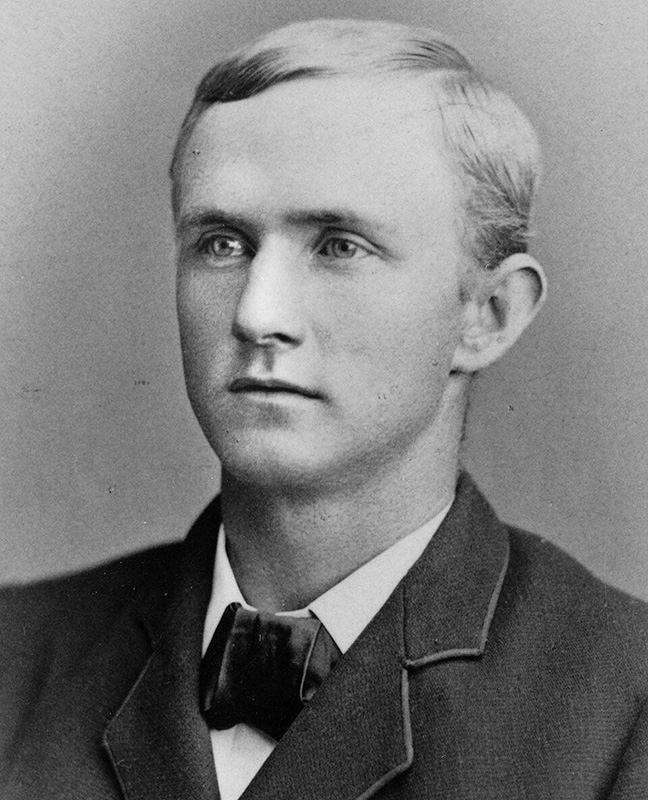
Mead’s fix, in the 1890 constitution he helped draft, was blunt: The state would own the water, and a board of control — not a courtroom — would decide disputes, tying rights to water actually used rather than paper claims. Most territorial claims got cut to a fraction of what people thought they owned.
That trade-off paid off most clearly where resistance ran deepest. Buffalo, in Johnson County, had voted against the new constitution and distrusted Cheyenne. In 1891, Mead’s office installed the state’s first stream-gaging station on Clear Creek, the stream that flows through Buffalo that would provide the real test of his system. The adjudication cut most claims on the creek by roughly 90%. A Colorado investment company holding foreclosed Buffalo-area land sued to challenge the results, and the Wyoming Supreme Court upheld the cuts. Then drought hit. Because rights on the creek had already been cut to what it could sustain, every irrigator made it through the season anyway. People who opposed the system became its defenders. A hard technical ceiling, enforced by someone with real authority, had done what open claims and courtroom guesswork could not: survive a crisis.
A man of his era
Mead carried that lesson for the rest of his life. During his years in Washington doing federal irrigation research, he lost his right arm in a 1901 trolley accident after a baseball game, taught himself to write left-handed, and told a friend he expected to “do as well without any hands as with both of them.” He went on to a stint in Australia, then in 1924 took the top job at the U.S. Bureau of Reclamation, overseeing construction of Hoover Dam and Boulder City, Nevada, the town built for its workers. He died in 1936, four months after the dam’s dedication; the reservoir was named Lake Mead in his honor within weeks.
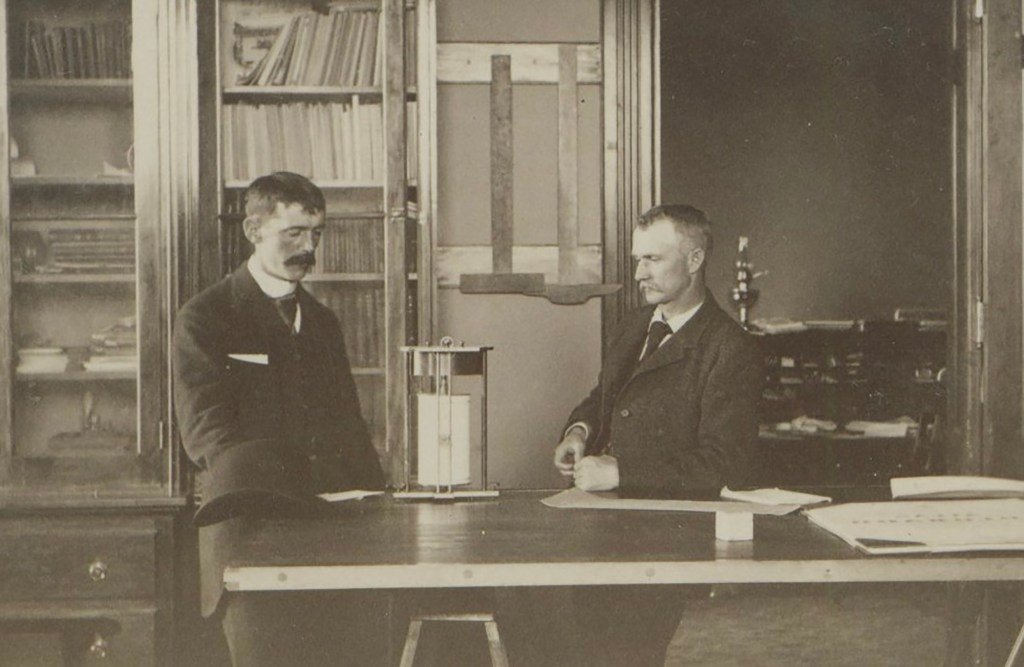
It’s tempting to end there: The young engineer who fixed Wyoming’s water goes on to lead construction of the dam that supplied water to the modern Southwest. But it’s worth understanding Mead on his own terms. He came of age with the Progressive movement’s faith that trained experts could manage natural resources for the public good, the same faith behind national forests and city planning. Mead’s version, “social engineering,” pushed further: government-built farmhouses, planned irrigation colonies, resettlement schemes for struggling families.
Some of it worked, but much of it strained under real-world weight that it wasn’t built to carry. When agricultural prices collapsed during the 1920s farm crisis, residents of one of his model towns in California burned his portrait in the community hall, and Bureau of Reclamation projects he championed left irrigators holding debts they couldn’t repay. Mead was a man of his moment, applying tools past the point where they held.
Same river, different century
Here the story sharpens rather than repeats. Decades of drought have collided with rising demand from the cities and farms the Colorado River supplies. The river has been governed since 1922 by a patchwork of compacts, court decisions and federal law. In February 2026, the Upper Basin states — Wyoming among them — reached consensus; the Lower Basin states rejected it. What’s stuck is two blocs, evenly matched.
The disagreement comes down to whose water absorbs the pain. Lower Basin states, which draw from the river’s two largest reservoirs, want Upper Basin states to accept mandatory cuts, too. Upper Basin officials counter that they already cut back in dry years by necessity because they lack big reservoirs on that same scale. They’re not wrong: The river’s average flow has dropped by roughly 20% since 2000.
Wyoming’s negotiator holds Mead’s old job. State Engineer Brandon Gebhart has warned that leaning on Flaming Gorge Reservoir — fed by the Green River, Wyoming’s own contribution to the Colorado — as a permanent relief valve is a finite tool, not a solution. Lower Basin negotiators see it differently: Tto them, Upper Basin reservoirs are exactly the flexibility a shrinking river needs. Gebhart has pushed for continued negotiation to avoid litigation.
One federal lever resembles what Mead built: the agency deciding which states gets cuts is the Bureau of Reclamation, the same one Mead once ran. Some would call that the kind of impartial authority that Mead spent his career building. Others would call it federal overreach into water that seven states consider their own, an irony given that Mead himself resisted federal involvement in reclamation for years before reluctantly coming around. Whether the authority holds, and whether it should, is very much unresolved. On Aug. 24, Nevada sued to find out, asking a court to block the Bureau of Reclamation’s plan.
Crises are often what push societies to change what they’d otherwise leave alone. Mead built his career on that premise. He turned Wyoming’s crisis into permanent law, then spent the rest of his life trying to scale that same fix to bigger problems, not all of which held. Whether the Colorado River Basin can do what Mead did, at the scale this crisis now demands, is the open question behind every headline about Lake Mead’s shrinking shoreline.
Related articles on WyoHistory.org
Order out of Chaos: Elwood Mead and Wyoming’s Water Law
Watering a Dry Land: Wyoming and Federal Irrigation
Flaming Gorge Dam and Reservoir
The Green River Basin: A Natural History
Wyoming Becomes a State: The Constitutional Convention and Statehood Debates of 1889 and 1890


Thanks for an insightful article, well explained, concisely. No easy solution–it will be some form of share the pain/share the cost. The seven states must also persuade the rest of the country that there is an important national interest at stake too–which there very much is. Some of those national interests come backed up by law or treaty, but some are more just super important economic considerations like our food supply, the power grid, or even overall robustness of the economy.