


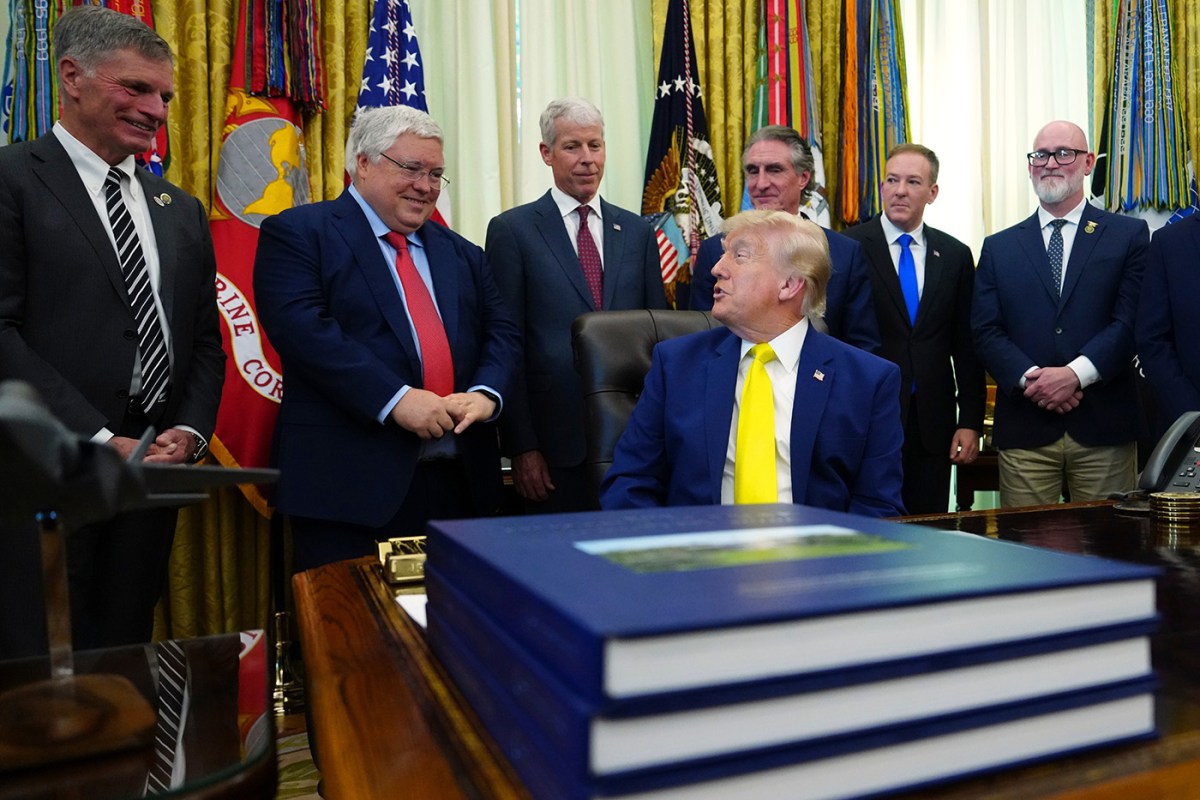
WASHINGTON—President Donald Trump is again seeking to boost the struggling U.S. coal industry, announcing a plan Thursday to spend nearly $700 million to support coal-fired power plants and coal exports.
Trump said the administration will use authority under a Cold War-era national defense law to support 13 coal plants across the country and help build coal plants in Alaska and West Virginia — the first new U.S. coal plants since 2013.
The money will also help restart a shuttered coal-fired power plant in Maryland and support construction of a long-delayed coal export terminal in Oakland, California — a project that coal producers in Wyoming and Utah have been pining for for years.
Though most of the investments go to coal plants and other recipients outside Wyoming, administration actions could delay a planned retirement date for one of four coal-burning units at the Dave Johnston plant outside Glenrock. Gov. Mark Gordon, who attended Trump’s White House announcement of the coal spending, noted the slate of actions includes rolling back a regional haze mitigation requirement that was cited as a reason to schedule the closure.
“Keeping Dave Johnston Unit 3 online is a positive step for Wyoming workers, Wyoming families and everyone who depends on reliable power,” Gordon’s office said in a statement Thursday. “He feels this Administration’s recognition that this area remains well within attainment levels reflects both the facts and Wyoming’s long record of responsible environmental stewardship.”

Together, the announcements will support or create more than 14,000 jobs in coal, construction, rail and maritime industries, a White House official said.
At a White House ceremony, Trump called coal “a great business,” adding: “It’s real power. In terms of power, there’s really nothing like it.”
Gordon praised the president for his leadership in supporting an industry that has long supported Wyoming.
“When a kid grows up in Wyoming, their education is paid, in large part, by coal severance taxes, by the royalties that come from mining that coal that was shut down by the Democrats. When [Wyoming kids] have a chance to get a job, they can go look to the coal mines — and it’s not just digging coal the way we used to. It’s high-tech jobs.”
Gordon stressed the importance of the coal port in Oakland, which he believes will provide Wyoming coal producers access to lucrative Asian markets
“Today, Mr. President, I really want to talk to you a little bit about our recent trip to Japan and to Taiwan — both countries that were going to forswear coal and now they realize that they need that reliable, dispatchable, secure source of energy, but they can’t get it as clean as they can from the Powder River Basin.
“So to be able to open that Oakland port is absolutely essential for the lifeblood of our state and for our coal mines,” Gordon said.
Trump’s coal announcement is further evidence the president is “fighting for America’s energy workers,” Wyoming Sen. Cynthia Lummis said in a prepared statement, “and Wyoming couldn’t be prouder to stand with him.”
She added, “The growing demands of AI and modern industry require more affordable, reliable electricity which coal delivers.”
Trump seeks to reverse long-term decline in U.S. coal
The announcement is the latest step by Trump to try to reverse the years-long decline in the U.S. coal industry. Wyoming supplies nearly half the nation’s coal used to generate electricity, and the Cowboy State has seen coal production slip by nearly half since 2008.
The administration said last fall it would open 13 million acres of federal lands for coal mining and provide $625 million to recommission or modernize coal-fired power plants. Trump issued executive orders soon after retaking office to try to revive coal, a reliable but polluting energy source that’s long been shrinking amid environmental regulations and competition from cheaper natural gas and renewable energy.
Some of those efforts have flopped.
In what was supposed to be a triumph over the Biden administration’s decision to stop new federal coal leasing in the Powder River Basin, the Trump administration in 2025 cleared the decks for a 167 million-ton coal lease auction in Montana and another for 441 million tons in Wyoming. But the federal government received only a single bid for a fraction of a penny per ton of coal, leaving the Bureau of Land Management to indefinitely postpone the coal lease auctions.
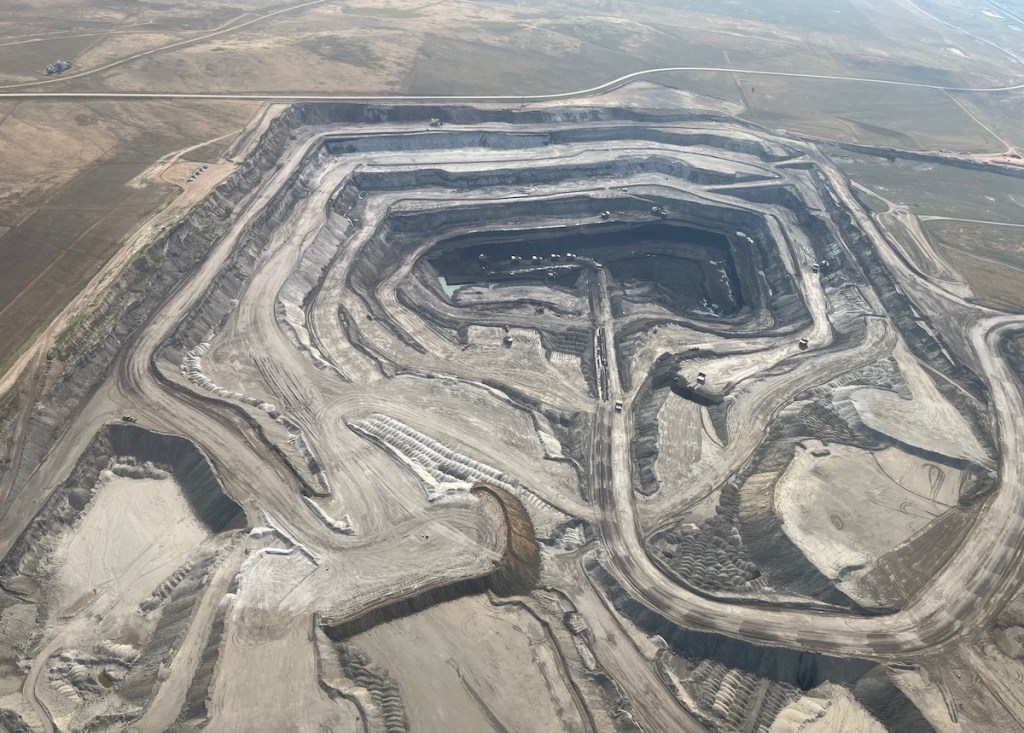
Under Trump’s orders, the Energy Department has required coal-fired power plants in Michigan, Indiana, Colorado and Washington state to keep operating past their retirement dates to meet rising U.S. power demand amid growth in data centers, artificial intelligence and electric cars. The Energy Department has extended short-term orders to allow those efforts to continue, and has ordered oil and gas-fired plants in Maryland and Pennsylvania to run past scheduled retirement dates.
Wright has said the administration’s use of emergency orders to keep aging coal-fired plants operating helped prevent major blackouts during brutally frigid weather that gripped most of the country in late January and early February.
Activists call Trump’s priorities archaic
Environmental groups denounced the latest effort to boost coal, which comes as the Trump administration has clamped down on renewable energy, including freezing permits for offshore wind projects, ending clean energy tax credits and blocking wind and solar projects on federal lands.
“Propping up coal billionaires with taxpayer money is one more way for the Trump administration to put polluters first and put the rest of us at risk,” said Kit Kennedy, managing director for power at the Natural Resources Defense Council. “What’s next, a taxpayer bailout to build new phone booths?”
Trump’s order will result in higher electricity bills and dirtier air, Kennedy and other critics said. “The best thing for the air, the climate and our utility bills is to let these plants retire peacefully,” she said.
Rich Nolan, president and CEO of the National Mining Association, said coal generation helps shield consumers from the impacts of volatile energy prices and supply challenges exacerbated by AI.
Trump’s strategy will “ensure that upgrades to existing energy assets are made” domestically, “and at our ports to ensure that U.S. coal can answer the world’s needs,” he said.
Coal once provided more than half of U.S. electricity production, but its share dropped to about 15% in 2024, down from about 45% as recently as 2010. Natural gas provides about 43% of U.S. electricity, with the remainder from nuclear energy and renewables such as wind, solar and hydropower.
Coal exports have dropped
U.S. coal exports dropped during the first year of Trump’s second term, largely due to less coal being shipped to China after it imposed reciprocal tariffs on American products last year in response to broad tariffs announced by Trump, according to the Energy Information Administration. Global coal demand rose to record levels in recent years but is expected to flatten or decline in coming years, according to the International Energy Agency.
It’s hard for U.S. companies to expand into new markets because there are plentiful reserves of coal around the globe.
Even so, Trump has pushed to revive coal exports on the West Coast. Coal miners have long sought to ship coal from Utah and the Powder River Basin in Montana and Wyoming to markets in Asia.
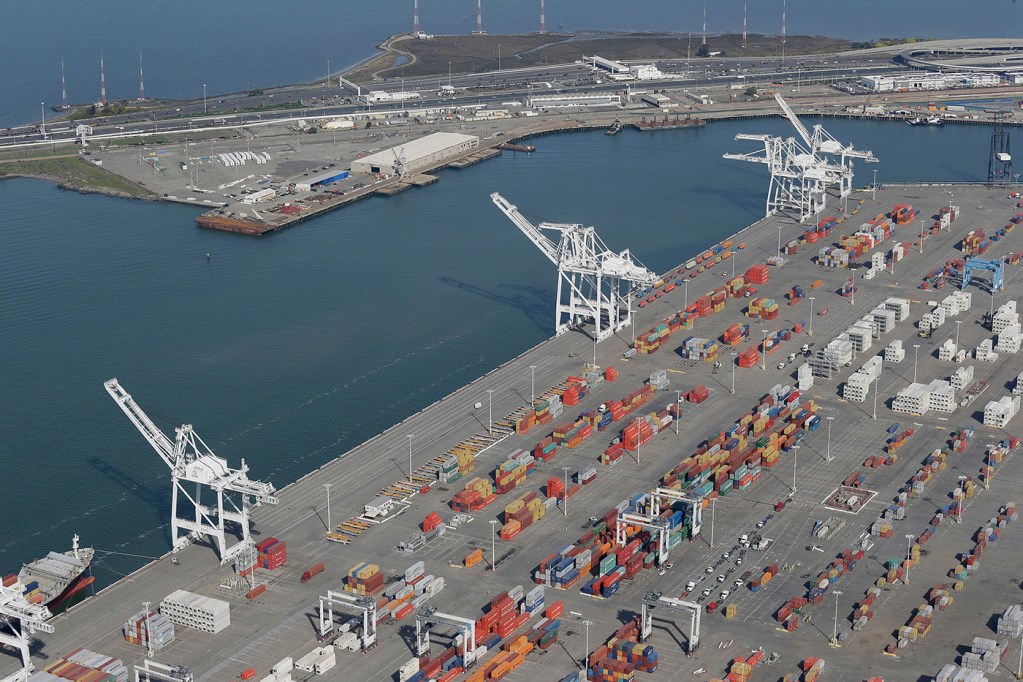
Developers are fighting the city of Oakland to build an export terminal on the site of a decommissioned Army base. Community members and advocacy groups have voiced concerns over how trains loaded with coal will affect public health, safety and the environment.
Associated Press writer Matthew Brown in Billings, Montana contributed to this report.


I read a story – on line- about the state of Wyoming turning down money from the Feds for installing electric charging stations. Their reason was ” we think this should be done by free market capitalism, not government subsidies.” Probably not the exact words. It’s comical how the Republicans demand free market capitalism when it’s something that they’re against, yet the money flows freely to billion dollar corporations and ranchers/farmers.
Communities adjacent to railways generally object to the coal dust that is a byproduct of transporting coal by train. I am interested to know how that would be avoided.
More proof that deep down Republicans are socialists at heart.
700M, a drop in the bucket compared to what the green new scam has wasted.
It certainly is chump change compared to the taxpayer money given to the oil and gas industry.
This is what a guided trip back to the Dark Ages looks like …
Guess the coal industry is not immune to receiving subsidies.
Subsidies for coal…the irony is almost too much.
The coal industry will now have the ability to bring their product to the world !
There are countries that are waiting for Wyoming coal,India,china,Japan,even australia.
Bravo President trump.
Really, Paul ? All those countries are pursuing wind solar and other alternative energy sources more than stopgap coal. China is adding more wind and solar than new coal. Australia is using less coal for generation now than before . It has its own export market and is much, much closer to the users in Asia. Japan is using less coal every year for generation but more for alternative energy . The coal Japan does use is anthracite coal preferred by steel mills. Wyoming’s coal doesn’t work for steelmaking. India imports only 12 percent of the coal it uses; the rest is mined locally . Again , they need more hard anthracite not Wyoming soft bituminous.
Coal is dying. Trump is wrongheaded . Gordon is wrongheaded.
Bravo
Statements of truth.
Not pie in the sky..
I also believe I heard that RMP/Pacific Corp said the only way to go forward with the Dave Johnson plant is to convert it to natural gas.
That is not coal!