


Gov. Mark Gordon said he sees “opportunity” for Wyoming in President Donald Trump’s tariff wars. At a press conference last week, he echoed the Wyoming congressional delegation’s praise for Trump’s economic policies as a tool to bring manufacturing back to the U.S. and level the nation’s trade imbalance with much of the world.
“The Trump tariffs have kind of shuffled the deck, in a way, and I think it’s a great opportunity for Wyoming to be able to pick up the game,” Gordon told reporters while highlighting his April trade mission to Japan and Taiwan. “Taiwan very much understood that they can buy more [U.S.] energy and that will help their situation in the trade deficit.”
But southwest Wyoming, the world’s largest exporter of natural soda ash, along with agricultural producers, businesses reliant on tourism and natural resource extractive industries across the state — as well as ordinary Equality State consumers of almost anything — have cause for concern, according to one Wyoming economist.
“There’s just no good way to spin the Trump administration’s economic policies in the short term,” University of Wyoming Associate Professor of Economics Rob Godby told WyoFile. “They’ve been disastrous, and they’re going to be disastrous.”
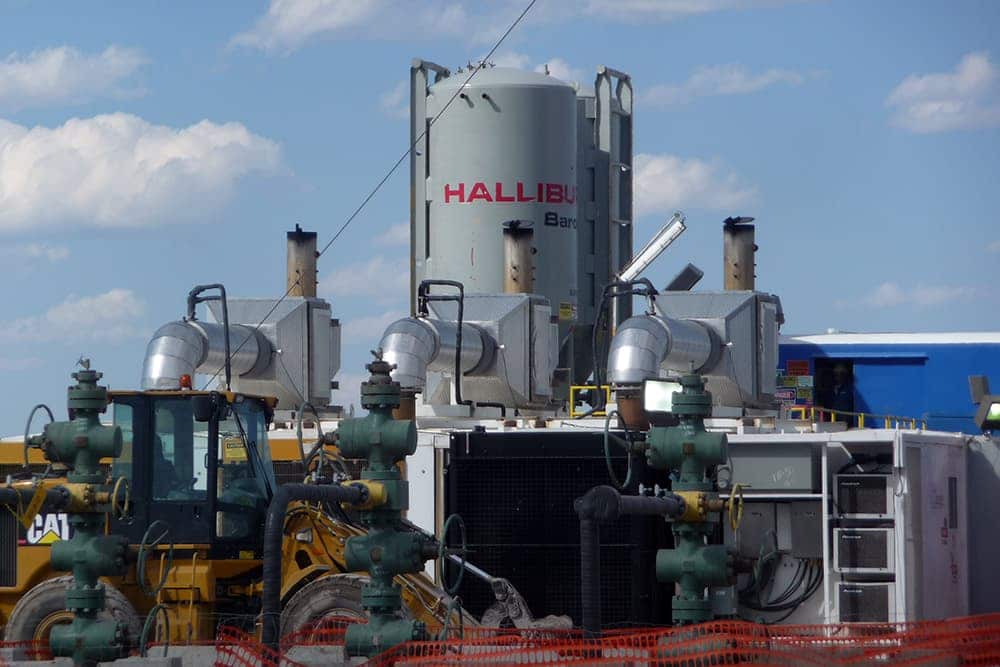
The global oil market dominates much of the world’s economy and plays an outsized role in the nation’s economic pulse, especially Wyoming’s, Godby noted. So far, the market’s reaction is pointing to economic decline. That’s bad for Wyoming’s economy across the board, he said, and portends lower revenues to the state’s coffers.
Godby also serves on the state’s Consensus Revenue Estimating Group, which consists of the state’s top bean-counters tasked with estimating revenues to fund state and local governments. While tourism and agriculture play vital roles in the state’s revenue picture, Godby and his fellow CREG members closely monitor coal, oil and natural gas.
In addition to providing more than $2.4 billion in state revenues in 2023, the oil and natural gas industry supported nearly 59,000 direct and indirect jobs in the state, according to the Petroleum Association of Wyoming. But U.S. oil prices have declined since Jan. 20, when Trump began his second term in the White House, slipping by about 20% to around $56 per barrel over the weekend.
“I would say that the biggest effect on our revenues is really the indirect effect that will be caused by world oil prices, which is really driving down [Wyoming] oil revenues, especially in the last month and a half,” Godby said. “We’re not quite seeing it yet in terms of reported numbers, but we know it’s going to hit us because these prices are well below what we expected.”
The CREG group is on the front lines of measuring Wyoming’s vulnerability in international trade and the overall U.S. economy, according to Gordon’s office. Gordon’s Communications Director Michael Pearlman told WyoFile, “We’re monitoring the tariff situation closely, which is constantly changing.”
Meantime, there are more acute concerns for Wyoming regarding Trump’s tariffs and potential retaliatory responses among U.S. trade partners, Godby said.
Trona and soda ash
Trona mined in Wyoming is processed into “natural” soda ash — a key component in the production of glass, baking soda and myriad other products. Wyoming’s trona and soda ash industry employs more than 2,000 workers, compared to about 4,100 direct jobs in Wyoming coal mining, according to the Wyoming Mining Association.
By far, soda ash is the state’s biggest foreign export commodity in terms of sales. Of Wyoming’s $2 billion in total exports in 2024, soda ash accounted for about $1.3 billion, according to Godby. China, Trump’s primary target in his tariff wars, typically accounts for about 10% of those soda ash purchases.

If the industry were to lose that 10%, it would be a significant blow, Godby said. What’s worse is the possibility that tariff wars might give a price advantage to synthetic soda ash, which Wyoming does not produce, and put a drag on exports to other nations.
“That could be a really significant impact on our [soda ash] exports,” he said, adding that it might even dampen plans for major expansions of trona mining and soda ash refining operations in the region.
WE Soda’s Project West, a multi-billion dollar trona solution-mine expansion project now under construction near Granger, will create 2,000 temporary construction jobs, more than 400 permanent jobs and boost annual production by 3 million metric tons, according to the company. Pacific Soda’s proposed Dry Creek Trona Mine Project south of Green River, which has also crossed several regulatory approval milestones, would bring in another 2,000 construction jobs and create about 300 full-time jobs, according to the company.
“This vital development [the Dry Creek Trona Mine] will create hundreds of good-paying jobs for hardworking Wyoming families while strengthening our domestic supply chain for essential minerals that keep costs lower at the store for everyday Americans,” Sen. Cynthia Lummis said in a prepared statement last week.

While the state’s trona and soda ash producers have been very “bullish” regarding exports in recent years, global dynamics for the commodities could change drastically if Trump’s trade wars escalate, according to Godby. Though the industry is not among the top three major influencers regarding the state’s overall revenue picture, “it does affect southwest Wyoming,” he said.
Though the industry may struggle in terms of past expectations to increase exports, Gordon said he hopes Trump’s policies might actually result in bringing glass manufacturing, which relies on soda ash, back to the U.S. and for the first time in Wyoming.
“This is a long shot, but we’re really talking about bringing in glass manufacturers,” Gordon said, noting that he and his team visited with glass manufacturer Corning while in Taiwan. “We talked about the possibility of being able to locate manufacturing here — a longtime dream of people in Wyoming. It may be a little bit more of an opportunity now with the backdrop of those tariffs.”
Oh, Canada, and China
Wyoming’s other vulnerability in international tariff wars is its reliance on Canada, the state’s largest international trading partner. The nation to the north accounts for about 20% of the state’s exports and 55% of imports, according to Godby. That translates into significant exposure for multiple goods, including robust trade of agricultural, manufacturing and heavy machinery components that both nations rely on in their natural resource extractive industries.
“If you really wanted to sandbag the U.S. economy, you couldn’t have done much of a better job.”
Rob Godby, University of Wyoming
“That clearly is going to have supply chain effects in terms of impacts on consumers, or impacts on what we produce, given the products that we bring in from Canada,” Godby said.
“If [Trump] gets tough with Canada, they’ll get tough back,” he added, noting the recent election of Prime Minister Mark Carney, who promises to rebuke Trump’s policies. “Even though they know it hurts, they’re willing to do that, and Wyoming would be a victim of that trade war.”
Combined, Canada and China account for nearly 65% of Wyoming’s imports, according to Godby. “Clearly, Wyoming could be impacted much more than the nation as a whole, if we get into a kind of a trade dispute with those two countries.”
Still, based on his recent trade mission to Japan and Taiwan, Gordon said he believes the tariff and trade policy negotiations serve as motivation for those markets — as well as others — to balance their trade deficits with the United States. Though he heard concerns about Trump’s tariffs and retaliatory trade policies, he also heard assurances that Japan and Taiwan are interested in balancing their trade with the U.S. Ways to do that could include importing more Wyoming-produced coal, natural gas, uranium and soda ash, as well as nuclear microreactors that might be manufactured here.
“The Prime Minister [of Japan, Shigeru Ishiba] said, ‘Look, we were [at an 80% trade imbalance with the U.S.] in the 1980s and now we’re less than 20%. So, you know, we’re anxious to work with you to rebalance,'” Gordon said.


That type of interest includes potential investments by both Japan and Taiwan to expand port capacities in the U.S. and on their shores to increase the flow of Wyoming coal and natural gas to those and other Asian nations, he added.
Though Wyoming might see some new deals to ship energy commodities to Asian markets, Godby said, it would be despite escalating tariffs. The state may even land new manufacturing here at home, but those are long-term outcomes that first have to be built on investor confidence.
“Hope is not a strategy,” Godby said. Even if the Trump administration pumps the brakes on tariffs completely, he added, there’s already a certain level of damage done to U.S. trade relations — and a big part of that is the fact that nobody knows what the Trump administration will do next.
“With just general uncertainty, you’re going to see [investments] go down, which is going to hurt our economy. There’s no way to win that,” Godby said. “If you really wanted to sandbag the U.S. economy, you couldn’t have done much of a better job.”

Everyone, WAR that’s a very, very strong word. These United States of America hopefully will finally realize that as a continent the USA is as or close to the size of Europe and other continents.
So why isn’t the USA strengthening ourselves with our own internal products at prices that are marketable here and ACTUALLY KNOW what our own GDP is via each and every State’s resource GDP and ACCEPT those numbers without looking down our noses at each other and allowing for STATE deficits and work them out within our state lines, SURE that’s probably ASKING more than we collectively could accomplish in 18 months or less because the USA is conditioned/trained/take it for granted to participate in the WORLD ECONOMY when we can get a real idea/notion/view what our State’s GDP is to the National/USA’S GDP really is and help each other at each State level but! That of course is going to take a four letter word ending in “K” aka “WORK” at each individual involvement of their own personal trade experience and expertise. As long as we Americans within this REPUBLIC can support each other in the “triangle of life = FOOD, CLOTHING AND SHELTER” and do it consistently then why should I care if my product survive the “WORLD MARKET” because I am only interested in the 1-5 or 1-25 Nations WANT and DESIRE my product(s)?
When I take a closer look at our National International Commerce we seem/act as if we were already INDEPENDENT NATIONS within this COUNTRY? A PRIMARY example is one of most important and that’s TRANSPORTATION of our own products/goods and services, why?
Let’s unite within ourselves on an economic basis for what our State has and incorporate into our National wallet and yes the cost of doing World TRADE is and going to be TARIFFS but if for some reason we are convinced that there’s a requirement for “REDISTRIBUTION OF WEALTH” this world is huge!
A redistribution of concern is better served especially if a Nation’s concerns are their LEADERSHIP’S concerns is their personal wallets and not their “people” UNFORTUNATELY they do not enjoy the rewards of the triangle of life because they do not enjoy the fruits of their labor, cooperation, safety and CONCERNS that the Constitution of these United States of America does for each and every American other Nations internal CORRUPTION is their people’s objective to pursue.
IF we are positioning our country in a “REDISTRIBUTION OF WEALTH” “WE THE PEOPLE” will find ourselves forced to be or drawn into “THE WORLD COURT SYSTEM” and what does that mean to our United States of America CONSTITUTION? Thank you if you have read this far and thank you WYOFILE for your FIRST AMENDMENT exercise.
The GOP has to stop pushing the so-called trade imbalance. It does not exist. When US consumers purchase goods and services, they obtain the value and use of them. In most cases, the point of sale is with a US owned and operated business that have a profit margin built into the price, and so they benefit as do domestic firms in the supply chain. With such economic ignorance, no wonder the country is in trouble.
Thank you WYOFILE and Dr. Godby (hi Rob). I guess Gov. Gordon has to be all smily faced about the state’s economic prospects, but he’s no dummy, and I presume he is getting prepared for the hard times coming for Wyoming. Tourism and exporting fossil fuels and other mined products will all take a major hit. Of course, these are Wyoming’s top two industries. This is happening because of one person… Donald Trump. So ironic that Wyomingites voted once again for the felon/snake oil salesman. Well, as they say, votes have consequences.
I’m betting my money on the economist.
That is a +EV bet.
He wanted to get the world’s attention, he surely succeeded. He hasn’t made anything great, he’s turned the U.S. into a bully that countries around the world despise. I believe Republicans that have turned against the president, Democrats plus Independent voters now out number Republican loyalist in this country.
To ensure stock market investors do not lose the entirety of their investment in a particular company or stock index, e.g., S&P 500, circuit breakers are used.
The stock market circuit breaker system is a set of regulatory measures designed to temporarily halt trading on stock exchanges during dramatic price declines to curb panic-selling and allow time for information to be processed. Here’s how it works, specifically in the U.S. markets like the S&P 500 and Nasdaq:
Types of Circuit Breakers:
Market-Wide Circuit Breakers (MWCBs):
Triggered based on a percentage decline in the S&P 500 Index from the previous day’s closing level.
Three levels:
Level 1: 7% drop → 15-minute halt (before 3:25 p.m. ET).
Level 2: 13% drop → another 15-minute halt (before 3:25 p.m. ET).
Level 3: 20% drop → trading stops for the rest of the day, regardless of time.
Single-Stock Circuit Breakers:
Designed to prevent excessive volatility in individual stocks.
If a stock moves too far (typically 5%-10%) within a 5-minute window, trading is paused for 5 minutes under the Limit Up–Limit Down (LULD) rule.
Purpose of Circuit Breakers:
Prevent market crashes from snowballing due to panic.
Give investors time to assess information.
Ensure orderly market functioning.
I suggest U.S,. Congress pass a bill that implements a similar circuit breaker to halt implemented tariffs permanently when unemployment reaches 7-13%. They would automatically revert back to 12/31/25 levels. This would prevent mass unemployment and inflation from occurring and the collapse of our economy.
This administration obviously didn’t consider the millions of households that would be affected by these high tariffs (unemployment and inflation), the time frame to build factories, the cost to move and build and the AI robotics that are involved rather than human workers to operate factories.
This is a pipe-dream, the majority of economists are against the high tariffs, e.g., R. Godby- University of Wyoming, W. Buffet- CEO of Berkshire Hathaway, R. Wolff- professor emeritus at University Massachusetts Amherst, J. Sachs- Economics professor at Columbia University, etc.
This is a great article and Mr. Godby’s points are spot on. You could argue whatever positive outcomes you hope to see come from these tariffs, but capitalism will ultimately win the day regardless. As Godby aptly pointed out “hope is not a strategy”. I think we should expect some significant pain from all of these tariffs even if they are revoked now. The seeds of doubt have already been sown, and any market of any kind hates uncertainty. The well is already poisoned so to speak. Trump could have at bare minimum have done a better job of mitigating the poisoning of the well by selling these tariffs through some realistic (realistic being key) stated goals, but he did not. As a registered Democrat I actually do respect Gov. Gordon and think he is doing as good a job as he can given the make up of our legislature, but he is still a politician, not an economist. I hope he’s right that some good will come to this state from trump’s economic polices, but I don’t see it happening for the reasons Godby articulately outlined. There’s no arguing with this, it’s bad economic policy and we are going to pay for it through job loss, projects being canceled, etc.
Gordon is recycling cliches, while trade relationships wither. Canada has gone full elbows up, particularly after the shellacking their conservative maga-lite party took in the recent elections. Of course Gordon sees opportunity, what choice does he have? He’s not going to publicly admit WY bet big on the wrong orange donkey in our race to the bottom. Everything the 34x felon touches dies, along with WY’s trade.
Arrogant and unpredictable, Trump has convinced himself and his true believers that he’s smarter than the leaders of all other countries. He’s delusional about his superiority; he views other world leaders as inferior. Savvy leaders will accommodate the Trump regime’s tariff scheme for now–the accommodation, though, will be temporary. And each “deal” will carefully work around what the rest of the world now knows: Trump and the U.S. cannot ever again be trusted as honest, reliable economic players. New economic arrangements between and among countries other than the U.S. will evolve and flourish. The economic and political influence of the U.S. will shrink and in many areas disappear altogether.
Wyoming voted overwhelmingly for the felon, we certainly deserve economic pain.