


For the next four days, much of Wyoming faces an extraordinary set of weather conditions that makes wildfires more likely. There are forecasted mid-March temperatures higher than any time in 120 years, abnormally dry grasses and shrubs, high winds and low humidity.
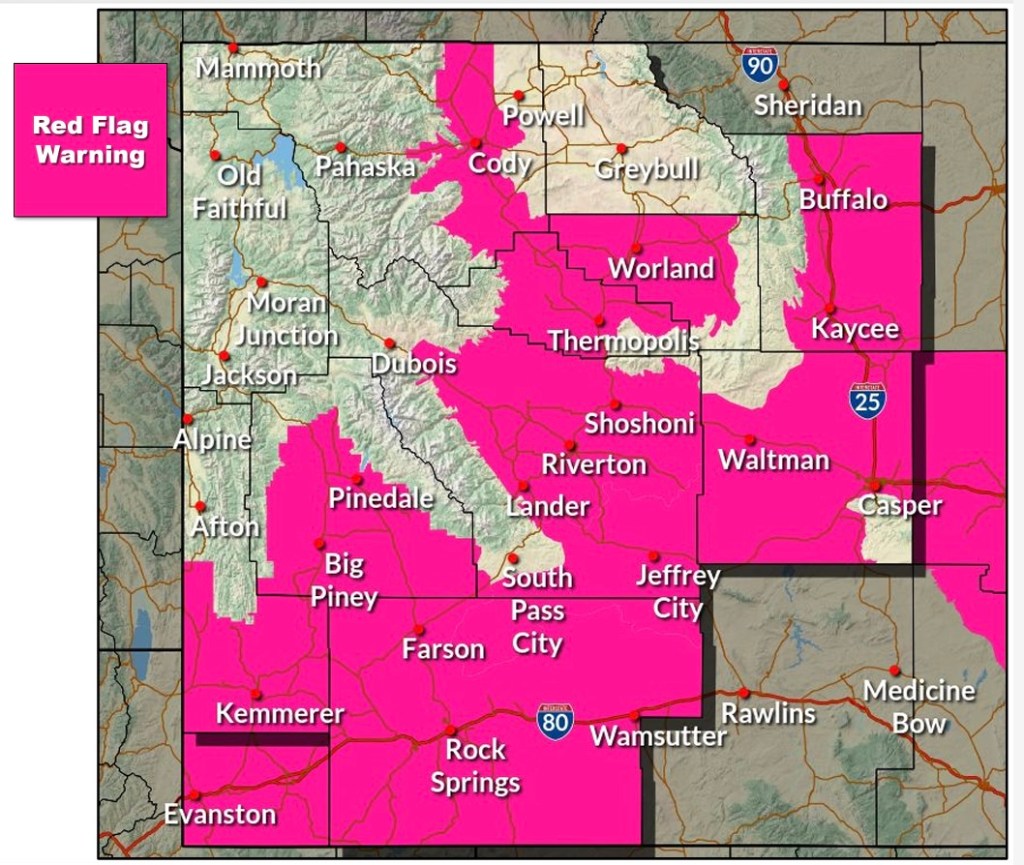
Put it all together, and the conditions warrant a four-day-long “Red Flag Warning” that stretches from Cody to Kaycee to Evanston to Pinedale.
“It’s critical,” said Lance VandenBoogart, the warning coordination meteorologist for the National Weather Service’s Riverton office. “It’s important, and notable how much wind and dryness there are [that could] help move a fire.”
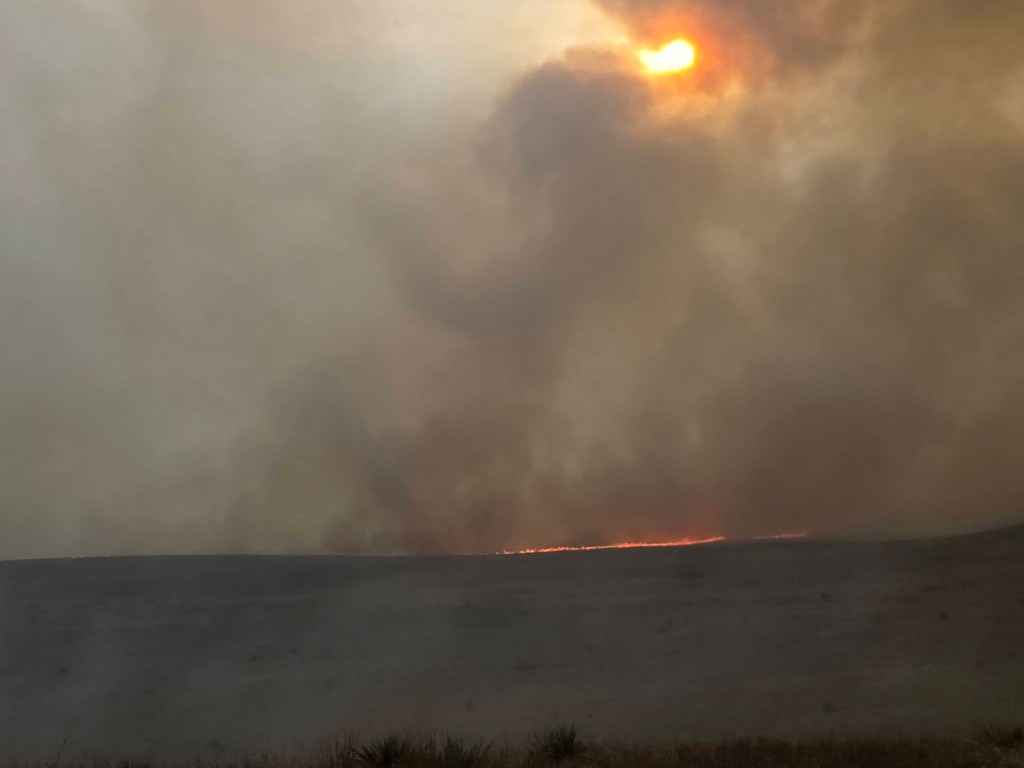
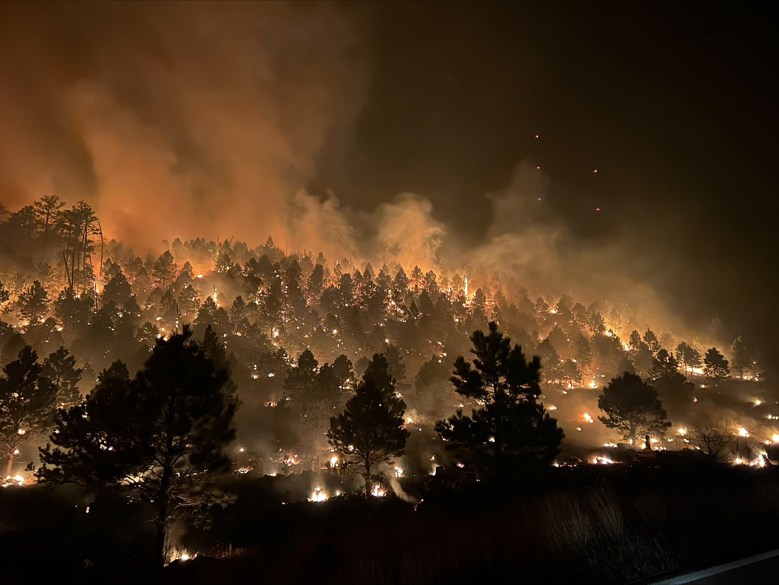
Wyoming residents and firefighters don’t have to look far to see the severity of the wildfires these types of conditions can yield. The grasslands of central and western Nebraska are being torched: More than 800,000 acres have burned even though it’s March, and those conflagrations already constitute the largest wildfires in Nebraska history. South Dakota’s side of the Black Hills, meanwhile, is also ablaze. Roughly 350 firefighters are battling the 7,500-acre Qury Fire southeast of Custer, a blaze that’s torching ponderosa pines and was only 27% contained as the critical fire weather arrived.
Several wildfires burned in Wyoming earlier in the winter, including the 175-acre Little Crazy Woman Fire near Buffalo and the 2,542-acre Porcupine Creek Fire near Wright.
A controlled burn south of Wilson escaped and ignited a brief wildfire on Tuesday before it was extinguished near North Fall Creek Road. But as of midday Wednesday, there were no active wildfires in Wyoming, according to Jerod Delay, the state’s fire management officer.
Nevertheless, wildfire officials back home are urging precaution.
Areas without snow cover — essentially all low elevations in Wyoming — are particularly susceptible to ignition and fast-growing wildfires, the Bureau of Land Management’s statewide office announced Wednesday.
“Even though it may not feel like peak fire season yet, the current conditions create a real potential for wildfires to start and spread quickly,” Mark Randall, BLM’s fire management officer for the High Desert District, said in a statement. “A single spark in the wrong place can have significant impacts.”
Some fire restrictions are already taking effect.
On Tuesday, Laramie County commissioners imposed “stage 1” fire restrictions that prohibit open fires and lighting fireworks on all state and private land until further notice.
The need for precaution to prevent Wyoming from burning comes on the heels of the warmest winter on record. The National Weather Service’s Riverton Office also issued its earliest Red Flag warning ever — that came back on Feb. 15, VandenBoogart said.
Influenced by the “heat dome” that’s driving temperatures into the 90s in Colorado, Equality State thermometers are poised to break all-time records for the duration of the Red Flag warning. It expires at 9 p.m. Saturday.
Temperatures in Riverton are expected to climb into the low 80s and are forecasted to top previous record highs on Wednesday, Thursday, Friday and Saturday, VandenBoogart said. Recordkeeping at the National Weather Service station goes back to 1907.
Wildfire risk typically subsides and Red Flag Warnings become less common later in the spring, when green vegetation sprouts.
“Normally, we have a spring fire season, and then we have green-up,” Delay said. “But there wasn’t a lot of moisture around this winter. So we hope we have a green-up.”