
Editor's note:
This story was jointly reported and authored by the Gillette News Record, Uinta County Herald, Green River Star, Wyoming Tribune Eagle and WyoFile. Reporting was coordinated and compiled by WyoFile, with editing from all participating publications.
More Wyoming counties and towns are signing agreements to perform federal immigration duties as the Trump administration and Congress spend billions to intensify immigration arrests, detentions and deportations nationwide.
The towns of Wheatland, Shoshoni, Pine Bluffs and Moorcroft all inked new pacts — known as 287(g) agreements — with U.S. Immigration and Customs Enforcement in April. They’ve signed onto what’s called the “Task Force Model,” which allows local law enforcement to carry out some immigration enforcement duties under ICE during routine policing. In 2025, the Trump administration revived the Task Force Model, which the Obama administration had phased out in 2012. Since its renewal, the approach has rapidly expanded nationwide.
ICE’s website touts the agreements with calls to action like “How Can I Convince My Chief or Sheriff to Participate in 287(g)?” While the partnerships come with financial rewards, immigration advocates warn local law enforcement risks losing community trust.
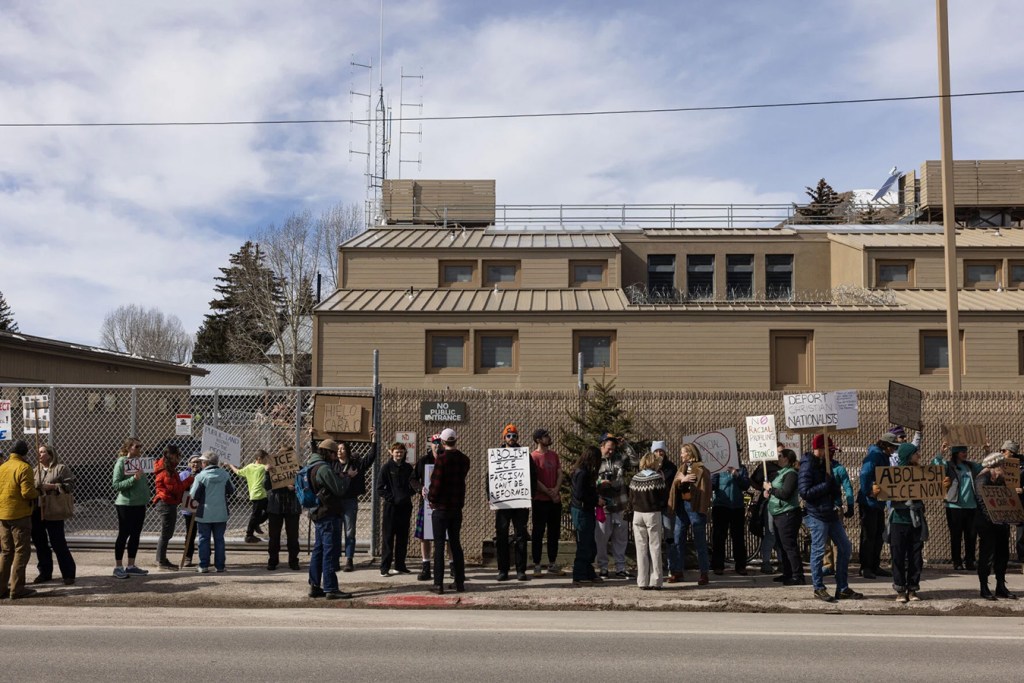
The agreements have sparked protests in Rock Springs and Cheyenne. Rock Springs resident Dana Ward, who helped organize an anti-ICE Sweetwater County protest last fall, said the Obama administration had discontinued the task force and hybrid agreements in 2012 with a memo explaining that other programs were more efficient. Those models also led to racial profiling, harmed community relations with law enforcement and triggered lawsuits alleging civil and human rights violations, Ward said. Critics contend that such agreements effectively make local law enforcement an arm of ICE.
Still, Wyoming sheriffs and police departments are signing on. While some view the agreements as unnecessary and a community disruptor, others see them as a useful tool or the best way to have a say in enforcing a federal priority.
“It was very important for the sheriff that we had a seat at the table,” said Jason Mower, spokesperson for the Sweetwater County Sheriff’s Office, which has a partnership with ICE. “If this was going to be a federal priority, regardless of whether or not we were on board, what we didn’t want to have happen was the federal government to come into Sweetwater County, unannounced and unbeknownst to us, and basically do whatever they want without our oversight.”
Wyoming sheriffs have worked with ICE for decades. But more Equality State communities have reached agreements with the agency since President Donald Trump returned to office last year, bringing with him a high-profile push for immigration enforcement and deportations. Now, with last year’s passage of the One Big Beautiful Bill Act, Congress has allotted $75 billion through 2029 to ICE, making it the highest-funded U.S. law enforcement agency. Some of the federal funding is making its way to Wyoming sheriffs through their agreements to cooperate with ICE.
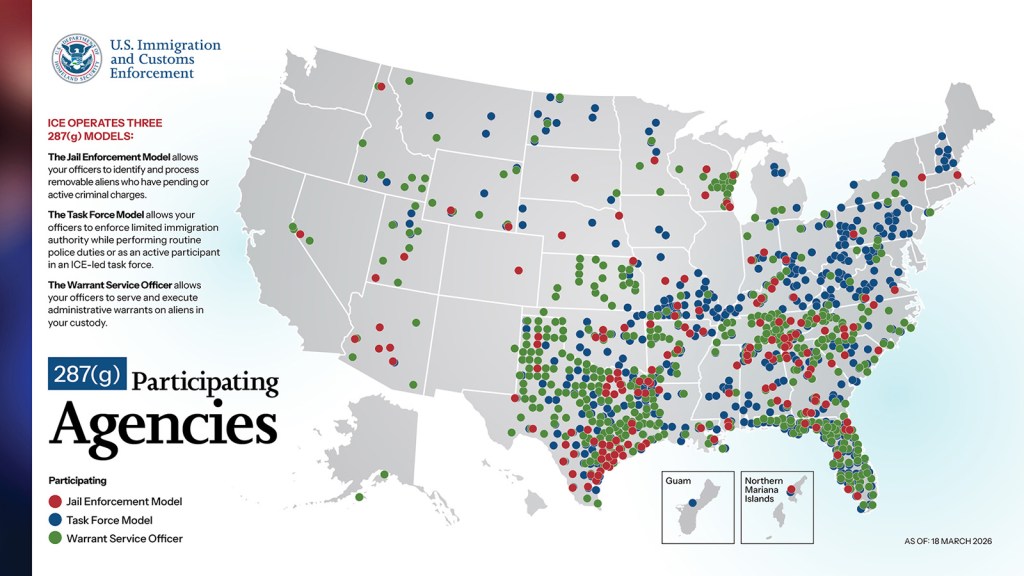
Currently, seven Wyoming counties, the Wyoming Highway Patrol and four towns have one or more 287(g) agreements with ICE, which allows local and state law enforcement to work with federal agencies to enforce immigration rules. Even when participating in the same type of agreement with ICE, local and state agencies have some discretion over how they implement those pacts. As a result, immigration enforcement across different counties in Wyoming is a diverse tapestry.
What is a 287(g) agreement?
The 287(g) program is named for Section 287(g) of the Immigration and Nationality Act. Put simply, the program, which became law in 1996, expands local and state law enforcement’s authority to undertake some immigration duties under ICE’s supervision. ICE has three 287(g) program models: Jail Enforcement, Task Force and Warrant Service Officer.
The Jail Enforcement Model gives officers authority to find and process people who are in the country without legal permission when they are already in a detention facility and facing criminal charges.
The Task Force Model enables officers to conduct some immigration enforcement during routine policing.
The Warrant Service Officer Model allows local officers to serve and execute administrative warrants on people who are in the country without legal permission and already in a local or state agency’s custody.
Under all three models, local and state law enforcement work alongside federal ICE officers. Some ICE agents live in Wyoming communities, though it’s unclear how many. The ICE Denver field office spokesperson, Steve Kotecki, said in an email that the agency doesn’t release personnel numbers because of “operational security.” ICE officers may also come from out of state to perform immigration enforcement.
Crook County
Crook County Sheriff Jeff Hodge sees his office’s formal ICE agreement, in effect since Jan. 7, as another law enforcement tool.
Crook County deputies aren’t seeking out immigrants lacking permanent legal status, Hodge said, but if deputies respond to an incident and encounter someone they suspect may be in the country illegally, deputies can follow through with a criminal inquiry under the 287(g) program. A deputy can ask about immigration status and transfer the suspect to ICE custody for deportation if they meet certain criteria.
“We’re focusing on criminals,” Hodge said. “You’re just not arresting every illegal out there.”
His deputies prioritized arresting criminals suspected of human trafficking, regardless of suspects’ immigration status, during one weekend operation this past winter with federal ICE agents, he said.
“They had indicators of human trafficking,” Hodge said. “That’s all I’ll say.”
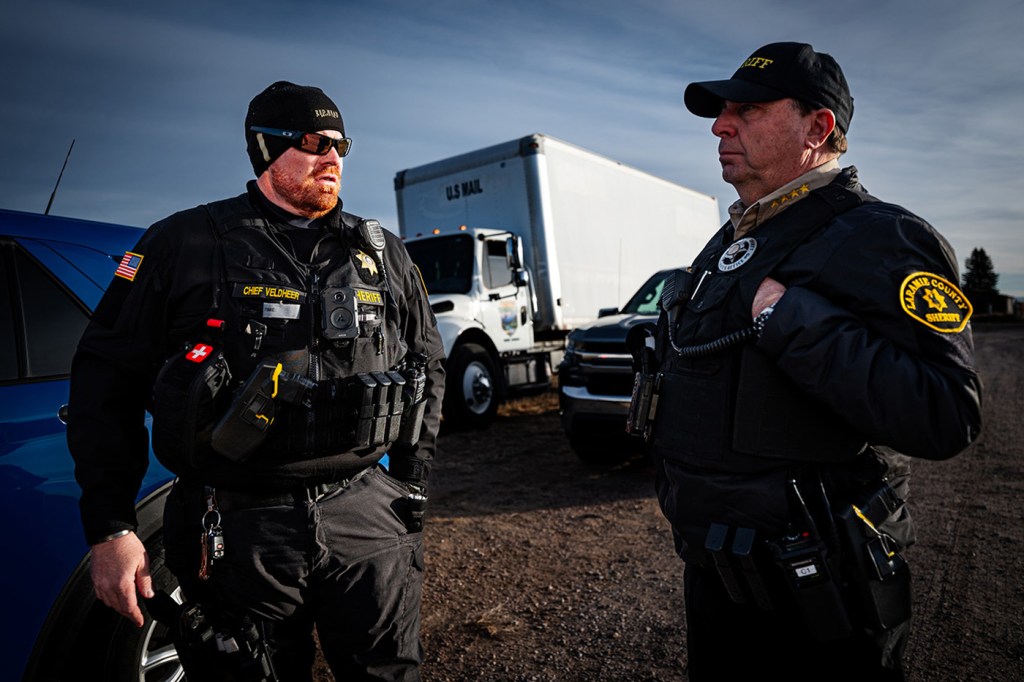
Federal agents have collaborated with Crook County’s 287(g)-certified officers to crack down on noncitizen truck drivers traveling U.S. Highway 212, a 949-mile route with only about 20 miles in Crook County. The highway doesn’t have ports that require commercial vehicle inspections like interstate routes, Hodge said.
During the weekend operation, four ICE agents and deputies stopped 50 trucks and found 21 immigrant drivers lacking permanent legal status. The agents and deputies arrested four of them. Unlike the other 17, the four didn’t show they were trying to comply with U.S. immigration laws, such as renewing a work visa or applying for citizenship, Hodge said.
The operation was more ICE’s priority than his office’s, Hodge wrote in an email.
“Moving forward, policy is very pointed towards enforcing and arresting higher risk and criminal illegal immigrants,” Hodge wrote.
Crook County has two ICE agreements and is working on a third.
Crook County may get a significant sum of money for agreeing to work with ICE. Hodge’s department has received a $100,000 one-time stipend from the federal government and $15,000 per trained officer for IT and equipment every quarter. The $100,000 will pay for another patrol vehicle for deputies, he said. Nine Crook County deputies have been trained for ICE operations under the Task Force Model.
But payment has been delayed with the Department of Homeland Security’s record-breaking partial shutdown. Federal delays also have slowed Crook County from finalizing the Jail Enforcement Model agreement.
Natrona County
The Natrona County Sheriff’s Office, overseen by Sheriff John Harlin, entered into a Task Force Model agreement last May. WyoFile asked for interviews with Harlin regarding the 287(g) agreement but didn’t receive one.
The Natrona County Sheriff’s Office is currently the only sheriff’s office in Wyoming that participates exclusively in the Task Force agreement. That’s because there are ICE agents based in Casper who already perform the duties that fall under the other two models, according to Natrona County Sheriff’s Office spokesperson Kiera Hett.
“It may benefit other sheriff’s offices who don’t have an ICE office in their jurisdiction to do so, but the ICE agents here in Casper conduct those duties,” Hett wrote in an email.
The Natrona County Sheriff’s Office doesn’t have a formal internal policy for implementing the Task Force Model, according to Hett.
Asked why Harlin had opted for the Task Force Model, Hett wrote that the agreement allows deputies “to further their roadside investigations during routine patrol and traffic stops.” In a 2025 interview, Harlin told Oil City News that deputies certified to do immigration enforcement under ICE also get access to federal databases that provide more resources to conduct investigations into crimes such as human trafficking.
It’s unclear whether ICE actively courted the Natrona County Sheriff’s Office to join the agreement, as the federal agency has with other Wyoming sheriffs’ offices. When asked, Hett said that the “agreement came through mutual discussion as part of our longstanding partnership with ICE.”
The Natrona County Sheriff’s Office has received stipends totaling $137,500 to date to cover IT and equipment costs, according to Hett. “This helps ensure that the Natrona County Sheriff’s Office does not incur additional expenses related to participation, ultimately preventing any financial burden on our local community,” she wrote in an email.

Though the office doesn’t participate in the Jail Enforcement or Warrant Service Officer agreements, the Natrona County Detention Center, which the sheriff’s office operates, holds ICE detainees — sometimes for long periods. The federal government reimburses the Natrona County Sheriff’s Office at a rate of $95 per day for immigration and other federal detainees under a U.S. Marshals Service intergovernmental agreement, Hett said.
Immigration detainees from other states are sometimes housed at the Natrona County Detention Center. In July, for example, ICE transported 44 people booked on immigration holds from the ICE detention center in Aurora, Colorado, to Natrona County, Oil City News reported.
Some of those detainees remained at the Natrona County Detention Center for several months. One person from Sudan, who stayed at the detention center for about six months, was released after a judge granted his habeas corpus petition, which places the burden of proof on the detaining agency to justify detention. By that time, the man had been held in various detention centers for about two years, according to court documents. Another person from Haiti remained in Natrona County for about eight months before being transferred to another facility.
Sweetwater County
The Sweetwater County Sheriff’s Office has cooperated with ICE and other federal partners for the past two decades.
“We’ve always been a team player,” said Jason Mower, the office’s public affairs director, of longstanding relationships with federal partners.
Mower has worked for the Sweetwater County Sheriff’s Office for 17 years. The department began holding federal detainees a few years before he was hired, he said. That arrangement, however, is not part of a 287(g) agreement.
Since 2006, the federal detainee housing reimbursement rate under that agreement was $61.57 per adult detainee per day, he said. The federal government bumped the rate to $120 per day for adults after a renegotiation in 2025.
Any county jail in Wyoming can house ICE detainees, but most are limited to 48 or 72 hours, Mower said. Sweetwater County has one of the few county correctional facilities in Wyoming certified to hold federal detainees, including ICE holds, for more than 72 hours.
Mower clarified that the holds are still temporary, however, and usually intended to keep detainees until ICE can take them to a different facility. Sweetwater County deputies have been transporting detainees from Teton County, where community members launched a petition objecting to extended holds without judicial warrants and transferring people to immigration custody after arrests for minor offenses.
Sweetwater County also has a transportation contract with ICE for moving detainees between its jail and other locations. The contract reimburses wages and vehicle mileage for those transports.
In 2020, the Sweetwater County Sheriff’s Office signed onto the Warrant Service Officer Model. Under that pact, the agency has two or three specially trained deputies at the detention center who are authorized to work with ICE on requests to hold immigrant detainees for up to 48 hours beyond the time they would ordinarily be released. This gives the Department of Homeland Security time to assume custody of detainees under federal immigration law.
In 2025, Sweetwater County added the Task Force Model, becoming the first local law enforcement agency in Wyoming to do so. When it became clear that illegal immigration would be a focus of the Trump administration, Mower said, it was important for the sheriff’s office to update and finalize its agreements with ICE.
“From our perspective, it made sense seeing the writing on the wall to formalize our agreement and cooperation, so that we kept a seat at the table,” Mower said.
Under the 287(g) Task Force Model, Sweetwater County received an initial $100,000 transportation stipend, restricted to transportation-related costs, plus an equipment stipend of $7,500 per task force officer.
“We are also eligible for a quarterly stipend of $15,000 per task force officer for equipment and IT support,” Mower explained. “In addition, wages and benefits are reimbursed at 100% for actual hours worked on ICE cases, and those personnel costs are billed separately every month.”
The transportation and equipment stipends have been placed in a designated fund for future use, Mower said.
While the Task Force Model gives the sheriff’s office more authority and money, Mower said Sweetwater County mostly continues to house detainees, as the agency has always done.
“I think by and large our direct involvement under the Task Force Model has been very limited,” Mower said.
He did admit, however, that there are generally more ICE arrests now.
“The notable difference is the number of individuals,” Mower said. “That has certainly increased.”
Laramie County
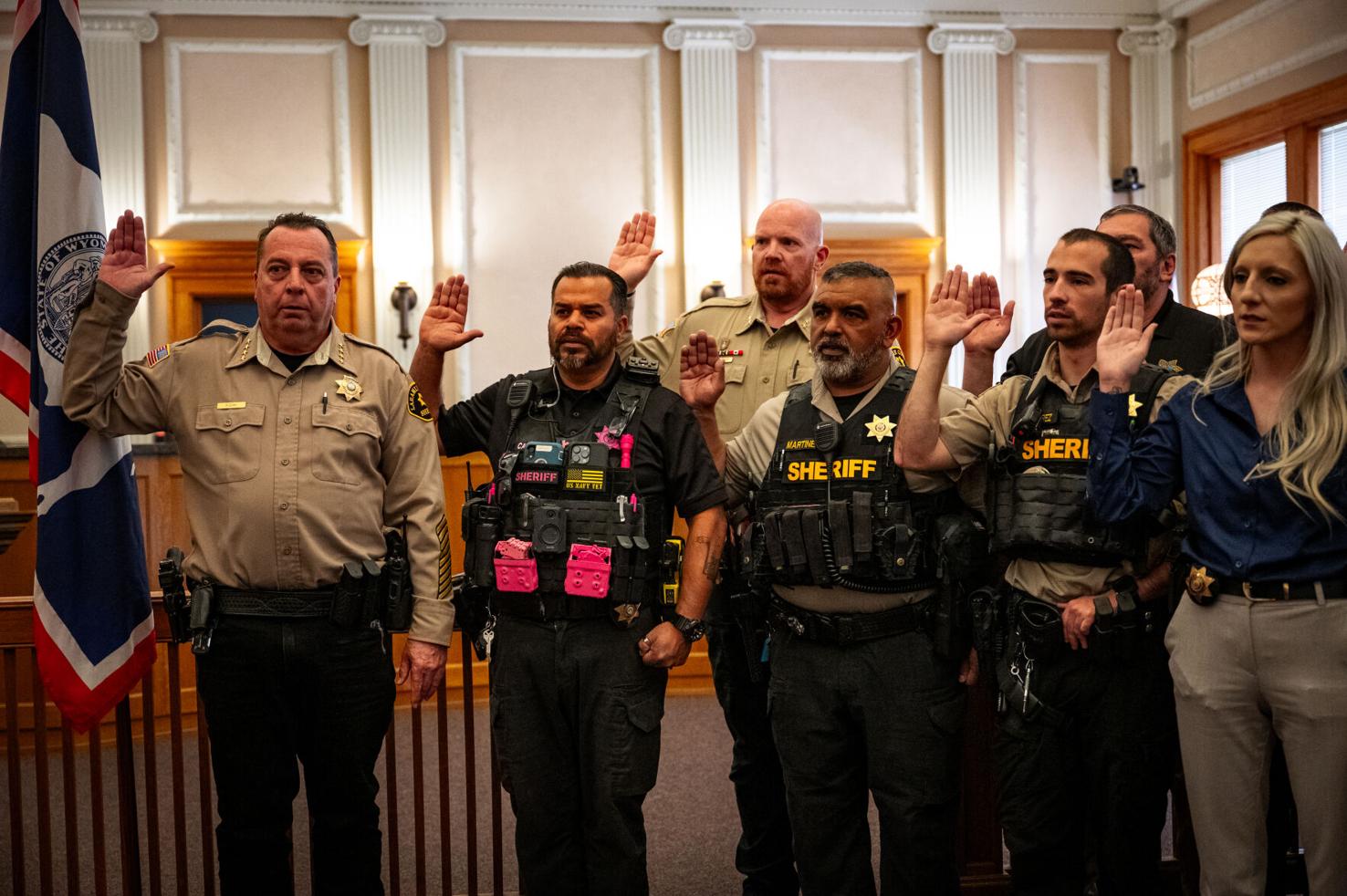
Like Sweetwater County, Laramie County Sheriff Brian Kozak was among the first Wyoming sheriffs to pursue all three 287(g) models and complete training after the Trump administration revived the Task Force Model.
Laramie County obtained its jail enforcement agreement in May 2025, with Task Force and Warrant Service model agreements following a month later. The first 23 certified officers were announced in October, and the number of deputies participating has increased to 27 since then.
Facing criticism for working with ICE and claims that officers are stopping drivers to confirm status without cause, Kozak has continued to reiterate the department’s strict policies regarding racial profiling and discrimination.
Task Force officers aren’t supposed to ask about an individual’s immigration status unless officers made “lawful contact” with the person after a lawful stop, detention or arrest based on reasonable suspicion of criminal activity, according to department policy. Stops for minor traffic violations, and the investigation of other individuals who are in the same vehicle, home or on the same job site qualify as “lawful contact,” should the officer have “reasonable suspicion.”
Each of Kozak’s deputies completed training in cultural diversity, profiling, naturalization process, document identification, visas and constitutional standards, Kozak said.
“I guarantee racial profiling will not be an issue,” Kozak wrote in an email. “I value the U.S. Constitution more than anything.”
The department has used the certification both during day-to-day enforcement duties and during large-scale targeted operations enforcing broader issues, such as trucking and transportation.
During those operations, deputies work with ICE to arrest commercial drivers and any passengers with them who have been determined to be in the U.S. without up-to-date or proper documentation.
Kozak frequently promotes these trucking operations on social media, giving them nicknames like “operation safe haul” and “truck around and find out,” a slogan which now adorns a trucker hat that Kozak shows off in his most recent video.
In some cases, deputies have contacted ICE to come to the scene to pick up individuals. Although Laramie County was involved in the arrest, the offender never enters the county jail for the initial violation.
Laramie County is paid for its efforts. The federal government has paid the sheriff’s office $100,000 for vehicle reimbursement, $180,000 for an equipment stipend and $32,388.97 for salary reimbursement as of Feb. 28.
Kozak has repeatedly assured the public that partnering with ICE is not done to subsidize the income of his employees or make up for a lack of funding, but to “uphold the rule of law.”
“We are not housing criminal aliens to make money,” Kozak said while announcing in October the first 23 deputies to complete their 287(g) certification. “We are doing it for national security, public safety and upholding the rule of law.”
Kozak does not want the department to end up reliant on these contracts for operating expenses. Instead of subsidizing employee income or operating expenses, the reimbursement funds will go to programs that will benefit the community, Kozak has said. This year, ICE funds will pay for human trafficking education campaigns.
Ultimately, Kozak sees the contract as a benefit to the community, fitting well within existing duties and speeding along arrests when deputies do encounter people whose documentation they suspect is invalid.
Community advocates, however, have warned that the contracts have cost the department community trust, especially among the families and friends of those who have been picked up by ICE.
Birgitt Paul works with Friends of Immigrants Responding Ethically, a volunteer group associated with the Unitarian Universalist Church of Cheyenne and in partnership with Highlands Presbyterian Church.
Not everyone in Laramie County is aware of 287(g), according to Paul. That said, she and her peers are watching the mixed-status families learn first hand that they can’t trust law enforcement. This includes agencies — like the Cheyenne Police Department — that don’t have a direct agreement with ICE but will call local sheriffs that do when they suspect someone is undocumented, she said.
“It is important to me that we maintain that trust,” Paul said. “It is how we continue to help people as teachers and health workers, and I hear from people how sad they are and how untrusted (the) police are becoming and the sheriff are becoming.”
Paul said that even people who are actively in the process of updating papers, or receiving proper documentation through federal programs like Deferred Action for Childhood Arrivals, are scared to go out, scared to send their children to school and even scared to stay home.
On Tuesday evening, Paul was preparing to go sit with a mother who is waiting on DACA paperwork.
“She doesn’t want to drive in a car or be a passenger in a car, because without that paperwork, her kids don’t have a mother,” Paul said.
Paul’s group is working with several community members who have reported they’ve been pulled over for no apparent reason, and had loved ones detained because of it.
According to Laramie County Sheriff’s Office, there have been no such reported incidents.
“We are aware of concerns raised by activist groups about potential impacts on community trust,” Undersheriff Chance Walkama wrote in an email. “To date, LCSO has not received reports indicating decreased trust tied to 287(g). We continue to monitor community feedback, engage in outreach, and maintain transparency about our policies and how reimbursements are used to support community programs.”
Wyoming Highway Patrol
Gov. Mark Gordon announced the Wyoming Highway Patrol’s 287(g) Task Force contract in July.
Because WHP does not operate a jail or have jail or warrant service agreements, they can only complete task force operations in counties that have a corresponding agreement between ICE and the jail, according to Lt. Col. Karl Germain, the department’s operations commander.
“If the jail isn’t participating, we don’t have the resources to transport for ICE,” Germain said. “In that case, you would try to make arrangements with ICE, if they want to come pick this person up.”
“Making arrangements” can vary, depending on the individual, reason for contact and location. If the individual has committed an arrestable offense, Germain said that WHP would still arrest them on non-immigration related offenses and inform ICE so that ICE can come and take the individual. Troopers, like participating deputies, can also contact ICE and have federal agents pick up an individual.
WHP has approximately 12 troopers certified for the task force, but that could change as more counties decide to join 287(g).
“Now, it is a volunteer program,” Germain said. “We don’t force people to go through the 287(g) training, but that’s going to be dependent on if more counties come on board.”
Unlike many of the county agencies participating, WHP is not taking financial compensation for its work, though reimbursement is available, according to Germain.
“There’s money for overtime and money for equipment, but since we’re not doing anything that is a burden to the WHP, there isn’t a need to reimburse for anything,” Germain said.
The agency did not draft any policies specific to 287(g), though existing anti-discrimination policies and policies that mandate the adherence to the Fourth Amendment still apply to 287(g)-certified troopers, Germain said.
“All of those protections are organically already in place within law enforcement,” Germain said. “When you go through the 287(g) training, which I have been through, there is extensive emphasis put on discrimination, Fourth Amendment rights, developing reasonable suspicion, and what you can and can’t do on a traffic stop.”
Germain emphasized that constitutional rights apply regardless of legal status.
Campbell County
Campbell County Sheriff Scott Matheny said his office gets $80 per night for every ICE detainee the jail holds. The jail sometimes holds detainees from neighboring Crook County, which is working on its own jail agreement with ICE.
Campbell County participates in ICE’s Warrant Service program. But Matheny said he doesn’t see a need for an added and more extensive agreement with ICE.

“We don’t really have the population here,” Matheny said. “I think everything we have right now covers what we need.”
Uinta County
Last summer, Uinta County Sheriff Andy Kopp secured pay raises for his entire department based on revenue from ICE for holding immigrant detainees on a short-term basis at the Uinta County Detention Center.
But Uinta County’s agreement isn’t a 287(g) with ICE. It’s a separate agreement with the U.S. Marshals Service to hold an estimated 31 federal detainees: 25 men and six women.
Kopp negotiated a per diem increase from $66 to $120 per inmate last fall for that existing agreement at a time when his department was facing budget cuts due to the Wyoming Legislature’s property tax relief measures.
“If you took a 25% hit from your annual business and you wanted to make that up the quickest way possible … ICE just kind of hit us at the right time with the numbers they could [offer],” Kopp told the Uinta County Herald last month. “We knew we’d have that steady stream of revenue.”
Even with money from ICE, his office cut positions to afford the raises. Kopp has declined to sign onto any 287(g) agreements with ICE despite the potential financial benefits.
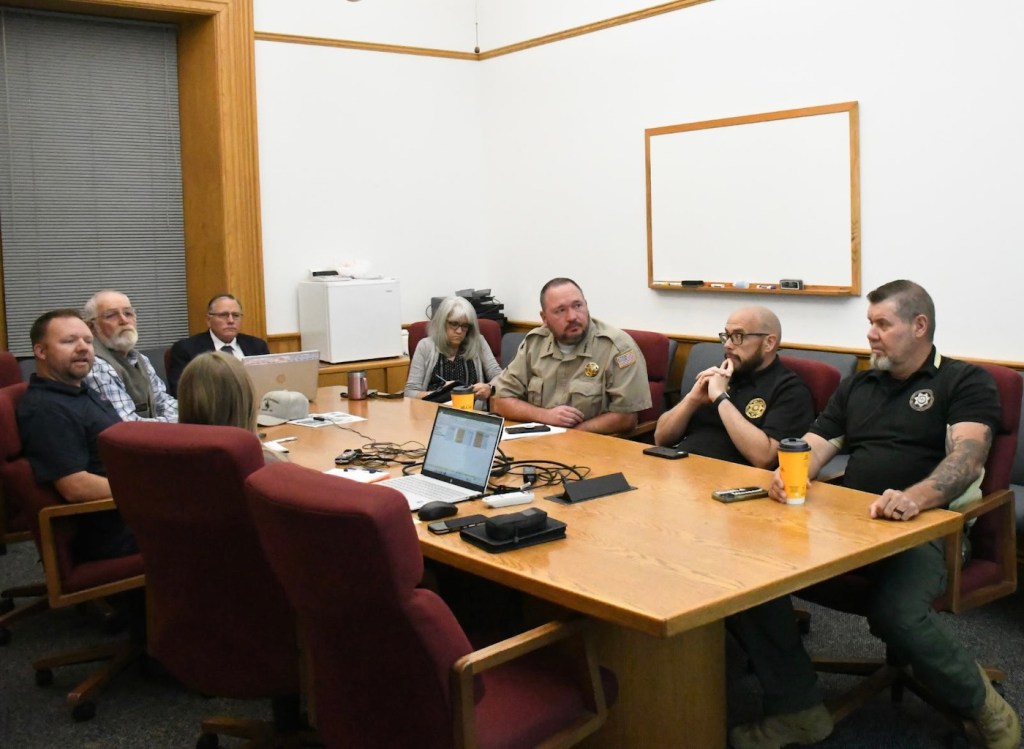
Like Campbell County, Kopp doesn’t see a need for joining the program.
“We don’t have a criminal illegal immigrant issue,” Kopp said of Uinta County, describing a 287(g) contract as a “community disruptor.”
“But we’re still looking at other options,” Kopp said, suggesting he plans to take in more state and federal inmates, being held for crimes not related to immigration enforcement, once deportation efforts begin to dwindle.
The contract to house inmates for the state, however, remains at an outdated $65 per detainee, per day.
“That doesn’t even cover operation costs,” Jail Administrator Lt. Brendan Morrow said.
Other agencies
Carbon and Lincoln counties have had Warrant Service Officer agreements with ICE since June and November respectively. The towns of Wheatland, Shoshoni, Pine Bluffs and Moorcroft signed Task Force Model agreements with ICE in April.





Albany County Sheriff Aaron Appelhans has refused to let ICE agents into the jail. I and many other Laramie folks laud him for that. Sheriff Kozak, on the other hand, is a bit too enthusiastic to partner with ICE, even putting a neon “vacancy” sign above the Laramie County Jail. A tacky and unprofessional stunt unworthy of the position.
An extraordinary piece of collaborative, investigative journalism. Thomas Jefferson would be proud of you!
Everything in America is a pyramid scheme and “law enforcement” is no different. As the US violent crime wave that hit a high water mark in 1990, but has since receded, the LEO community needed more “tools” (unjustified laws) to fill the jails. The first set of unjust laws to replace the loss of violent offenders were the users of “illegal” substances and alcohol. For example, raising the drinking age and lowering the blood alcohol level from 0.1 to 0.08 did the trick for a while but alas that proved not enough, so along comes Trump, who gets elected using racism to falsely imply that brown people commit crimes and of course the “good people” (GOP) of Wyoming bought it.
The alcohol and immigration laws being enforced are “unjust” laws that target otherwise law-abiding citizens using the lack of a turn signal into a pull over to wreck lives unjustly and increase the costs to the taxpayers. Along with unjustly wrecking lives, law enforcement agencies that arrest truck drivers for a turn signal violation drives consumer inflation and that my citizens is a driving factor in the entire Trump administration. Driving up costs based on stupid and unjust decisions. The war with Iran started with two separate war crimes, for your information.
I find it repulsive that the sheriffs like Kozad can justify this enforcement while they celebrate taking money from the US taxpayer for conducting these disgusting acts while using the “rule of law” to justify their inhumane actions. Just one more reason I would never vote for or register as a Republican in this state.
You just described Social Security. A pyramid scheme and the world’s largest chain letter.
An orchestrated 4 year invasion of over 10 million from third world countries has consequences. They were aided and let in for a reason.
Trump has deported far fewer than Obama. The ICE theater is for show, division and distraction.
Mr. Guenter: what’s your problem with folks from Third World countries? Do you prefer White South Africans?
Quite a few of them are going back to South Africa, citing quality of life is better and it is safer.