

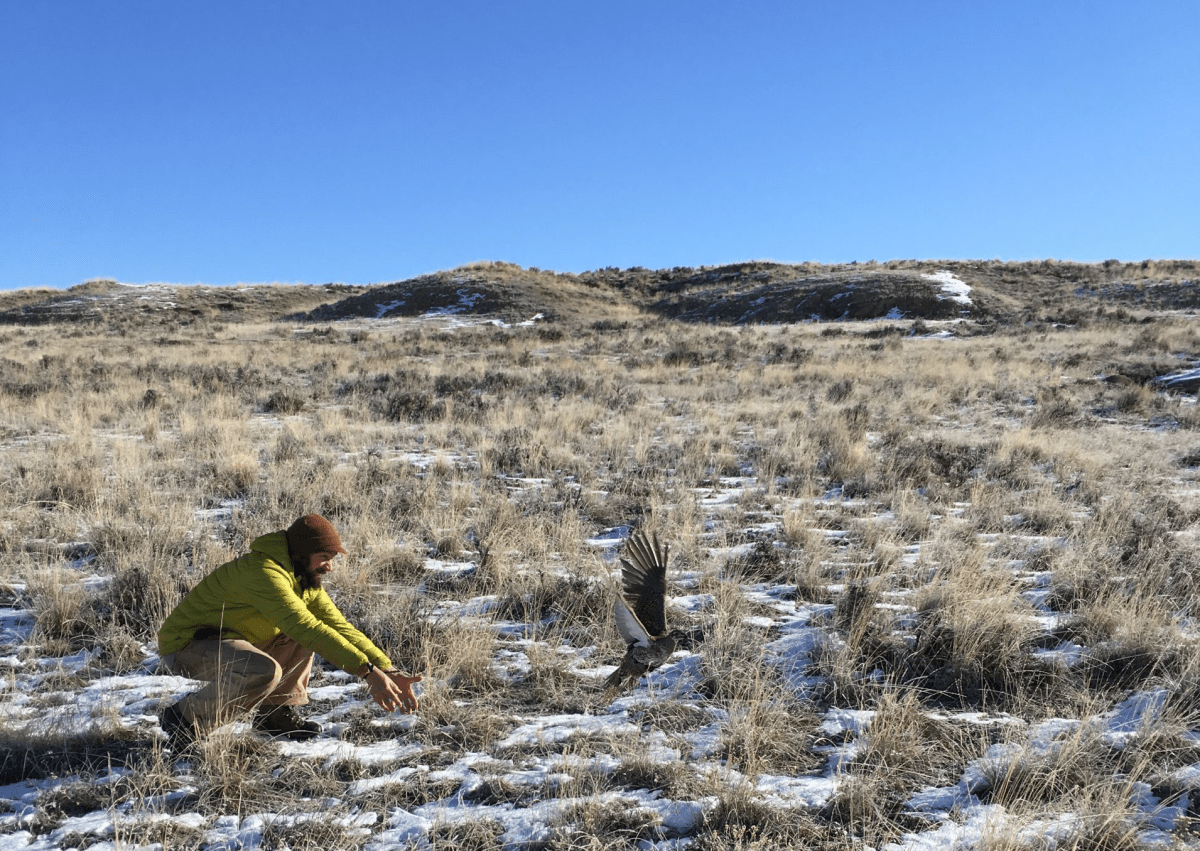
Newly published research exposes the role gas drilling infrastructure played in shrinking habitat for northeast Wyoming’s dwindling sage grouse population — and it also provides a blueprint to help the imperiled species continue to exist on industrialized landscapes.
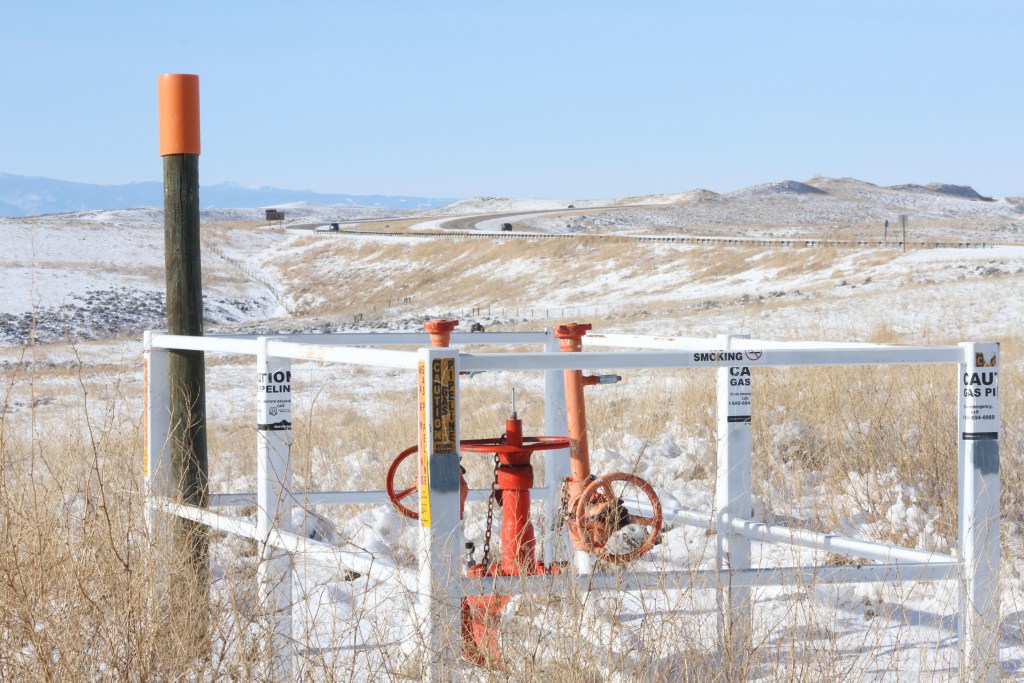
In the Powder River Basin, a coalbed methane industry boom around the turn of the century brought with it some 30,000 wells, thousands of miles of roads, power lines and pipelines, along with scores of wastewater ponds resulting from drilling. Amid the disruption, sage grouse in this corner of the state have struggled, but they’ve continued to hang on. How hens were able to raise chicks to adulthood with industrialization all around them is a question Sheridan-based ecologist Chris Kirol set out to understand. He learned there were specific infrastructure features that the notoriously sensitive grouse species most especially eschewed.
“We found that the hens with chicks are showing strong avoidance of power line corridors,” Kirol said. “And these powerlines often run to every single well, so there are a lot of overhead power lines.”
Successful chick-rearing grouse also steered well clear of wastewater reservoirs left across the landscape from coalbed methane drilling. In addition to shrinking habitat, the ponds are also spreading sage grouse-killing West Nile Virus, past research has shown.
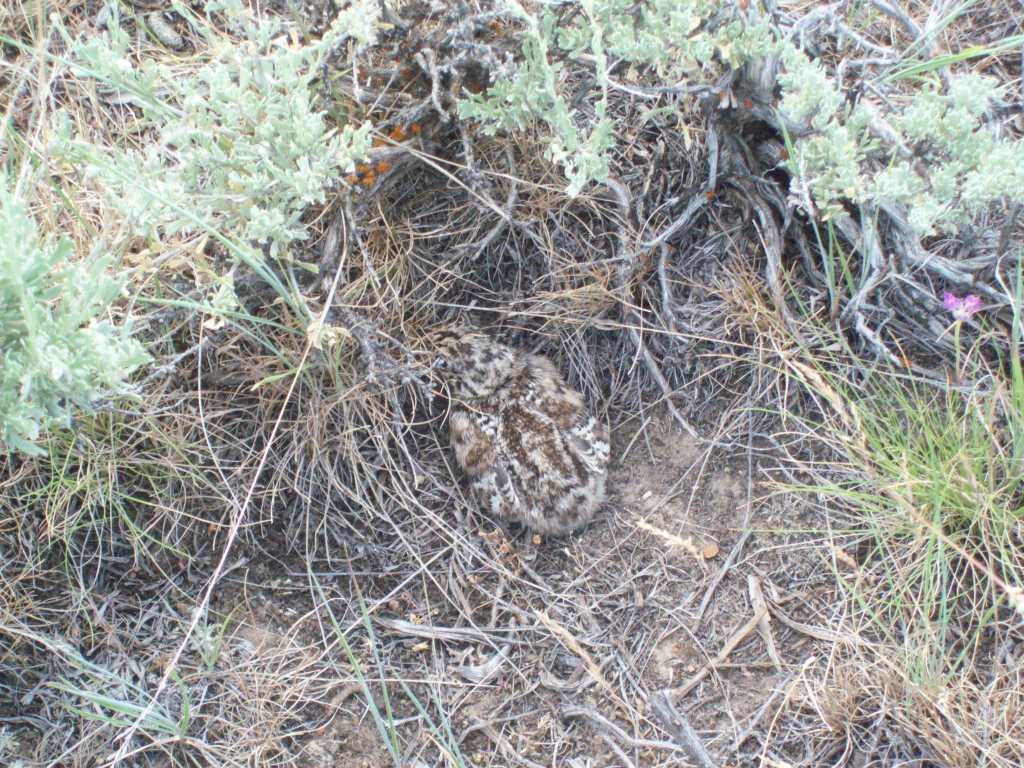
“What’s hard with the reservoirs is a lot of ranchers and people think, ‘water is good for wildlife,’” Kirol said. “But water is good for some wildlife. Water reservoirs everywhere are not necessarily good for species that are adapted to dry, arid climates.”
Recent research conducted for the Wyoming Game and Fish Department also found that coalbed methane ponds were likely spreading a virulent condition called epizootic hemorrhagic disease in mule deer, contributing to a pronounced deer decline in the region.
Kirol, a University of Waterloo postdoc, quantified the scope of the habitat loss experienced by sage grouse in the coalbed methane zone. His study area sprawled out over 940 square miles of the Powder River Basin, an area that was crisscrossed by 3,989 miles of overhead power lines. Typically, females with chicks wouldn’t go within a third of a mile of those lines.
“What we call ‘functional habitat loss’ — areas no longer used by these hens because of these large overhead lines — it’s about 27% of the area,” Kirol said.
The ponds took away more. In the most densely drilled portion of the study area, there was about one impoundment for every 500 acres, and chick-rearing grouse didn’t often use habitat within 600 yards of the water.
“They’re probably recognizing higher predator concentrations around these ponds,” Kirol said, “and they’re completely avoiding them.”
Kirol and the University of Waterloo’s Brad Fedy published their findings in the academic journal Wildlife Biology. The study shines some light on some of the suspected mechanisms of sage grouse decline in northeast Wyoming.
As a species, sage grouse have infamously struggled: A 2021 U.S. Geological Survey report estimated an 81% range-wide decline in numbers over the last half-century. Grouse are at the point in their shorter-term cycle that numbers are on the up in Wyoming — including a 14% increase in northeast Wyoming — but historically those types of gains have been washed out by persistent habitat loss-driven declines.
Not doing so hot
Birds in northeast Wyoming are no exception.
“Basically this population is so low that it’s getting a little alarming,” said Kirol, who’s a member of the state’s Northeast Sage Grouse Working Group. “In fact, it’s so low Wyoming Game and Fish suspended all hunting last year.”
Long-term population data shows that numbers were never particularly strong in the Powder River Basin. Consistently, fewer male grouse gather to strut at breeding sites called leks in this region than in any other portion of Wyoming. That’s partly a product of the natural habitat condition, being on the easternmost fringe of the greater sage grouse range, according to Dave Pellatz, who directs the Thunder Basin Grasslands Prairie Ecosystem Association.
“We’re right on the edge of the sagebrush steppe,” Pellatz said, “[where it meets] the Great Plains.
The state’s sage grouse conservation plan for northeast Wyoming says that the region never had a ton of sagebrush (grouse depend on the shrub) and that the biome has considerably declined. The “patch size” of sagebrush stands fell more than 60% since the 1960s in the Powder River Basin, where sagebrush was estimated to cover 35% of the overall landscape in 2005.
Pellatz, who’s a member of Wyoming’s statewide Sage Grouse Implementation Team, said there’s an ongoing debate about what exactly is causing sage grouse declines in northeast Wyoming.
“There are some areas where we can specifically say these declines are likely tied to anthropogenic disturbances,” Pellatz said. “And there’s other areas where there has been no change that we can identify at all — and sage grouse are no longer in that area.”
Even a decade ago, half of the known sage grouse leks in northeast Wyoming were considered “inactive,” according to the region’s conservation plan. A Pew Charitable Trusts study that dates to that era predicted that sage grouse would likely be extirpated from the Powder River Basin within three decades.
Wildlife managers and sage grouse stakeholders want to prevent that.
“This area provides the connectivity for genetic diversity,” said Laurel Vicklund, a retired reclamation specialist who chairs the Northeast Sage Grouse Working Group. “We don’t have the large grouse populations that some of the state has, but we offer the access for genetic diversity.”
That’s because northeast Wyoming links the state’s grouse population — the largest remaining on Earth — with smaller, even more vulnerable populations, like those in the Dakotas and eastern Montana.
Burying lines, draining reservoirs
Kirol was clear with WyoFile about his intent for the research. He wanted to do more than elucidate the reasons why sage grouse have struggled in the coalbed methane fields.
“What I care about is helping the birds,” Kirol said. “So trying to figure out what we can do for them. The sage grouse are trying really hard to persist in northeast Wyoming.”
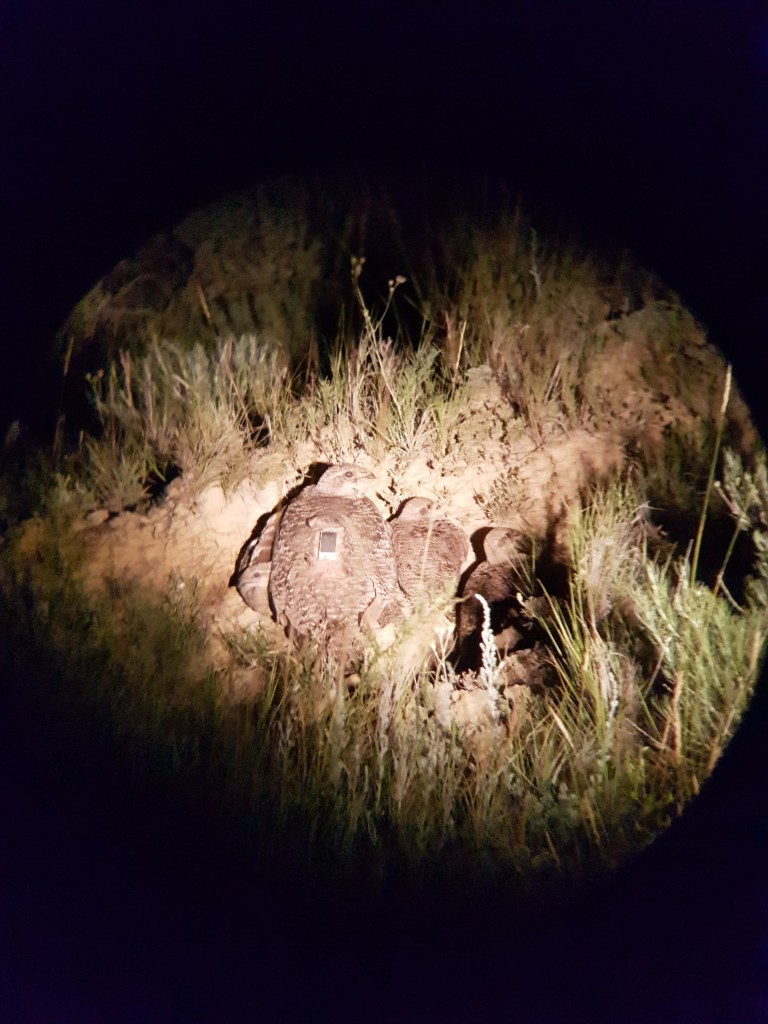
And there were some silver linings to otherwise grim findings about how grouse are navigating the gas fields. The 18 tracked hens that successfully raised broods to six weeks in age didn’t avoid all infrastructure. None of the birds raised their young especially close — within 500 feet — of coalbed methane wells, but they were more tolerant of the lower-to-the-ground structures, with some of the birds selecting habitats within a third of a mile of wells.
Kirol study’s included recommendations for how to make coalbed methane fields more livable for sage grouse.
“In any future development, the [overhead] lines should absolutely be buried,” he said. “Our other recommendation is that all these coalbed natural gas reservoirs, when they come to the end of their life, they should be reclaimed back to the natural drainage.”
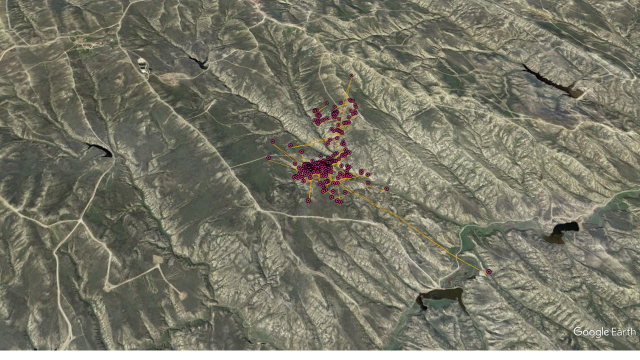
During the coalbed methane boom, there was a lot of talk about reclamation and restoration, but issues with “orphaned” wells and associated infrastructure have persisted. Kirol worked as a consultant and surveyor at the time.
“They said, ‘All this development is happening, but at the end of the life of these wells, all the power lines are going to be removed, all the wells are going to be removed, all the reservoirs are going to be removed, and habitat is going to be reclaimed and restored,’” Kirol said. “But twenty-some years down the road, a lot of times that is not happening.”
Proposed revisions to Wyoming’s sage grouse conservation map, which identifies and protects “core” habitat, could potentially help stimulate some of the costly habitat work needed to help birds in the Powder River Basin’s coalbed methane country.
Last summer, the Sage Grouse Implementation Team proposed a large addition to the core area in already-drilled coalbed methane fields east of the Powder River. That proposal, however, riled up local ranchers, and the sage grouse team has since demoted the level of proposed protection to a novel “stewardship area.” What exactly that means — and whether it happens — is a work in progress, said Pellatz, a member of the implementation team.
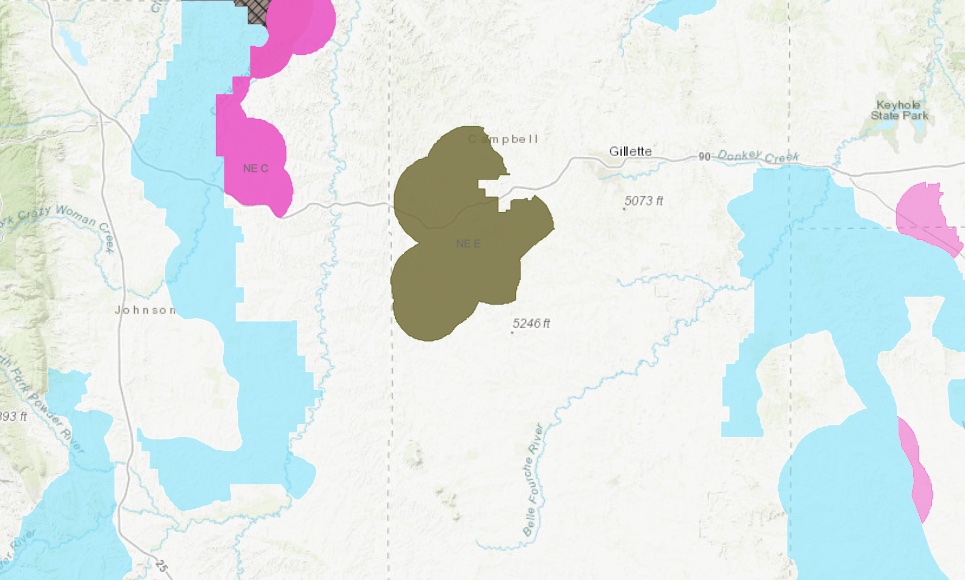
“Until we see the [governor’s] actual executive order, we don’t know what’s going to come down,” Pellatz said. “But that was the intent: to try to encourage protection … in this area. There’s a lot of private land, so there are considerations there.”
If the “stewardship area” does come about, Pellatz expects there will be discussions about funding the type of work that Kirol proposes: burying power lines and dewatering ponds to help sage grouse.
“There’s been quite a bit of interest in doing some of the things he’s identified as potential restoration,” Pellatz said. “I think some of that stuff will get done, probably in high-priority areas where there appears to be enough birds to warrant it.”
I hunted sage grouse in Montana this past year for the first time.
Sagebrush was the key for me.
One ranch had two pieces of sagebrush that butted right up to a large complex of homes(20) pig operation, heavy machinery, heavy agriculture.
Stopped to ask an owner who was working in a huge garden on one side of road and sage brush on other side, he said there will be sage grouse exactly where I was standing as they were raiding his garden. I would have never guessed this would be a good spot so close to a very active farm. Next morning a flock of sage grouse were there. The other section of sage brush had sage grouse(separate flock) as well right next to silos, equipment etc. Very surprised. One friend shot a sage grouse with a transmitter, we called it in and was from an old discontinued study.
We went later to a public land dotted with oil rigs, very ugly but surprisingly found sage grouse there as well.
Just wanted to share some first hand observations for whatever it’s worth.
In Montana, the limit is two sage grouse a day, I would recommend one to two bird limit a day but make a season limit as well.
It has been studied and found that sagegrouse avoid areas with wind turbines in place. The thinking is that the grouse recognize the towers as high spots that enable eagles and other raptors to gain advantage by being able to scope out more areas from the high vantage point. We are not talking trees here. Desert areas with juniper trees do not count as providing vantage points like a windmill. Sage grouse do not hang around drilling sites or wind mill sites. They may pass by, but do not thrive. As a side note, it was determined some years ago after a court hearing that: Golden or Bald eagles killed as a by product of wind generation were worth $25,000.00 apiece. Is that still the case and is that fine still being assessed on the wind generation entities? If not, why not, and what is the current value of a raptor knocked out of the sky and killed by those windmills?
How are the grouse impacted by wind power infrastructure?
I will dare to say the Red Desert/Windriver foothills may now be a last sage hen stronghold that has and is under constant attack by those that would move huge machinery too and scrape the desert bare for development. The Rock Springs RMP revisal may be a last best hope for sage hens in Wyoming. Let’s not be 20 yr.s on from this point and wonder why there are NO sage grouse to be found.
I sometimes wonder if those who plan for development really consider work and results from other places? I didn’t see any mention of noise levels that may also be affecting sage-grouse, numbers. That has been extensively monitored elsewhere in the state and found to be detrimental, especially during breeding season..
I also wonder if the “planners” go to any great length to really evaluate and modify plans as they go, especially when they start observing declines.
The concept of adaptive manage sometimes helps with this, but as with all development in Wyoming, when you start making money you generally don’t take the time to further evaluate what can be done better, do you don’t spend the extra money trying to do it right. Examples of that are plentiful.