
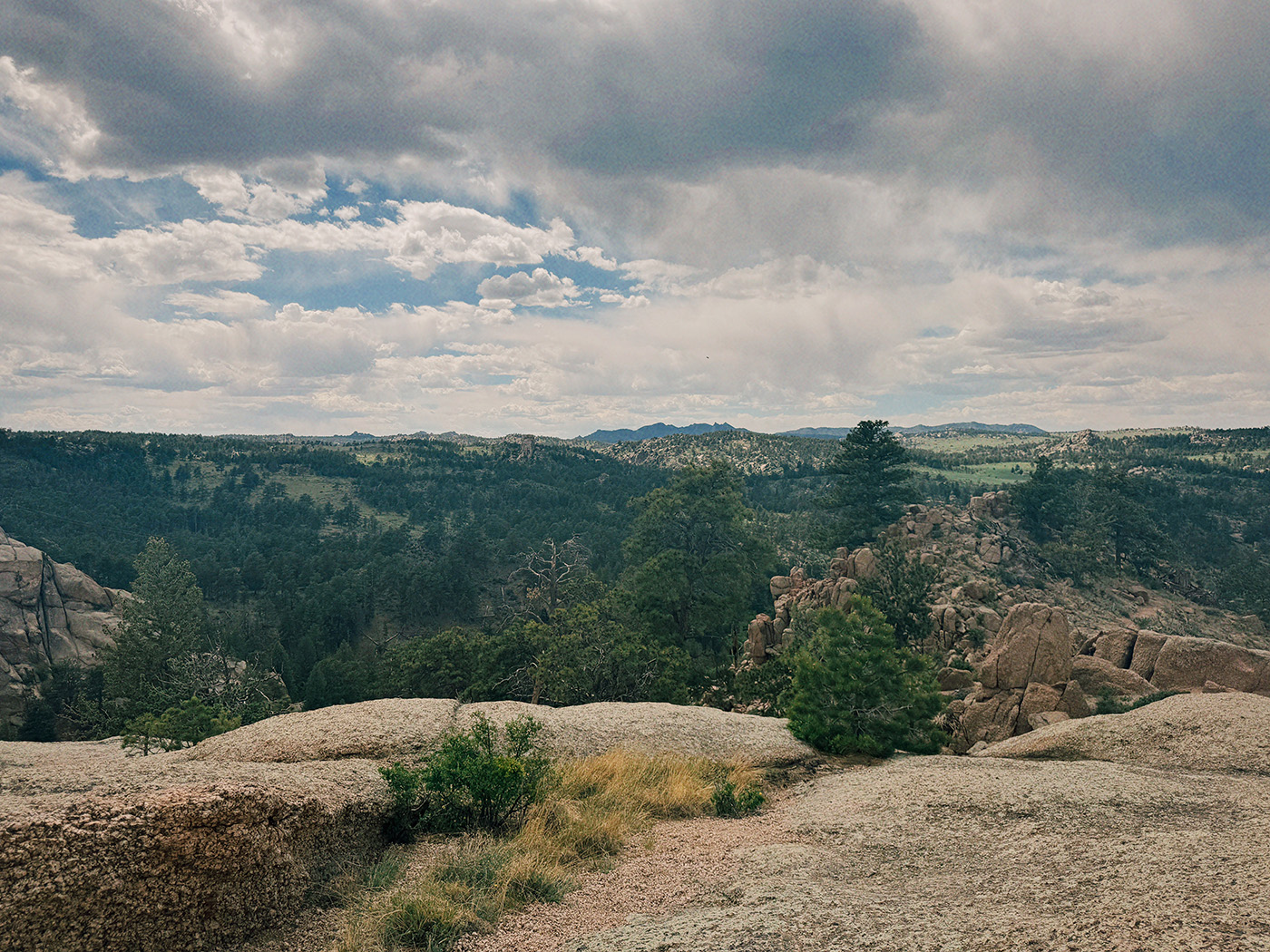

Early in the warm season, while our neighbors fired up their fishing boats and pulled their camper trailers out for the summer’s first night under the stars, my little family wandered Curt Gowdy State Park with backpacks of field recorders, notebooks and cameras. Some folks glanced, questioning; others asked, “So, what are you doing here?” to which we said, “We’re interviewing the park.”
Opinion
Can the lone pine at the treeline remember its years as a sapling?
How does the herd of antelope feel when the winter’s snow never comes?
Does a mountain know it will one day erode to just a hill?
We came to the southern Wyoming park, situated between Laramie and Cheyenne, through the Wyoming Arts Council and Wyoming State Parks’ 2026 Artist in Residence Program, which was expanded this year with semiquincentennial funding. Through the summer and fall, 19 Wyoming artists will take up four-day residencies in parks across the state — each asked to honor the past, reflect on the present and imagine the future of America as it celebrates 250 years.
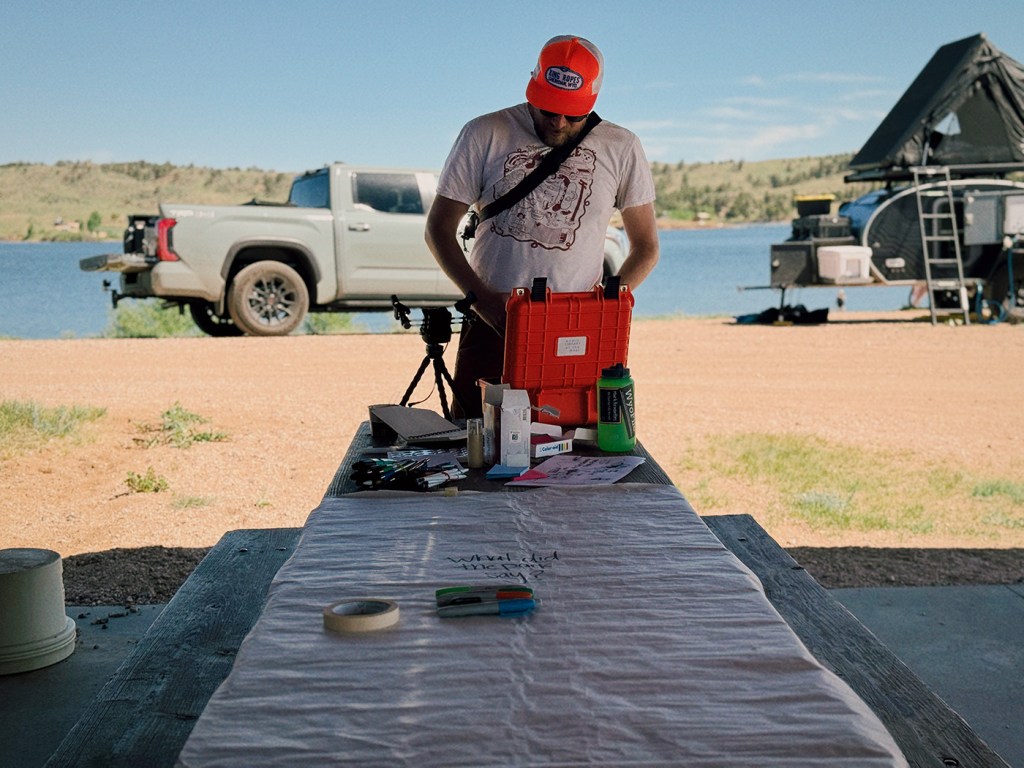
We pitched our project as an exploration of landscape, both physical and abstract. We were curious what Wyoming chooses to say about itself through the care of and connection to its parks. What better time to listen to the wisdom of the land and its creatures, when communication between humans feels so fraught.
Established in 1971 through a lease agreement with the city of Cheyenne and the Boy Scouts, the area was originally named Granite State Park. Today, it’s known for miles of hiking and mountain biking trails, camping, fishing and water recreation in Granite, Crystal and North Crow reservoirs.
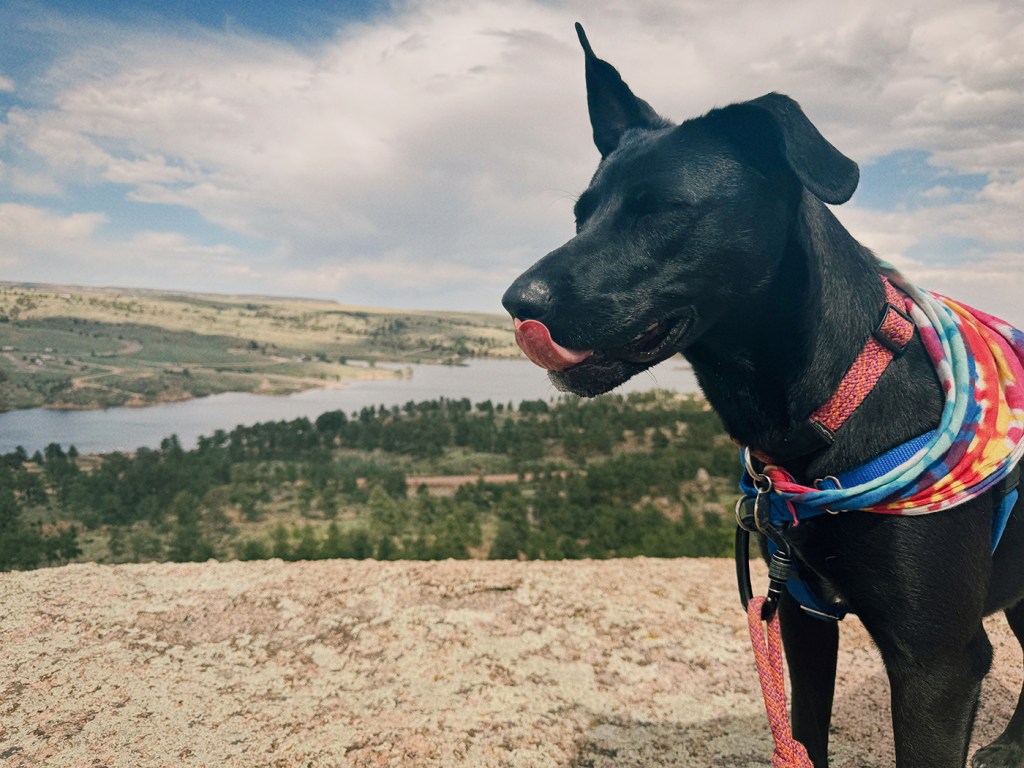
Long before our founding fathers declared this America, wisdom lived in places like this. It was surely known intimately for food, medicine and ceremony — a far richer relationship than the one forged with 30-foot camper trailers and speed boats blasting pop country.
One year after the park’s creation, Wyoming renamed it after beloved national sports broadcaster and Wyoming native Curt Gowdy.
Gowdy knew of the land’s wisdom, too. In “Cowboy at the Mike,” his autobiography co-written with Al Hirshberg, he wrote: “Everybody dressed the same for fishing — in boots and Levi’s — so you never knew if you were with a millionaire rancher or one of his hired hands. You didn’t care either.”
Three nights in the mountains was far too short a time to solve the challenges that face America’s future, but, as with most any time when phones sit untouched, it was nourishing. We remembered to pay closer attention to our company.
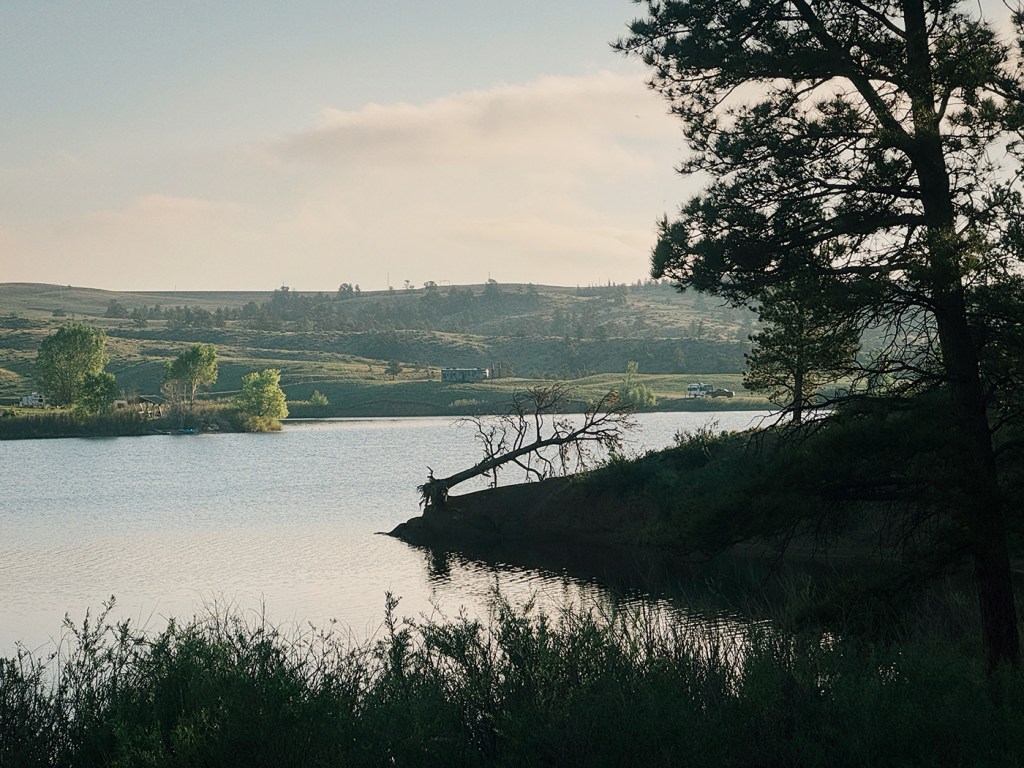
We talked of how the wind wonders why we grip our belongings so tightly and how the reservoir of drinking water watches us paddle with our fluorescent, fiberglass fins. We questioned whether a root-bound tree felt relief when it finally fell onto the shore, and why people insist on carving their initials into everything.
What did the park say about America?
Well, nothing.
Though there was no shortage of depictions of the stars and stripes stretched high on camper awnings and low, printed across swim trunks. When we visited the roadside bar for a burger and a hot-water handwash, the house band called the room to stand and sing along to the national anthem. Meanwhile, the park sat down the highway, waiting with its quiet.
Instead, it said our shadows all look the same in the midday sun, and the ripples on the lake are only the first layer of many. That we try to explain away the truth with time, and so much has remained unchanged.
Perhaps for its birthday, America should spend a week outdoors.

This was refreshing, good advice for everyone.
“Perhaps for its birthday, America should spend a week outdoors” Agreed, but leave all the motorized toys behind, turn your cell phone off and enjoy the peacefulness and quiet that our public lands have to offer. Get off your butt, and hike somewhere, where there is no one, use this time to reconnect with each other; face to face. Marvel at how this land is bigger than you or I will ever be, and was here long before we were born and will still be here long after we die.
Thank you, Jessica. This was beautiful.