

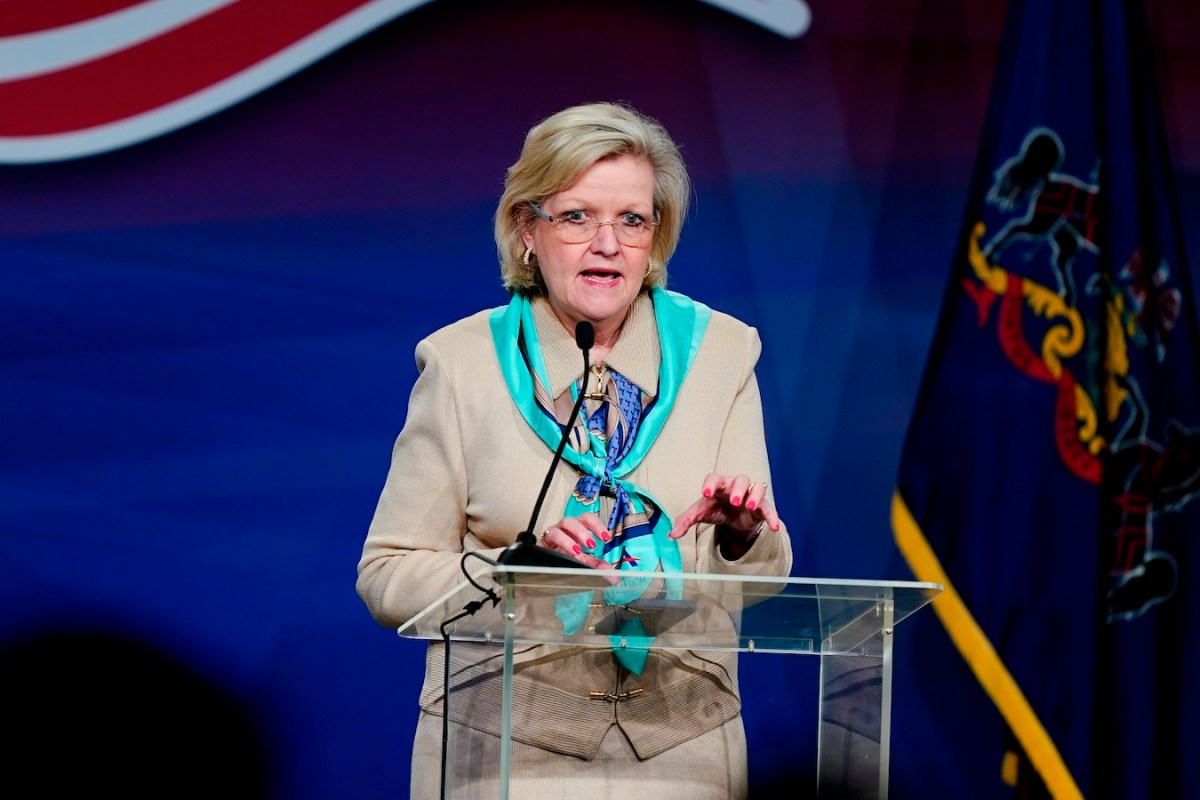
After working to overturn President Donald Trump’s 2020 election defeat, Cleta Mitchell, a conservative attorney and former Oklahoma state lawmaker, began building a national movement aimed at remaking American elections.
Mitchell — who was on the phone call with Trump when he pressed Georgia Secretary of State Brad Raffensperger to “find” enough votes to recalculate the results in his favor — launched the Election Integrity Network in 2021.
The network works as a coalition of activists, attorneys, Republican party officials, advocacy groups and right-wing media outlets. Mitchell has also provided assistance to Wyoming Secretary of State Chuck Gray.
Under Mitchell’s leadership, the network has wielded its influence to change state laws, purge voter rolls and cast doubt on election security. In an extensive profile published in October, ProPublica reported that “no one besides Trump himself has done more than Mitchell, 76, to turn the mundane processes of how ballots are cast and counted in American elections into mortal combat.”
While Mitchell has kept a direct line to Trump, she’s also worked closely with Gray, according to text and email records obtained by American Oversight through a public records request. American Oversight, a public interest watchdog based in Washington, D.C. shared those records with WyoFile.
The records indicate Mitchell recommended Gray as a witness before the U.S. House Administration Committee, suggested edits to his congressional testimony, and asked Gray to press Wyoming’s federal delegation and other GOP secretaries of state to support the SAVE Act. The federal legislation, which ultimately stalled in August in the Republican-controlled Senate, would have required voters to provide documentary proof of citizenship to register and expanded the federal government’s involvement in election matters traditionally left to the states.
“Huge win Cleta!” Gray texted Mitchell on July 1, 2025, records show, alongside a Facebook video of him discussing several election-related laws going into effect that day in Wyoming, as well as his signing of an agreement with the Department of Homeland Security to use the Systematic Alien Verification for Entitlements database.
“Thanks for all your help and support Cleta – – it means a great deal!” Gray wrote in the same text.
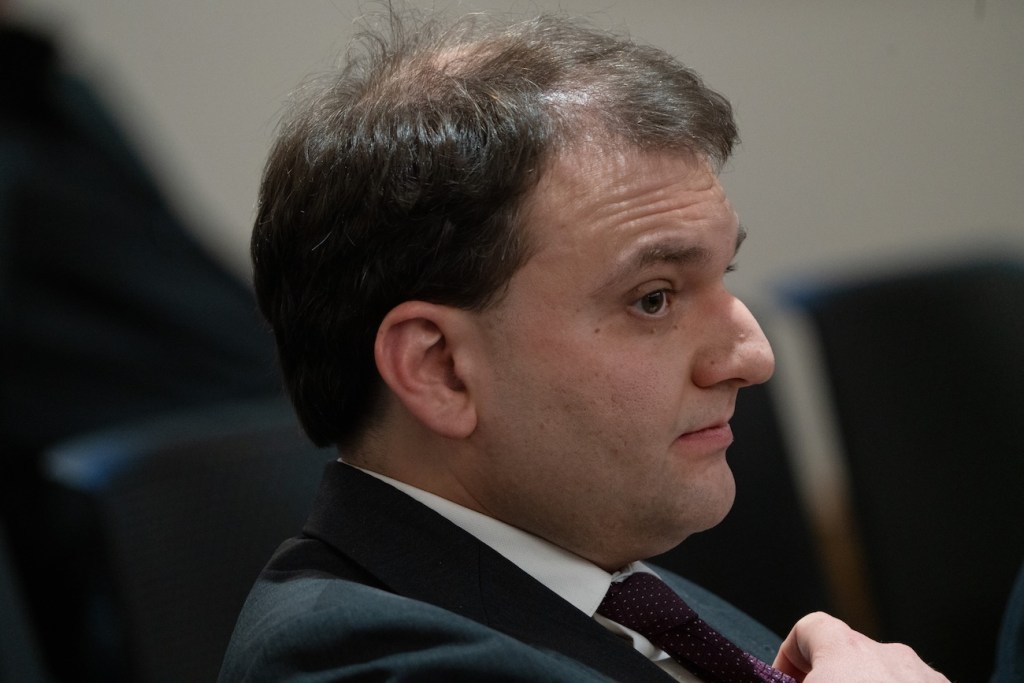
While Gray collaborating with Mitchell is not necessarily surprising given his focus as secretary of state, the records lay bare the enthusiasm of Wyoming’s chief elections officer to work closely with one of the country’s most powerful pushers of the false claim that U.S. elections are rigged and stolen.
In 2022, Gray, then a state lawmaker, ran for the position of chief elections officer on a platform of unverified claims of “tremendous problems” with Wyoming’s elections. As part of his campaign, Gray sponsored showings across the state of the debunked film “2,000 Mules,” which alleged that rampant “ballot harvesting” in swing states stole the 2020 election from Trump. (The nonprofit whose claims the film was based on later acknowledged in a court filing that it had no evidence to back its claims in the film.)
After voters elected him to the position, Gray ardently lobbied state lawmakers for a slate of election restrictions and racked up legislative wins that included a bill similar to the SAVE Act that added proof of both citizenship and state residency to Wyoming’s voter registration process. In 2025, he made Wyoming the first state to cooperate with the federal government’s demand that states hand over sensitive voter data.
“Wyomingites deserve to know why Cleta Mitchell, who helped try to overturn the 2020 election, has so much access to their chief elections officer,” American Oversight Executive Director Chioma Chukwu told WyoFile in a statement.
“These records show her working behind the scenes to shape his congressional testimony and enlist him to advance her national network’s agenda,” Chukwu said. “What does that agenda have to do with the needs of Wyoming voters? What else is Gray getting out of this relationship, and how does it benefit the people he serves? How has any of this made it easier for eligible voters to cast a ballot? Gray owes Wyomingites answers.”
In response to an emailed list of detailed questions from WyoFile, Gray responded with a statement.
“My tenure as a legislator and as Secretary of State has been one of collaboration, and I have worked with numerous individuals to advance meaningful election integrity legislation at the state and federal level. Our administration has been very successful in working for the people of Wyoming to strengthen the integrity of our elections,” Gray wrote in the statement. “The media’s obsession with attacking citizens like Cleta Mitchell who are advancing common sense election integrity measures shows how out of touch the media is. I will keep advocating for common sense election integrity measures, because the people of Wyoming support these common sense election integrity measures.”
Earlier this month, voters elected Gray to Wyoming’s lone congressional seat in the U.S. House of Representatives. He takes office in January.
Video calls
Records show that Mitchell responded to Gray’s Feb. 1, 2025 message regarding Wyoming’s newly enacted proof-of-citizenship election law and his agreement with DHS later that day.
“That’s just fabulous!!!” Mitchell wrote. “You have to talk about this on the Friday call this week!!! Woo hoo!!” Mitchell wrote. “Can you do that?”
“Yes absolutely!” Gray said.
Since its inception, a hallmark of Mitchell’s Election Integrity Network has involved weekly videoconference meetings with participants from across the country.
After obtaining recordings of more than 400 of those meetings, the New York Times reported in 2024 that the coordinated calls “allowed debunked theories to jump from state to state” and “nurtured a cast of amateur election sleuths and armchair experts who often see evidence of election fraud in processes that they misinterpret.”
Records show that on Oct.7, 2025, Mitchell texted Gray and asked if he could join another Friday call to discuss running Wyoming’s voter rolls “through the updated SAVE system at DHS?”
“I’ve got you on the agenda for Friday to talk about the SAVE system / process and what your experience has been. Can you still do that? 15 minutes?” Mitchell wrote in a later message.
“Yep!” Gray responded.
Congressional testimony and delegation
Gray testified to the U.S. Committee on House Administration during a February hearing titled “Make Elections Great Again: How to Restore Trust and Integrity in Federal Elections.”
Sometime in the days ahead of the hearing, records show that Gray texted Mitchell with a favor.
“I’m testifying on Tuesday in House Admin on the MEGA Act! Really excited about it – – thank you for all of your help! Can I send you testimony – – just wanted to see any suggestions you have?” Gray wrote.
“Yes of course. I suggested they ask you” Mitchell responded. “I’d be happy to go over your testimony. Plus I have one key paragraph I want to suggest.”
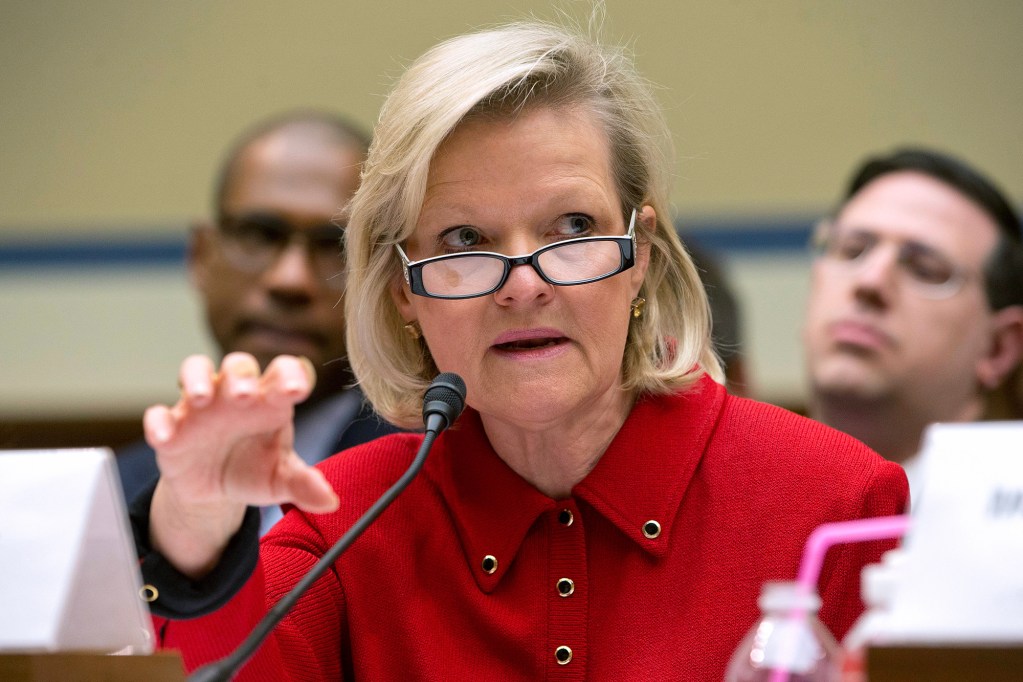
Email records indicate that Gray sent his testimony to Mitchell on Feb. 9, the day before the hearing. Records show that Mitchell mostly suggested slight tweaks to Gray’s testimony and asked that he add a paragraph about Wyoming being exempt from the National Voter Registration Act and how the MEGA Act would “allow states to take the actions necessary to clean voter rolls on a real time basis.”
As seen in his testimony, Gray did not adopt most of Mitchell’s edits, including the added paragraph, largely sticking instead to his original draft.
Letters
Records show Mitchell texted Gray on Feb. 24 about a letter sent to Senate Majority Leader John Thune from the SAVE America Act Coalition, a project of Mitchell’s Election Integrity Network.
“Make sure Cynthia [Lummis], [John] Barrasso and Harriet [Hageman] see this letter and publicly support the talking filibuster. Particularly Barrasso,” she wrote.
Mitchell also asked Gray to “create a similar letter to be signed from GOP Secretaries of State.”
“If you get one together, we can help get it hand-delivered to Sen Thune’s office,” Mitchel wrote.
On March 26, Gray announced in a press release that he had sent a joint letter with Indiana Secretary of State Diego Morales to Thune, urging the Senate majority leader to “enforce the talking filibuster to ensure” the passage of the SAVE Act.
The records do not indicate whether Gray pushed Wyoming’s federal delegation to support the bill and he did not answer that specific question in his statement to WyoFile.
WyoFile contacted Sens. John Barrasso and Cynthia Lummis as well as Rep. Harriet Hageman to ask whether Gray had urged them to support the SAVE Act.
“No one has ever needed to convince Harriet Hageman about the importance of requiring an ID to vote in American elections,” Tristan Justice, Hageman’s communications director, told WyoFile in a statement.
Neither Barrasso nor Lummis responded to WyoFile’s request by publishing time.
