

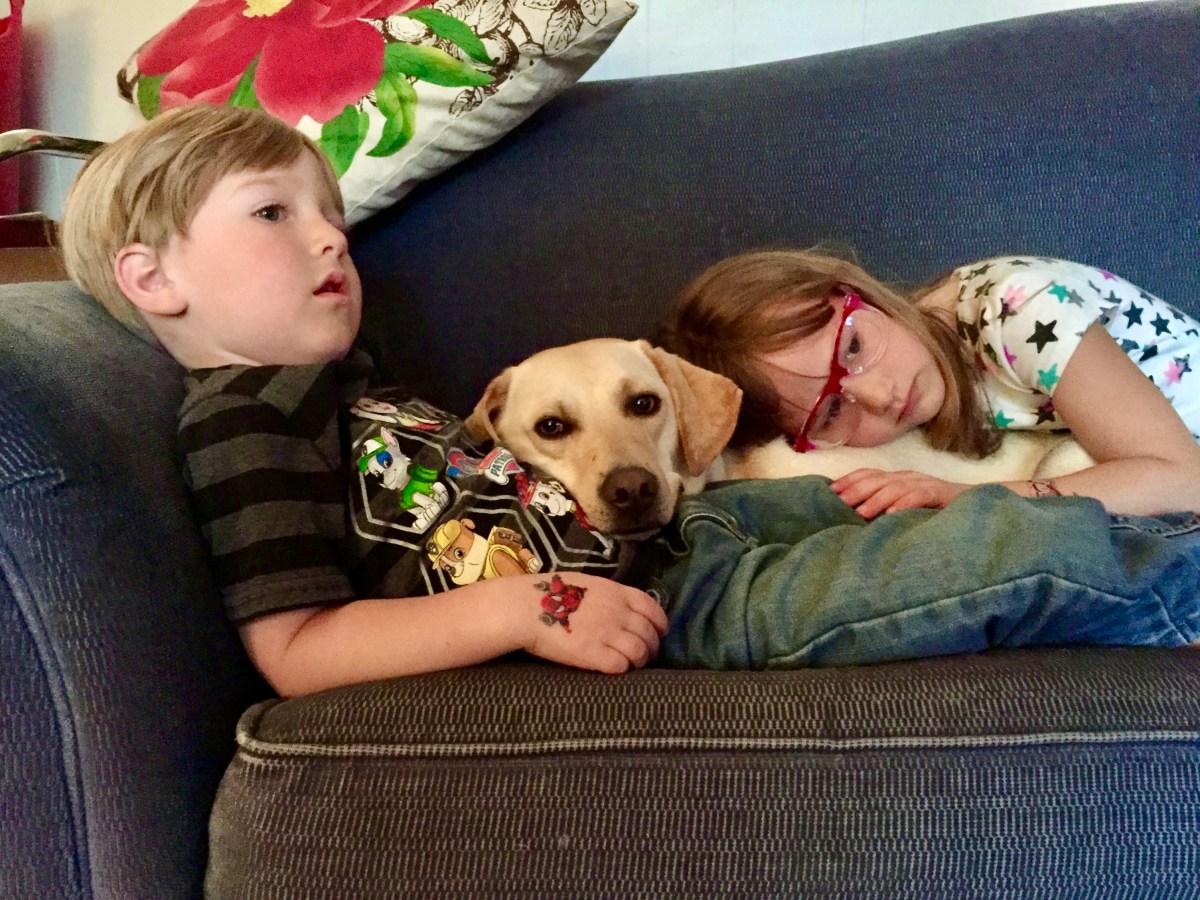
He looked like a gargoyle when we met him. His back legs splayed outward, ribs emerging from a gaunt frame, the hint of a tail. Scars on his nose and a notch in his right ear, as if someone had pinned a tag to it and then ripped it away.
He grinned like a gargoyle, too, pacing our house on the night we brought him home, flopping down and then standing to pace again. He had no instinct to fetch and little interest in other dogs. The numeric tattoos in his ears suggested he might have started life in a laboratory, and thus had scant experience with canine things.
We found him through a dog rescue. They said they’d found him wearing a rope collar in a kill shelter in Roswell, New Mexico. Nico Wolfson, our little alien. Hips so tight that he could not sit. We suspected he’d spent most of his first year in a cage. He might have been part Labrador and part beagle, but that was just a guess.
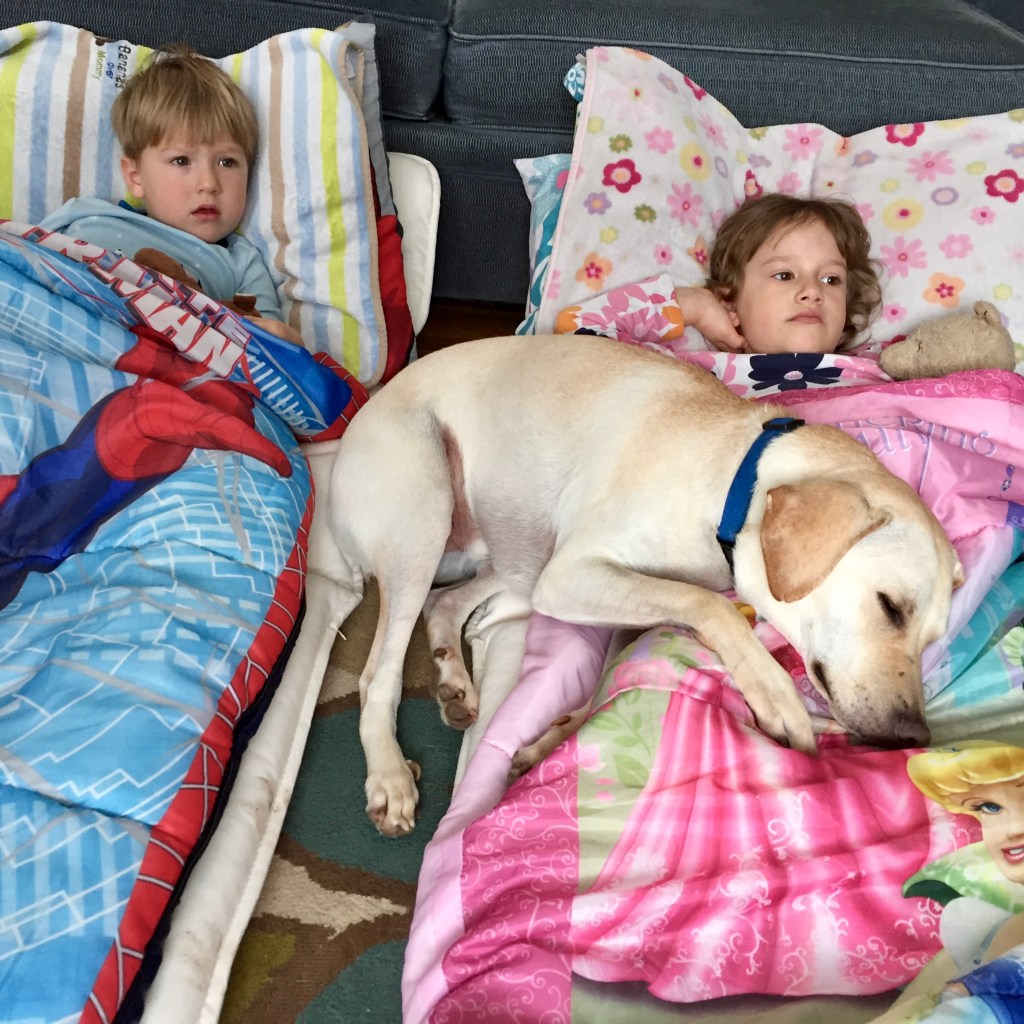
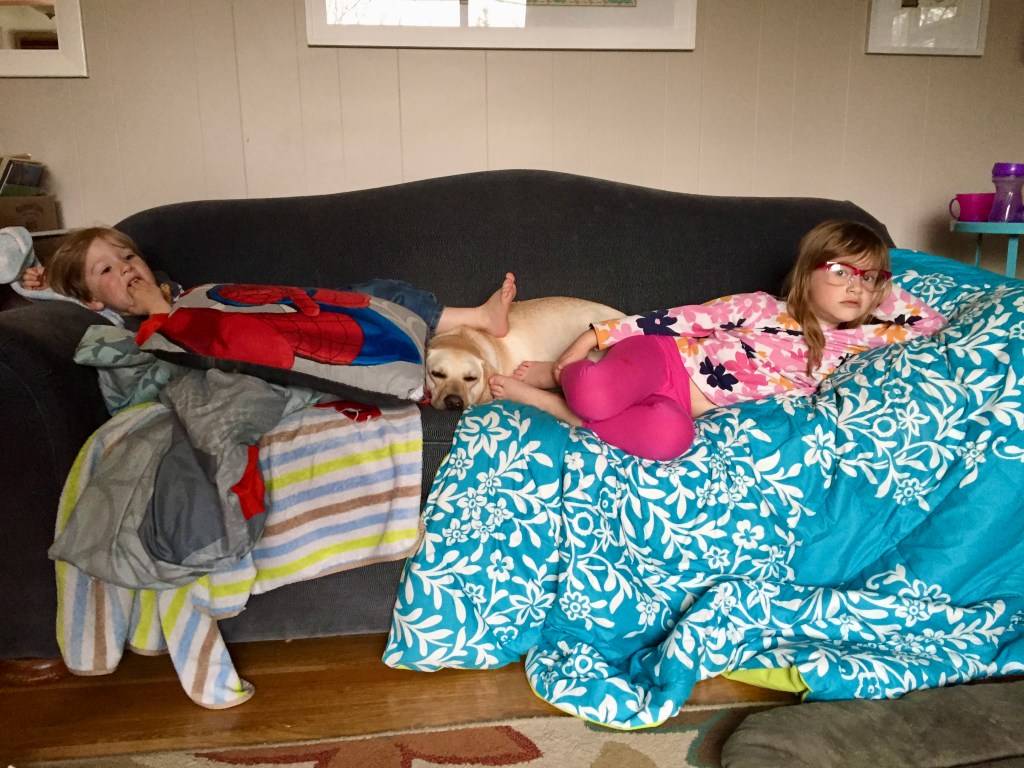
It didn’t matter. Nico was badly in need of love, and we had so much to give. The kids were little then and would spread brightly colored sleeping bags across the floor or the couch. They would settle in together, two children and a dog. Playing and sleeping and playing again. A pack of three.
***
Nico eventually learned he could sit. His gaunt form grew plump — the result of too many treats. He’d had a hard life to start, so what’s a little cheese in his bowl with breakfast?
He never took an interest in returning a thrown ball. He just wanted connection. If the kids were having a dance party, he hovered beside them, tongue out and panting. If they played Legos or Lincoln logs, he’d lie close by. In the car, he’d stand between their car seats, ignoring all appeals that he sit for his own safety.
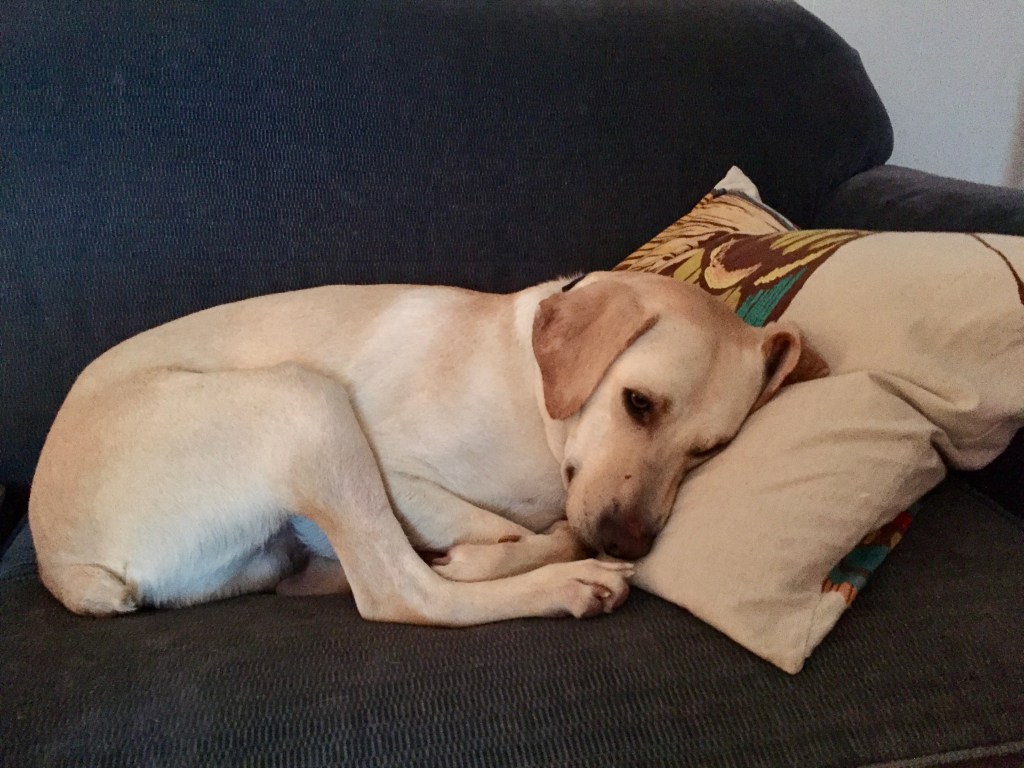
Most nights, he’d settle in next to me in the front room, and we’d listen to the wind break like a wave against the house. The rest of the family asleep down the hall. The scattered thoughts of a father. So many worries. About work, about family. Soothed by the constancy of a dog, tucked nearby and breathing softly amid the din.
***
Is there a lesson from a dying dog? Some accumulated truth, collected unseen since the time of our joining, that floats atop the spring of grief? What other arrangement do we undertake that is so short, so inevitable?
We don’t say it, but we understand from the beginning: This bond will break my heart.
***
Nico’s health issues from his youth only temporarily subsided. Before too long, his eyes, a deep amber, clouded over. He suffered random leg injuries that vets attributed to his start in a laboratory cage. After a few years, he began avoiding the basement because the stairs caused him pain.
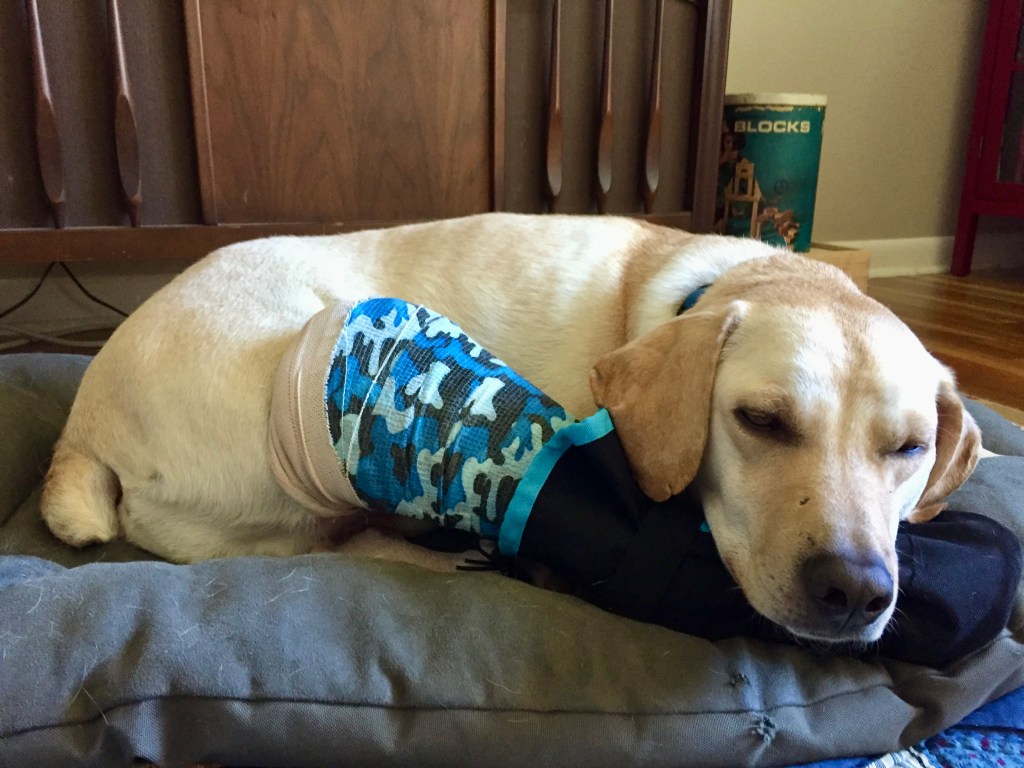
It was an autoimmune disease, discovered six years ago, that really did him in. It sapped his energy. He had trouble going to the bathroom. And a few times, he got sick — so sick that my wife and I worried what we’d tell the kids if he died.
But we found meds that worked, and he bounced back enough to resume our strolls through the neighborhood and long winter nights curled up in the living room as the snow fell and the turntable spun. There were still many years ahead, I told myself.
***
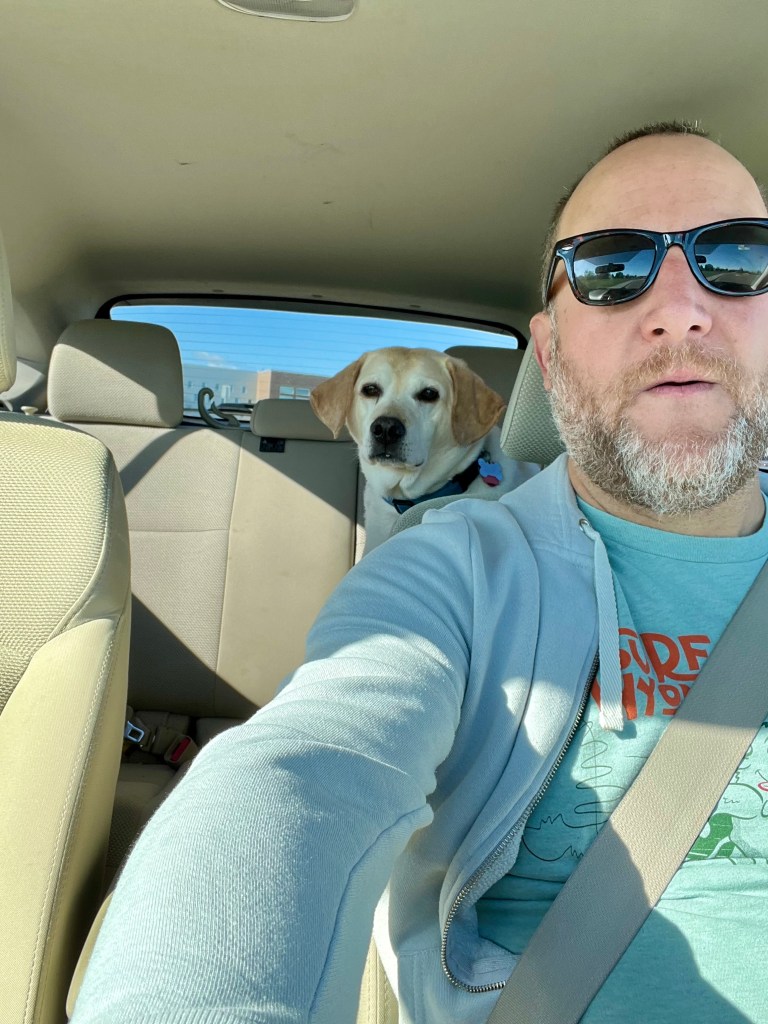
We aged together. As his eyes clouded, mine weakened to the point of embarrassing my kids by asking for help reading receipts in darkened restaurants. His coat grayed, and so did my beard. And while he struggled with the basement stairs, I would grimace as I put on my coat for our walks, the result of a bad shoulder that would crack loud enough that my wife could hear.
People say death is life’s one constant, but loss is our companion long before then. Loss of friends, of family. But also the loss of chunks of ourselves, disintegrating with a slow but determined momentum. My family lived near the beach when I was a kid, and one of my favorite pastimes was building a dam to block the rising tide. As the waters rose, I would frantically fill the gaps with sand, working with greater urgency until finally giving in to the inevitable.
At night, while the wind howls and the family sleeps, I wonder if I’m now playing a different version of that game. But I reconcile loss with the wisdom that clings to it. My body is not what it was, but I’m hopefully a kinder, more well-adjusted version of myself. My children are no longer the kids who built couch forts with me and the dog, but I’ve learned to love their teenage musings about art and love and competition.
Nico’s decline felt different. I wanted meaning from his suffering. But as I watched him tire on walks or struggle to get out of bed, there was no insight to be found.
***
The meds eventually stopped working. Or maybe it was his swollen spleen. Whatever the cause, around the start of this year, Nico went from an aging dog to one that’s dying. He had more trouble relieving himself, ate less and dropped weight until the ridges of his spine reemerged. He slept later each morning, eventually rising for breakfast around the same time the kids arrived home from school.
After a vet appointment, my wife returned with both him and a worksheet scoring his quality of life. I scanned the first questions and quickly pushed it away.
Nico still had his good moments, I told her. I recalled how he’d wake excitedly in the evenings when my daughter returned from her restaurant job smelling of burgers and grease. I ignored all the times he’d hardly move when I walked into the room.
It was the kids who convinced me that it was time. Or rather, it was the thought of them, alone while my wife and I were away, finding their childhood playmate seizing on the living room floor, or worse yet, dead on the couch. My wife and I reviewed the vet’s questionnaire again and tallied up the score. “Quality of life is concerning,” it told us.
For whatever reason, our society has settled on “put them down” as the moniker for euthanizing a pet. I assume its origins reside in some rural euphemism for killing an animal.
But another definition emerged from that questionnaire. Putting a pet down, in a literal sense, means to relinquish our grasp of them. Or put more simply: to let them go.
***
I took a walk on the last night of Nico’s life. The sun had slipped near the horizon, the sky pink and blue. When I had imagined this moment as his health deteriorated, I envisioned us cruising the neighborhood one last time. A break from the suffering. Some deeper meaning finally revealed.
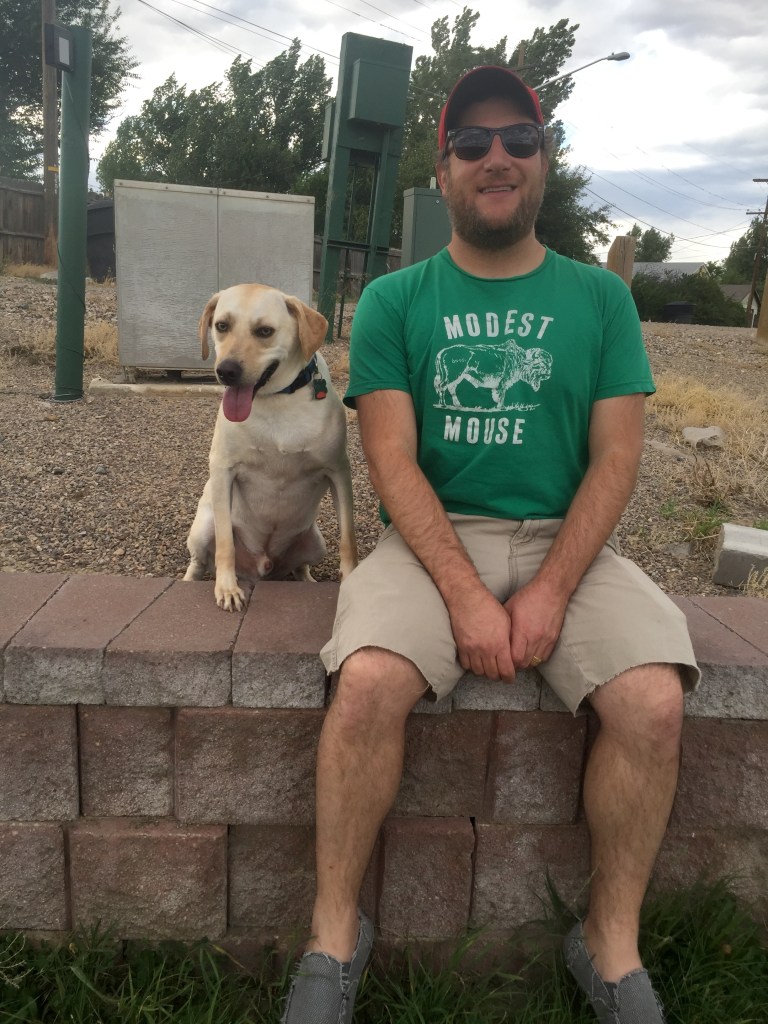
On similar nights when we were younger, Nico and I would walk up one street and down the next, pausing at the park or the high school so he could sniff the grass. But he was too weak to join me now, too exhausted to do much of anything but look up from his bed.
I drifted through the neighborhood until I reached the park. I watched the clouds wander and people strolling the path that Nico and I traveled countless times. Then a man emerged with two eager dogs and a cord of rope. He whipped the toy high into the air, the dogs charging up a hill, tongues out and panting hard.
When I got home, I saw a cake on the kitchen counter, a last gift for Nico from my son. We walked outside, planted the cake on the patio and waited. Nico took a step toward the cake, then hesitated. Craned his neck and then licked. Backed off again.
I walked inside, opened the fridge and grabbed a bag of bacon that my daughter had been collecting for him from her job, and returned to the porch. I stuck the bacon strips on the cake.
Nico stared ahead. He tried nibbling at the meat, but it was no use. He stepped away from us, turned and sniffed the grass. It was getting dark. We drifted inside. The cake sat mostly uneaten on the patio.
***
The rest of the family retreated to their rooms the next morning as we waited for the vet to arrive. It was me and Nico together again in the front room.
There was no wind this time. Birds chirped through the open window. I heard a neighbor’s chimes, the gentle whirl of a car passing on the street. Nico tucked nearby, his breathing more pronounced, more labored. The doorbell rang.
When it was finished, my daughter sobbed over his body. Sobbed in an unguarded way like she did sometimes when she was a little girl and he was a puppy. Back when they’d lie together in those brightly colored blankets, and the world felt infinite.
Finally, she stopped crying and looked at the vet. Both were on their knees, leaning over Nico’s body. “Thank you,” she said. She paused, and I’ll always wonder whether I could summon that much grace. “I don’t know how you do this.”
The vet looked at her, then looked down. My eyes were wet, my throat choking shut. “It gets harder every time,” he said.
***
Is there a lesson from a dying dog? Some wisdom that sleeps in a long-forgotten vault until times of sorrow, when it wakes and reveals itself as a salve for our damaged hearts? Some vast amount of sand conjured from the ether to hold back the incoming tide?
It’s been three weeks now, and I’m still waiting. I wait in the front room, in the fading light. I wait in the morning, when I turn the corner and see his vacant spot on the couch.
As an editor, I remind writers that the ending matters above all else, that without it, the reader doubts the journey’s worth. The reader wants — I want — some greater truth to be revealed, for some wisdom that balances this side of the scale against the weight of loss, the weight of inevitability.
I try to convince myself that I’m thinking about this all wrong. That the truth of a dying dog is more simple. Maybe there is no lesson. Maybe we don’t need one. We loved Nico as best we could, for as long as we could, and he did the same for us.
Is that enough? God, I hope so. But I’m not sure. I know I’ll keep pondering him on nights in the front room when the family is asleep down the hall, when the only thing I hear now is my breathing and the wind breaking against our home like waves against the shore.

I’ve been around dogs all my life pretty much and came to the conclusion a long time ago that dogs are the superior species. I think that any dog owner will agree if they think about it.
These letters might be the greater reason.
What a beautiful piece. Thank you. Of course I was in tears by the end, because it was all too familiar. It’s a common experience to know the pain of losing a beloved animal companion even when death is inevitable and to keenly feel the hole they leave in your heart after they are gone. As the vet said, it gets harder every time – for everyone.
What a well-written tribute to this rescued dog, who lived many happy years with a loving family. I’ve said goodbye to loved dogs and cats and the only meaning I can get from such grief is that they loved their lives and their deaths opened me up to be a more loving person. A quote (anonymous as far as I know) helped me: “It came to me that every time I lose a dog they take a piece of my heart with them. And every new dog who comes into my life, gifts me with a piece of their heart. If I live long enough, all the components of my heart will be dog, and I will become as generous and loving as they are.”
I have some of the most unique and special relationships in my life with pets – my rescued dog, Rudy, or my guinea pig, Twinkie…. the biggest gift any of them has given me, is their love. I only had Rudy for a short 3.5 years, as we’d rescued him from the pound when he was 14… but I’m that time we had a fierce bond… he was my pup and I was his person. Even Twinkie, my beautiful littleI have some of the most unique and special relationships in my life with pets – my rescued dog, Rudy, or my guinea pig, Twinkie…. the biggest gift any of them has given me, is their love. I only had Rudy for a short 3.5 years, as we’d rescued him from the pound when he was 14… but I’m that time we had a fierce bond… he was my pup and I was his person. Even Twinkie, my beautiful little Peruvian guinea pig…. she died when my parents dog jumped into our guinea pig cage…. she didn’t attack them, but they were so freaked out, all but one died that day, and Twinkie, at only around 6 months old left me that day too…. I’ll never forget how she’d flip on her side, lay on my chest and fall asleep, with such love and trust. I’ve loved every single critter I’ve ever had, but there’s just something special that sometimes happens, and’a bond forms unique to just the two of you. Regardless, love all your animals. Peruvian guinea pig…. she died when my parents dog jumped into our guinea pig cage…. she didn’t attack them, but they were so freaked out, all but one died that day, and Twinkie, at only around 6 months old left me that day too…. I’ll never forget how she’d flip on her side, lay on my chest and fall asleep, with such love and trust. I’ve loved every single critter I’ve ever had, but there’s just something special that sometimes happens, and’a bond forms unique to just the two of you. Regardless, love all your animals, you never know when it might be the last one.
I am adding my tears to the flood of tears that continue mounting from this beautiful, open-hearted piece of writing.
I thought it would be good for me to read as I ponder my choices with my rescue doggie, Raven, who has Cushing’s disease and will likely not live to a ripe old age. The most one can do, I learned from your piece, is to give your dog the best life you can every single day and to recognize when the time comes to gracefully let them go, as you did. And what a gift you gave Nico by rescuing him! Thank you for sharing your path with so many of us dealing with our aging or declining best friends.
Wow, what a beautiful piece. As a fellow dog owner, this one hit like a freight train. As Rudyard Kipling wrote, “the price of a good dog is a broken heart at the end”… no truer words have been said.
What a beautiful article, you had me weeping with you daughter.
Nico received and in turn gave unconditional love. Letting go is the gift you gave him. It hurts and slowly the gift of memory becomes a blessing to ease our pain. Peace to you all
I can barely see to type this, as the tears started flowing and just keep coming. Having had to say goodbye to (or, as you say so well, let go of) a number of beloved dogs through the years has been the worst days of my life. Sadly, it never gets easier.
Our beagle, Tillie, will be 16 next month, and while she has aged much in recent years, she still can run joyfully through the meadow like a puppy. I know that’s how I’ll remember her some day when she’s no longer here.
Thanks for the beautiful read. One more reason to support WyoFile.
I may doubt heaven/hell, but I definitely believe in the RAINBOW BRIDGE .
Please know your beloved Nico is there, healthy, happy, and surrounded by all the grand critters who went before. A blessing we can provide our 4 leggeds is to end their suffering in and kind/gentle/loving manner. Sadly we dont universally have that option for our people. RIP Nico 🙏
I have a 12 year old lab that is in the old dog phase. He is our 4th lab. I have gotten more attached to every one of those incredible companions. I’m not looking forward to the future challenges and the eventual goodbye. I like to think that we are worthy of their love. They certainly are worthy of ours.
To love and be loved; life’s greatest gift. May you find comfort in time. We understand.
God bless you, buddy. This is simply beautiful. Dogs, more than any other critter, love with their whole heart. It’s not performative. It’s not transactional. It’s pure and simple and good. Clearly, the Wolfsons loved Nico the same way. May we all learn something from that.
Having gone through the process several times, I understand the agony you went through and understand the loss. Sometimes, the answer is that there is no answer. As you note, it is not very satisfying. We muddle on as best we can.
I’m really sorry for your loss Joshua. This is a wonderful story about the bond between most dogs and their owners. If allowed, they truly become part of the family in a way that only dog lovers can understand. Again, I’m sorry that Nico left you in body but you’ll always remember his spirit.
Heartbreakingly beautiful. Thank you for the tears your essay allowed.
What a vulnerable, moving, bittersweet story. I’ve grieved longer and harder for departed dogs and cats than for most lost humans. Rest in peace still-mourned Skippy, Kitty Tom, Alice, Lucy, Charlie, Harley, Cubby, Rover and Poppy.
Thousands of years ago canines and humans formed a species contract that they would evolve and grow together for the benefit of both… Over time, I think that dogs have kept their end of the bargain often much better than their human partners, but I think you and your family did a stellar job “as best we could for as long as we could” as you said. That’s probably as profound as it needs to be, and my family’s two rescue rascals send several tail wags your way as thanks.
Joshua, thank you so much for this moving story. You are so right in that it gets harder every time when our pets die. Our pets, unfortunately, almost always pass before us. We lost our two dogs last year, Ruby 12 from cancer and Scout 14 from old age and the effects of a lifetime of medication due to severe allergies. Like Nico, they were not just pets, but beloved family members that enriched our lives beyond measure. We still have a 16 year old cat, Kiah, who I know her days are limited and are mostly filled with sleeping. But she can still meow at 5 am every day to demand her canned food. I haven’t set an alarm in years. We’re taking time to consider another dog, maybe two. But this time around we’re thinking of adopting older dogs who deserve the love and quality of life in their twilight years. Selfishly, maybe because they won’t be in our lives as long, it won’t hurt so much when we lose them, but I doubt it.
Beautiful! Thank you. I am so sorry.
Joshua, this was beautiful and compelling. Our Corgi is closing in on 14 years and of course, aging in dog years. I know this time is coming. Thank you for this beautiful piece of writing.
As I sit crying after reading your story, I am thinking of all my own losses over the last year and of my daughter’s 19 year old sick cat and how tough a decision she is making. I will show her your story and hope it will help her. Beautiful writing, thank you!
Thank you. This is why we choose to support Wyofile.