

As convicted felons, the people incarcerated in Wyoming’s prisons don’t get to vote until they’ve served their time and gone through a state process to restore their rights.
But even without the right to vote they, too, are constitutionally represented by the senators and representatives who go to Cheyenne each year to craft state laws.
A report published by the Prison Policy Initiative, a nonprofit research group dedicated to reforming the country’s prison systems, says Wyoming’s inmates aren’t being properly counted when legislative maps are drawn and are instead padding the populations of two statehouse districts in particular.
It’s called “prison gerrymandering,” Prison Policy Initiative researchers write in the report, published today, and the Wyoming districts are among the worst cases in the nation.
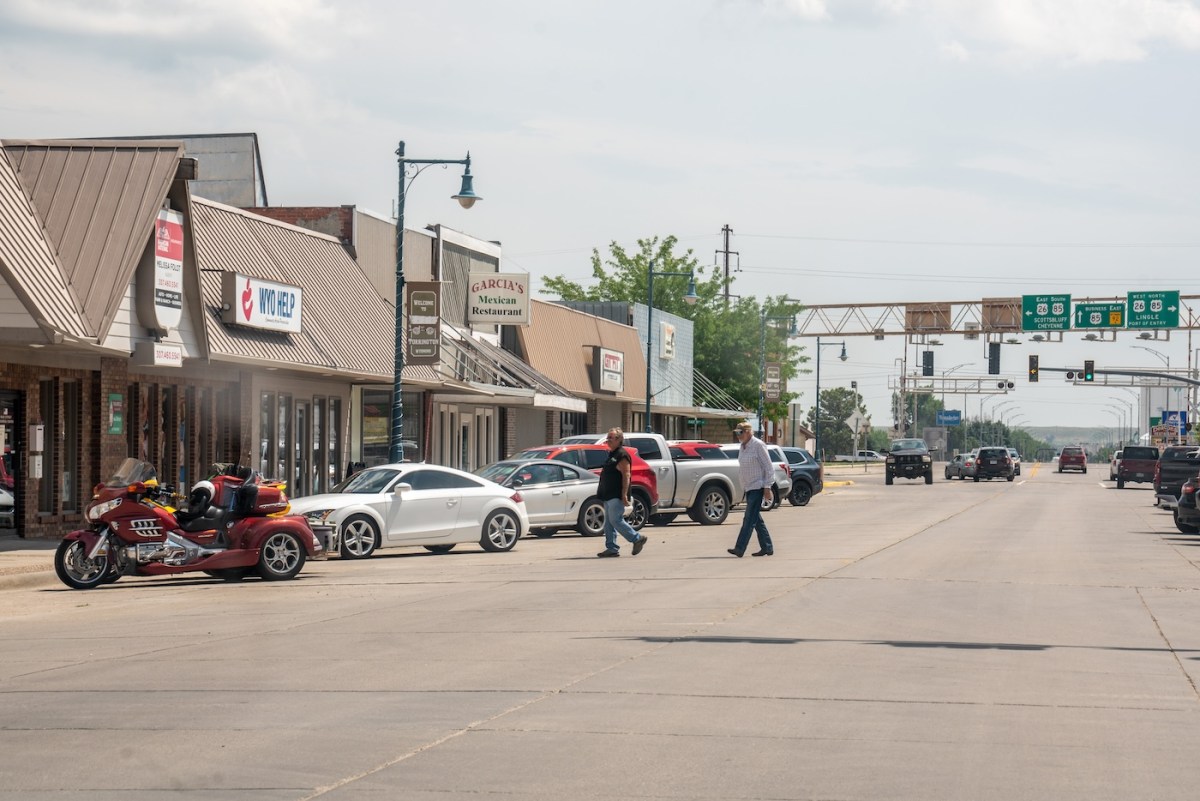
Wyoming House District 2, which covers parts of Goshen, Niobrara and Weston counties, includes the women’s prison outside Lusk, the medium security men’s prison outside Torrington, and the Wyoming Honor Conservation Camp outside Newcastle, the state’s minimum security prison. Because inmates in those facilities are counted as district denizens, prisoners, who cannot vote, make up nearly 14% of District 2’s residents.
The report’s authors say including those incarcerated Wyomingites as residents of District 2 robs them of their constitutional right to elected representation, and also contradicts state law around what defines residency. When people in prisons want to bring an issue to the concern of their elected official, they tend to write to the person representing the town or county they call home, not the lawmaker for the district containing their prison, Mike Wessler, communications director for the Prison Policy Initiative, told WyoFile in an interview.
“Do lawmakers [in the prison-holding districts] consider people who are incarcerated their constituents?” he asked.
Rep. JD Williams, R-Lusk, who currently represents House District 2, said yes. He acknowledges inmates in his district as his constituents, he said, though many are there only until their sentence is complete. They weren’t the only transient population he represented, Williams said — naming agricultural and construction workers, among others. But the lawmaker, who is in his second term, also said he doesn’t often hear from denizens of the three prison facilities in his district.
“It is very rare for an inmate to contact me with an issue that can be addressed legislatively,” Williams told WyoFile by email, “but many of my constituents staff the Department of Corrections facilities in and near my district and so I certainly am responsible to them.”
Williams considered it unlikely Wyoming will change course on how it includes incarcerated people in legislative maps going forward, he said, because the federal government still counts them as residents of the place where the prisons are located.

The Prison Policy Initiative argues it’s incumbent on states to make the change, because the federal census counting method for incarcerated people is misguided. Wyoming stands out, Wessler said, because, unlike other states, including neighboring Montana, it has not moved to link prisoners to the place they came from in their political representation.
House District 2 is among the 10 worst such gerrymandered districts in the nation, according to the report. If prison gerrymandering leaves incarcerated people poorly represented, it gives residents of towns and counties around the prisons excess voting power, the Prison Policy Initiative argued. In the case of House District 2, 86 residents have “as much political clout” as 100 residents of a Wyoming House district without a prison, the report says.
Wyoming law governing residency also appears to conflict with how the Legislature has conducted districting around prisons, according to the report. State statute defines a residence as “the place to which, whenever he [or she] is absent, he [or she] has the intention of returning.” It also specifically states a Wyomingite doesn’t lose their official place of residence “merely by reason” of being “kept at a hospital or other institution.” The Prison Policy Initiative contends prisons fit the definition of “other institution.”
“That is one reason for Wyoming lawmakers to fix this, just to make sure they are in compliance with their own laws about where people call home,” Wessler said.
The Legislature last redrew its political maps, a process called redistricting, in 2022. The debate was contentious and came down to the wire on legislative deadlines. The maps drawn by the Legislature already left some districts underrepresented, according to WyoFile reporting at the time. The concept of prison gerrymandering did not come up during those debates, according to Senate Corporations, Elections and Political Subdivisions Committee Chairman Cale Case.
The Lander Republican’s committee did the lion’s share of the redistricting work that year. But both the House and Senate changed the maps once they hit the chamber floors. “There was so much noise and maneuvering going on with redistricting, but the issue of counting inmates did not come up that I remember,” Case told WyoFile.
Case, who has helmed the Senate committee charged with governing elections since 2007, is familiar with the prison gerrymandering concept, he told WyoFile. “I definitely think there’s some significance,” he said. “Do I feel like the inmates’ rights are compromised by the way they’re counted? I’m not sure.”

Like the authors of the Prison Policy Initiative report, Case recalled a high-profile incident of alleged prison gerrymandering during the 2012 redistricting. That year, then-state Sen. Curt Meier, today the state treasurer, brought an amendment to the redistricting legislation that redrew his Goshen County district to capture a prison and boost its population, according to a report in the Casper Star-Tribune by longtime political journalist Joan Barron.
The resulting district, Barron wrote, “looks like a finger as it hugs the eastern Wyoming border north then twists to the west at the tip.”
The goal of the “truly weird configuration” was to capture the medium security prison in Torrington, she reported, in a redistricting year where the original maps would have left Meier up against a Cheyenne senator in a tough reelection battle.
These days, Torrington and its prison are squarely within Meier’s old Senate District 3, which today is held by Republican Sen. Cheri Steinmetz, and the heavily gerrymandered line is gone. The northern border of both Senate District 3 and House District 2 does jag up to round in the honor conservation camp, but Wessler said there’s not as much evidence that Wyoming lawmakers gerrymandered prisons deliberately in 2022. It is more, he said, an error of omission in failing to consider the issue.
With modern data technologies, other states have found it increasingly easy to count prisoners as residents of their home district, Wessler said. The Prison Policy Initiative report cited a 2023 report by the National Conference of State Legislatures that called reconsidering where incarcerated people are counted as “the fastest growing trend in redistricting.”
Though Wyoming won’t redistrict again until after the 2030 census, Wessler encouraged state lawmakers to begin questioning where incarcerated people should be counted now. “If they take up the issue now, it will help to make sure the state has the data it needs to successfully reallocate people back to their home communities,” he said.


Foreigners in jail should not be counted as residents.
They should not be allowed to vote while incarcerated. If they fallow rules regs of society they can get voting rights restored. I know several that have. As far as saftey in prison. They are in charge of that now. They all know right from wrong.
A lot to unpack here. First to those stating that prisoners should have the right to vote, I ask, are we picking and choosing from the bill of rights now? Or do they get guns too? Most states do this, and I disagree with it. They should not be counted for the purpose of districting unless the prison is actually in the same place they resided which is very rare. The census system should take their home of true residence into consideration and that would correct the situation.
The corruption of this state is only exceeded by the menace in the White House.
New York is calling you home.
Russia is calling for you.
I served on the politically sensitive east/west German border and was on it when the wall fell. What did you do?
Thank you Richard Nielson. I
was the US army drug abuse prevention coordinator in Bad Hersfeld. An army agent included me (two persons) on a brief tour along the border one morning. He showed “us” the rifles (disarmed) along the fence.
It appears that you learned nothing
My preference is that the franchise, the right to vote, be granted to all prisoners. I suggest this, not because I am “soft” on crime, but because the voice of prisoners could be an important way to learn about and improve conditions in our prisons and jails, and we can do that more effectively if prisoners can vote.
I’ve been struggling with this topic, and your post really helped.