

Two men fell from icy roofs and died last year in Teton Village. By a terrible coincidence, the second worker, who fell just a few weeks after the first, died just one day before Workers’ Memorial Day, the day America pauses to remember the men and women we lose to workplace fatalities every year.
Opinion
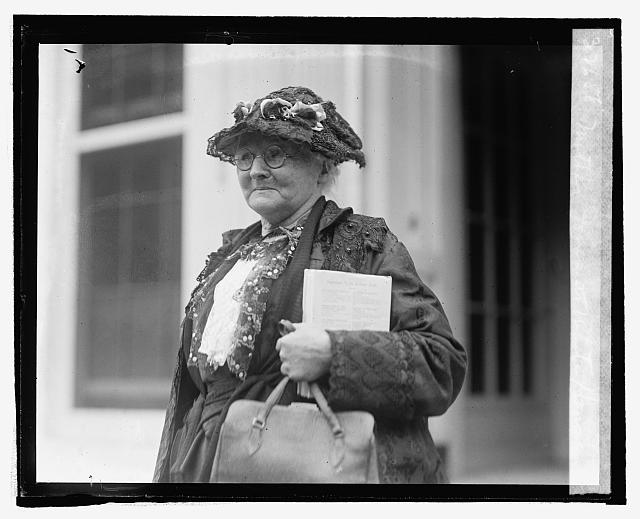
There’s an old saying in America: “Mourn for the dead, and fight like hell for the living.” It’s attributed to Mother Jones, a woman who, early last century, organized workers all over the country in an effort to raise pay, end child labor and make jobs safer.
In Wyoming, I’m sorry to say, we haven’t been fighting like hell for the living. We have continued to let each other die. Instead, we offer excuses. We say our jobs are more dangerous here, which isn’t true. Our official reports blame the workers, even though we know that workers do what employers require. And the penalties for employers whose workers die are laughable, often $2,000 or $3,000. The recommended solutions are worse. A recent post-mortem analysis called on an employer to “consider implementing a safety check system.”
Only “consider” it.
Requiring safety harnesses for workers on roofs is just one example of the types of cheap, fast and easy investments employers could make instead — investments that would save lives. And yet we ask instead that they “consider” safety checks.
For more than 50 years, union-employed researchers have compiled annual data on workplace accidents and injuries, including fatalities, from every state. We do it because we care about each other, and because we want to stop rich and powerful corporate interests from putting endless profits ahead of our lives and the well-being of our communities.
If you follow the news, you probably already know that Wyoming regularly has the worst worker safety record in the country. In 2021, the most recent year for which data is available, we suffered more than 10 fatalities per hundred thousand workers, nearly three times the national average of about three. All told, 27 workers died on the job in Wyoming in 2021.
Workers fell from icy roofs, suffocated under collapsed dirt walls and suffered under falling rocks in mines. They were crushed and battered by machinery, unsecured steel pipes, falling tools and faulty scaffolding. They died from heat exposure, explosions and live electrical wires. You get the idea.
These deaths were preventable, and the average fine paid by employers was only about $3,000.
Let’s be honest. That sum isn’t enough to convince a boss to make workplace safety a priority. What difference does $3,000 make on a multi-million project?
In unionized workplaces — an increasing rarity in Wyoming — we meet with management to try to make our jobs as safe as possible. Workplace safety is, and has been for years, the number one motivating factor when workers decide to form a union.
Other top reasons include stopping favoritism, having regular work schedules and the chance to negotiate pay and benefits.
Safety, though, comes first. Every worker has the right to a safe job, and Wyoming’s working people are trying to make that ideal a reality.
Think of our railroad workers, who led a national fight last year for safety standards on the job; they begged the Legislature to pass a bill ensuring the safety of Wyoming’s communities. The Legislature refused. The very same day that the House Corporations Committee killed House Bill 204 – Allowable train lengths, which called for shorter trains, the East Palestine, Ohio derailment occurred.
The devastation to East Palestine and surrounding communities is irreversible. Wyoming’s labor unions stand together with every railroad worker, because we know safety on the job also means safer communities. We still ask the Wyoming Legislature to pass laws that will protect our communities and our workers from similar disasters.
Wyoming’s workers continually ask the Legislature for workplace protections. We ask for strong safety standards on construction projects. We want public workers to be able to confidently speak up about safety issues at work. During the 2023 session we asked legislators not to pass a bill pushed by Wyoming contractors, that prevents project labor agreements on public projects. These agreements strive to ensure the safety of workers on all kinds of state funded projects. The Legislature listened to the contractors, not the workers, and now the state is not allowed to negotiate agreements that are designed to keep workers safe on the job.
I am proud to say that one of Wyoming’s first new union locals in decades was formed this year in Lander when EMS workers at Frontier Ambulance voted to join the United Steelworkers, citing safety concerns as a primary reason for organizing.
Not long before, two wheels had fallen off an ambulance while it was being driven. Luckily nobody was killed. Now that they have a union, the EMT’s of Fremont County can speak up against these managerial failures which put profit over the safety of the workers.
We don’t need more excuses. We need a statewide task force to focus on safety on the job. It is time to listen to workers when we ask for safety protections for ourselves and our communities.

Unions are not a panacea for everything. Even on union jobs people are hurt or killed. Safety is a personal thing. Most people know the right and safe way to do a job, but some will cut corners and be injured or killed.
How do I contribute? Especially to the railroad unions. My grandfather worked for the Pennsylvania RR.
Well said. Get rid of anti-union legislators.