

School-aged children filled the south side of the House gallery when a bill to strengthen Wyoming’s K-12 mental health resources failed on day four of the legislative session.
Youngsters aren’t that unusual in the State Capitol when lawmakers are in session. A field trip to the People’s House brings civics lessons to life.
On this particular day, students visiting the lower chamber got a peek into lawmakers’ differing views on childhood mental health.
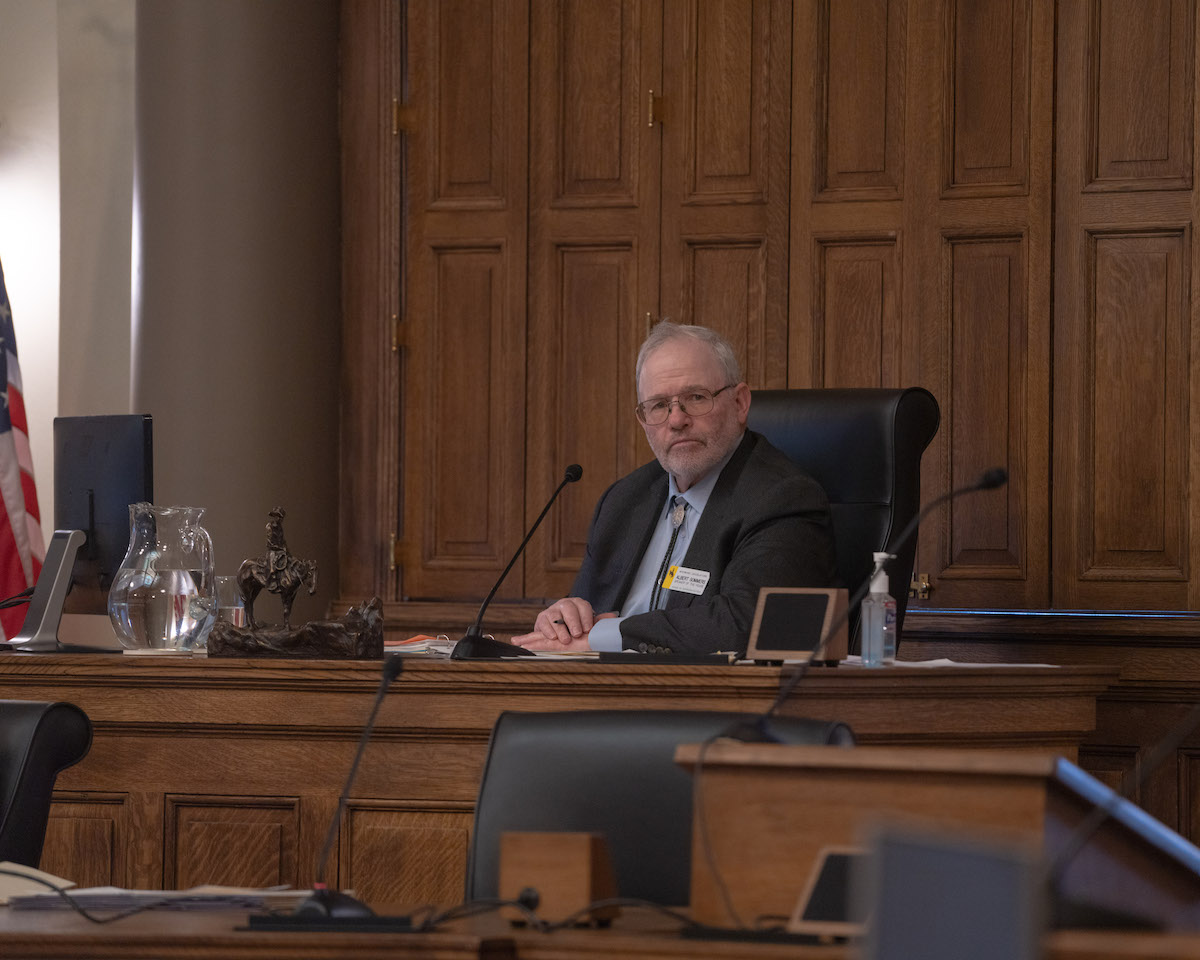
“Even in my little town of Big Piney, we have an inordinate amount of children that are going to school counselors that are basically talking about suicide and are in crisis,” Speaker of the House Albert Sommers (R-Pinedale) said.
Sommers learned of these circumstances through his experience on the Legislature’s Mental Health and Vulnerable Adult Task Force. It spurred him into action.
“These are our precious resource, these children,” Sommers said. “And to see them in the pain, and the crisis that’s occurring in our schools, is tragic.”
The bill, however, died when the hard-line Freedom Caucus used its voting bloc to kill it upon introduction.
“It’s not the role of government,” caucus member and Rep. Jeremy Haroldson (R-Wheatland) said in opposition to the bill.
“Obviously, this is a world I live in every single day,” said Haroldson, who works as a pastor. “But the reality is we have to ask ourselves, ‘Is it our place as the government to try and fix this problem?’ I would go as far as to say we can’t, that’s an impossibility.”
While not in the majority, the Freedom Caucus has enough House members to block bills on introduction during a budget session, when two-thirds support is needed.
Today, however, a slightly different version of the bill got a second chance when Sommers brought it as an amendment to the budget bill.
The House voted 33-28 to put $18.5 million toward establishing a grant program intended to address K-12 mental health needs.

Details and revival
Grants would be based on the average daily membership of the school district, and the Department of Education would be responsible for promulgating rules. Plus, districts receiving a grant would need to report expenditure amounts, the number of served students and the impact of the services.
Sommers originally asked to set $37 million toward the new grant program in his bill, but pared it back by half in the amendment. Either way, the funds would be better spent on community mental health centers, according to Rep. Clarence Styvar (R-Cheyenne), who voted against the amendment.
“That money needs to go to them,” Styvar said.
The program is intended to help districts identify and refer students to resources including community mental health centers, Rep. Lloyd Larsen (R-Lander) said.
“We have to give the school districts an opportunity to have the resources,” such as social workers, “to at least make sure that the kids have a direction to go,” Larsen said.
The grant program will provide lawmakers with the information they need to shape a more long-term, statewide solution, Larsen said. Whatever that fix is, Larsen added, it will be important that schools do not become the sole provider.
Nonetheless, the grant program is not a direction schools should be going, Rep. Sarah Penn (R-Lander) said.

“The more I see government intrusion and interference in parent and child relationships, the more I am concerned about schools getting involved in this,” Penn said.
The unfortunate reality is that mental health concerns are now part of the education equation, Rep. Karlee Provenza (D-Laramie) said.
“Kids can’t learn if they’re depressed,” Provenza said. “They can’t learn if they’re anxious. They can’t learn if they’re suicidal. And they can’t learn if they’re dead.”
Whether the amendment sticks remains to be seen. A mirror amendment was not brought in the Senate, which means the Joint Conference Committee will have to resolve that difference before bringing the budget back to both chambers for a vote.

As a former educator, I witnessed the plethora of students that needed mental health services that our district was too short-staffed to be able to help. I actively watched students leave our state because their parents needed more mental health supports for their children. We are doing the future of our state a huge disservice by refusing them mental health education and services.
“It’s not the role of government” says Haroldson, the preacher from Wheatland. It’s what I’d expect from one of these kooks- a so called Christian even. Remember when he collected PPP money from the government, along with Bear, Hageman family, Allemand, Frank Eathorne, and probably others. For me but not for thee. Keep putting them in office folks!
These legislators can’t decide if parents are in charge or if they need to “protect ” kids from parent s making medical decisions for their kids.
As a retired school psychologist who provided extensive mental health care services along with my school social worker colleagues, I can attest to the need to support children and families. The school was often the first safety net to recognize and address the social and emotional needs of children. If providing support, guidance, comfort to children and parents is considered government overreach, I have no regrets at being a “government worker”.
Get rid of these self righteous Republicans and everyones mental health would improve.
Wow.. Sarah Penn is doing her very best to join the ranks of the worst wyoming has to offer.. what does she have against mental health care for kids?
She also voted against outlawing child marriage last year. Her values are incredibly twisted.