


Legislative leaders Wednesday prioritized reviews of electricity rates, access to public records and maternity care deserts as topics for lawmakers to study before the 2027 legislative session in January.
In a sweeping review of interim study topics, members of the Legislature’s Management Council also kicked the corner-crossing can down the road, promoted a wild horse slaughterhouse and urged home-ec instruction as a necessary educational foundation. Lawmakers supported examination of corporate fraud, urged work on 911 funding and backed a court-ordered review of school funding.
Lawmakers may only tinker with property tax changes as the state braces for a citizens’ initiative on the November General Election ballot that could cut some tax rates in half. The council of 10 legislators considered study topics from 18 legislative committees — including the manufacturing of 47-pound curling stones worth $10,000 apiece — in what’s arguably the annual mother of all committee meetings.
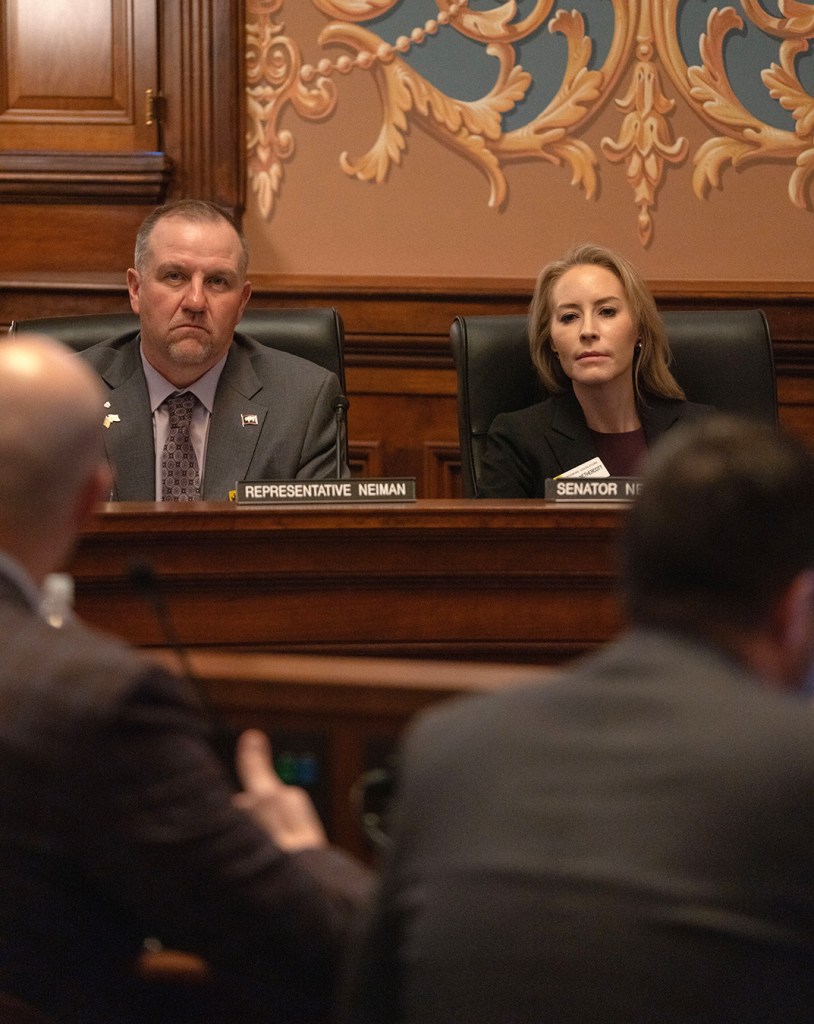
Corner crossing is too hot a topic to address legislatively, Sen. Tara Nethercott told co-chairmen of the Joint Travel, Recreation, Wildlife and Cultural Resources Committee, who proposed the topic. Corner-crossers step from one piece of public property to another while necessarily passing through the air above private land, but do not set foot on private land.
After a year’s work to fashion a bill that would codify a federal court decision that corner-crossing is not trespassing, the committee’s efforts died in the most recent legislative session. Lawmakers amended the simple measure in so many ways that it became unpalatable for advocates of public access as well as landowners.
Nethercott, the Republican majority floor leader and Management Council member from Cheyenne, said there’s nothing to be gained from further work on the topic, starting just weeks after the bill died.
“A cooling-off period, I think, is appropriate,” Nethercott said. Public land access and corner crossing remain important, she said, but a rest “just allows everybody to reevaluate the current circumstances.”
Education review
Lawmakers will vet Wyoming’s education systems, representatives from two committees said, including how they are funded and what is taught. A court decision that the state is violating its constitution by underfunding education will be a mandatory topic known as recalibration.
“The select committee [on school facilities] needs to do its job and get up to speed on what that [decision] means and whether or not there’s an opportunity for us to modify statutes,” Sen. Bill Landen, a Casper Republican, said.
“When I graduated, a bunch of ranch guys were taking home-ec because we need to learn how to sew and we need to learn how to cook and to clean up after ourselves — a lot of those soft skills and things that are very important as we move ahead.”
Chip Neiman
The Joint Education Committee seeks to find out why kids’ skills decline relative to those in other states between fourth and eighth grade.
“Our test scores are pretty good — fourth grade level with reading, math — and then we have a bit of a drop between fourth grade and eighth grade,” Evanston Republican Sen. Wendy Schuler told the council. “We want to take a look at that.”
House Speaker Chip Neiman, a Republican council member from Hulett, urged Schuler to probe deeply. Too many Wyoming high school graduates require remedial classes upon entering college, he said.
Among shortcomings may be a lack of classes in home-ec — instruction on how to manage a home and family, including topics like nutrition, budgeting and child development.
“When I graduated,” Neiman said, “a bunch of ranch guys were taking home-ec because we need to learn how to sew and we need to learn how to cook and to clean up after ourselves — a lot of those soft skills and things that are very important as we move ahead.”
His constituents are looking for “young people that are actually able to interact and to have some of those soft skills that we’re losing,” Neiman said. Soft skills are “quite critical to the long-term success of our workforce.”
People’s property tax initiative
The Joint Revenue Committee may largely stand aside as the “People’s Initiative to Limit Property Tax in Wyoming through a Homeowner’s Property Exemption,” is decided in November’s General Election. The ballot initiative would reduce the taxable amount of a primary residence by half.
The Revenue Committee will “take a good, hard look at this and make sure that we have considered the potential impacts of the people’s initiative and how it might blend together with the items that are in place,” Casper GOP Rep. Tony Locke told the council.
The council directed the Joint Corporations Committee to make a review of electricity rates its No. 1 priority. The committee’s chairs also advocated for a review of public records law and election security measures.
“If the lights aren’t on, they won’t get you your records anyways,” council member Rep. Jeremy Haroldson said. “And if the lights aren’t on, you’re probably not going to be voting,” the Wheatland Republican said.
In addition to reviewing the costs of keeping the lights on, the Corporations Committee also will review “an enormous amount of fraud that’s happening within our corporate filing networks,” Sen. Cale Case told the council. The Lander Republican also pledged to examine public records access, including mass requests for information from commercial entities that tend to clog up the system.
Nethercott proposed that funding for 911 emergency services is more important than election audits that would “redo the same bills that just died three weeks ago.” Case agreed, adding that to propose election-law changes on the cusp of a general election would be problematic.
“Our county clerks begged us not to [propose new election laws] because they are in an election already, and we’ve got so many moving pieces and the public might get confused between proposals and law,” Case said. “Right now, we need to educate people about the law.”
Nevertheless, House committee members have been insistent on adopting new election laws. “It’s a democracy and my good friends in the House are very persuasive,” he said.
Maternity deserts, wild horses, hot trout
Among other things, the Joint Labor, Heath and Social Services Committee will study the maternity-care desert in the state. Wyoming ranks 42nd among states in reproductive health care and the state has struggled to address the problem.
“I know that we’ve got some OB deserts,” Sen. Evie Brennan, a Cheyenne Republican, told the council. Her committee will expand the issue to include midwifery, she said.
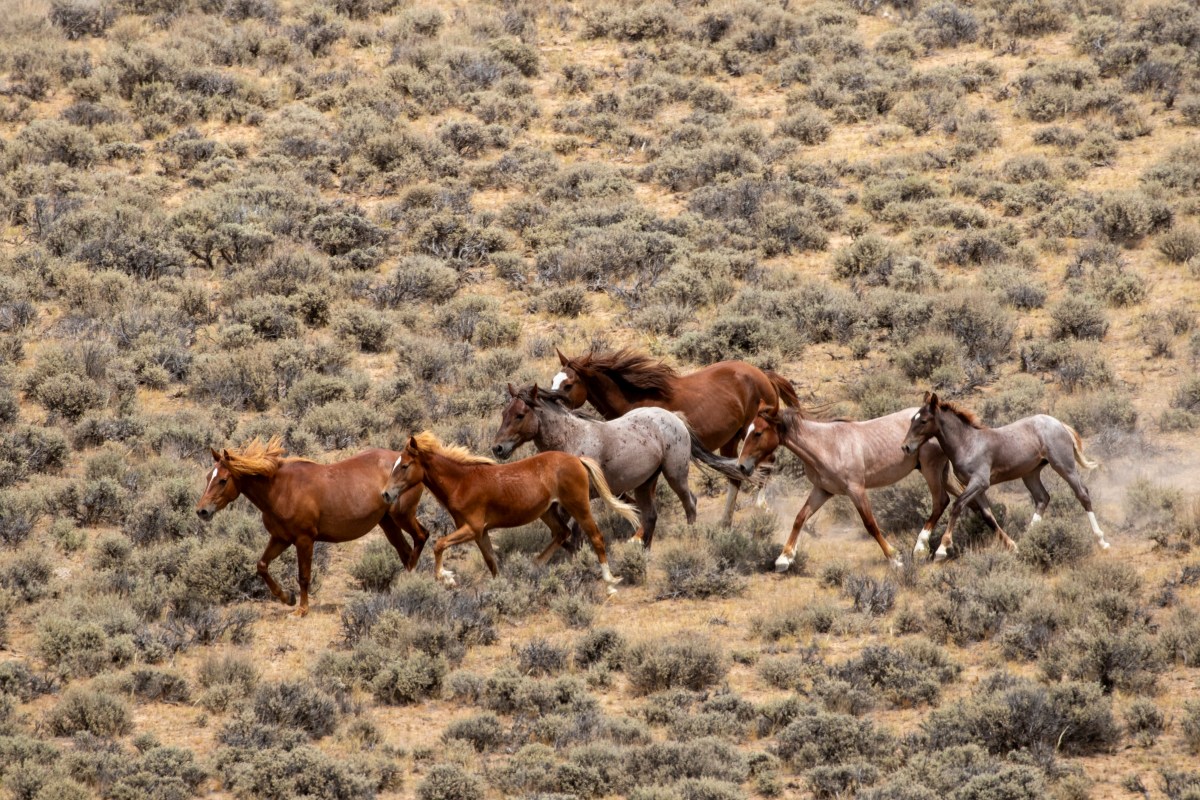
The Federal Natural Resource Management Committee will work with tribes on the Wind River Indian Reservation to see whether they can build a wild horse slaughterhouse, Rep. Bob Wharff told the council.
“They can help us sort out those horses that are salvageable … versus those who would need to go to slaughter,” he said.
Activities could center around Riverton, where the Wyoming Department of Corrections’ Honor Farm allows inmates to break wild horses collected from BLM and private lands in Southwest Wyoming. Tribes from around the country could collect wild horses, even use them in Indian relays, he said.
“I think it’s an opportunity for us to get a handle on managing wild horses,” Wharff said. “It’s been kind of a problem here that affects wildlife, livestock, everything.”
The Travel, Recreation, Wildlife and Cultural Resources Committee wants to become involved in the proposed pumped storage project at Seminoe Reservoir. Anglers fear the plan to use water pumped and stored uphill to act as a battery storing fickle wind and solar power, will threaten bighorn sheep and also trout in the Miracle Mile.
“A lot of constituent groups, Trout Unlimited, all the way to the Wyoming Wildlife Federation … are very concerned about that project,” Landen told the council.
“We have one of, if not the best, trout fisheries below that project,” said Rep. Andrew Byron, a Hoback Republican, fearful pumped storage could warm the water below the reservoir to the detriment of the trout. “It’s important to me that we talk to state agencies, specifically Game and Fish, who were chiming in on this project and not necessarily feeling like they were heard.”
Curling for dollars
“Scotland makes all the curling stones that we have, period,” Sen. Jim Anderson, a member of the Joint Minerals Committee said. “They weigh from 38 pounds to 47 pounds, and they’re shaped in a certain way, and they have a handle on them,” the Casper Republican said.
“Not a big deal,” he said, but “it could be economic development for us in making that curling stone.”
Priority No. 7 for Minerals would be to mine the topic of curling stone production.
“The market is about 3,000 a year,” he said. “Scotland can only produce about 1,500, and they say they’re not going to increase.
“So our market could be about 1,500 stones,” Anderson said, adding that they sell for anywhere from $500 to $10,000 apiece.
“Now the $10,000 ones, of course, are perfect.”
For more legislative coverage, click here.

No horse slaughter houses in Wyoming. We’ve been down this road before with Sue Wallis trying to open slaughterhouses in Wyoming and when that didn’t work in the south and every person asked said NO! The plants release a lot of waste, foul water sources and treat the horses horribly. The meat is sent to Europe who have since decided to not buy horse meat from the US because of drugs. Sure, wild horses won’t have huge amounts of Bute and other drugs harmful to humans but the thought of taking the free, beautiful and wild horse and turning it into burger and steaks is not a good one. It is a cruel and inhumane punishment. The tribes that relay race use OTTB’s not wild horses.
The slaughter plants planned for Wyoming died with “Slaughterhouse Sue Wallis” We don’t need that rising from the grave again. No to slaughterhouses in Wyoming.
I love the curling stone topic. Just shows that the legislators have rocks in their heads,