

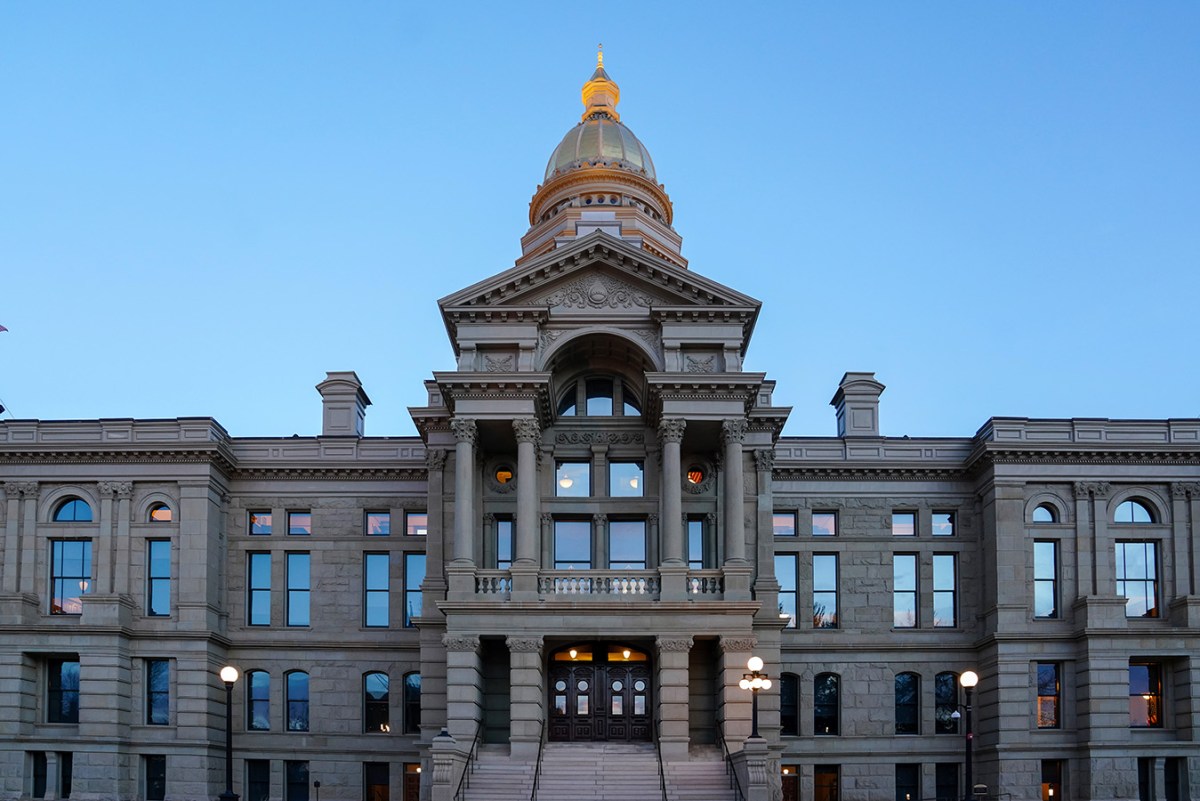
Wyoming remains one of a handful of states without a law to prevent lawsuits intended to silence free speech. After a measure failed last session, lawmakers are taking another swing at passing a bill to block such “strategic lawsuits against public participation,” known as an anti-SLAPP statute.
After making several changes to a new anti-SLAPP bill, members of the Joint Judiciary Committee decided Monday to postpone voting on the measure until their next meeting in October.
“Let’s bring it back at our next meeting in an updated version with the amendments built into it,” Rep. Art Washut, R-Casper, said. “There may be different public comment with the amendments than there was public comment on the draft that we saw today.”
SLAPPs are usually civil complaints brought by the powerful to silence critics through the stress and high costs of lawsuits rather than through legal merits. Anti-SLAPP laws are meant to protect journalists and private citizens who face retaliatory litigation for questioning those in powerful positions.
Legislation to prevent SLAPP lawsuits in Wyoming died for a second year in a row this past legislative session. House Bill 103, “Wyoming First Amendment Protection Act,” sponsored by Rep. Pepper Ottman, R-Riverton, was meant to provide a way to quickly dismiss frivolous or meritless legal actions. But it had too many holes, lawmakers said — some were concerned about the bill’s applicability to pending cases and to what they saw as its imbalanced approach to attorneys’ fees.
Plus, lawmakers didn’t like that the bill had been drafted by a Nevada attorney, Marc Randazza. “I’d rather write our own laws than an attorney from Nevada write our laws,” Senate Judiciary Chairperson Sen. Jared Olsen, R-Cheyenne, said in March.
Lawmakers proposed taking a deeper dive into the issue during the legislative offseason and crafting a different anti-SLAPP bill for the 2027 legislative session. The new bill draft is based on the Uniform Public Expression Protection Act, a model anti-SLAPP law made by the Uniform Law Commission, a nonprofit organization of state-based commissioners who aim to craft laws that offer consistency across states. Roughly half of states with anti-SLAPP laws use that model language.
“I encourage the committee to adopt this because it is based on the uniform laws, and we do have a little bit more consistency on how that’s applied,” Wyoming Commissioner Scott Meier, speaking on behalf of the Uniform Law Commission, told the committee.
The most significant proposed changes to the draft bill concerned making the bill “substantive” rather than just “procedural.” Substantive laws are the “what” — they tell courts what people are and aren’t allowed to do. Procedural laws are the “how” — they set the rules for how a court and attorneys can go about deciding, proving or disapproving whether a person violated a substantive law. Substantive state laws can be applied in federal court, while procedural state laws that conflict with federal procedures can’t.
“We’re trying to get to a point where the courts will recognize these types of bills not as procedural only, but as having a substantive component,” Parker Jackson, a staff attorney at the Goldwater Institute, a research and litigation organization, told the committee.
He noted that states like Ohio and Pennsylvania have added immunity provisions to their anti-SLAPP statutes to protect defendants who face a SLAPP lawsuit over protected expression. “The goal of that is so that the courts will recognize this as substantively protecting constitutional rights, not just providing an expedited procedural mechanism.”
But lawmakers decided not to add an immunity provision to the bill, noting that such provisions have landed some states’ anti-SLAPP laws in court. “This imports a whole concept of immunity [that’s] being litigated in other states right now,” Rep. Ken Chestek, D-Laramie, said. “If that fails, if we include this language, we fail too, maybe, or we’re creating a bigger hill to climb to defend it.”

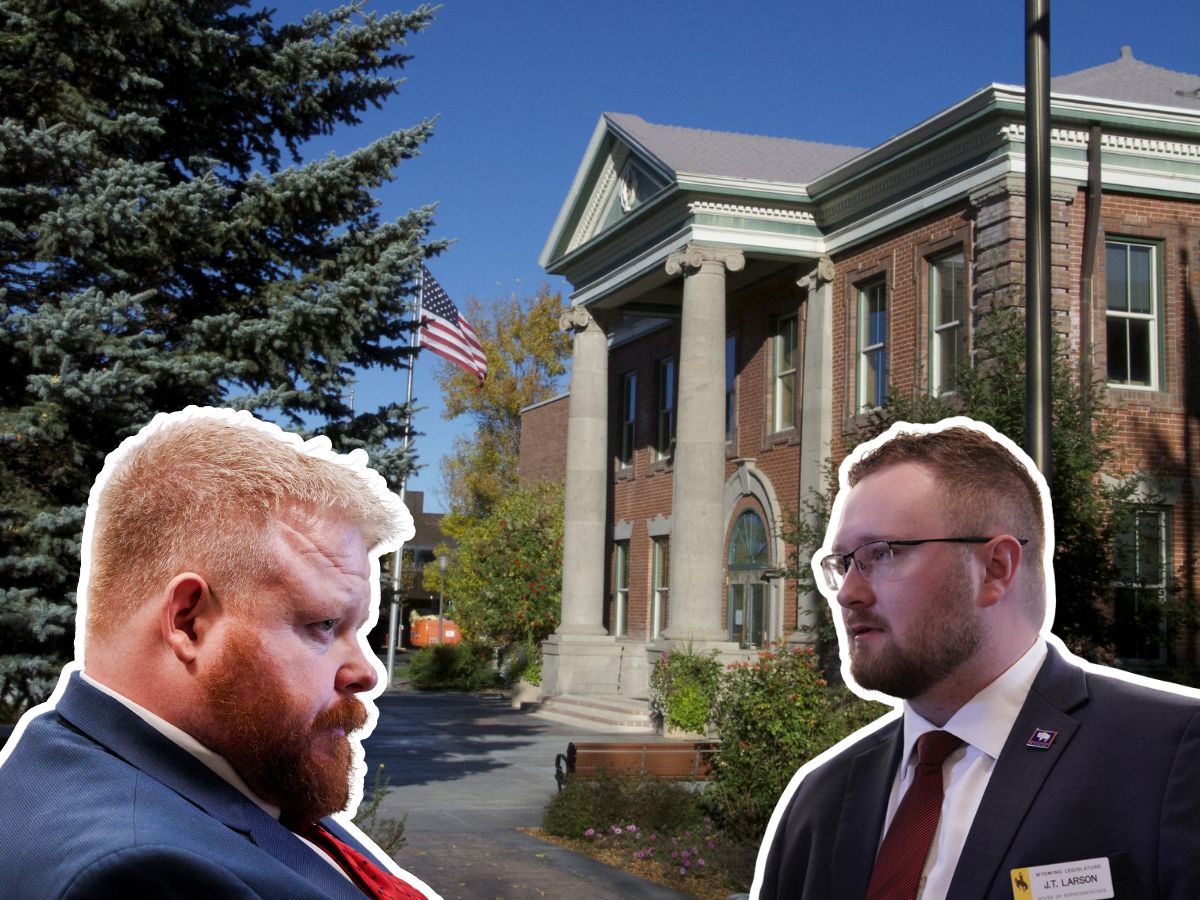
The committee opted for a simpler approach, adding the word “substantively” into the bill to describe the rights that the legislation intends to protect from frivolous lawsuits. “I think that is going to go a long way, and maybe all the way, to making this a substantive right,” Chestek said.
During public comment Monday, speakers encouraged lawmakers to pass an anti-SLAPP bill. Ben Sheffner, an attorney for the Motion Pictures Association, which represents major U.S. motion picture and television producers and distributors, told the Joint Judiciary Committee that the “motion picture industry has a particular interest in this legislation.” Association members “engage every day in constitutionally protected expression,” reporting the news and making films, television shows and documentaries, he said.
“Sometimes that expression is controversial, and sometimes, people or companies who dislike how they’ve been portrayed respond with meritless defamation, privacy or other lawsuits, with the ultimate goal of censoring such portrayals.”
Such lawsuits can cost “hundreds of thousands of dollars” to defend, Sheffner continued. “For a filmmaker, a local journalist, or a small production company, that cost alone can be enough to kill a project or chill the next one before it’s even started.”

It is a very, very sad commentary on our world and nation that the need for such legislation even exists.