

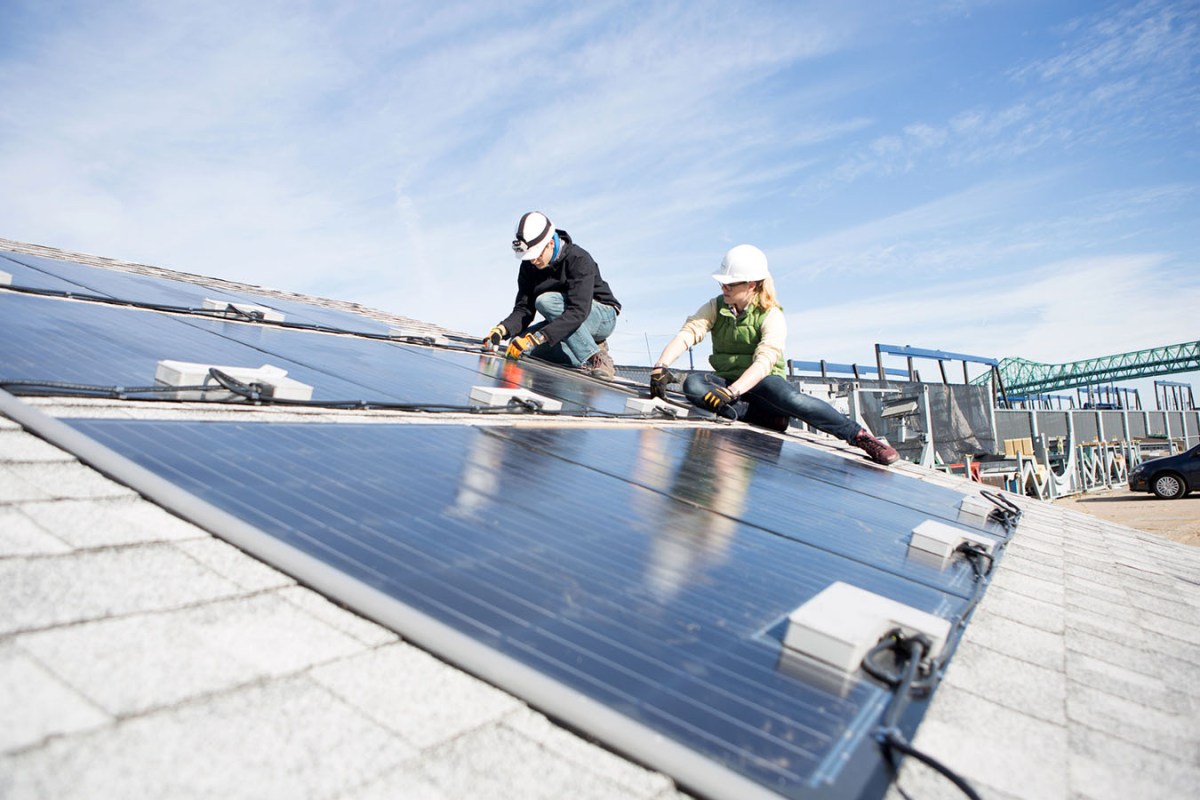
A measure to help renters and homeowners save on their monthly electric bills with plug-in solar panels died in committee this week amid safety concerns from monopoly utilities.
House Bill 146, “Affordable electricity act of 2026,” died Tuesday in the House Transportation, Highways and Military Affairs Committee for lack of a motion to move it forward.
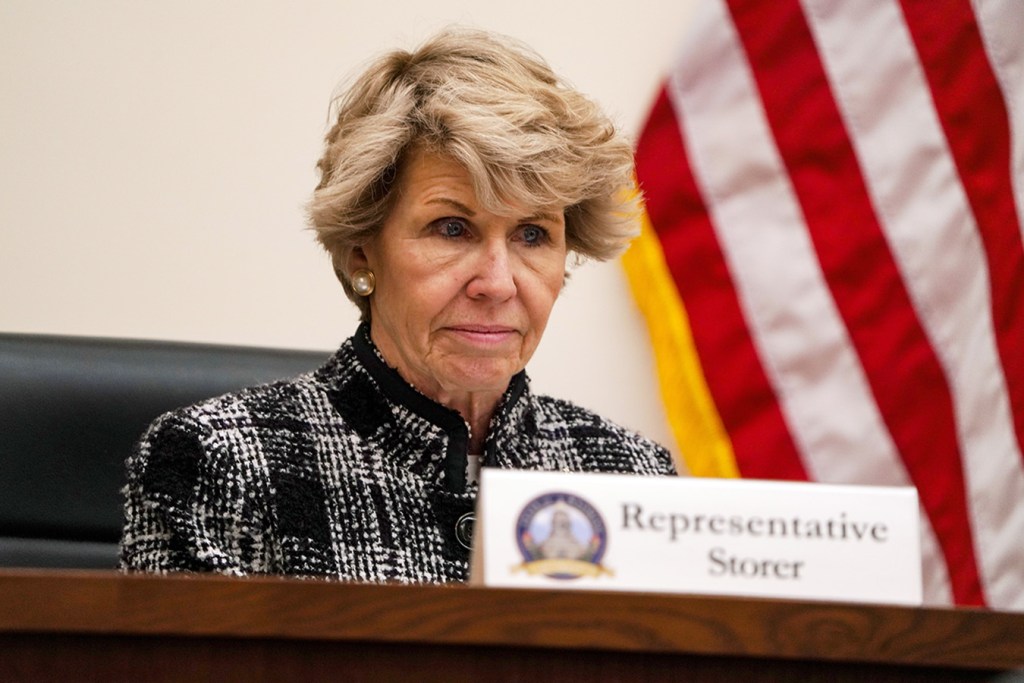
Sponsored by Jackson Democratic Rep. Liz Storer, the bill would have clarified that small plug-in solar devices, unlike rooftop solar systems, are exempt from state-level regulations — things like city inspections and an interconnect approval from a utility.
A typical plug-in or “balcony solar” panel sold at a box store converts solar energy to household alternating current and can be plugged into a standard outlet, injecting about the same amount of electricity as a blow-dryer. Proponents estimated it could save renters or homeowners up to a couple hundred bucks a month — significant for an investment of about $300 to $2,000, compared to $10,000 or more for a rooftop solar array.
Utah passed similar legislation last year, and at least 24 other states are considering following suit, proponents noted.
“This legislation would empower renters, folks that live in prefabricated or manufactured homes and people for whom, they are homeowners of a regular stick-built home, but the math just does not work in their favor for installing a full-size home-solar system,” said Stephen Magnifico, community organizer for the Sheridan-based landowner advocacy group Powder River Basin Resource Council.
“I think it would save people a lot of money,” Patrick Lawson of Riverton told the legislative panel while video streaming from an electric vehicle. “I’m also a member of the Northern Arapaho Tribe, and I know there’s a lot of our members that would benefit a lot.”
Rising bills and little relief for customers
Though Wyoming still enjoys among the lowest electric rates in the nation, a series of rate increases have shocked customers and elected officials alike. But some recent legislative policies have added to customers’ bills.
Last year, lawmakers passed House Bill 192, “Public utilities-wildfire mitigation and liability limits,” restricting what wildfire victims can claim damages for when an electric utility sparks a blaze. Utilities argued it’s necessary to protect their essential services from billion-dollar class-action lawsuits, claiming such legal action could bankrupt a utility. Part of that bargain, however, requires utilities to increase wildfire mitigation measures — a cost that is passed on to ratepayers.
Utilities claim the extra costs will be minimal because they already have wildfire mitigation programs and continually upgrade power systems. Critics, however, have worried that banning class action lawsuits against utilities could shift the burden of rising insurance costs to property owners.
Wyoming’s 2020 coal carbon capture mandate, intended to extend the life of coal power plants in the state, has tapped ratepayers for a collective $5 million so far, according state officials. House Bill 56, “Carbon capture mandate-repeal,” which would cancel the law, is advancing through the Legislature.
Though not in play this budget session, the Legislature has made repeated attempts to revise or squash Wyoming’s net-metering law for rooftop solar. The argument, according to proponents, is that net-metering creates an unfair cost shift to those without rooftop solar.
Net-metering requires utilities to compensate rooftop solar owners for extra electricity they pump back into the grid. Last year, some Wyoming ranchers backed a measure — House Bill 183, “Net metering amendments” — to extend the state’s net-metering cap of 25 kilowatts. Proponents argued it would empower agricultural operations to be more self-reliant and protect ag operations from skyrocketing electricity costs.
The measure failed.
Safety concerns
Though plug-in solar devices are supposed to adhere to Underwriters Laboratory and National Electrical Code standards, utilities cannot be assured their customers won’t buy and install some knock-off product that isn’t up to snuff, several utility representatives testified to the committee.
Like a rooftop solar array, plug-in solar panels are supposed to shut off when a utility cuts power — in the case of a fire, for example. That’s for the safety of electricians who need assurances a system isn’t energized. There have been instances when that didn’t happen with rooftop solar arrays, attorney Nathan Nicholas, of Cheyenne firm Koch Law, told the panel.
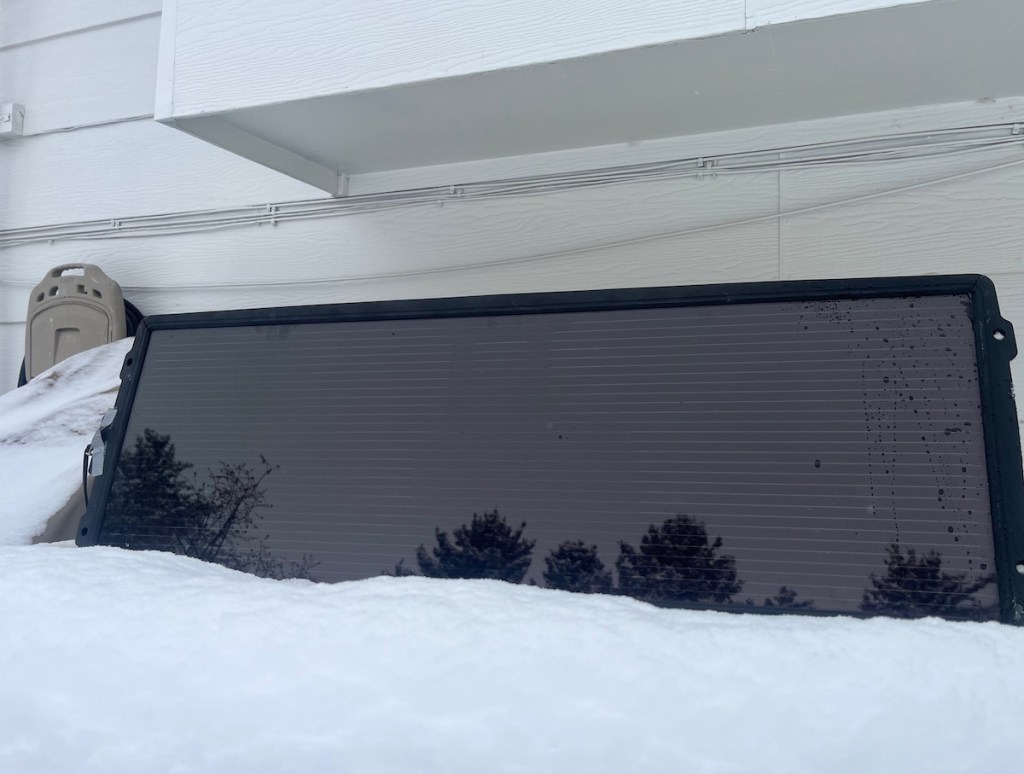
Plug-in solar devices could also pose a potential hazard by “overloading” home wiring systems, said Nicholas, who spoke on behalf of client Rocky Mountain Power, the state’s largest electric utility.
If wiring is overloaded, he said, “You start overheating wires, you start subjecting the house to electrical fires and other types of injuries and damage.”
A Black Hills Energy representative shared those concerns, as did Wyoming Rural Electric Association Executive Director Shawn Taylor.
Taylor, however, noted that its members are customer-owned, nonprofit rural co-ops. Safety concerns likely are not insurmountable, he suggested. “If our members want to do something like this, we want to work with them.”
Testimony regarding safety hazards felt like a canard, Lawson told WyoFile.
“They’re afraid of linemen getting zapped or something,” Lawson said. “It’s basically not even possible. It’s pretty simple: If they don’t have power, the inverter doesn’t run, and they don’t produce power.”
Lawson reiterated that plug-in solar is a particularly viable option for low-income households to withstand rising electricity bills — especially on the Wind River Reservation. “The poverty level is pretty high, and if there was a device that could help them cut their electric bill by any amount, it would be a big deal.”

It was “weird” that there was no motion to move HB 146, Lawson added. “The power companies were the only ones that were against it, and everybody else was for it.”
For Cheyenne Republican Rep. Landon Brown, chair of the Transportation Committee, the bill’s death might be inconsequential.
“I honestly don’t think the law is needed,” Brown told WyoFile via email. “There’s no need to actually create the law because there’s nothing prohibiting the use of them. I feel like the idea of us creating a law right now to allow this actually may create more issues rather than fix something that’s not broken.”
For more legislative coverage, click here.

Americans are told over and over how we have a “free market” compared to those over-regulated, over-protected Europeans. But they can get balcony solar that these American legislators say is too dangerous. They can get heat pumps using common “natural” refrigerants, but our regulators say those are too dangerous. They can install solar on rooftops w/o months hung up with building inspections and utility interconnection paperwork. Add in our protectionism and non-tariff barriers from vested interests, and one can start to see why, even for things invented in American research facilities, development and deployment of innovative energy and building and transportation systems don’t happen here until years or decades later. And then we cry…. “OMG, all these things are imported.”
It is telling that Rocky Mountain Power retained an outside law firm to oppose this bill while relying on safety narratives that have already been scrutinized in other jurisdictions. The lineworker electrocution argument, in particular, does not reflect how modern UL-listed, IEEE 1547–compliant inverters actually perform in the field.
I was present at the Utah State Capitol for the committee hearing and final vote on HB340. Rocky Mountain Power did not appear in opposition. The bill moved forward without the dire warnings now being repeated in Wyoming.
So what changed?
Plug-in PV did not suddenly become more dangerous when it crossed a state line. The technology is the same. The standards are the same. What changed is that Utah demonstrated a workable regulatory pathway, and that precedent carries national implications.
When a utility supports silence in one state and escalates to organized legal opposition in another, it is fair to ask whether the concern is public safety or regulatory control.
If states are unwilling to modernize their interconnection frameworks, federally recognized Tribes such as the Northern Arapaho Nation possess inherent sovereignty to adopt their own building codes and exercise Authority Having Jurisdiction (AHJ) status. Many Tribes are already asserting that authority in other infrastructure domains. Energy policy need not be an exception.
Policy debates should be grounded in technical evidence, not hypothetical hazards that have already been engineered out of compliant systems. Wyoming lawmakers deserve a discussion rooted in facts and grid performance, not in fear of the much needed progress.
As an electrical engineer, I can tell you that a properly designed and UL-listed plug-in solar system poses no danger and should be allowed by law. In addition, it is easy to place a device at the electric meter that prevents backfeeding if you’re not “net metering,” which is a good safety measure in general. But the electric monopolies are too cheap to do that.
Probably another case of our legislators not understanding how it all works.
I have had solar on my house for 10 years, haven’t had an electric bill since. It powers my house and car. It has already paid for itself and I really like being energy independent.