
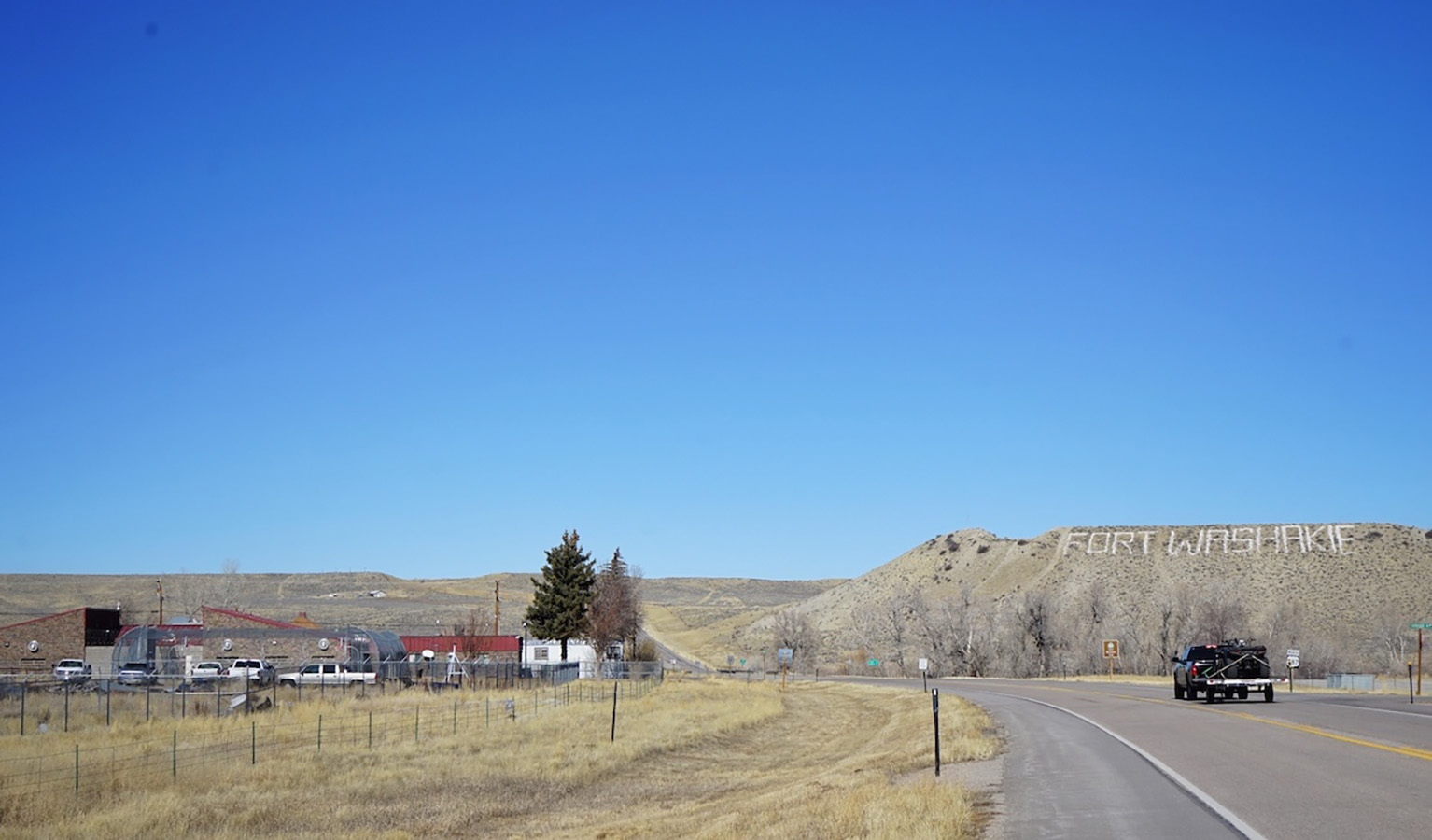

An Eastern Shoshone woman who instigated a petition that destabilized the tribal government’s leadership this winter filed a lawsuit in late February asking a federal court to rule on the matter.
The tribal court charged with determining which of the councils is legitimate is conflicted, the lawsuit filed by June Tillman argued. U.S. District Court Judge Scott Skavdahl dismissed it the following day, citing lack of jurisdiction.
The existence of conflict might necessitate the tribal judge’s recusal, he wrote, “but it would not strip the tribal court’s jurisdiction over the dispute.”
While it didn’t sway Skavdahl, Tillman’s 94-page legal filing does draw the curtain back on many of the allegations and details surrounding the power struggle, which temporarily closed tribal offices and led to pitched online debates, restraining orders, street protests and the cancellation of at least one general council meeting.
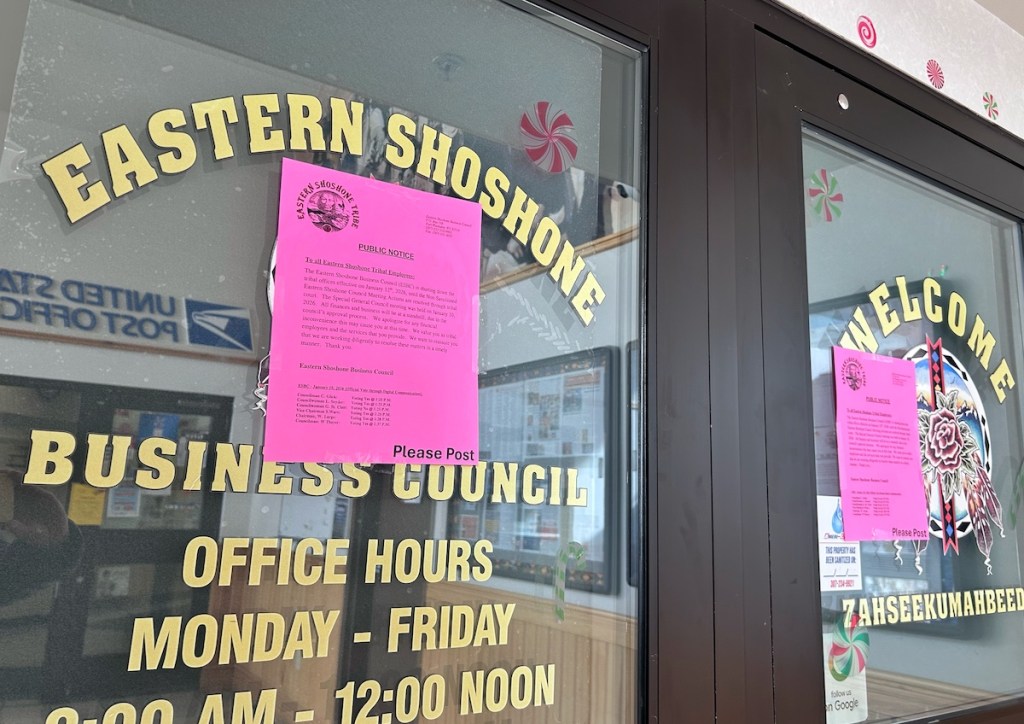
Tillman’s suit also details the allegations of corruption and nepotism that instigated the petition related to removing all six sitting members of the council.
For now, the matter will be hashed out in Wind River Tribal Court. A hearing scheduled to take place Friday was postponed. In the meantime, disagreement among members of the Wind River Reservation tribe continues over who should helm their governing council.
(Enrolled Northern Arapaho tribal member Patti Harris-Baldes sits on WyoFile’s board of directors. Board members have no say over the editorial content of WyoFile stories.)
Tale of two councils
The Eastern Shoshone Tribe is a sovereign nation on the Wind River Reservation, meaning it has authority to govern its members and manage its land. The Northern Arapaho Tribe is a separate sovereign body on the reservation.
Nearly 4,000 enrolled Eastern Shoshone tribal members and roughly 8,600 Northern Arapaho members live on the reservation, according to the Interior Department.
The Eastern Shohone Business Council is an elected body charged with overseeing departments like housing and employment and managing tribal revenues that come from sources such as fossil fuels and casinos. But the tribe’s general council — composed of enrolled tribal members 18 years or older — holds the ultimate authority in a notable example of direct democracy.
In general council meetings, a quorum of 75 must be met within a certain time and all members vote.
The question of who lawfully sits on the Eastern Shoshone Business Council is at the heart of the dispute. One side claims that the old guard, which held power as of late last year, was lawfully removed by the general council in January and replaced. The other says that effort was unsanctioned and that the old guard remains rightfully in charge.
As of late December, the business council included Chairman Wayland Large, along with Clinton Glick, Gloria St. Clair, Gus Thayer, Stanford Ware and Latonna Snyder.
Tillman and fellow organizers, however, submitted a petition that month asking for a special general council meeting to, among other items, remove all six. The tribe posted a meeting notice and agenda on Dec. 30, and the meeting took place Jan. 10. The necessary quorum was met, according to records, and the group voted to oust the council before holding nominations and further rounds of voting to install a new council.
That new council consisted of Wade LeBeau, Larry McAdams, Bobbi Shongutsie, Mike Garvin, Sokaiheechee Mills and Alison Durgin.
The former council disputed the validity of the meeting, however, calling it unsanctioned and citing a failure of petitioners to submit legitimate documentation. In the aftermath, both panels have claimed to be rightful council members in what has become acrimonious at times.
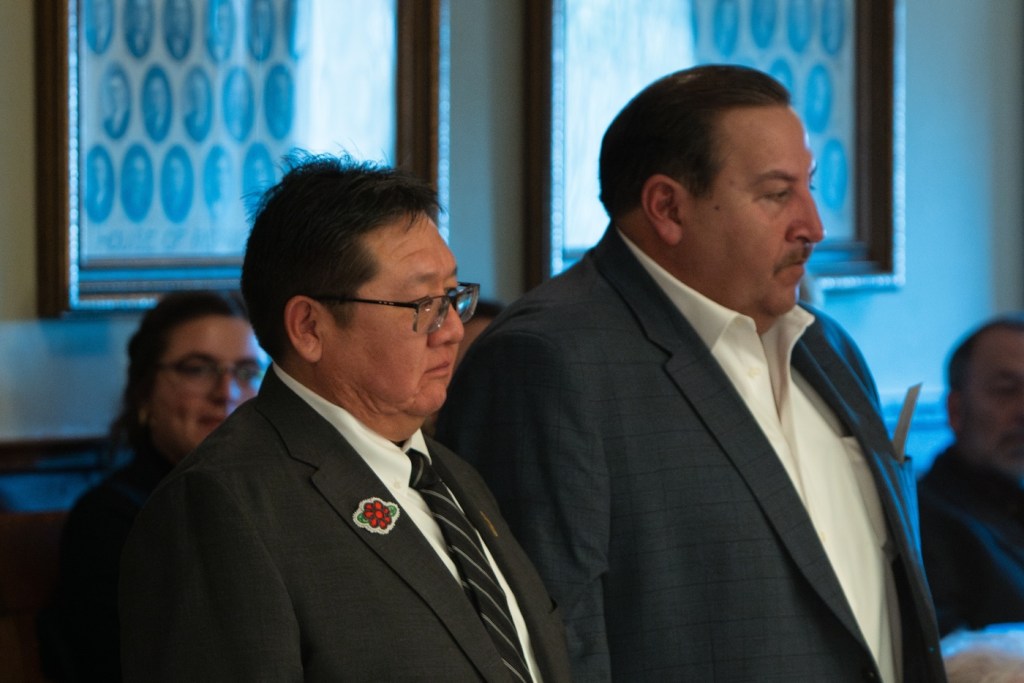
Large and LeBeau, chairmen of the old and new guards, both attended a meeting of the Legislature’s Select Committee on Tribal Relations in Riverton on Jan. 27. During that meeting, Large told WyoFile he could not comment in detail on the matter, but that he was confident it would be resolved in court.
On Feb. 12, Large addressed the imbroglio in a YouTube video.
“The duly elected Eastern Shoshone Business Council has never lost its authority to govern the Eastern Shoshone tribal government’s day-to-day operation,” Large said. “We understand many tribal members are upset with the current situation. We are working diligently to resolve these matters as quickly as possible.”
In that video, Large reiterated the assertions that the challengers lacked legitimate documentation — which his group asserts are related mainly to procedural steps.
“It is our stance that the group is presenting allegations with no proof,” he said.
An earlier statement asserted that a “meeting request form” from each circulator had not been provided and that the original petition was not returned to the enrollment office for signature verification.
The new council and their supporters, meanwhile, claim they did everything by the letter of the law only to be told their efforts weren’t valid.
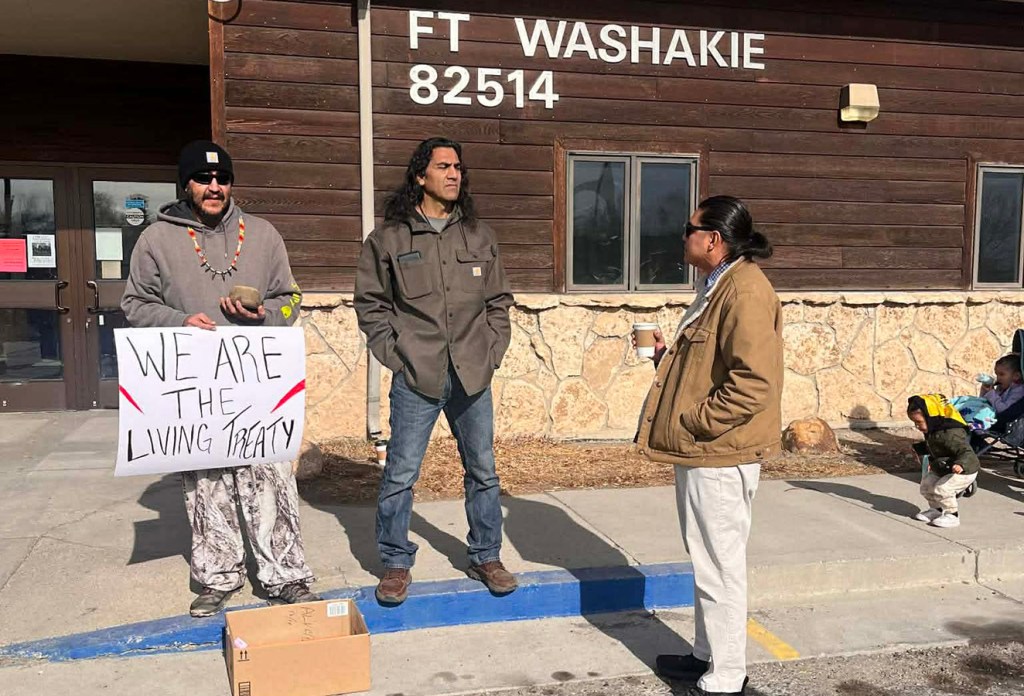
“This is just a tip of the iceberg of the blatant misconduct happening behind the scenes, including the weaponization [of] our tribal court,” Jessica Zina wrote on Facebook in a post promoting a protest in Fort Washakie.
Wayland and other original council members did not respond to WyoFile emails requesting comment, though Snyder confirmed that Tillman’s lawsuit had been dismissed. Tillman and members of the new council told WyoFile a gag order issued by Wind River Tribal Court barred them from talking about the case to the press.
Lawsuit details
There has been ample chatter, rumor and accusation on Facebook around the dispute, with several anonymous commenters weighing in. One line of social media criticism suggests the old council is attempting to stifle Tillman for bringing to surface alleged malfeasance of the governing board.
Tillman’s lawsuit sheds some light on the events that led to the petition. Her legal filing included emails, social media posts, tribal notices and other records going back several years that painted the following narrative:
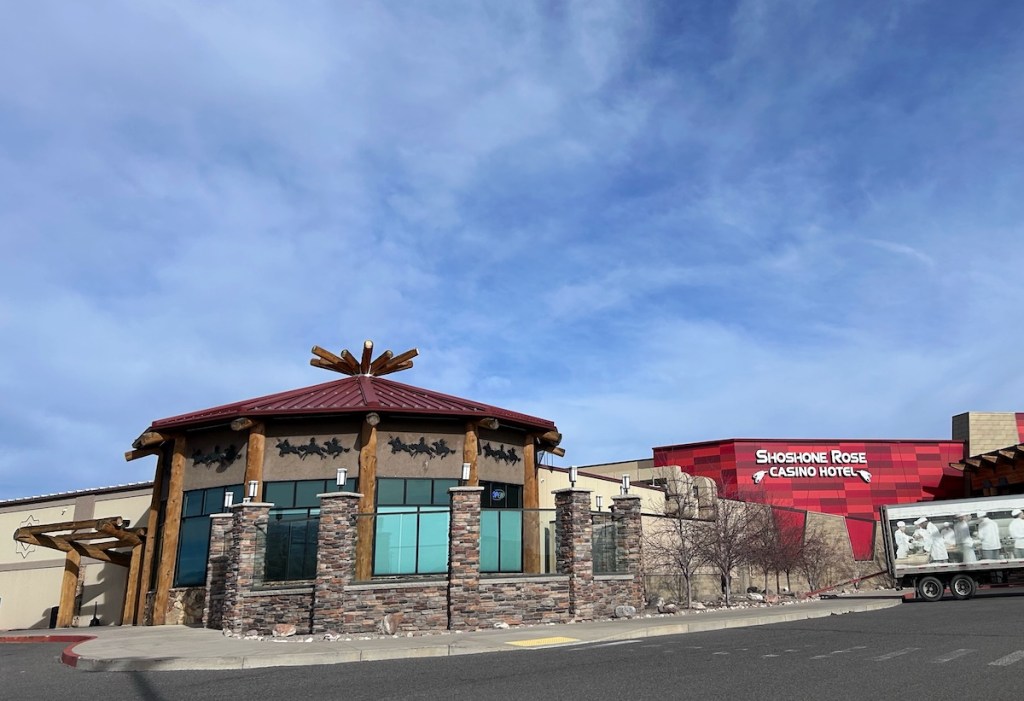
Tillman was selected as a tribal gaming commissioner in 2024. In that role, she was tasked with enforcing tribal gaming codes related mainly to the Shoshone Rose Casino, which the tribe operates.
Two casino employees were fired under Tillman’s tenure for violating regulations. However, Tillman asserts, they were friends of Large and fellow ESBC member Snyder, who then reprimanded Tillman and a fellow commissioner. The business council then amended its gaming code to make allowances for these friends before wrongly “unapppointing” Tillman and the other commissioner, according to the suit. It also asserted the council denied her request for a grievance hearing and didn’t properly compensate her.
Her lawsuit also includes allegations that family and friends of council members were given high-paying casino jobs in examples of nepotism.
Those incidents spurred her to petition for the special general council meeting. “I followed this petition process completely!” she wrote in a narrative that is part of the lawsuit.
The effort, however, has led to a tangle of disputes, a temporary closure of tribal offices, restraining orders and dueling narratives about who is in the right. The tribe’s former Facebook account was taken down at some point. Pages have sprung up in the void, which appear to represent each side, and the tenor of comments has turned nasty at times.
LeBeau of the new guard even spent five days in tribal jail in February after showing up for a hearing to contest a restraining order he claims he did not break. The judge did not set a bond, he said.
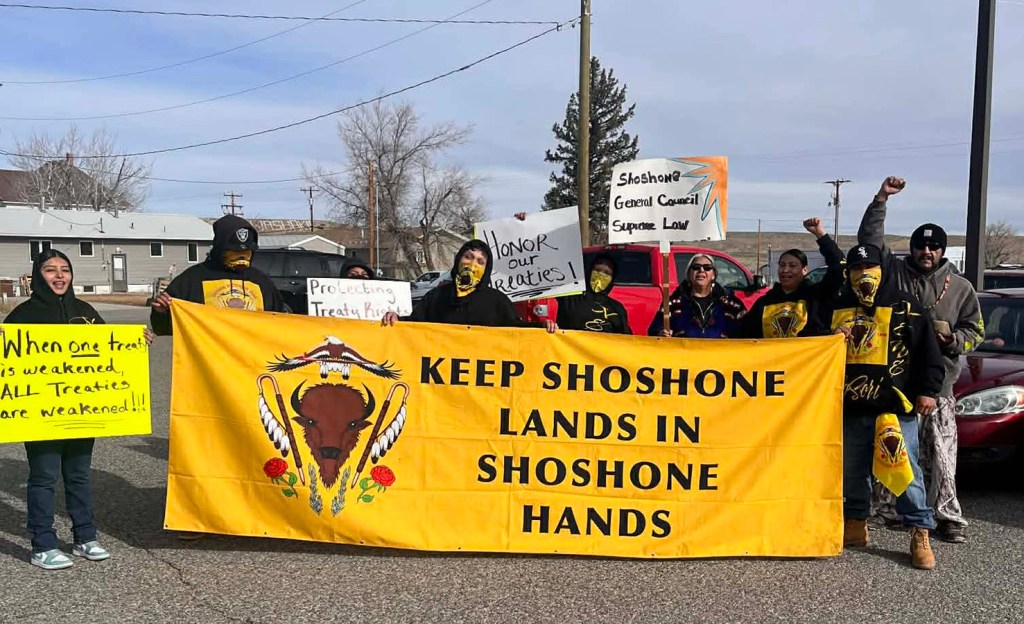
“What happened to me is the fate of all Eastern Shoshones if we don’t stand up,” LeBeau told WyoFile in February.
In a Feb. 20 Facebook post, new council member Shongutsie noted that the tribe’s general council has removed business council members in the past. “However this is the first time our tribe has been met with resistance of the removed tribal members.”
Her group will continue to pursue due process through the proper legal channels, she wrote, noting that the dispute is not about personalities. “It is about the protection of fort brodger treaty, recognized self-governance and the lawful order of the Eastern Shoshone Tribe.”
The spelling “fort brodger” instead of “Fort Bridger” in the last paragraph of the story is as the post reads. — Ed.