


The U.S. Forest Service in July began a 30-day public comment period on its plan to review a rare-earth element mining project in northeast Wyoming — the only opportunity for the public to weigh in on the federal process that is being fast-tracked by the Trump administration.
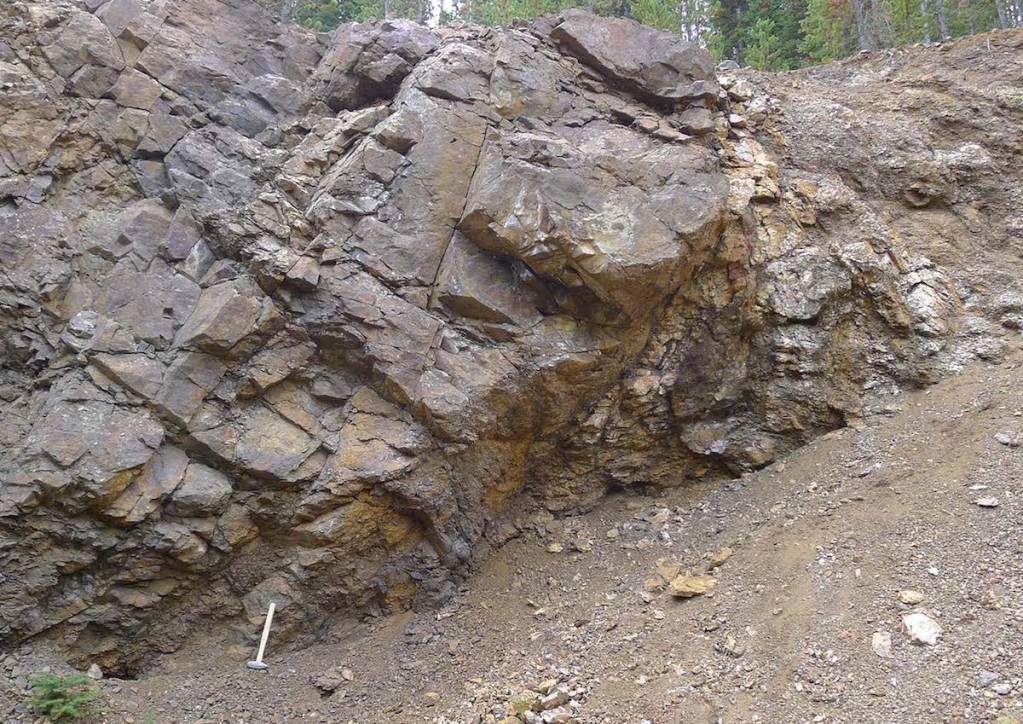
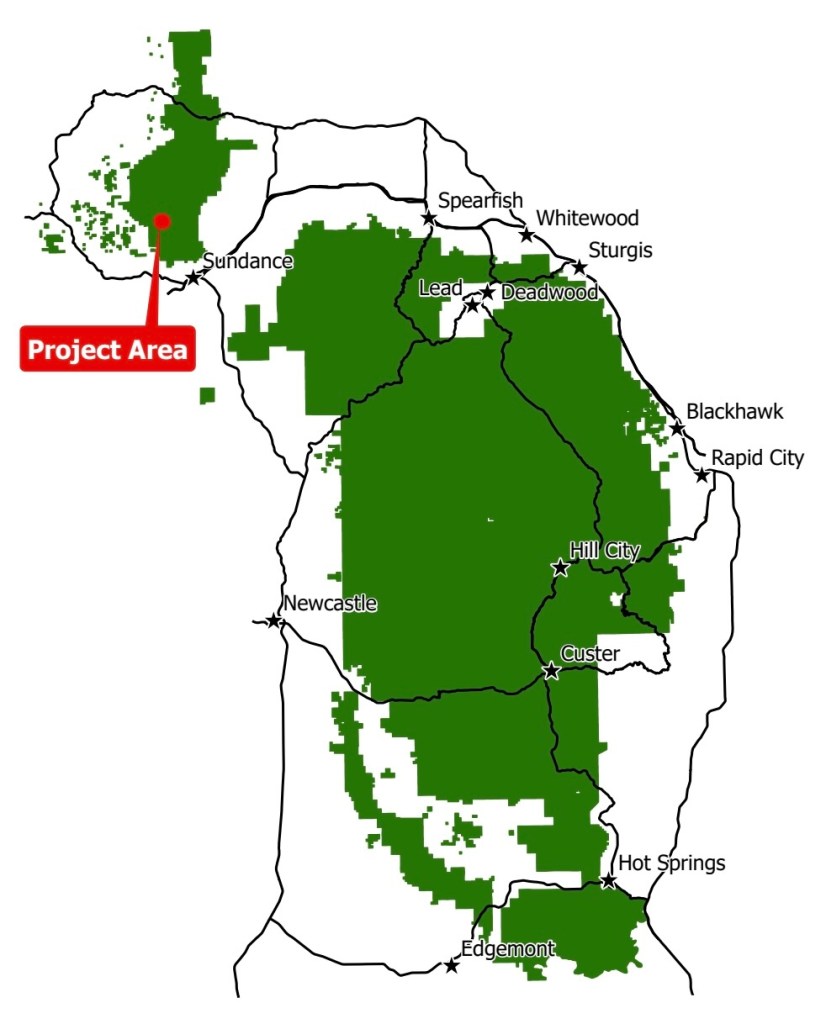
Colorado-based Rare Earth Resources plans to construct an open-pit mine at Bull Hill in the Black Hills National Forest 12 miles northwest of Sundance and about 22 miles from Devils Tower. Raw materials from the mine will be trucked to its “demonstration” processing plant near Upton.
People with concerns about the mine’s implications for health, wildlife, exemptions to the Black Hills Forest management plan, air and water quality have until Friday to submit comments.
Thirty days is precious little time to absorb a complex mining proposal and environmental review documents, Sundance resident Justin Johnson told WyoFile. He’s lived in the area for more than a decade, and the project’s fast-track nature came as a surprise.
“It was kind of hush-hush, in my opinion, as far as not much word about it around Sundance,” Johnson said. “All of a sudden, in July when it came to our attention, it’s like, ‘Holy cow. We got little time before the federal deadline to get our comments and concerns to the Forest Service.'”
Crook County Commissioner John Davis acknowledged that locals are caught off guard with the expedited process.
“We’re in favor of the project, and we hope it goes forward,” Davis told WyoFile. “We’ve got a lot of questions and a few concerns ourselves that we’re hoping get squared away, too.”
The commission is hosting a special meeting at 4 p.m. at the courthouse in Sundance to pose questions to staff from the Wyoming Department of Environmental Quality and the Wyoming State Geological Survey.
Rare Element Resources’ Bear Lodge Rare Earth Project is among more than 50 projects in queue for fast-track federal permitting under FAST-41 coverage — one tool the Trump administration is using to address what it describes as a national security priority to increase domestic production and curb U.S. reliance on China for rare-earth elements, or “critical minerals.” The metals are increasingly in demand as building blocks for everything from magnets to batteries in devices like cell phones and MRI machines. They’re also frequently used in military equipment such as radars and jet engines.
Last year, President Donald Trump issued the Immediate Measures to Increase American Mineral Production executive order while invoking the Defense Production Act to fast-track permitting and help finance mining and processing efforts.
Rare Element Resources touts “one of the highest-grade deposits for the critical magnet [rare earth elements] neodymium and praseodymium, as well as samarium and terbium,” according to the company’s website. “These elements are expected to see the largest demand growth and price support over the next 10 years due to their importance in permanent magnets used in defense systems, transportation, advanced energy and other high-tech applications.”
“You would think there’d be a lot more time for the actual owners of public land — the citizens of the U.S. — to have a response to what’s going on.”
Justin Johnson, Sundance resident
Regardless of the demand for rare-earth elements, there’s no excuse to rush a mining project that involves public natural resources, said Rachael Hamby, policy director for the Colorado-based conservation and advocacy organization Center for Western Priorities. Especially for hard-rock mining in a national forest.
“They [federal officials] know that their actions on national public lands, and related to our natural resources, are deeply unpopular with the public,” Hamby told WyoFile. “That’s why we see them trying anything they can to avoid and minimize taking public comment, because they know it’s not going to go their way.”
The company, meanwhile, says there will be additional opportunities for public participation — via other federal and state entities — later in the process.
Bear Lodge project
Rare Element Resources is headquartered in Firestone, Colo. General Atomics, a U.S. defense contractor, is a majority shareholder in the company, and its affiliates play a key role in the refining technologies that will be used to process critical minerals from the Bear Lodge mine.
The company has invested about $180 million in the project, it says, and could spend up to $250 million. The mine would support a combined 110 permanent jobs and contribute more than $75 million in state taxes over its 17-year operational life, it says.
The jobs and economic benefits of the processing plant in nearby Upton are less clear. However, Rare Element Resources received a $4.4 million Energy Matching Funds grant from the Wyoming Energy Authority in 2022 and $24.2 million in federal funding — both to support the processing facility in Upton. The plant is essentially built, but the company and its affiliates are still working out kinks to conduct full operational testing.
Rare Element Resources submitted its draft Bull Hill mine operations plan to federal officials in July as part of the federal permitting review. One of the key questions before the Forest Service is whether to “authorize deviation from existing visual standards and guidelines in the Black Hills Forest Plan,” according to the agency’s “notice of intent” published in the Federal Register.
In addition to the open-pit, the company proposes to build access roads, a power line and support infrastructure — some of which would be located on adjacent private land.
As with any proposed mining activity, locals have voiced concerns and posed questions about potential impacts to water and air quality, as well as what some feel is a rushed federal permitting process. The Bull Hill area is also a popular place for locals to hike before and after work, Johnson said.
“Where this mine is, the drainage basically goes through Cook Lake before it heads out of there,” Johnson said. “It’s at the headwaters of a lot of creeks that leave the Bear Lodge [area] and head somewhere.”
Fast-tracked
The FAST-41, or Fixing America’s Surface Transportation Act, was established under the Obama administration in 2015. Originally intended to increase transparency and expedite permitting for transportation infrastructure projects among multiple federal agencies, the program was expanded under the Biden and Trump administrations. President Trump, in his second term, has directed federal agencies to use the program to expedite mining projects, including for rare-earth minerals.
Though the Forest Service will conduct an “environmental impact statement” review, it “will not publish a draft environmental impact statement or conduct an objections process,” according to the agency’s notice in the Federal Register. That’s a major departure from public engagement typically required under the National Environmental Policy Act.
“As originally intended, the FAST-41 program is supposed to be about transparency in permitting,” Hamby said. “What I think we have seen a little bit more of is the Trump administration trying to treat it as a fast-track [tool], and that is certainly how the general public perceives it, and they don’t like that.
“People don’t like when things are rushed through,” Hamby added, “when they don’t feel heard or listened to, and they don’t have an opportunity to weigh in.”
Johnson confirmed that assertion.
“You would think there’d be a lot more time for the actual owners of public land — the citizens of the U.S. — to have a response to what’s going on,” Johnson said.
Despite the short public comment period, local and state governments will have additional opportunities to weigh in on the federal permitting process, according to Rare Element Resources.
“State and local agencies (and other federal agencies) are all part of the NEPA process (as cooperators and participating agencies), and do have inputs to the process post Aug. 28, for sure, through the EIS progression,” Rare Element Resources Vice President and General Counsel Kelli Kast told WyoFile via email.
State agencies — primarily the Wyoming Department of Environmental Quality — will also have a role in shaping the project’s regulatory parameters, she said. But, she added, the company “has not yet made applications for those permits and licenses, as we’re in the pre-application phase.”
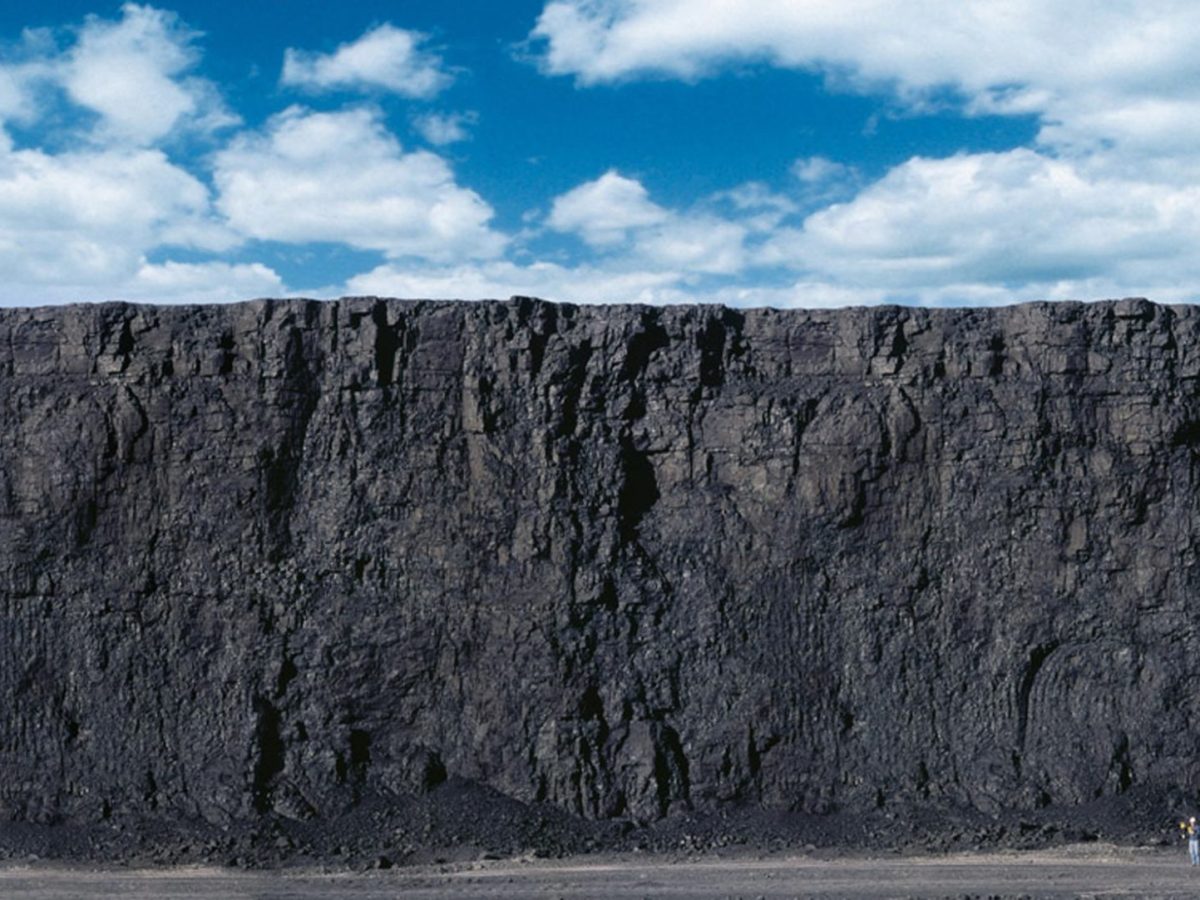
Johnson said he and his neighbors are not against mining. “Mining for Wyoming is huge. I mean, a lot of towns in Crook County would not survive if the coal mines were not in operation.”
But, he said, hard-rock mining for rare-earth minerals in a national forest — that’s a new aspect that he and others have a lot of questions about, and they deserve to be more engaged in the process.
“We would actually like them to say, ‘Yeah, we would like to extend the period of review, so we make sure that everything’s looked at.”
Go to this U.S. Forest Service portal to submit a comment on the proposal.
Written comments can also be mailed to:
Wendy Schuyler, Project Manager
Black Hills National Forest, Bearlodge Ranger District
101 S. 21st Street, P.O. Box 680
Sundance, WY 82729

Sorry, but the idea of an open pit mine in the middle of Wyoming’s Black Hills National Forest just turns my stomach. I grew up in the black hills region, and deeply value our public forests. I see nothing good coming out of this for Sundance, or Crook County, or Wyoming.
Interesting, in context of corner-crossings…above, below?