
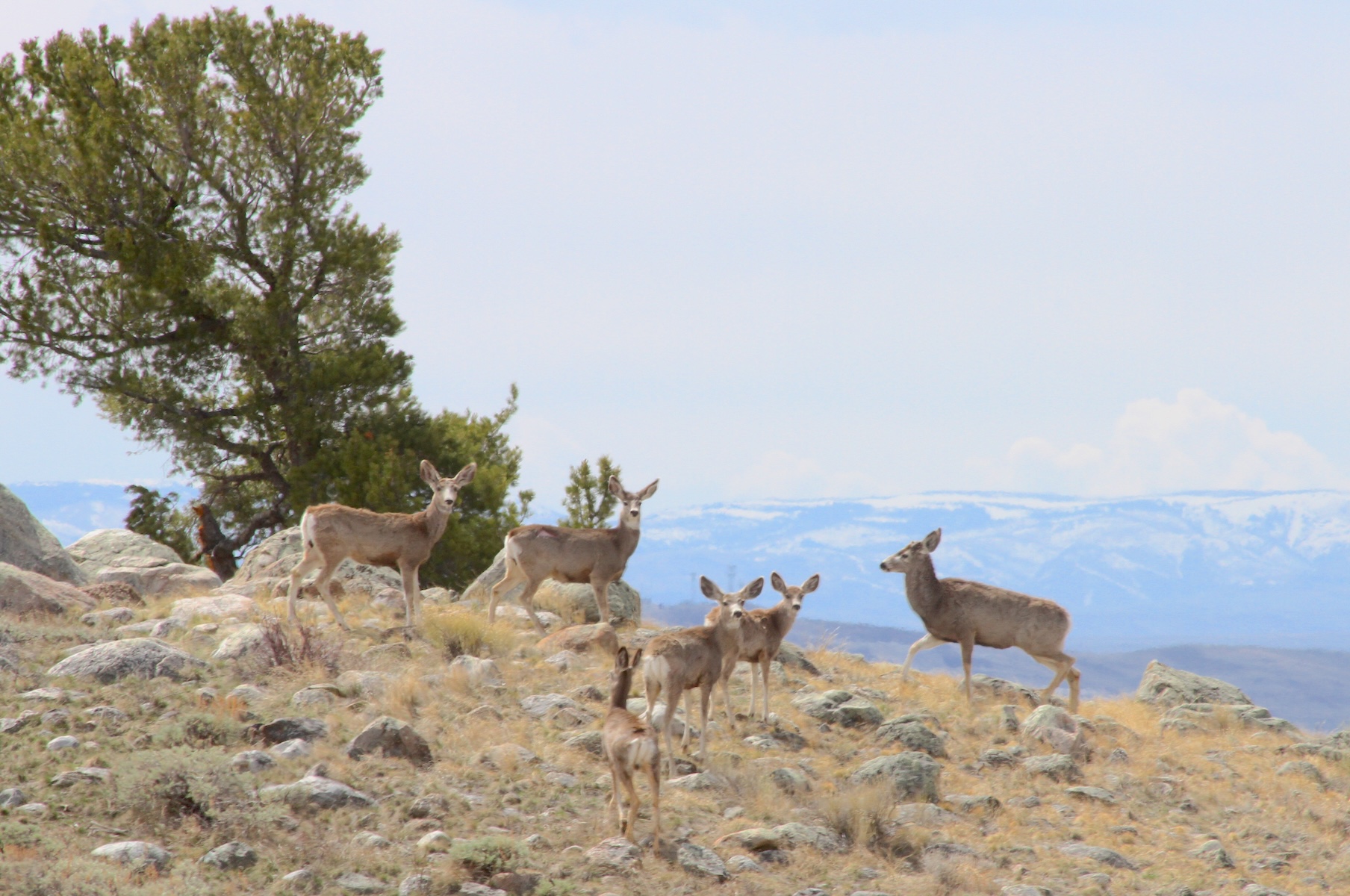

SUBLETTE COUNTY—Standing amid sagebrush on slopes offering soaring views of Wyoming’s highest peaks and second-largest lake, Ryan Grove made his case for why Skyline Drive is the right place to put Pinedale’s first singletrack trail system designed for mountain bikers like himself.
What’s standing in his way? Mule deer, elk and moose.
The native ungulates that dwell and migrate through the same spot have wildlife advocates and managers worried and urging proponents to build the 18 miles of trails elsewhere. But Grove, a local physician assistant who volunteers to lead the Sublette Trails Association, doesn’t believe there needs to be a tradeoff.
“This parcel has high wildlife value and high recreation value,” Grove said from the scenic site where the proposed trails would go. “We think that those two things don’t have to be exclusive.”
Grove’s aspirations for coexistence were directed at Jason West, a Lander resident and avid big game hunter who’s less excited about the association’s proposed location for its flagship project.
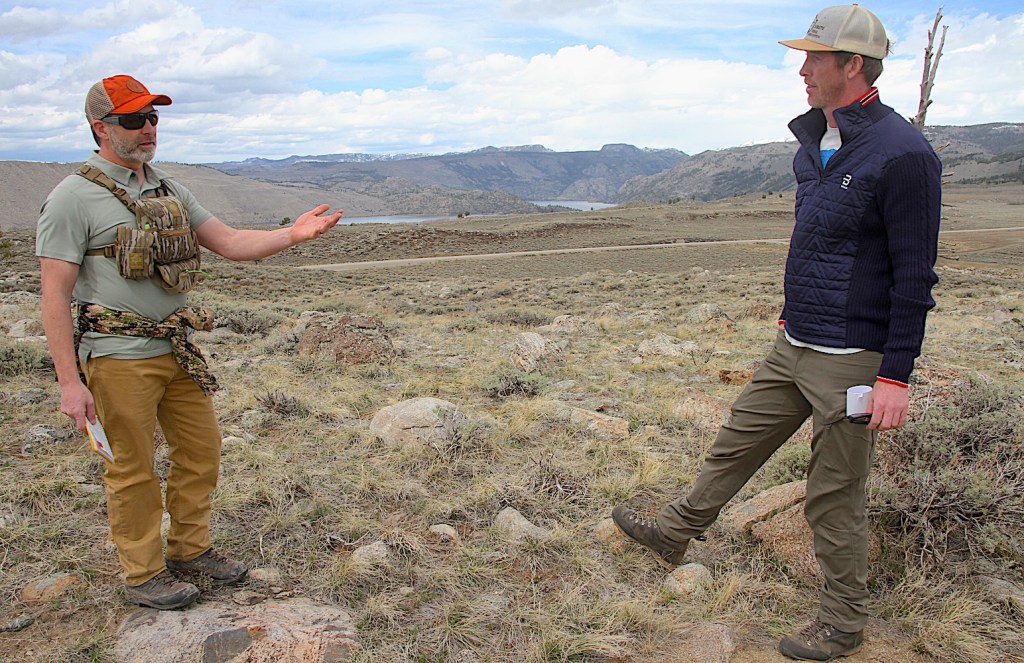
On April 10, he ventured around the Wind River Range for a conversation about the merits of a project he’s contesting. Through a volunteer board role with the Wyoming Mule Deer Alliance, West is among those behind a petition to the Bureau of Land Management. Signatories want the trail’s approval process to be transparent and the BLM to be mindful of potential impacts to thousands of migrating mule deer.
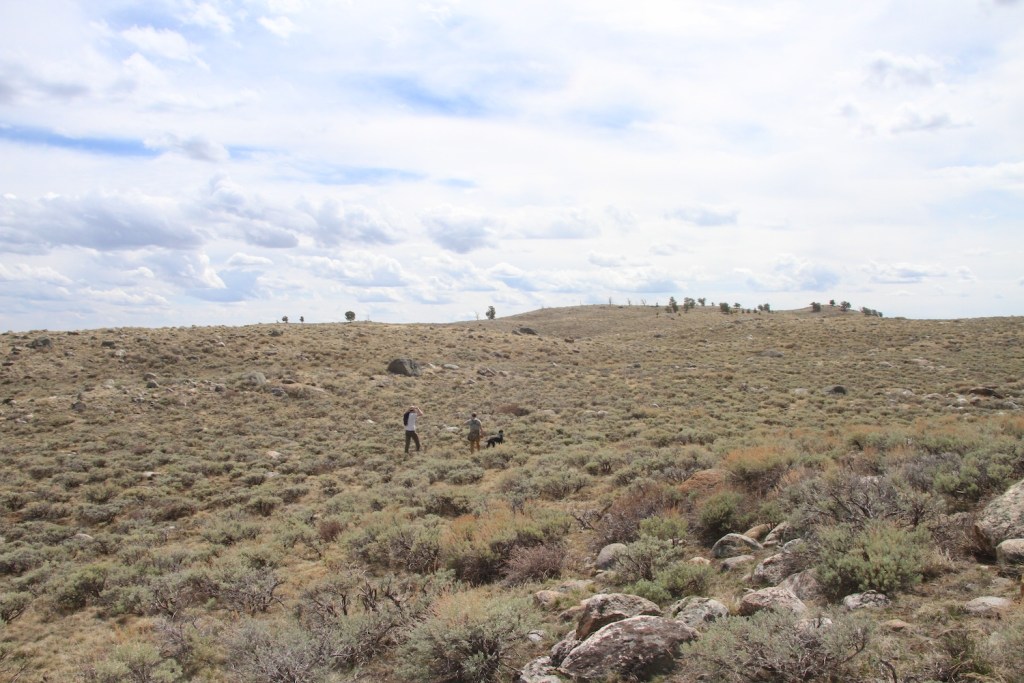
Overlooking Fremont Lake, Grove and West hiked and tried to talk things out. On several occasions, they bumped into mule deer along the way.
“We’re not trying to target you in an outsized way,” West said. “At the end of this, no matter what happens, when I walk into Pine Coffee someday and I see you there, I’ll be like, ‘Hey, Ryan, what’s up?’”
Grove vowed the same: “For sure,” he said. “I feel the same way.”
A shared desire for cordial relations did not ensure they could talk their way past a fundamental disagreement. It’s either the right place for a mountain bike trail network, or it’s not.
Long time coming
Setting off on their walk through the 600-acre BLM parcel, Grove recounted the history of a project the Sublette Trails Association has been pursuing for several years.
“There’s 600-some miles of trail in Sublette County,” he said. “The vast majority of it exists in the wilderness. You’re not allowed to ride a bike on it, it’s not really accessible for folks from town.”
Three years ago, with Wyoming Pathways and the Ruckelshaus Institute, the small nonprofit helped put on a “trail charrette” — essentially a planning meeting that brought different user groups together to talk about expanding frontcountry, nonmotorized recreation opportunities.
Participants got together and visited the potential trail system sites, according to a Ruckelshaus Institute report. At the time, however, plans were geared toward building the singletrack in Tyler Draw, which is southwest of town near where the Pinedale Mesa slopes toward the Green River.
“The motorized community pushed back pretty hard,” Grove recalled.
Dirt bikers had already developed a system of unauthorized trails in Tyler Draw, and they didn’t want to draw attention to it, he said.
The Sublette Trails Association’s board was sufficiently dissuaded.
“We don’t want to be involved in user-created or illegal trail establishment,” Grove said. “There’s a process for a reason, right?”
Starting over, Sublette Trails Association board members examined maps to try to find BLM land near town that “made sense from a recreation standpoint,” Grove said. The two adjoining parcels off Skyline Drive became the target. The appeal for mountain bikers and other trail users was clear: The site’s just five miles from town limits, it overlooks Fremont Lake and the terrain lends itself to trail building.
In February 2025, the International Mountain Bicycling Association prepared a 52-page draft proposal for the Bureau of Land Management with funding from grants and the Sublette Trails Association. The plans were reviewed by WyoFile, and show that the vision is to break the project into three phases. Altogether, the vision is for just over 18 miles of trail, including one-way downhill mountain bike-only sections. There’d also be three parking lots accommodating up to 60 vehicles and a restroom and “shelter facility.”
The proposal includes two pages under the header, “Wildlife Considerations.” That section vows to use seasonal closures, including gates and signs, marking the trail system off-limits during seasons recommended by the Wyoming Game and Fish Department.
Grove tried to sell West on the concept. The parcel, he pointed out, is currently open to foot traffic during winter months and migration season.
“We think that we can make this habitat better,” Grove said, “and protect it during the most sensitive time of year.”
West wasn’t having it: “I don’t necessarily like an argument of ‘we’re going to make this better by regulation,’” he said.
If the trails project stays true to the proposal’s pledge that it “will” include closures abiding by wildlife guidance, it’d only be open 4.5 months a year.
Wildlife worries
That’s because for wildlife, there are many habitat designations and a lot to protect.
“It does overlap with three species’ crucial winter range,” said Brandon Scurlock, wildlife management coordinator for the Game and Fish’s Pinedale Region. “Moose, mule deer and elk.”
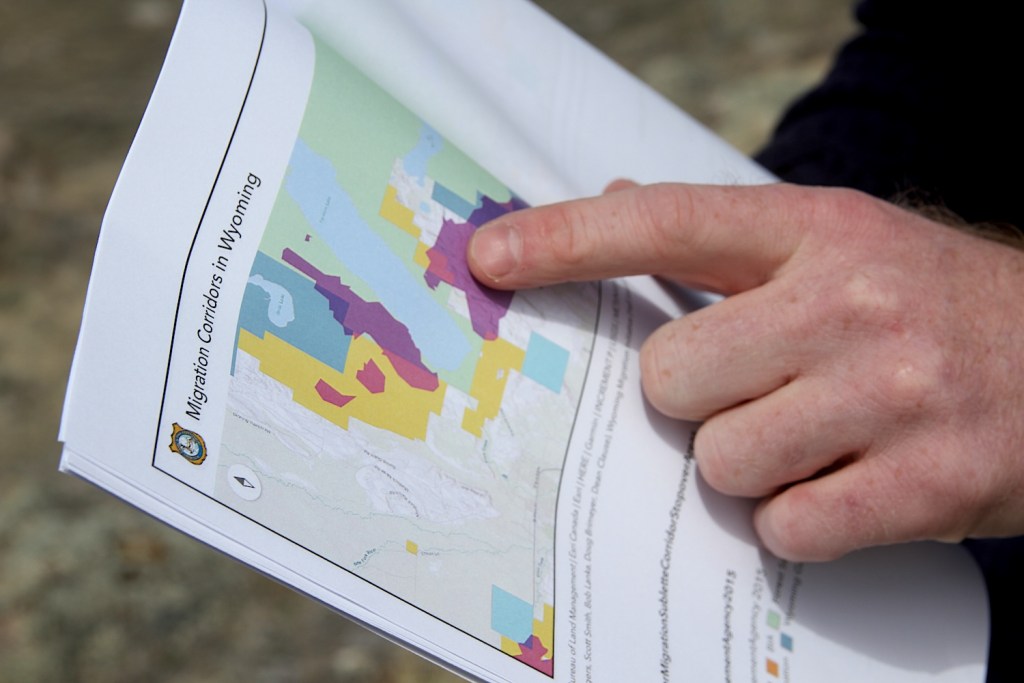
Furthermore, a portion of the longest mule deer migration in the world — and Wyoming’s first designated corridor — cuts through the southern reaches of the parcel where trails are planned. The overlap includes “medium use” and “stopover” habitats.
The project is also located roughly 2 miles from the “bottleneck” of the migration corridor near Fremont Lake. Thousands of deer headed toward and away from the pinchpoint each spring and fall would presumably pass right by the trails. The Wyoming Mule Deer Alliance seized on that especially critical class of habitat, including it in its Change.org petition title: “Protect the Sublette Mule Deer Migration Corridor from the Fremont Bottleneck Bike Trail.”
The habitat designations in the area have killed trails projects in the past. In 2019, the Bridger-Teton National Forest killed a proposal for a nearly 4-mile-long trail. Converting closed forest roads, the trail would have ascended Fremont Ridge on the west side of the lake. Trail proponents ended up putting the new route higher on Skyline Drive in the Sweeney Creek area instead.
Seven years later, there’s a push for the same outcome.
“Our last meeting, I basically told them, ‘If we could somehow avoid putting trails and infrastructure on these two BLM parcels, that would be amazing,’” Scurlock said.
The biologist pushed to build the infrastructure higher up Skyline Drive beyond the BLM parcels, and “out of mule deer and elk crucial winter range.”
“That’s something we could really support,” Scurlock said.
Game and Fish hasn’t yet conducted a formal review of the project. That’s because it’s still in limbo and hasn’t been formally accepted by the Bureau of Land Management. The federal agency declined WyoFile’s interview request, instead emailing a statement that said the trail project is in the “early stages of review.”
“As with all proposed recreation projects, the BLM will complete the required environmental review before determining whether the project will move forward,” a BLM spokesperson who asked to be kept anonymous wrote.
“Our last meeting, I basically told them, ‘If we could somehow avoid putting trails and infrastructure on these two BLM parcels, that would be amazing.’”
Brandon Scurlock
If the 18-mile Skyline Drive trail network does advance, as proposed, wildlife managers will offer their formal recommendations. The boilerplate guidance for crucial winter range is to “avoid disturbance.”
“If you can’t avoid it, minimize it,” Scurlock said. “If you can’t minimize it, mitigate it.”
The recommended closures for the crucial winter range would be Nov. 15 to April 30. But because of the migration, the off-limit period would stretch longer. Game and Fish’s guidance for the “Finger Lakes” portion of the migration corridor is to keep it open for deer from April 15 to May 31 in the spring and from Oct. 15 to Nov. 15 in the fall.
That leaves just June, July, August, September and the first half of October for wildlife-friendly mountain biking.
Unaffiliated wildlife advocates say they’re withholding judgment about a project that hasn’t been formally proposed.
“I don’t think we’d want to put the cart ahead of the horse,” said Meghan Riley, who manages the wildlife program for the Wyoming Outdoor Council. “If the proposal comes out in a place that’s harmful to big game species in their crucial winter ranges, that’s something that we would probably not be in strong support of.”
Common ground?
Toward the tail end of their hike, West and Grove stumbled into a matched set of mature mule deer antlers. Although their resting spot lay within eyeshot of Skyline Drive, sagebrush must have obscured the prized antlers from passersby. The set’s bleached underside suggested they’d been there for a year — testimony to little human use, at least on portions of the parcel.
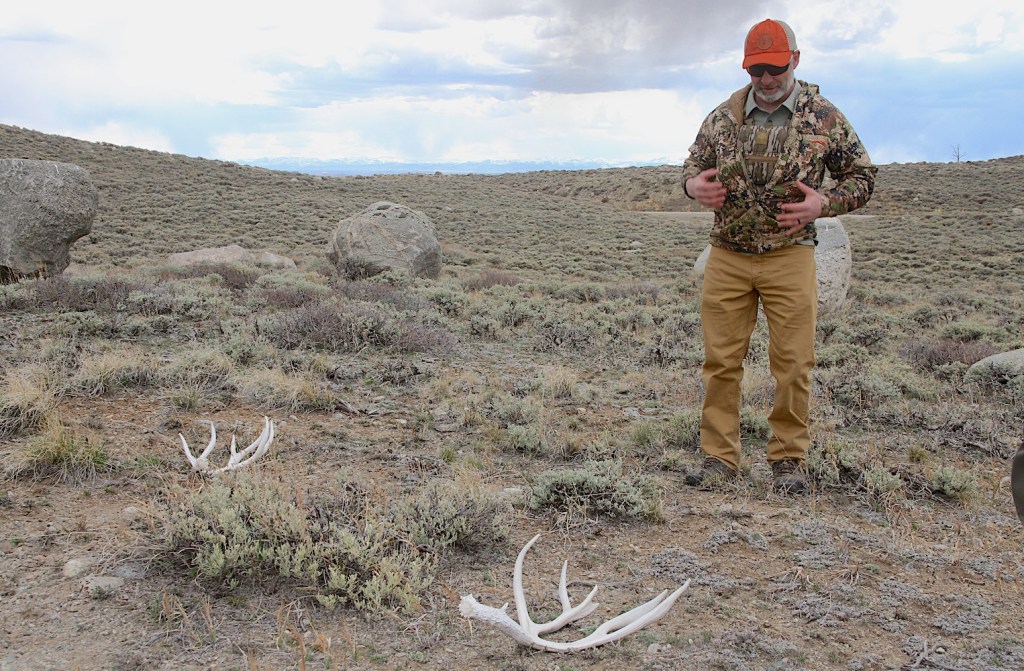
“What we’re asking of you is to put a little bit more value on the mule deer concern,” West told Grove.
The mule deer advocate asked the trails advocate if he’d be willing to look at other spots. Grove affirmed.
“That’s what I want to hear,” West said.
Grove sought to ascertain what it would take for the Wyoming Mule Deer Alliance to end its opposition if it stuck with Skyline Drive. The seasonal trail closures didn’t cut it, and a mutually agreeable path forward proved elusive.
Like Grove and West, Pinedale residents are bound to be divided on whether it’s the right step forward for Sublette County to build out a trail network that overlaps a famous migration corridor and crucial elk, moose and mule deer range.
The way local mountain biker Morgan Faber sees it, the signage and seasonal closures could help build awareness about Pinedale’s world-class wildlife.
“What a great way to highlight the fact that we have this wonderful wildlife corridor that is very special to Sublette County,” Faber said.
Pinedale “needs more trails nearby,” Faber said. It’d be a benefit to locals and tourists alike, she said.
“It really bums me out that there is such a pushback,” Faber said.
Others think that Pinedale’s lack of modern outdoor recreational amenities is what makes the west slope Wind River Range community desirable and unique.
“You could go to nearly any other mountain town in the United States to find those manufactured outdoor opportunities,” Pinedale resident Heath Harrower said.
“And we have a lot of bike trails, they already exist,” he said. “I don’t know why we would continue to build bike trails at the expense of what is special and unique to this area.”

I wish WyoFile would list the sources of funding for this group. Who paid for the consultant to produce their expensive and slick, four-color “report” lauding additional disturbance near a wildlife migration corridor? Their idea of a BLM ranger monitoring this mega land disturbance to keep bikers on designated trails is laughable. Sublette has hundreds of thousands of acres of public land, where their rip-roaring activity would be appropriate. But not here.
Wildlife is getting pummeled from all sides. Especially in the Upper Green River Basin. Give them a break. Industrial recreation is just as destructive (or even more impactful) as any other human extractive use. This insane demand for more trails and recreation infrastrucure is everywhere in Wyoming, especially in “mountain” towns. New residents want to make it like Colorado or Utah or like the place that they came from. Every new development and “amenity” diminishes Wyoming, it’s wildlife, and way of life. Real Wyomingites need to stongly push back on these gentrification efforts otherwise we will lose everything that makes Wyoming unique and special. Leave it the way it is naturally. You want bike trails and other manmade recreation sites? Just leave…
To say that trail-based recreation is “just as destructive” as extractive industry is simply not supported by the wildlife science. Recreation absolutely can impact wildlife and should be managed responsibly, especially in sensitive migration corridors and winter range, but equating a hiking or biking trail to large-scale industrial development is a false comparison.
More importantly, the idea that people involved in trail advocacy are somehow “not real Wyomingites” is unfair and counterproductive. Many of us were born and raised here, work here, raise families here, and care deeply about Wyoming’s wildlife and landscapes. Wanting responsible access to public lands does not mean wanting Wyoming to become Colorado or Utah.
There is room for nuanced discussion about where recreation belongs, what areas should remain undeveloped, seasonal closures, wildlife protections, and how to balance competing uses on public land. But reducing the conversation to “leave if you want trails” ignores the fact that public lands are shared by hunters, anglers, hikers, bikers, ranchers, conservationists, and many others who all value Wyoming for different reasons.
Protecting wildlife should be grounded in evidence and good management, not gatekeeping over who qualifies as a “true Wyomingite.”
Prioritize the wildlife first. The mountain bike community pays lip service to them. They do not understand at a fundamental level the value of undisturbed, intact habitats. That community is happy to push an agenda of more regulation and over-site to get the trails and then falls flat on enforcing it. Find another place for bike trails. There is plenty of room elsewhere for them. This is coming from a diehard mountain biker who lives in a similar community (Springs Springs) with the same issues. NFS and BLM does not have the money or capacity to care about enforcing the regs around these trails.
Can they coexist? What an unfair way to frame this conversation from the start — making it seem like it has to be “wildlife vs. recreation.” Yes, they can coexist, and they already do in many places with proper management. There’s even local research from Buckrail discussing exactly that: recreation and wildlife can coexist when trails are intentionally designed and managed. https://buckrail.com/local-study-suggests-recreation-wildlife-can-coexist-with-proper-management/
This article also fails to clarify that this is a multi-use trail system, NOT just a mountain biking project. These trails would also serve other non-motorized users such as hikers, horseback riders, trail runners, dog walkers, and people simply wanting access to get outside close to town. The framing throughout the article feels one-sided and doesn’t give the proposal a fair chance by presenting the full picture or accurate context.
I’m also curious about the Wyoming Mule Deer Alliance. There’s very little public information available about the organization itself. It’s interesting that many opponents to the project appear to be mule deer hunters. What’s the actual motive here? I didn’t hear nearly the same level of concern when a hot mix plant operated on the same parcel for almost two years.
Another important point missing from this conversation: there is already unregulated recreation happening in these BLM parcels. Right now, people can access these areas year-round with no management, no designated routes, and no seasonal protections. Concentrated use paired with seasonal closures — similar to the CCC Ponds and other nearby wildlife habitat management areas — can actually better support wildlife by reducing dispersed impacts. Seasonal closures exist for a reason, and there’s extensive research showing they work. Otherwise, why would federal agencies continue implementing them?
BLM and USFS projects also go through NEPA review and wildlife evaluations. These agencies and partner organizations are intentional about trail placement, timing restrictions, and mitigation measures to ensure impacts are managed and concentrated responsibly.
At the end of the day, it’s always easier to say “no” than to have a nuanced conversation about balancing wildlife conservation and recreation access using science and facts. What’s missing from this article is the reality that managed, concentrated recreation can reduce broader habitat fragmentation compared to unmanaged dispersed use and user-created trails which are already shaping the landscape.
This article is another example of how public discussions about the Skyline trail proposal in Sublette County are increasingly being framed as a binary conflict: recreation versus wildlife. That framing is understandable in a media environment that favors simplicity, but it does not reflect either the science of wildlife management or the lived reality of land use in western Wyoming.
While wildlife impacts certainly deserve serious consideration, the article omitted substantial context regarding land management, existing disturbance, mitigation strategies, and the growing body of research showing that recreation and wildlife can coexist when properly managed. It also relied on selective framing and incomplete context in ways that shaped a more conflict-driven narrative than the underlying facts support.
As both a Pinedale resident involved in this local discussion, a hunter, and someone with a background in journalism, I believe the public deserves a more complete and accurate picture of this issue—one that reflects proportionality, management realities, and the actual design of the proposal.
While the article included multiple perspectives, the overall framing consistently positioned the proposal as inherently in conflict with wildlife rather than seriously engaging whether structured recreation management can reduce or avoid those impacts. That framing matters because it shapes how readers interpret everything else.
Several omissions and distortions contributed to that imbalance;
– The proposed Skyline project is not a “mountain bike trail system.” It is a phased, multi-use nonmotorized trail proposal intended for hikers, runners, walkers, and cyclists. Only a small portion—approximately four miles—is bike-optimized.
– Repeatedly labeling the entire proposal as “mountain bike trails” narrows public perception in a misleading way.
– The 18-mile network is conceptual and phased, not an immediate full buildout. That distinction is critical for understanding both scale and impact assessment.
– The article stated there are already “a lot of bike trails” in the area, which is inaccurate. Sublette County does not have designated mountain bike trail systems beyond paved roadside pathways; all existing trails are shared-use routes not designed specifically for biking, and this wouldn’t be either.
– The discussion repeatedly referenced the Fremont bottleneck in ways that blurred important distinctions. This proposal was intentionally moved away from the most sensitive migration and winter range areas that drove earlier conflicts. Suggesting it is “the same outcome” as prior proposals ignores substantial changes in location and management intent.
– The article also inaccurately stated that a “new trail was created in the Sweeney Lake area” after prior proposals were shelved. In reality, that project was a rebuild and reroute of an existing corridor, not a new trail system.
– It cited a Change.org petition without noting that its title is inaccurate and inflammatory. The proposal is not located in the Fremont bottleneck, and associated maps are not to scale, visually exaggerating the footprint.
– Migration and habitat impacts were emphasized without proportional context. The directly affected footprint is limited relative to the surrounding landscape and is being designed with avoidance of key habitat features in mind.
Additionally the article creates an uneven sense of organizational legitimacy and representation. The Sublette Trails Association is a Pinedale-based nonprofit made up entirely of local residents focused on nonmotorized recreation planning and stewardship across a broad user base. Which has undertaken significant efforts to get community input on this and other projects. It is NOT a mountain bike advocacy group, despite being framed that way implicitly at times. Meanwhile, the “Mule Deer Alliance” is treated as a structured conservation authority, despite not being a formal land management agency, or governmental entity or non-profit. Readers deserve clarity about who is representing which interests and in what capacity. Individual identification also matters. For example, framing one participant who is actually a Pinedale resident as a “local PA” while another is a “Lander resident,”and failing to note that STA is locally based and community-driven, subtly reinforces an outside-versus-local narrative that does not reflect reality. Nor does the article acknowledge relevant personal context, such as the fact that I am also a deer hunter—part of the very constituency often cited in wildlife advocacy discussions and the very constituency claiming to be represented by The Mule Deer Alliance. These omissions reinforce a simplified recreation-versus-conservation divide that does not reflect how overlapping these identities are in rural Wyoming.
The article notably also underrepresents existing and historical land use impacts in the project area. The parcels being discussed already contain roads, dispersed recreation, user-created OHV trails, and high levels of seasonal public use, in addition to being the site of an 8-acre hotmix plant which previously occupied part of the area for nearly two years. (Its worth noting that even if the entire 18 miles of trail were completed, the total ground disturbance would be significantly less than the pre-existing hotmix plant.) In addition, major infrastructure already exists within and adjacent to the footprint, including paved access to White Pine Ski Area and Elkhart Park Trailhead, one of the busiest trailheads in the state. Finally these parcels have been identified by the Bureau of Land Management as potentially available for disposal, making proactive recreation planning relevant not only for access but for long-term public land retention. These contexts matter because they directly affect how incremental impacts should be evaluated.
Most importantly, the article did not adequately reflect one of the central realities of modern wildlife management: recreation and wildlife already coexist across the West through timing restrictions, seasonal closures, spatial zoning, and adaptive management. This is not theoretical, a growing body of research supports the effectiveness of these tools. A 2019 study in Scientific Reports found that temporal road closures in Banff National Park significantly increased wildlife habitat use during closure periods, demonstrating that timing-based management can reduce disturbance while maintaining recreation access at other times. U.S. Forest Service synthesis research on recreation and wildlife interactions concludes that impacts are highly dependent on timing, intensity, predictability, and management structure—and that seasonal closures, concentrated use, and zoning are effective mitigation tools. Recent regional reporting, including work highlighted by Buckrail, has also emphasized that coexistence is achievable when recreation is actively managed rather than treated as inherently incompatible with wildlife.
Importantly, all human uses affect wildlife. Roads, energy development, hunting pressure, shed hunting, and rural expansion all contribute to habitat and behavioral changes in ungulates. Yet recreation infrastructure is often discussed in isolation from these other, often larger-scale influences.
None of this is to dismiss wildlife concerns—they are real and deserve careful evaluation. The question is not whether recreation has impacts. It does.
The question is whether those impacts are being evaluated proportionally, in context, and with recognition of the tools available to manage them.
Modern public land management does not operate on an either/or model. It relies on mitigation: seasonal closures, spatial planning, phased development, and adaptive management strategies designed to balance multiple uses. The Sublette Trails Association has consistently supported that approach, including seasonal protections in sensitive areas like the Fremont bottleneck and a commitment to wildlife-sensitive design principles.
Reasonable people can disagree about trail placement and intensity of use. Those conversations are important and should continue. But they should be grounded in accurate representation, complete context, and the full scope of scientific understanding—not selective framing that flattens complexity into a simple conflict narrative. The challenge moving forward is not deciding whether recreation belongs on the landscape, its already here. The real question is how to manage it responsibly enough that wildlife, public access, and long-term stewardship of public lands can all persist together. Increasingly, both science and management practice suggest that is not only possible—it is already happening where we choose to apply it.
I’m not going to litigate your feelings in a comment thread, but remain open to a discussion any time. You know how to reach me.
I bluntly say no to allowing mountain biking in any areas around Pinedale or Sublette County. Biking groups remind me of the old example of the Camel in the desert. The Camel finds a tent in the desert. He sticks his nose in, and soon after, he has his whole body in the tent.
Whether it’s mountain bikes, electric fat-wheel bikes, or just plain old bikes, the noise disruption has a chilling and lasting effect on wildlife movement: deer, elk, grouse, and even bears. The other part of this current challenge is landscape erosion caused by bikes and illegal trails that form when wet weather affects authorized trails. Protecting the environment and wildlife is imperative.
What about the dozens of cabins that are already within the critical migration corridor “bottleneck”, or the hundreds of vehicles driving the paved road through the BLM parcels in question every week to use the cross country and downhill ski trails, or the thousands of others that drive this same corridor to access the Elkhart Park Trailhead all summer? It seems to me that the impacts mountain bikers will have to this area are being unfairly represented here.
Just say “NO” to the crazy idea of changing a wildlife corridor into a human trail for more intrusion into wild country. The amount of development in Wyoming is crazy right now, and going to get worse. Just say “NO”. What good are wildlife migration corridors if humans can’t leave them alone?
Just say “NO”.
As early as the early 1980’s there was bar room chatter, coffee klatch speculations about a proposed extension of the road to Elk Heart Park to allow handicapped individuals the opportunity to drive into the Winds in the comfort of a motorized vehicle. Thankfully that idea died in infancy but it gained a breath of oxygen when everyone it seemed to have their own interpretation of multiple use. The invasion of dirt bikes and three wheelers has led to multiple trails and scars left across the state. The selfish desire of the body human to go no place on foot in some fashion is showing disrespect to not only mother earth but also to the creatures and plants that so desperately need a safe sanctuary. The economy driven by greed is a short stick of TNT with a lit fuse.
Sadly there is always some group or person who decides nature needs to be “improved” to his tastes. My feeling is if it doesn’t please you the way it is, try to find a place that is already the way you like it. Nature means natural, not an ideal.
After watching everything that has impacted mule deer in Sublette County and in particular a winter range that has been developed and mostly unusable (5000 mule deer were affected),and thinking about all the public lands in Sublette County, to me this should not even be a consideration. We have something special here. I’d say for true “multiple use,” they develop a bike path into the Anticline Field.
I can’t believe that this was even a thought in a crucial Wyoming migration winter range. Once you loose it, we’ll never get it back…. Put it some where else… that’s what makes Pinedale and the surrounding area is the deer, elk and moose! We are loosing so much habitat as it is, let’s try and give back instead of taking more. No bike path there!
After watching everything that has impacted mule deer in Sublette County and in particular a winter range that has been developed and mostly unusable (5000 mule deer were affected),and thinking about all the public lands in Sublette County, to me this should not even be a consideration. We have something special here. I’d say for true “multiple use,” they develop a bike path into the Anticline Field.
First, Pinedale and the surrounding area do not need to manufacture outdoor recreational opportunities. They exist in abundance and are there for all to enjoy, as are near limitless trails and roads. The desire to manipulate and control the environment to manufacture outdoor opportunities runs counter to the very uniqueness that the Pinedale area still offers, meaning an ability to enjoy landscapes and outdoor recreation that is largely unhindered and uncontrolled by human intervention. How does this proposed trail system protect that uniqueness? It doesn’t.
Second, the consequences of this type of development ripple over generations and will lead to intense overuse and tourism. Examples of this overuse are already present in Sublette County. Granite Hot Springs is one venue that Sublette County residents used to enjoy with little fanfare, but that has been developed and is now nearly completely monopolized by Jackson tourism companies. The intense tourism of Jackson is also bleeding into Pinedale with Jackson mountain and guide services and fishing companies routinely operating in what were once pristine and isolated areas while at the same time advocating for increased access. This area, its lifestyle, its wildlife, and its landscapes are worth protecting, not only for ourselves, but, more importantly, for future generations. Not protecting it and instead promoting wanton development such as this trail system is selfish and shortsighted. How does this proposed trail system protect our lifestyle, landscapes, and environment for future generations to enjoy? How will it protect against the intense tourism and overuse experienced by so many other mountain towns? It doesn’t.
Third, of course this will impact wildlife. Our wildlife is our heritage and in so many ways symbolizes this state and county. This is a community that historically maintained a fierce interest in the conservation of its wildlife, a legacy built over decades. This is well documented, and the Director of the Wyoming Game and Fish Department, Angi Bruce, provided a great snapshot of mule deer conservation efforts in the April issue of Wyoming Wildlife. However, despite these efforts, the mule deer population continues its several decades decrease. To believe there is no correlation between increased development and decreased mule deer populations, as some development proponents seem to suggest, is absurd. In the face of these conservation efforts, why would we want to promote yet another trail system that will impact what has always been prime habitat for multiple game species? How is this trail system assisting in conserving our wildlife? It doesn’t.
As stewards, we need to protect this living inheritance. A living inheritance where solitude is still possible and where the true wild can still be experienced. A lifestyle not beholden to a desire to control, trammel, mar, and exploit for personal gain the natural environment. People desiring these prostituted and manufactured recreational opportunities can enjoy them in nearly any other mountain town in the United States. Keep the uniqueness of this area. As I have stated before, when your values are clear, so is this choice.
What’s striking about this argument is that it treats all recreation development as inherently destructive while ignoring both scale and context.
No one is proposing turning Pinedale into Vail or Jackson Hole. The Skyline proposal is a relatively small, purpose-built non-motorized trail system adjacent to an existing community and within a landscape already heavily influenced by roads, energy development, dispersed recreation, outfitting, grazing, and motorized access, not to mention the 8-acre hot mix plant that existed on the proposed parcels for nearly two years. Pretending this proposal represents the end of “true wild” Wyoming is rhetoric, not reality.
The argument also relies on a false premise: that maintaining unmanaged, user-created recreation pressure somehow protects the landscape better than intentional planning and design. In practice, and according to the broader body of recreation ecology literature, the opposite is generally true and there is a great body of evidence showing that wildlife and non-motorized recreation can and do co-exist. Well-designed trail systems concentrate use, improve predictability, reduce habitat fragmentation from social trails, improve compliance, and allow managers to incorporate seasonal closures, sight-line management, and habitat protections directly into the trail layout.
Ironically, if the concern is unmanaged growth and tourism pressure, planning recreation infrastructure responsibly is one of the few tools communities actually have to manage impacts before they become chaotic.
The Granite Hot Springs comparison is also misleading. Granite became overcrowded largely because of regional tourism growth, social media exposure, and its proximity to Jackson—not because a local community built a small non-motorized trail system near town. If anything, that example demonstrates the need for proactive local management instead of reacting after use explodes.
And on wildlife: nobody serious is claiming recreation has zero impact. The real question is magnitude, mitigation, and comparison. The overwhelming body of peer-reviewed recreation ecology literature shows impacts vary dramatically depending on trail placement, density, timing, predictability of use, habitat type, and recreation mode. In fact, many studies find non-motorized trail use—especially on designated trails—produces impacts far more comparable to hiking than to motorized recreation or road networks.
What’s missing from arguments like this is proportionality. Mule deer declines across the West are tied to a complex mix of harsh winters, habitat loss, migration corridor disruption, energy development, disease, fencing, drought, predation, and climate pressures. To imply a relatively modest trail proposal near Pinedale is somehow a major driver of decades-long population declines is an enormous extrapolation unsupported by evidence.
Most importantly, this framing assumes conservation and recreation are mutually exclusive values. They are not. Many of the people advocating for these trails are hunters, anglers, skiers, runners, bikers, and lifelong residents who care deeply about wildlife and public lands. Wanting thoughtfully designed access to public land does not mean someone wants to “prostitute” the landscape for profit.
Public lands are not museums reserved only for one preferred style of recreation or one generation’s idea of solitude. The real challenge is balancing access, conservation, and community identity responsibly—and that requires nuance, not absolutism.
This bike trail is a bad idea. Find another place for goodness sake. We can’t be building bike trails or anything else in critical wildlife migration areas and prime habitat. We will be lucky if wildlife survives the stupidity of humans in this country.
What about adopted BLM and USFS travel management plans??? Its my understanding that the Federal agencies incorporate travel management plans into their Resource Management Plans and Forest Revision Planning documents. If not currently included, the agencies can generate a specific plan such as a climbing plan in the Big Horns or a management plan for the Marton ranch purchase. That is, there are existing mechanisms for addressing travel management whether it be in wilderness areas, ACECs, etc. The process allows for full public participation. With respsect to BLM and USFS management plans, the agencies basically “zone” the Fedral lands into specific areas that are best suited for singular uses , multiple uses or a combination. Game and Fish makes their recommendations during the public review process at which time wildlife migration corridors concerns and crucial winter range designations are submitted to the Federal agency for consideration. And, there may be T&E species or species of concern in any of the various areas.
Wildlife migration corridors and crucial winter ranges and core habitat for T&E species have already been identified via ” best available science “. In those currently identified areas it should be hands off for intrusive uses such as mountain biking, four wheeling, mud bogging, etc. The science is there to deny the intrusive uses and the wildlife should be protected from human intrusion. Thats the big. challenge in Yellowstone – how do we protect the wildlife from humans. The outdoor recreation business has exploded in Wyoming primarily due to the new toys and internet access. We must be wise enough to protect the natural resources while at the same time allowing designated suitable areas for the off roaders. That’s the purpose of travel management plans – restrict off road activity to suitable areas – zoned if you would.
Hey Mike,
Thanks for your researched article about this trail issue.
Brandon Scurlock said it, “…avoid putting trails and infrastructure on these two BLM parcels…”. He is a career wildlife expert, who deals often with public concerns.
After all, if what’s at stake is a recreational ‘bike ride’ vs survival of wildlife,
it appears to be a no-brainer.
Go to Moab is you want to see overuse by recreationalists…non-stop habitat abuse.
Humans are rarely able to ‘make it better’ for wildlife, except maybe a winter bird feeder in the backyard!
In this proposed trail case, humans would be actively scaring the animals away from their migratory homelands.
I like trails, but there’s plenty of other space in Sublette County to consider for this heavy use recreational proposal.
Regards,
Reet Donham
I also thought immediately of Moab, which was once a quirky desert town. Shocked at the difference when driving through last year…I thought, I hope this never happens to Pinedale. Certainly not at the expense of our migrating wildlife.
There is absolutely no (need) or reason for this project to happen in any wildlife corridor or any wildlife sensitive area. The State of Wyoming offers hundreds after hundreds of miles of accessable trails to ride on. Definitely a no go in this area. Teton Village Jackson hole Mountain resort, you can take the gondola up and ride your bike down. Same with areas near Park City, Utah. So those areas need to be explored since they are already developed and not new areas that are sensitive to wildlife.
Would you be so adamantly opposed if an energy producer wanted to lease this land? Or is your opposition only relegated to bike trails?
Your previous comments make it clear that you support energy development over all else.
You obviously do not ride a mountain bike. Compared to Utah and Colorado, Wyoming has approximately 2% of the of the total mountain biking trail miles of either state. BLM land in Wyoming is crisscrossed with hundreds of miles of two wheel vehicle scars and plenty of trash dumping. I don’t see where single track mountain bike trails can be any more harmful. In fact maybe it would encourage kids to take up mountain biking rather than making more ATV scars.
Thank you for pointing out that this project would cut across the longest mule deer migration route in the world. I’m not sure people understand how special and rare such a thing is. The mule deer that migrate from the Red Desert to the Hoback (and beyond), up to 200 miles, can do so only because western Wyoming is one of the last mostly undeveloped swaths of land in the lower 48 states. The migration is crucial to the health of the herd and the species in Wyoming. I love mountain biking, but the cost to our iconic, irreplaceable wildlife is far, far too high in this case.
It’s never enough for the off roaders, atvs, dirt bikes, mountain bikes. This proposal demonstrates the attitude that will ultimately result in Sublette County losing its mule deer and pronghorn migrations, a unique asset that is irreplaceable.
When will people give something back instead of taking?
John Carter
I was an avid mtb’er. I loved exciting new trails. I get it. But look at what is happening everywhere. There are more people, more trails, and fewer wild places and wildlife. Seasonal closures don’t work without enforcement and no federal agency or local law enforcement is going to enforce anything as ‘insignificant’ as trail closures. Maintain and enhance existing trails, but please don’t carve up the last wild places.
is nothing sacred and peaceful anymore in wyoming…..why would bike path and human encroachment be allowed to disturb a migration path for elk, moose and mule deer…. remember John Denver’s Rocky Mountain High …. more people, more scars upon the land,, the peaceful habitat for these animals needs preservation and protection and undisturbed from human disturbance
Human beings always want more. More trails, more roads, more housing developments, etc….. Growing up in Wyoming and hunting big game in the seventies was a true pleasure. There were no ,or very few ATV’S. Now the state is over run by them, and I want to tell you that they are a very negative influence on the hunting experience. If you want to have true outdoor experiences, say no to these projects.