
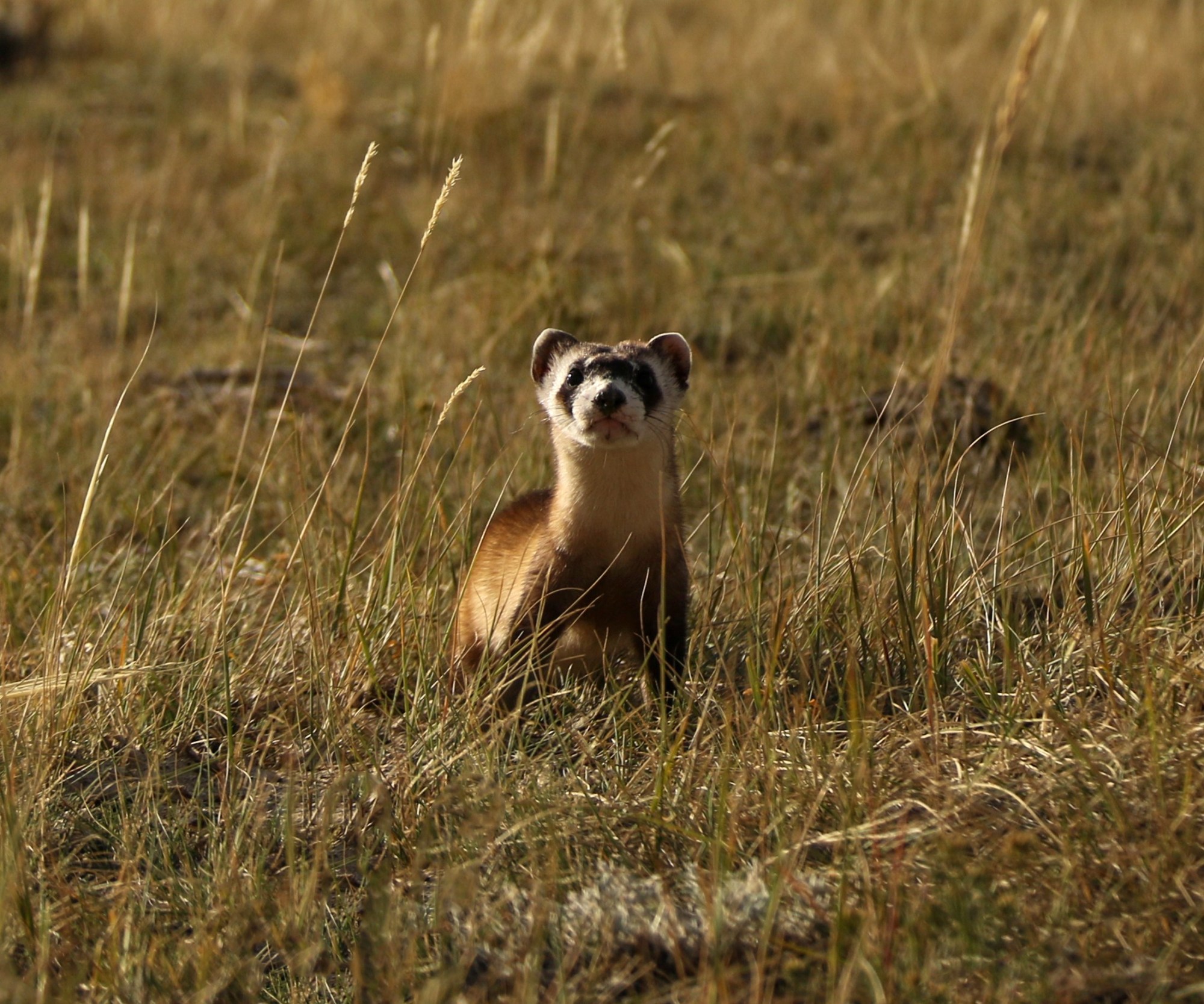

Wyoming wildlife managers are reporting that no black-footed ferrets are being detected in the cradle of the species’ conservation: the Absaroka Range foothills outside of Meeteetse, where the ferrets were saved after presumed extinction in the 1980s.
A tough combination of plague and drought — both big issues for the embattled western species — are suspected causes of a population collapse in the Meeteetse area, where wildlife managers returned ferrets to the wild in 2016 after a three-decade-long absence. It’s not assured that the reintroduced population is completely gone, but it’s not looking promising, Wyoming Game and Fish Department small carnivore biologist Andy Gygli said.
“We spent a couple hundred hours of effort surveying 4,000 to 5,000 acres of the Meeteetse reintroduction area,” Gygli said. “We didn’t see any ferrets.”
The complete absence of ferrets during the late August surveys wasn’t wholly surprising. Sylvatic plague flared in the region in 2018 and 2019, and ferret numbers plunged to just one confirmed animal in 2020. Subsequent releases of captive-raised ferrets, including 18 animals in 2022, helped the small population temporarily recover, but plague struck again in 2023. By 2025, spotlighting surveyors again detected just a single ferret. This summer there were none.
Ferrets bottoming out and potentially disappearing struck Meeteetse rancher Allen Hogg as a big letdown.
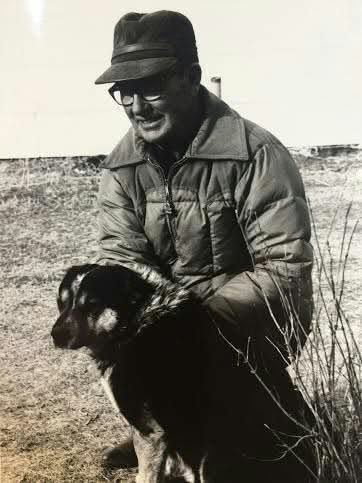
“I’m really disappointed, of course,” Hogg told WyoFile. “They might be gone. But just because they didn’t find them doesn’t mean they’re not there, either. I’m not saying all hope is lost.”
The Meeteetse rancher’s family name became synonymous with black-footed ferrets 45 years ago, when a blue heeler owned by his parents brought a dead weasel-like critter home. Subsequently, biologists found more than 100 other black-footed ferrets — presumed extinct for the two years prior — on and near the family ranch.
The exact cause of the ferrets’ absence during the surveys is unknown, but recently drought in the Bighorn Basin walloped their primary prey species, prairie dogs. In many corners of the West, there just hasn’t been enough vegetation growth to sustain strong numbers of the grass-eating mammals.
“We’ve heard a lot about deer, elk, pronghorn and cattle having hard times,” Gygli said. “It’s the same with our other herbivores. Prairie dogs also have to eat, and lack of [vegetation] coverage can result in low recruitment, which can result in downstream effects.”
For ferrets, those downstream drought effects are severe. They, too, haven’t had enough to eat. Indirectly, drought caused the numbers of rare mustelids in the world’s largest wild black-footed ferret population, in South Dakota’s Conata Basin/Badlands, to plummet from 250 to 70 animals between 2024 and 2025, according to biologist and ferret expert Travis Livieri, who studies that population.
“In my 30 years of doing this, I’ve never seen [drought] this bad, where prairie dogs failed to reproduce at a high rate,” Livieri said. “The prairie dogs don’t do well, the ferrets won’t do well.”
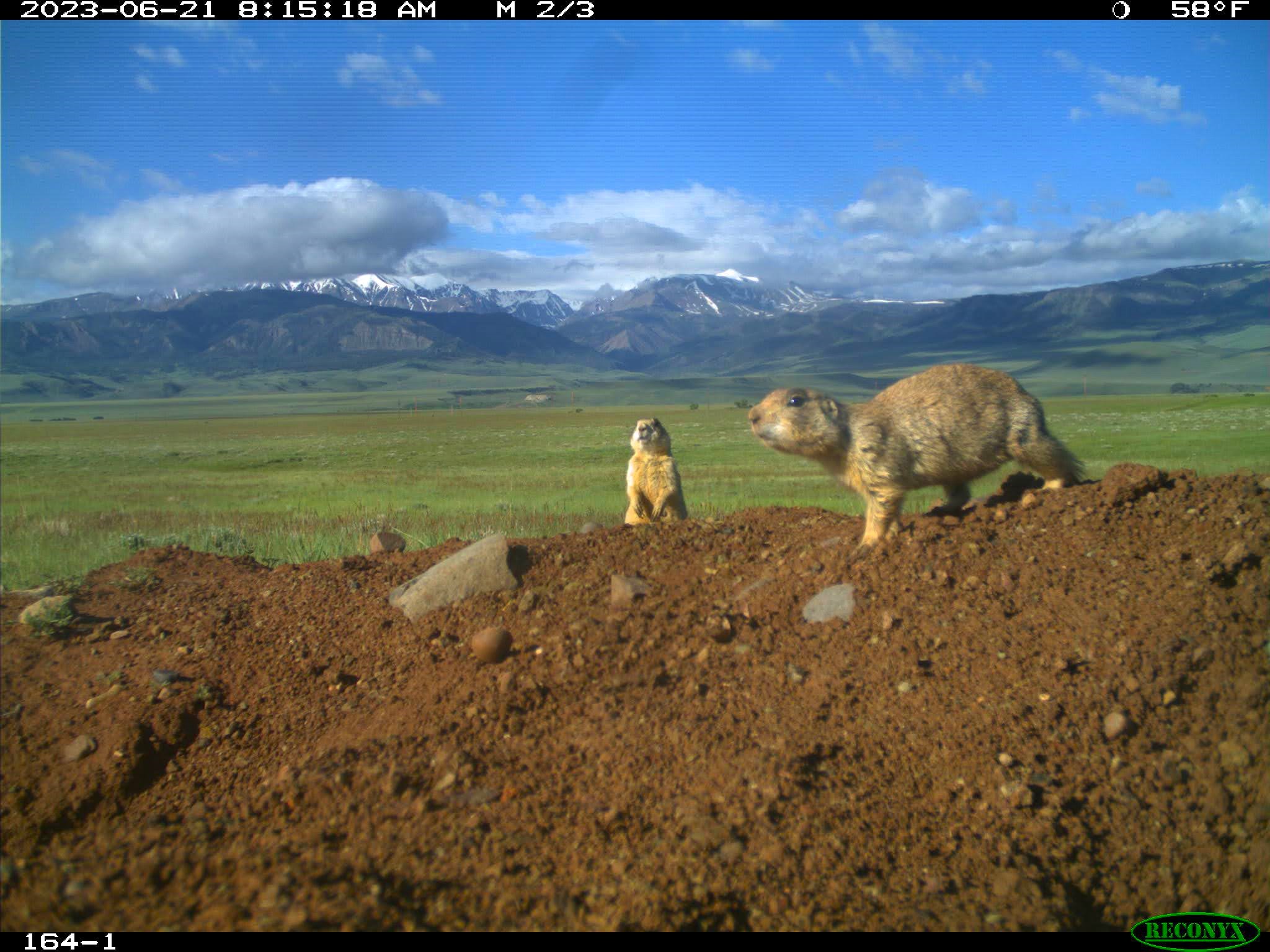
Prairie dogs in the Meeteetse area also continue to struggle, Gygli said. After the 2023 bout of sylvatic plague, Game and Fish surveys mapped prairie dog colonies and found only 3,800 acres in active use — down from the 6,000-plus acres that were mapped around the time of the 2016 reintroduction. Densities of prairie dogs per acre aren’t great, either.
The habitat conditions were bad enough for black-footed ferrets this summer that Gygli diverted 10 captive-raised animals that were going to be released in Meeteetse to the Shirley Basin, site of a rare ferret reintroduction success story. His rationale was that keeping ferrets out of the reintroduction area would relieve predation pressure on prairie dogs, helping them recover — and ultimately again support ferrets.
“There are prairie dogs there,” Gygli said. “They just need some time and some good conditions to come back. Rodents reproduce. That’s part of their strategy — they reproduce really quick.”
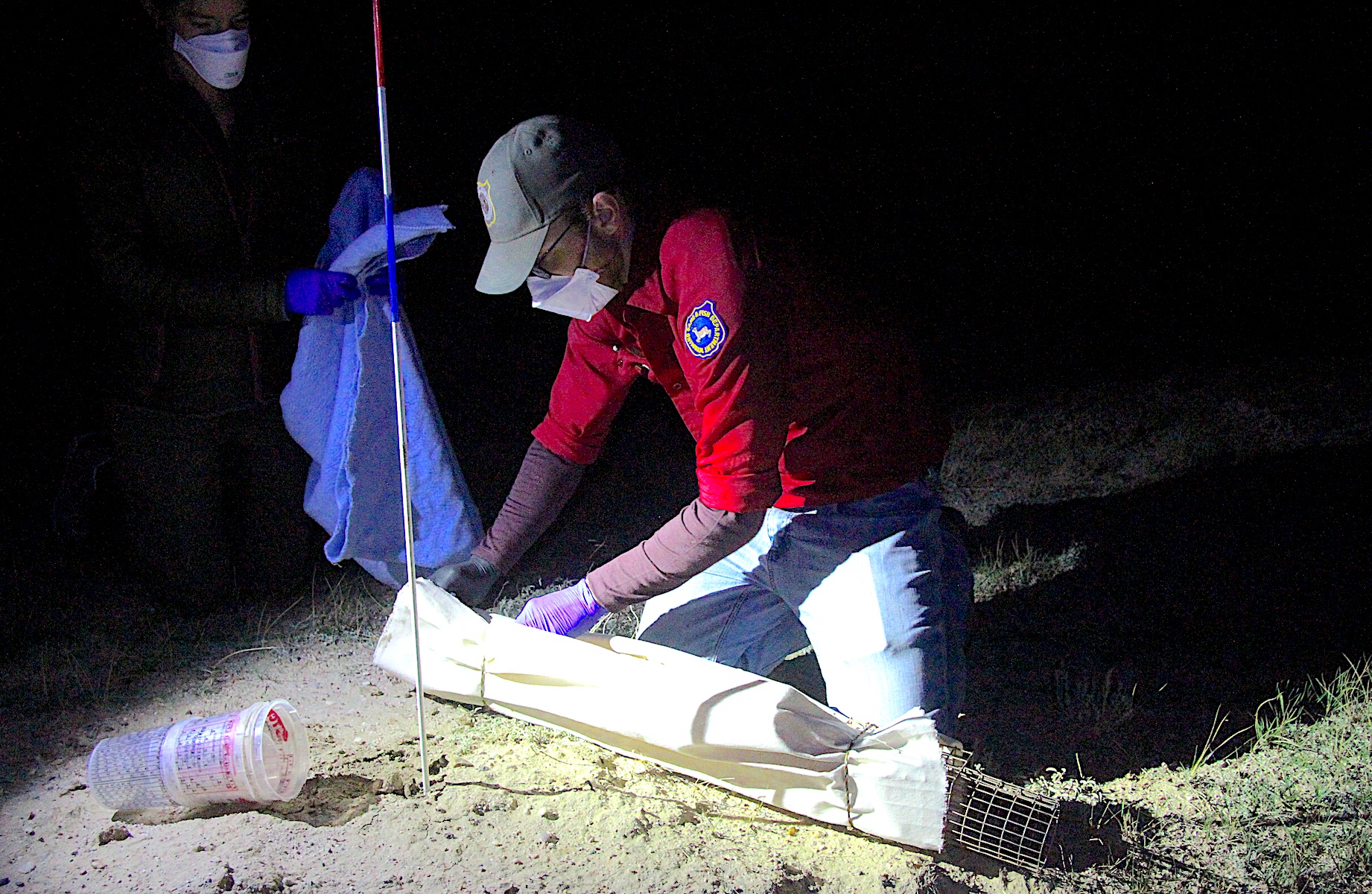
Wildlife managers are also assisting the recovery with prophylactic insecticide treatments to kill fleas and guard against plague. On average, they treat roughly 4,000 acres annually — a roughly $100,000 expense, with the lion’s share covered by the Bureau of Land Management, Gygli said.
For now, the Meeteetse reintroduction area might stay free of ferrets intentionally. The last time that happened, in 1986, there were wildly different circumstances. It was a rescue mission to save the species. Although the federal and state wildlife officials found 124 black-footed ferrets after Shep the ranch dog’s remarkable rediscovery, the population plummeted in 1985 from a combination of plague and canine distemper.
Retired Game and Fish Nongame Wildlife Supervisor Bob Oakleaf was on the front lines at the time, and he helped develop a contingency plan that outlined when wildlife officials should step in and whisk the remaining animals from the wild. Taking every last ferret into captivity from their only stronghold was a controversial decision, he recalled.
“There was a lot of blockage in the Game and Fish,” Oakleaf told WyoFile. “Back then, the Game and Fish really wasn’t oriented towards captive breeding.”
Then-Game and Fish Director Bill Morris halted the ferret capturing operation “halfway through,” he said, leading to a series of meetings. Oakleaf and others talked him into allowing them to resume.
“Thank God for the agreement on the contingency plan, because it allowed us to catch a few more ferrets,” Oakleaf said.
After the last known wild ferret, a male known as Scarface, was captured in early 1987, there were a total of 18 black-footed ferrets remaining in the world — all from Meeteetse. Ferrets didn’t return to the area for another three decades. They went back into the wild on the same private ranchland where they were rediscovered.
“All of the releases and all of the recovery efforts have all been concentrated here on our ranch and the Pitchfork,” Hogg said. “Lenox Baker, the current owner, was probably the most instrumental person in getting them brought back here — he really made the push.”
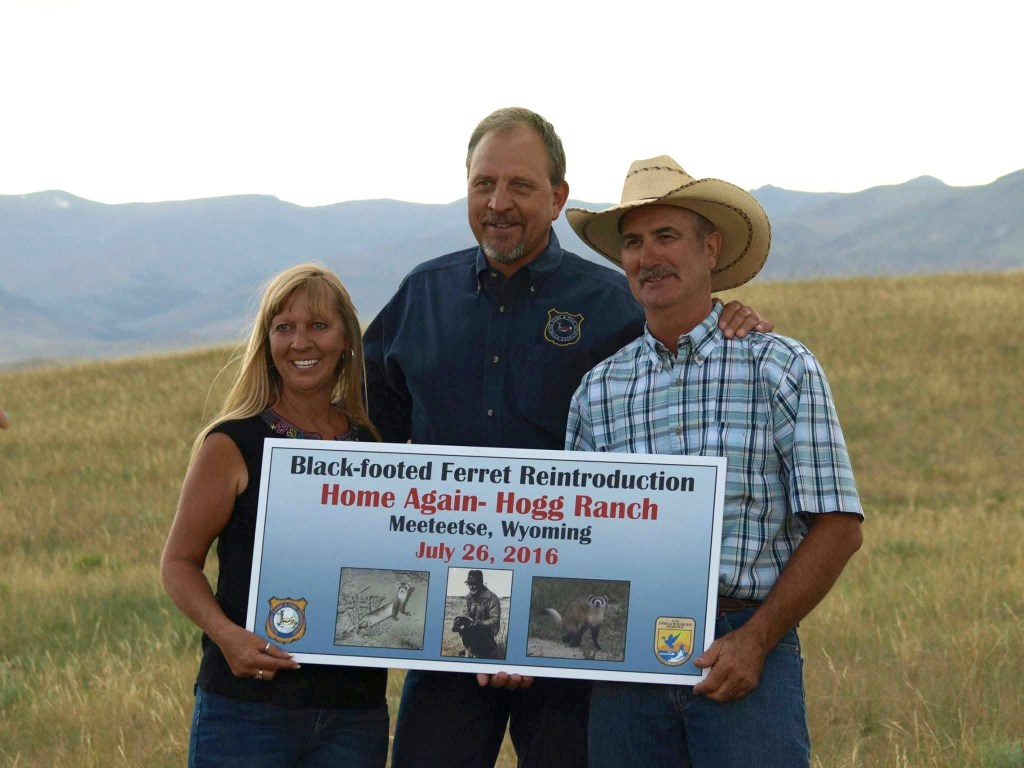
Hogg’s hopeful that the Meeteetse reintroduction area’s prairie dogs stage a comeback and the black-footed ferrets reappear — even if it takes continuous intervention.
“It might be a situation where, to maintain it here for historical reasons, we have to keep supplementing that population,” Hogg said. “Sometimes it just is what it is. You can only spend so much money on a project. If it doesn’t work, it doesn’t work, but we certainly hope it will work.”
There are some skeptics that Meeteetse will ever be home to self-sustaining ferrets. Oakleaf, the Game and Fish retiree, says he understands the desire to restore the historically significant population, but he worries that it’s just not the right place — it’s too small and has too much plague, he said.
“Everybody involved feels obligated to put them back in Meeteetse.” Oakleaf said, “But, man, I don’t know how you do it. It just hasn’t shown over the years that it could support a ferret population.”
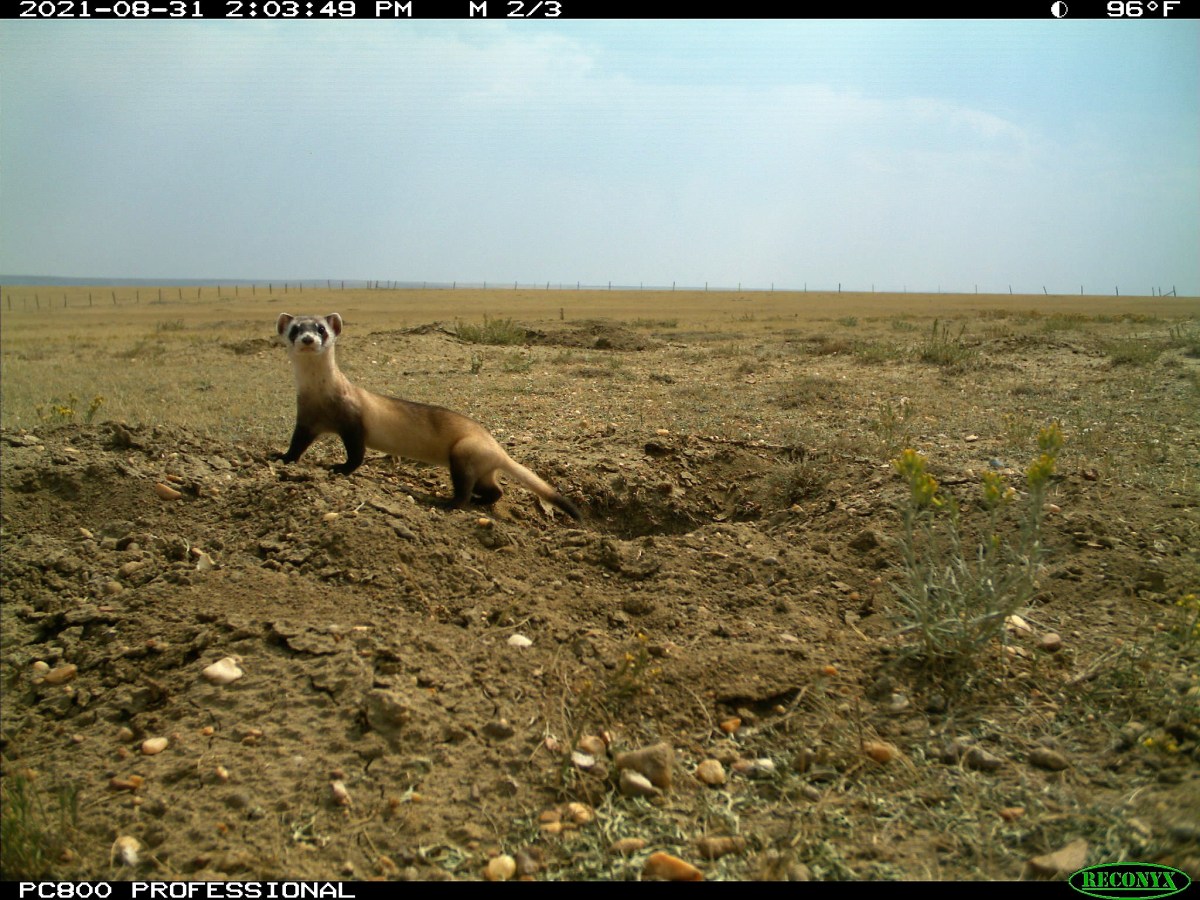

For now, the Wyoming Game and Fish Department is not giving up.
“This is a place that we’re going to continue to work on,” Gygli said. “It’s the place where ferrets persisted.”
In an ideal world, prairie dog populations would bounce back enough to support a captive-raised ferret release in 2027, he said.
