
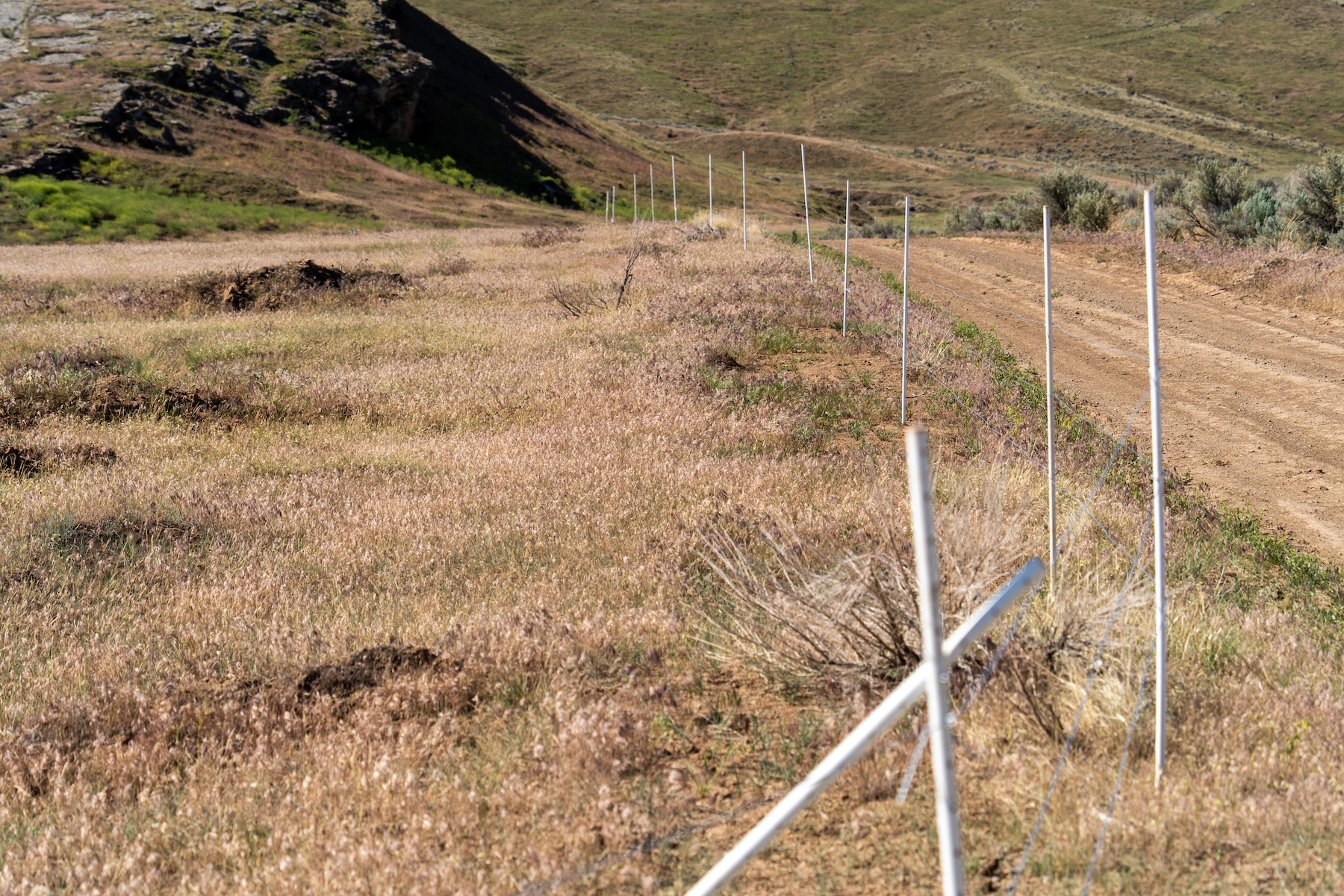

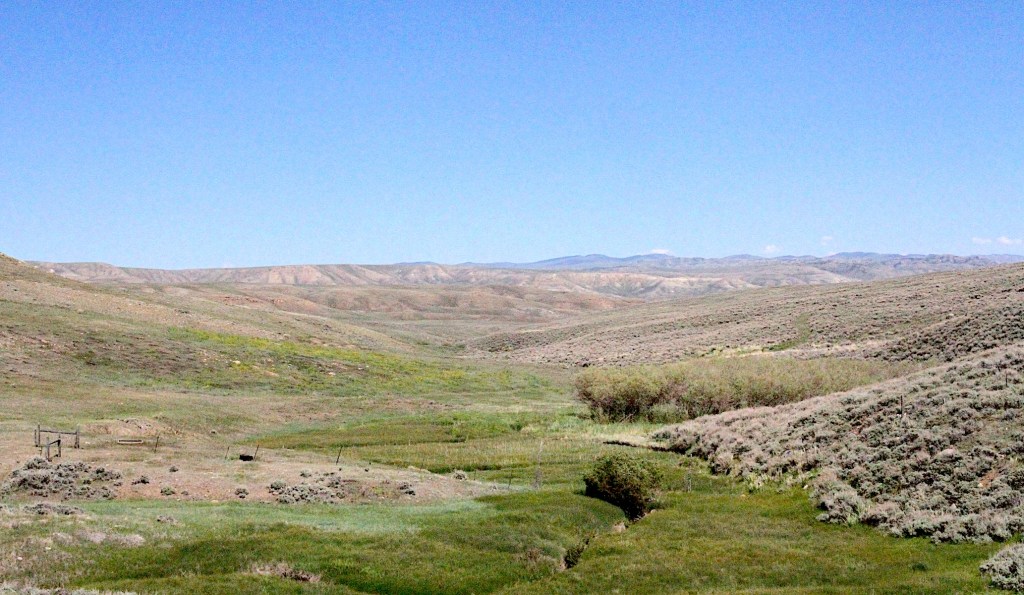
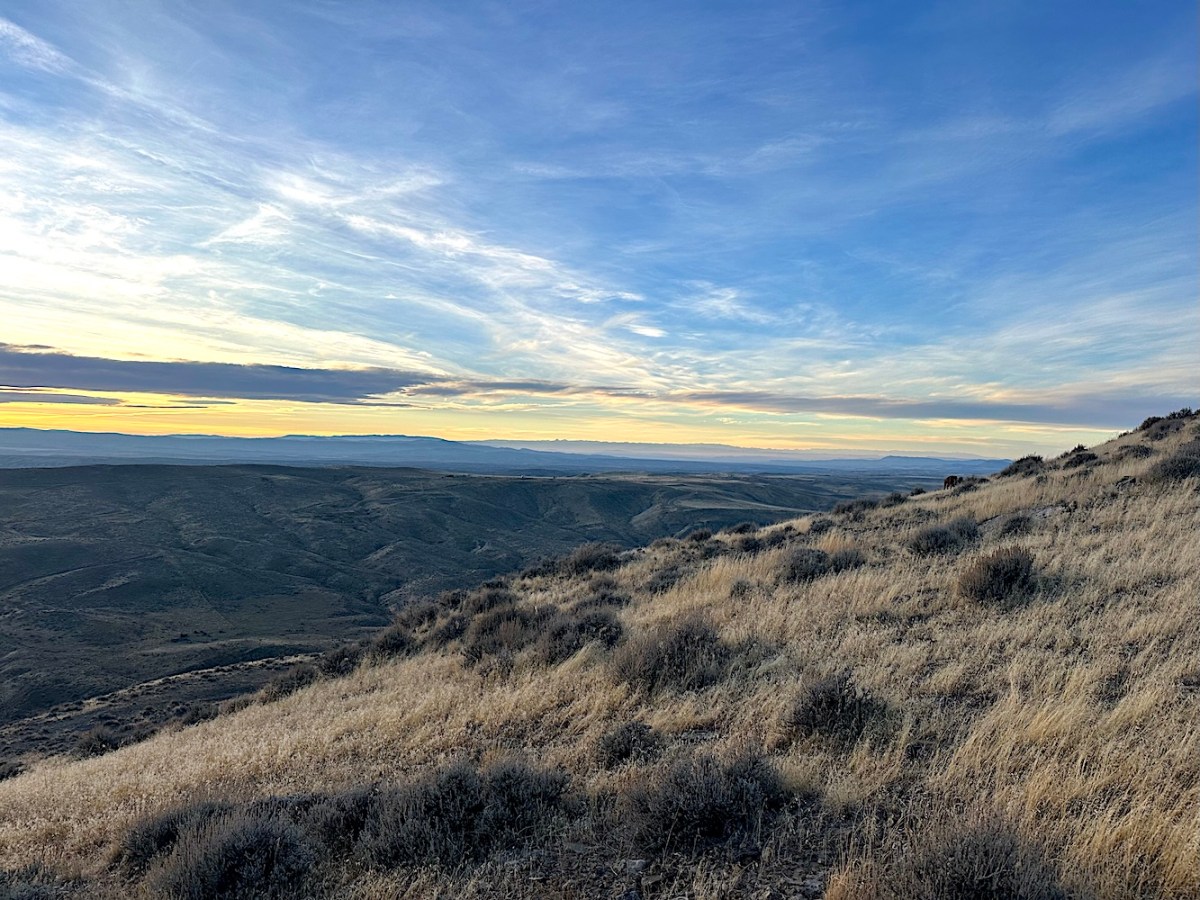
HOT SPRINGS COUNTY—As Derek Trauntvein traveled around the Bighorn Basin for his job with the new U.S. Wildland Fire Service this spring, the landscape looked so desiccated and browned out that it resembled late summer conditions.
“In a normal year, this would be lush green right now,” Trauntvein told a gathering of journalists last week in the 195-square-mile scar of 2025’s Red Canyon Fire. “June is the best time to visit the Bighorn Basin, because it’s green and beautiful.”
Not so in 2026.
On the heels of the warmest winter ever, which coincided with the sparsest spring snowpack on record, the normal green-up is absent, he said.
“Green-up is delayed, and in some places not even happening,” Trauntvein said.
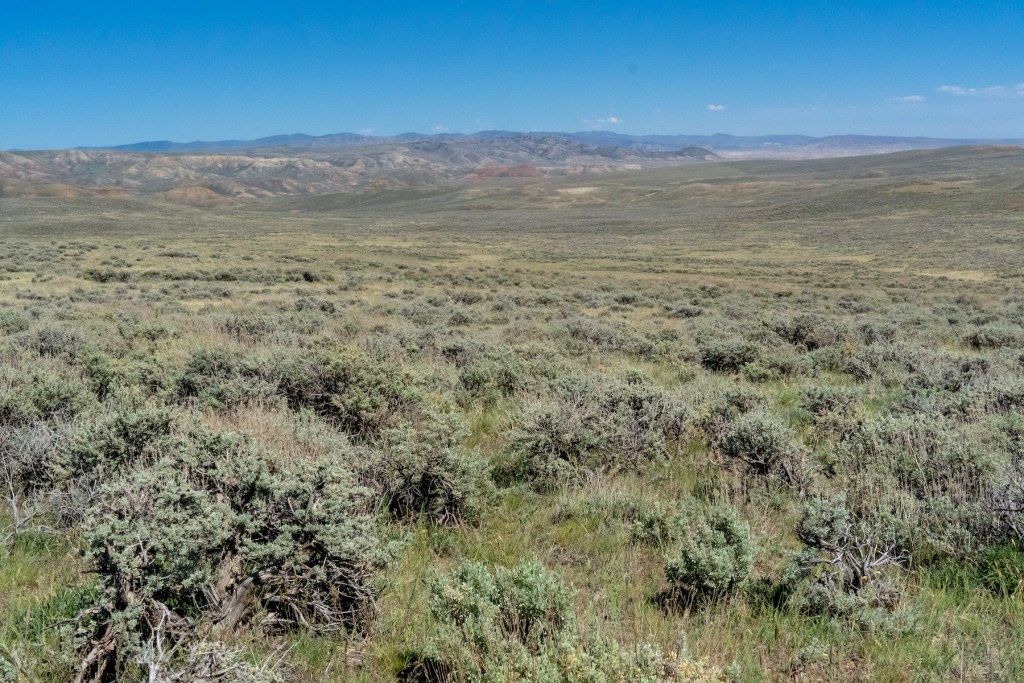
Measured moisture levels in the basin’s vegetation are at a July-like level, an indication that fire season’s probably going to come early.
“We may not grow anything to burn,” Trauntvein said, “but we still have a lot of residual [vegetation] from last year, and that’s definitely going to be problematic for this coming summer.”
The Bighorn Mountains foothills “look like August right now” and the cheatgrass he’s spotted is already drying out and especially concerning. When a cheatgrass-infested area burns and the nonnative grass dominates the fire scar, it’s then more prone to burn again, creating a feedback loop of more fire and more cheatgrass.
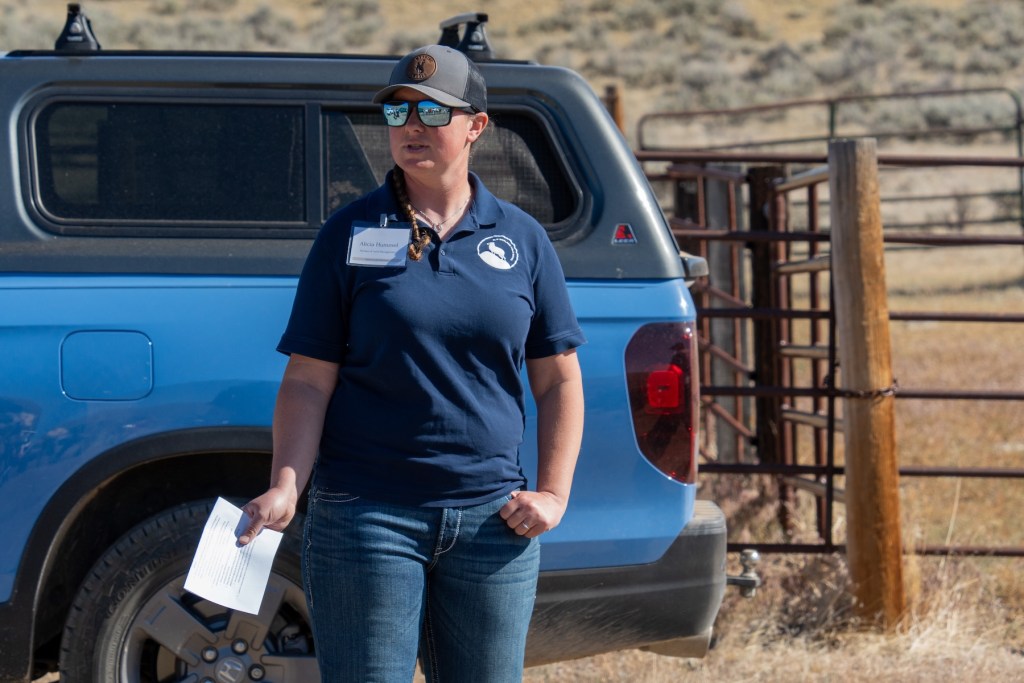
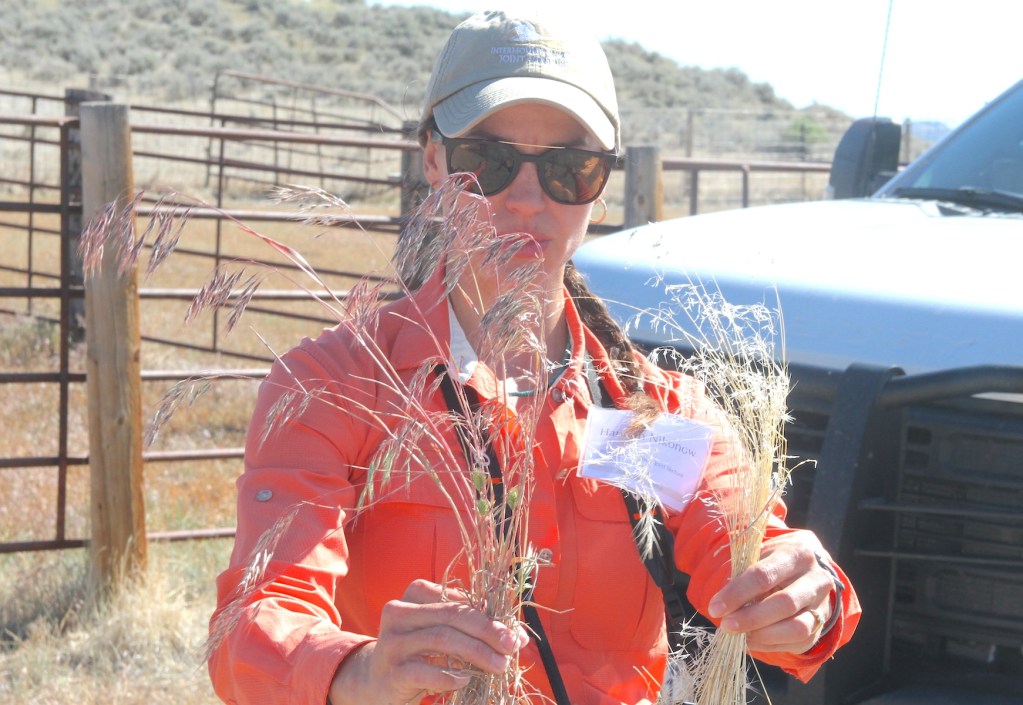
Those conditions are why Alicia Hummel called this spring’s persistent drought a “worst case scenario” for a landscape that’s still recovering from the Red Canyon Fire. Blueish perennial grasses that sprouted near the Bureau of Land Management rangeland manager’s feet were dominated by much-taller cheatgrass, an invasive annual grass that’s slowly overtaking Wyoming and the Bighorn Basin.
“Those should be outgrowing the cheatgrass right now,” Hummel said. “It’s just so stunted. We shouldn’t have the cheatgrass exceeding our [native] perennials.”
Native perennial grasses at only “a half or even a third” of their typical height and volume is a bad formula for the future of cheatgrass, which thrives in disturbed areas and especially burned landscapes. Native grasses can gain a toehold and help keep cheatgrass at bay, but that’s a less likely outcome when they’re being so clearly outcompeted.
The federal wildfire and land managers were gathered alongside state, county and University of Wyoming officials to teach roughly a dozen journalists, most from out of state, about the elaborate process of restoring rangeland after wildfire in a landscape where invasive grasses are already widespread. The outing was organized by Intermountain West Joint Venture, a Missoula-based partnership group that focuses on “people-centric” approaches to conserving western habitat.
More fire coming soon?
As the caravan of reporters, land and weed managers and scientists toured the burned swath of Hot Springs County, state officials were gearing up for what’s expected to be a “tough year” for wildfire.
“If you look at the drought monitor, you will see dark red,” Gov. Mark Gordon said on May 28 at an annual interagency wildfire briefing. “[That] means there’s a fire danger that is far higher than it’s been in a long time.”
Two weeks later, the entirety of Hot Springs County remains in “severe” drought, according to the U.S. Drought Monitor. Other areas in Wyoming have it worse: 15 of the state’s 23 counties included at least some areas where drought is considered “extreme.” Some blasts of spring snow and rainfall helped somewhat, but were not enough to pull areas out of drought, according to Wyoming State Forestry Division spokeswoman Melissa DeFrantis.
And so the wildfire season has already arrived, even in the western mountains. When roughly 250 acres burned near Sagebrush Flat west of Togwotee Pass last month, the Bridger-Teton National Forest experienced its largest May wildfire in history.
The grim outlook comes in the wake of two consecutive big Wyoming wildfire years. In 2024, the state confronted the second-most acres burned in its history, trailing only 1988.
Wyoming officials are fighting back against a future of more wildfires and more cheatgrass.
There was a bygone era when many Wyoming weed and pest districts threw in the towel and did nothing to interrupt the cheatgrass-wildfire cycle.
“For a lot of years in this state, for a lot of the counties — especially more heavily infested counties — [cheatgrass] was not on our priority list at all,” said Lindsey Woodward, the weed and pest coordinator for the Wyoming Department of Agriculture.
The mentality at the time, Woodward said, was: “We have no tools, we have no time, we have no budget, we’re not going to win — we’re just not going to [treat] it.”
Fighting back
That attitude has abated.
Nowadays, the Wyoming Weed and Pest Council facilitates massive efforts to address cheatgrass and other invasive annual grasses.
“We have, in the last 10 or so years, really really pushed for bigger landscape-scale projects — watershed-sized projects,” Woodward said.
During the last three legislative sessions, Wyoming lawmakers have fought over funding levels for spraying cheatgrass that enables those projects. Tens of millions of dollars have ultimately been made available after each fight. That’s helped, but experts say it’s still not enough to hold the line on invasive grasses that have already affected over a quarter of Wyoming’s landmass.
Partly that’s because of the exorbitant cost of spraying cheatgrass.
The most effective herbicide, Rejuvra, provides enduring protection against cheatgrass, but spraying quickly runs up a steep bill. Woodward used the term “staggering” to describe the per-gallon cost.
“It’s about $1,100 a gallon,” she said.
Largely for that reason, Hot Springs County Weed and Pest District Supervisor Heather Love applied for $9.8 million to treat the Red Canyon Fire scar.
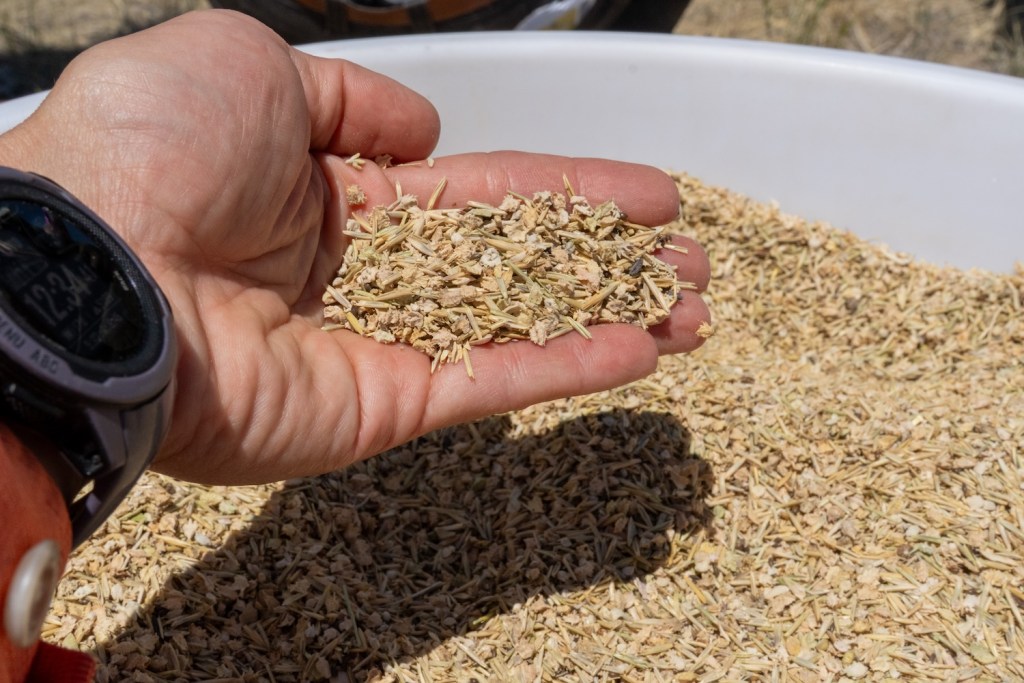
Some spraying is already underway, though there could be years of effort ahead before the restoration work is complete, Woodward said. Spraying blackened ground can be counterproductive, because it can also kill native perennial grasses trying to reestablish. Reseeding can also delay spraying.
“By the time you consider all of that … some of these projects are three or four years before you’ve completed the steps,” Woodward said.
Ultimately, the costly and complex landscape recovery efforts will help ranchers whose cattle and sheep graze within the Red Canyon Fire scar.
Out on the fire scar tour, the stewards of the V Ranch — where the blaze began — recounted confronting the wildfire and their experience helping the landscape heal in the 10 months that have since lapsed.
“Proper grazing is critical,” said Jim Wilson, whose granddaughter, Emme Norsworthy, will become the family’s fifth generation overseeing the ranch.
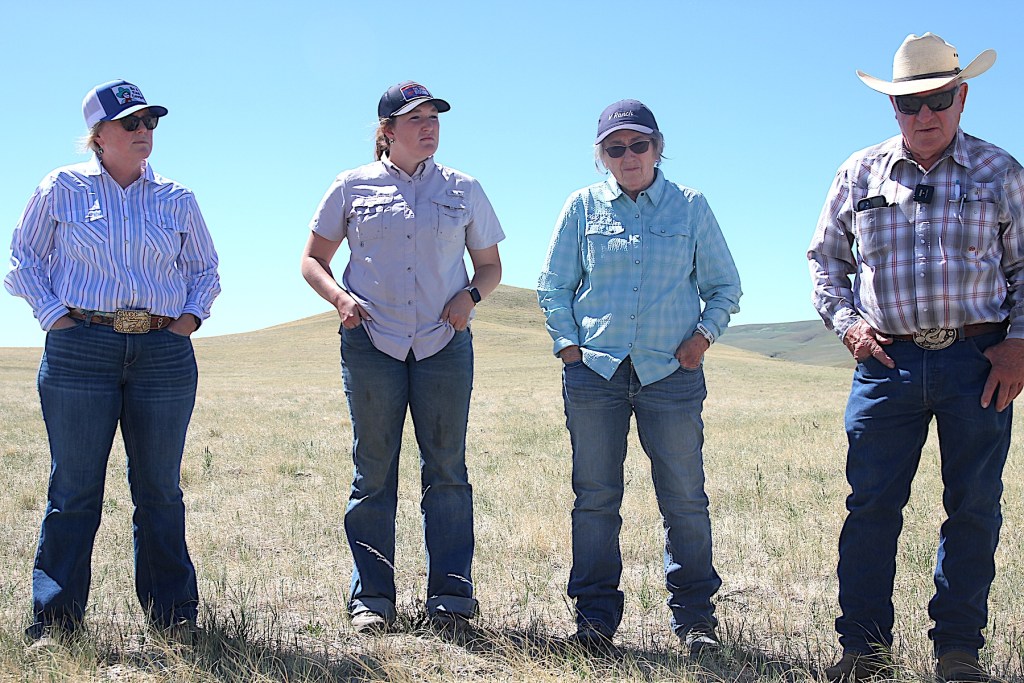
“The BLM is right,” Wilson said about the need to rest rangelands from grazing after wildfires, motioning to his own federal allotment. “That country will probably not get grazed for two more years. We’re gonna let it grow up, let it go to seed.”
Wilson was sanguine about Red Canyon Fire’s long-term impact on his ranch and adjoining allotments. The blaze could actually do some good for wildlife and cattle alike, he said.
“All old sagebrush is not good,” Wilson said. “They’ve got to have new sagebrush, they’ve got to have forbs.”
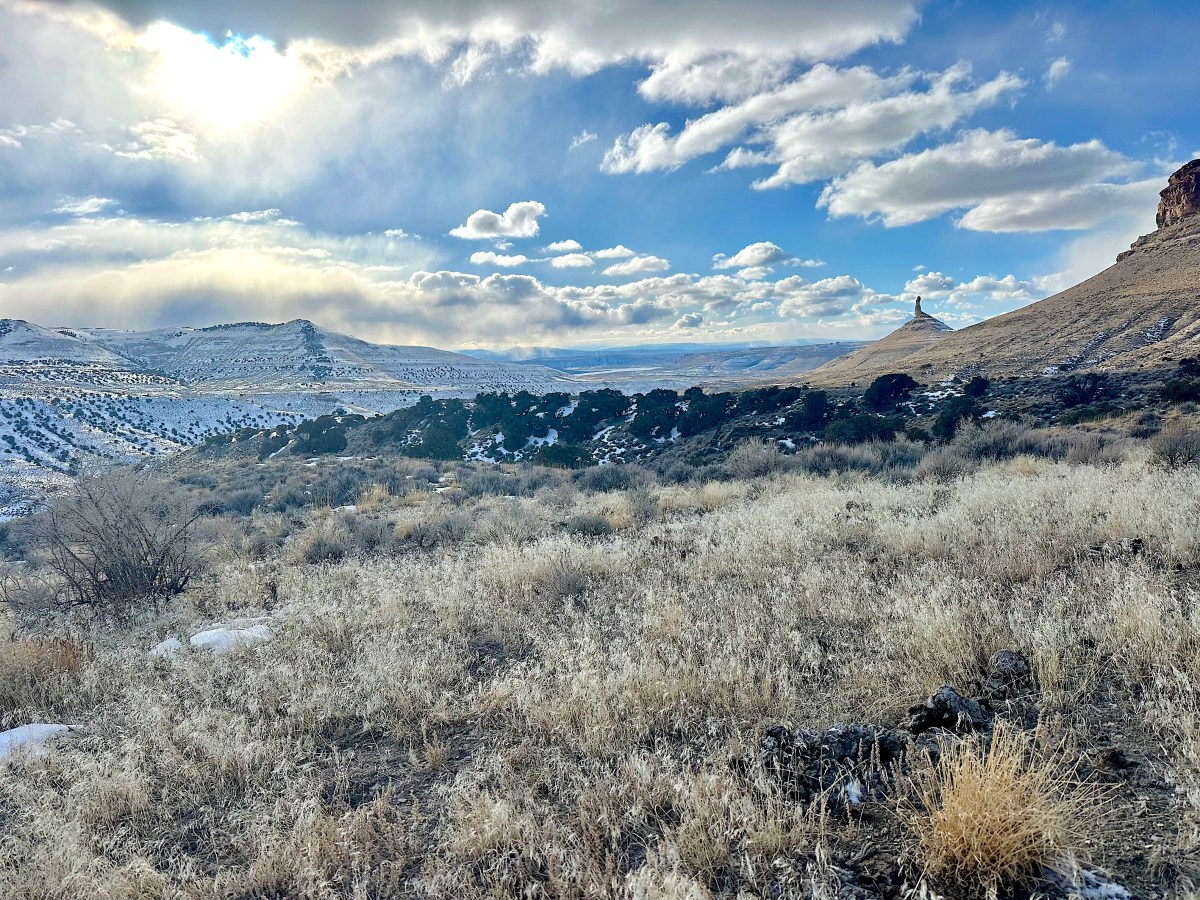
But to ensure the land’s productivity, Wilson, weed and pest professionals, the BLM, and others will have to make sure that cheatgrass doesn’t take over.
Ian Tator, the Wyoming Game and Fish Department’s statewide terrestrial habitat manager, spoke to how thresholds of invasive grass cover can make or break the habitat for mule deer. Cheatgrass coverage greater than 10% can cause the struggling ungulate species to avoid an area; 20% coverage can trigger habitat abandonment.
“We want to work really hard to not let it get to that point,” Tator said.

the coments prove yet another reason public land should be sold, Elon is right goverment is corrupt and ineficient, studies show 41% of public land is no good heres proof https://wyofile.com/grazing-blm-inaction-threaten-greater-sage-grouse-report-contends/ you wont see privat land abused like this, or at least transfer it tothe state, the state can manage it better than blm, the state doesnt allow overgrazing or cheatgrass
Your darn tootin’! Yes, the private ground is in excellent condition as the ranchers sure take care of their deeded tracts yet go full nuclear piling the cows and sheep cowboy hat deep on the B.L.M. leases, all under the supposed ‘watchful’ eyes of these BLM Range management specialists. The problem is that the agency and at least some of their employees have their thumbs stuck up their = = = = But, so darn tootin’ regarding your remarks about the State lands, many have been cow pounded to oblivion with down brome aka cheatgrass galore
First, transferring public land to state control would increase cattle numbers, not decrease them. Wyoming is required by law to manage state land for maximum revenue.
Second, there is some truth that certain ranchers treat their deeded lands better than our public lands, but overgrazing does occur on deeded land. However, it does not draw nearly as much attention because it’s not OUR public land.
Third, Wyofile usually does excellent reporting but the article cited in RC’s comment is not one of their better ones. Clayton Bolton’s very succinct comments for that article make it clear that a hard left leaning environmental group was deceptively attempting to pass off decades old data as current information to arrive at the 41% figure, in an attempt to further their stated agenda of eliminating ALL public land grazing. How ironic, that some hard RIGHT leaning groups are now using this deception provided by that hard LEFT environmental group to promote THEIR agenda to privatize public land! The reality is you can’t trust either extreme.
Myself and family recreate in the area of the Red Canyon fire, long before the flames even occurred and yes, the area showed a bunch of cattle, chewed down habitation and a lot of cheatgrass growing in the distressed areas. Not surprised at the level of devastation that occurred with the Red Canyon blaze. As one poster mentioned, the B.L.M. is the governing agency managing these lands yet some say they shouldn’t be culpable. There’ll be more fires in the future if they don’t change their management style.
Meanwhile – the range, through various reasons (including, aghast, too many cows and sheep for too long a grazing period) has been a yearly degradation. I hate to cast blame but the Bureau of land management IS the governing agency of these public tracts. The demise of the once great herds of mule deer and scads of sage grouse isn’t all just because of disease, over hunting etc. It’s the habitat, stupid and nobody with a right mind can claim that a range withered down to rocks, dry sticks and cow pies and livestock beaten down riparian areas are indeed good habitat. For those non believers, get off your computer and look or better yet walk around some of these tracts. If the BLM won’t take responsibility, who will?
What’s missing in this article is how the regional Bighorn Basin BLM office has looked the other way regarding some of the severe overgrazing that has occurred on public (BLM) lands. Overgrazing = Cheatgrass proliferation = Fire potential. Perhaps the author can press that BLM range management employee featured in this write up for an explanation of this allowed practice
KC, if you think grazing practices are the sole reason for cheatgrass proliferation or increased fire potential, then it shows your ignorance.
Perhaps the Jayner duo could enlighten not only Mr. Blair but the rest of us with their cheat grass wisdom
I’ll gladly enlighten you. The wildfires we will have this summer are due to many factors, including localized drought, climate change, fuels buildup from a century of fire suppression, invasive species such as cheatgrass, as well as management actions such as grazing which can either reduce or increase fire potential. KC is pointing to only one factor (grazing) while ignoring the rest.
There’s some things I dislike about public land grazing, but attacking one specialist for your perception of overgrazing throughout the “regional” Bighorn Basin is a dirty, cheap shot. Each specialist is responsible only for their assigned allotments, not the entire Bighorn Basin. Wherever it is that you are referring to, I’ll bet you have absolutely no clue who the permittee or range specialist is.
The Bighorn Basin has 2 BLM offices, and each office has several Range Management Specialists who cover a portion of each office. The areas that Alicia covers look very good, and she should be commended because I’m sure with the administration’s cuts that she has an enormous workload. It’s not fair to blame her for areas which she likely has no responsibility for or authority to manage.
Take a gander at the heart mountain area, oregon basin, mccullough peaks, etc if you want to witness years and years of over grazing, cheatgrass galore and all primed to burn. this under the supposed watchful eye of the cody blm office. kind of ironic that one of their ‘range managers’ would even show their face regarding the red canyon fire. land of multi use? no, land of mono use (graze baby graze)
Alicia hasn’t worked in the Cody Field Office for quite a few years, despite what the caption in that picture says. She does not cover any of those areas. Your reply is a perfect example of the ignorance that I described in my other comment.
Ha! Judging from some of the comments eluding to the areas you mentioned are actually in pristine condition due to the diligence of the local management agency (hi Gloria!), it’s proof solid that some people just don’t get out. I’m in Powell but often drove the highway between Cody and Greybull last winter, 100’s if not 1,000’s of cows on both sides of the road, munching on who knows what because the ground was pretty much gnawed down to the rocks. Instead of the native shrubbery and bunch grasses, now there’s a resurgence of that purple cheatgrass.
She is the range specialist for my cousin, and works in Worland, not Cody. A super-nice gal who knows her stuff. It’s sad that the comments section has degraded into accusations and finger pointing.
Yeah, I don’t see how you can blame someone for perceived mismanagement in the Cody BLM office when they don’t even work there.
??? Uh, what are you talking about? If I’m on the right track here, an individual being discussed does indeed work out of the Cody BLM office. ST Larsen, by far you’re not the only one who’s noticed the livestock induced damage on the public lands adjacent to Hwy 14-16-20 from Cody to Greybull