


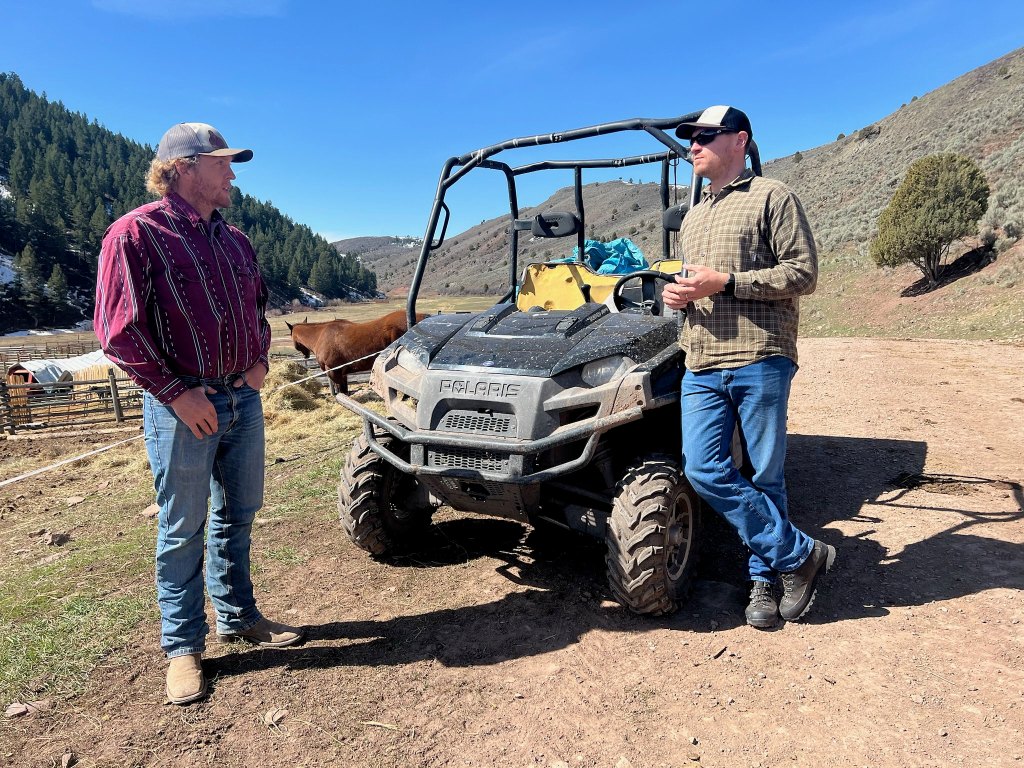
Like plenty of other Wyoming stockgrowers, Luke Lancaster is an outdoorsman who appreciates seeing wildlife on his Star Valley ranch.
There’ve been exceptions. A hefty herbivore that runs in big herds, elk, are notoriously hard to live with for cattle ranchers whose bottom line depends on the volume of grass growing on their rangeland and having enough hay stacked up to get through the winter. On top of that, the native ungulates can transmit the disease brucellosis to cattle, and vice versa.
So, until recently, elk were more of a headache for the fourth-generation cattleman who runs Lincoln County’s Spring Creek Ranch. His reaction upon seeing them: “Oh, shit.”
“This winter was the first time I’d seen them where I was like, ‘Oh, that’s cool,’” Lancaster told WyoFile.
What changed?
Ahead of this winter, Lancaster struck a voluntary, incentive-based deal with a conservation group, the Greater Yellowstone Coalition, to allow elk on his property southwest of Afton. Paying landowners to benefit wildlife isn’t new: Providing habitat is a big part of the very concept of conservation easements. Take, for example, compensation programs for California rice farmers to keep fields flooded for waterfowl.
But there’s a novelty and timeliness to what the Bozeman-based nonprofit has dubbed “elk-occupancy agreements.” As the chronic wasting disease epidemic ramps up in a corner of Wyoming where it’s expected to have especially devastating effects, pressure is building for the Wyoming Game and Fish Department and U.S. Fish and Wildlife Service to abandon a vector for infection, the century-old system of feeding elk.
“The real goal is to facilitate closing feedgrounds and to create a model to show ranchers who have properties: Here’s an option where you can get paid,” said Steve Sharkey, director of the Knoblach Family Foundation, which funded the Spring Creek Ranch elk-occupancy agreement.
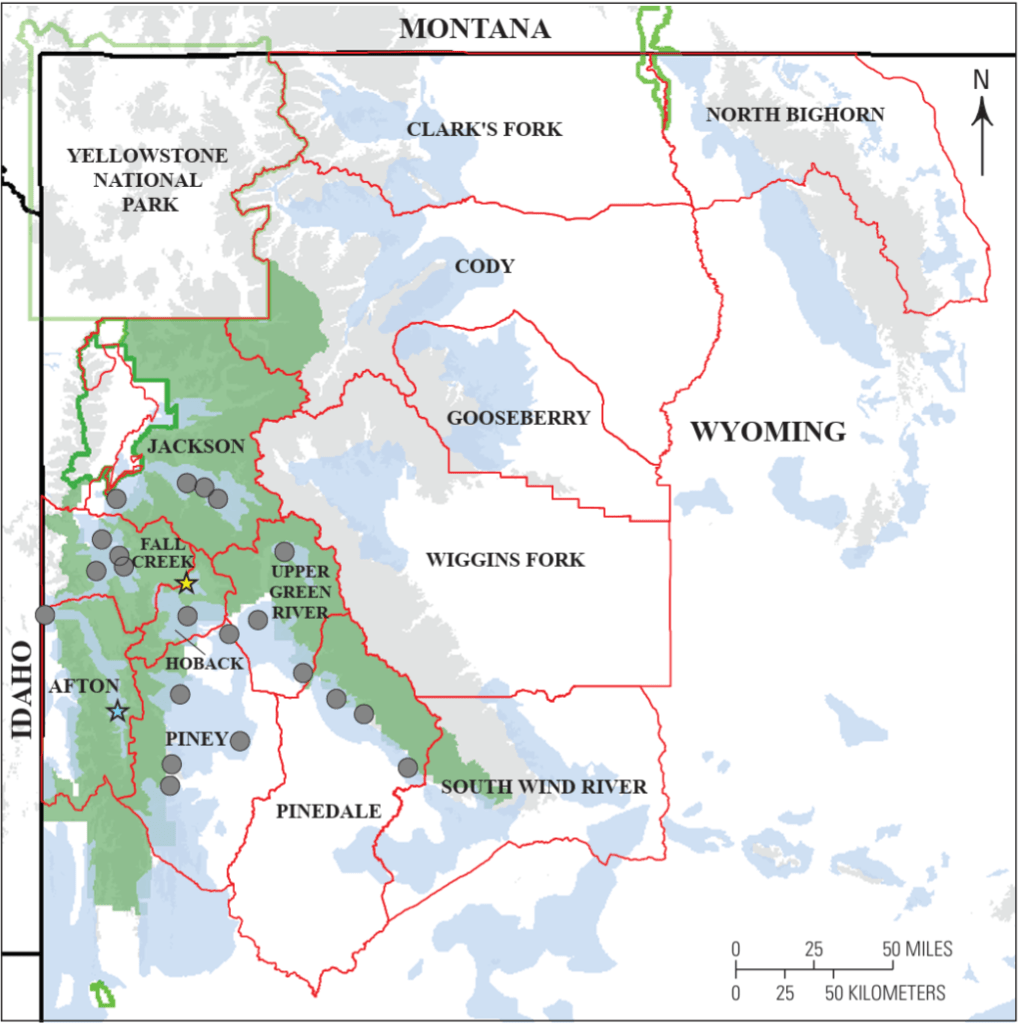
The situation in southwestern Star Valley is in a way a trial run at the broader initiative. Over the next three or so years, Game and Fish will be reviewing all of its 21 feedgrounds and exploring opportunities to change or even do away with them.
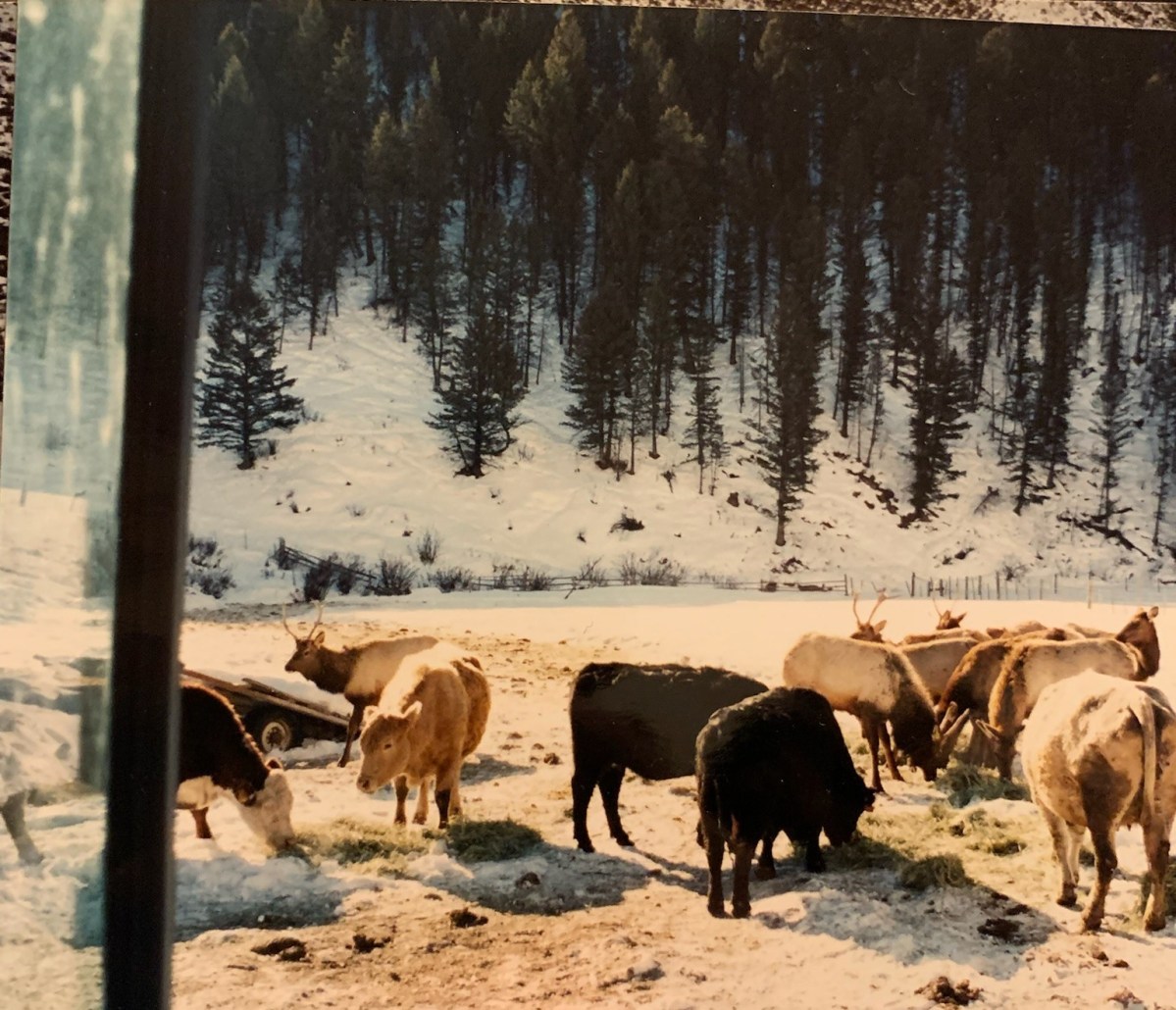
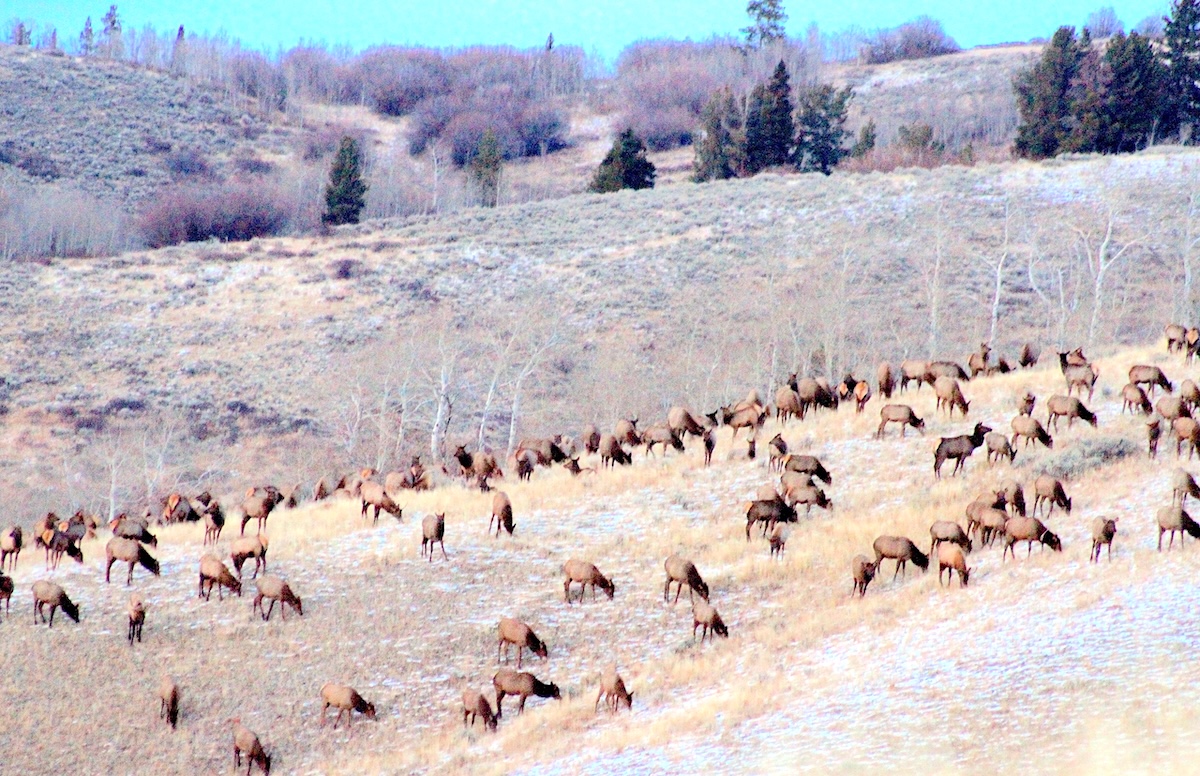
There was never a permanent feedground on or immediately adjacent to Lancaster’s Spring Creek Ranch, but it was an on-again, off-again feeding site in emergencies. The last time Game and Fish threw hay there, during the cold, long winter of 2022-’23, some 250 elk were holed up on the property.
Even when the feeding stopped last winter, he said, they had to “fight” 50 to 100 head of wapiti that returned to his land. A lot of that fight was left to Game and Fish, whose staff go to great lengths — even using drones — to haze and even kill elk deemed a nuisance.
Wyoming Game and Fish personnel weren’t available for an interview on Friday, but the state agency’s staff has been critical to making the Lincoln County deal happen. A warden, James Hobbs, put Lancaster in touch with the Greater Yellowstone Coalition. The agency’s Jackson Region wildlife management coordinator, Cheyenne Stewart, also played a big role.
“I was skeptical, but Cheyenne talked me into it,” said Sharkey, the funder.
How it works
Going into the winter of 2024-’25, Lancaster was already thinking of trucking his 250 cow-calf pairs to Utah pastureland to spend the winter. “[I]t looked a lot better than having them here in this -40 degree hellhole,” he said.
The deal cut with the Greater Yellowstone Coalition reimbursed him for about half of the transport costs, a roughly $10,000 savings. On top of that, the organization vowed to chip in on the cost of feeding his herd over the winter.
“It costs about $56,000 to winter the cows,” Lancaster said, “and it cut our feeding bill in half.”
The agreement also covered some modifications to Spring Creek Ranch, both its infrastructure and management.
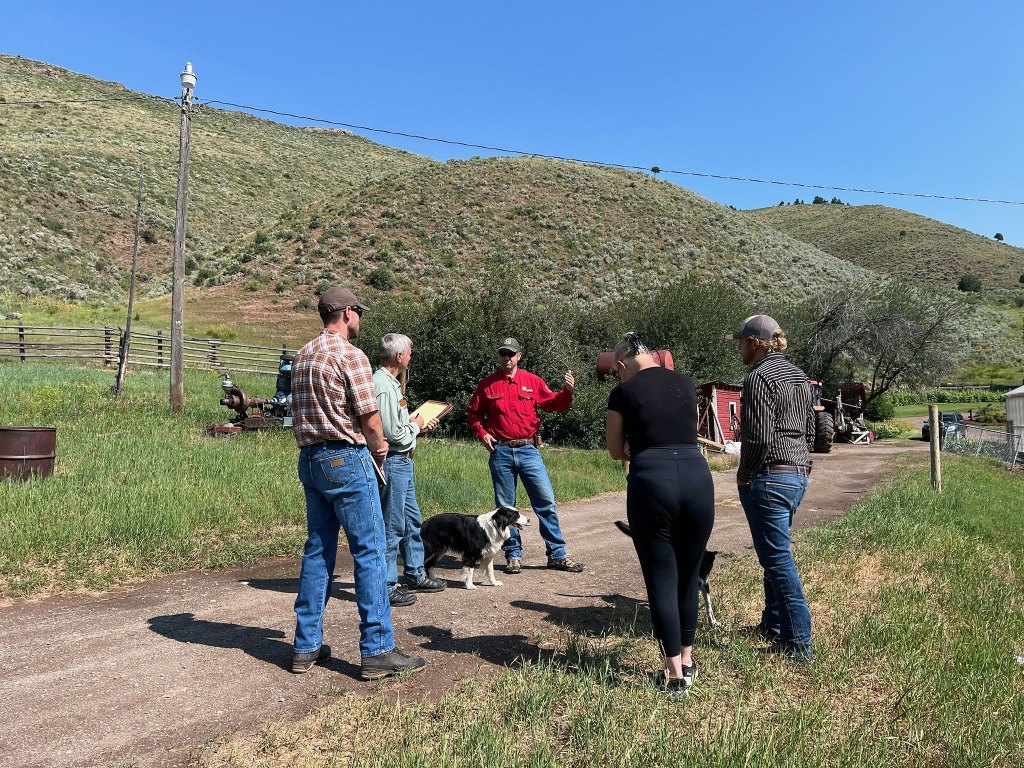
There was also a cost-share around retrofitting about a mile of fencing with “let down” features — a modification used for terrestrial wildlife and also avian species like sage grouse.
“It can be removed and put down during the winter months, so elk can move through,” said Teddy Collins, the Greater Yellowstone Coalition staffer who worked most closely with Lancaster. “And then the fence can be put back up during the summer months to keep cattle down in the irrigated pastures.”
The final component of the deal is being called a “standing forage incentive.” Essentially, Collins said, Lancaster is being compensated to not graze cattle on high ground that Game and Fish has identified as “crucial winter range” on the ranch during any part of the year. Elk, in turn, have that vegetation to browse and graze on during the winter.
Collectively, it’s a good chunk of change for Lancaster, who has a keen interest in keeping his ranch going in an agricultural community that’s losing its longtime identity to real estate development. Star Valley “has a clock,” said Lancaster, but on his own land he wants to slow down the hands.
“Every field’s getting developed, it’s kind of turning into Jackson,” he said. “This has helped us financially to be able to grow the herd to a [size] where we can actually live off of it and support the ranch. Hopefully, my kids will want to take over, and continue on with them.”
Scaling up?
Spring Creek Ranch’s elk-occupancy agreement isn’t the first of its kind. In northwestern Wyoming, the Greater Yellowstone Coalition and LegacyWorksGroup first put the concept into action back in 2018.
The first couple of agreements were struck with some of Jackson Hole’s few remaining ranchers. Sharkey has been involved since the early days. He learned of the concept while out hunting with now-colleague Steve Kallin, who was then managing the National Elk Refuge, which had been trying, with difficulties, to scale back its feeding program.
“It was kind of like a short-term easement,” Sharkey recalled. “They were just being basically paid to allow elk presence in the spring.”
The first deals were with a ranch in Spring Gulch, which is a valley adjacent to the federal refuge where elk consistently have been considered too numerous. Another was with a small ranch on the Snake River’s west bank that’s also struggled with elk. Unrelated to feedgrounds, the Greater Yellowstone Coalition and Property and Environment Research Center have also brokered elk-occupancy agreements in Montana’s Paradise Valley.
But to date, it’s still a pretty niche endeavor in terms of the broader landscape and elk management in the feedground region.
“It’s a nothingburger, at this point,” Sharkey said.
Although the Greater Yellowstone Ecosystem is famously public land-dominated, there’s still a lot of private ground — many millions of acres — that elk herds rely on to survive, especially in the winter. There’s even been research quantifying how much unprotected private land each of the Yellowstone region’s 26 elk herds depend on to survive. (The Afton elk herd, which dwells on Lancaster’s Spring Creek Ranch, is actually one of the least private land-reliant herds.)
“There’s definitely a scalability challenge,” said Arthur Middleton, a University of California-Berkeley ecology professor. “If it’s going to be a broader-scale solution, it needs a lot more resources.” (Disclosure: Middleton is married to WyoFile board member Anna Sale.)
That could come from philanthropy, which is how it’s working so far. Alternatively, state and federal agencies could take a wildlife management tool that began as a niche, donor-funded program and scale and fund it themselves, Middleton said.
There’s a blueprint for that in the Yellowstone region.
“In the early days of wolf recovery, there was a time when [livestock damage] compensation was novel — an innovation that Defenders of Wildlife was doing with private money,” Middleton said. “Now we think of it as standard practice.”

Sharkey’s brain is in the same place.
“If this could be scaled up, we would hope that Game and Fish would take it over,” he said. “Instead of buying hay to feed elk, they could reallocate those dollars to paying ranchers to allow those elk onto their properties.”
If Wyoming hypothetically diverted all of its elk-feeding funds, it’d be a good chunk of change. Game and Fish’s elk feeding program had a $3.1 million budget as of 2022, according to its feedgrounds management plan.
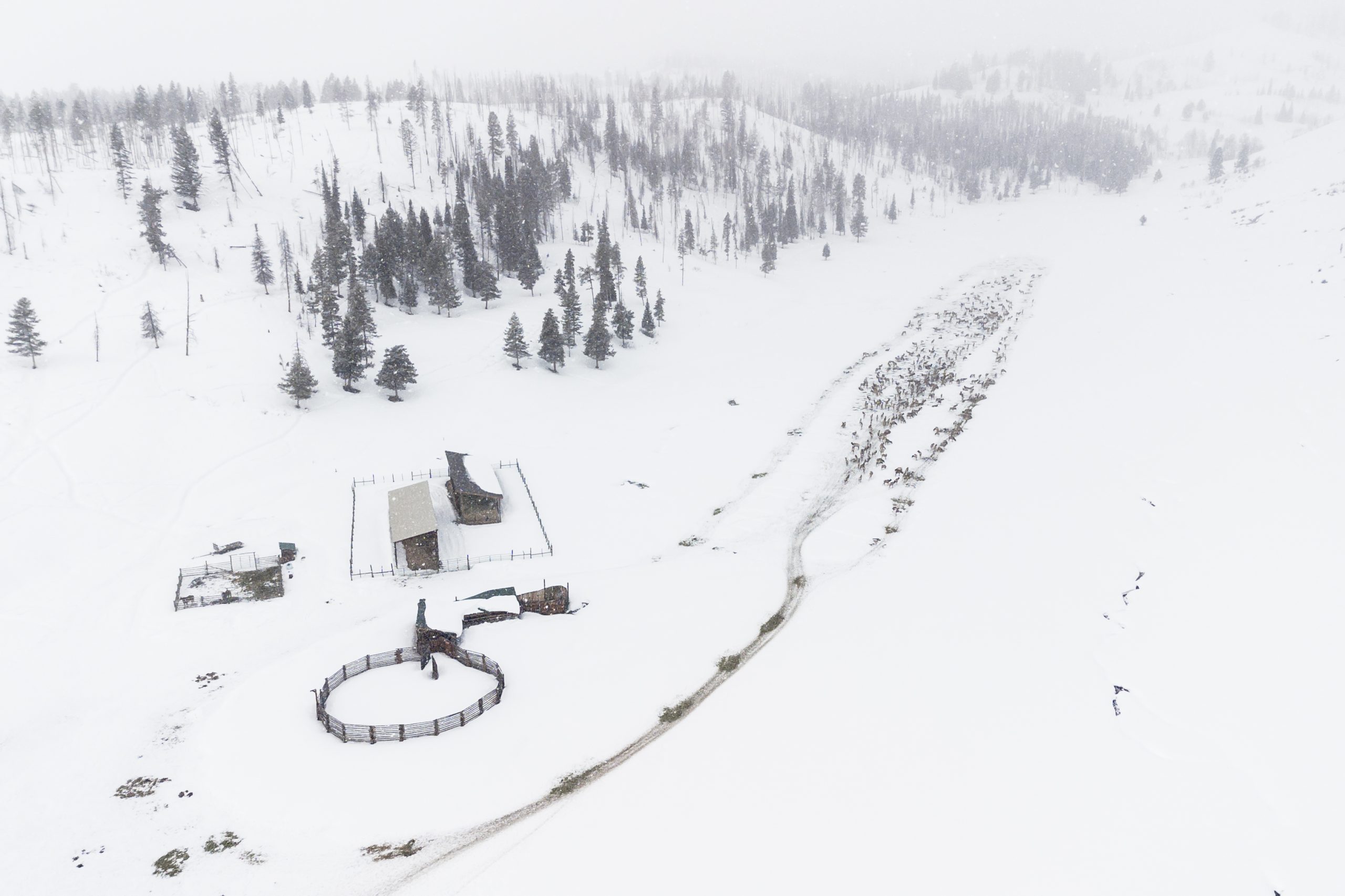
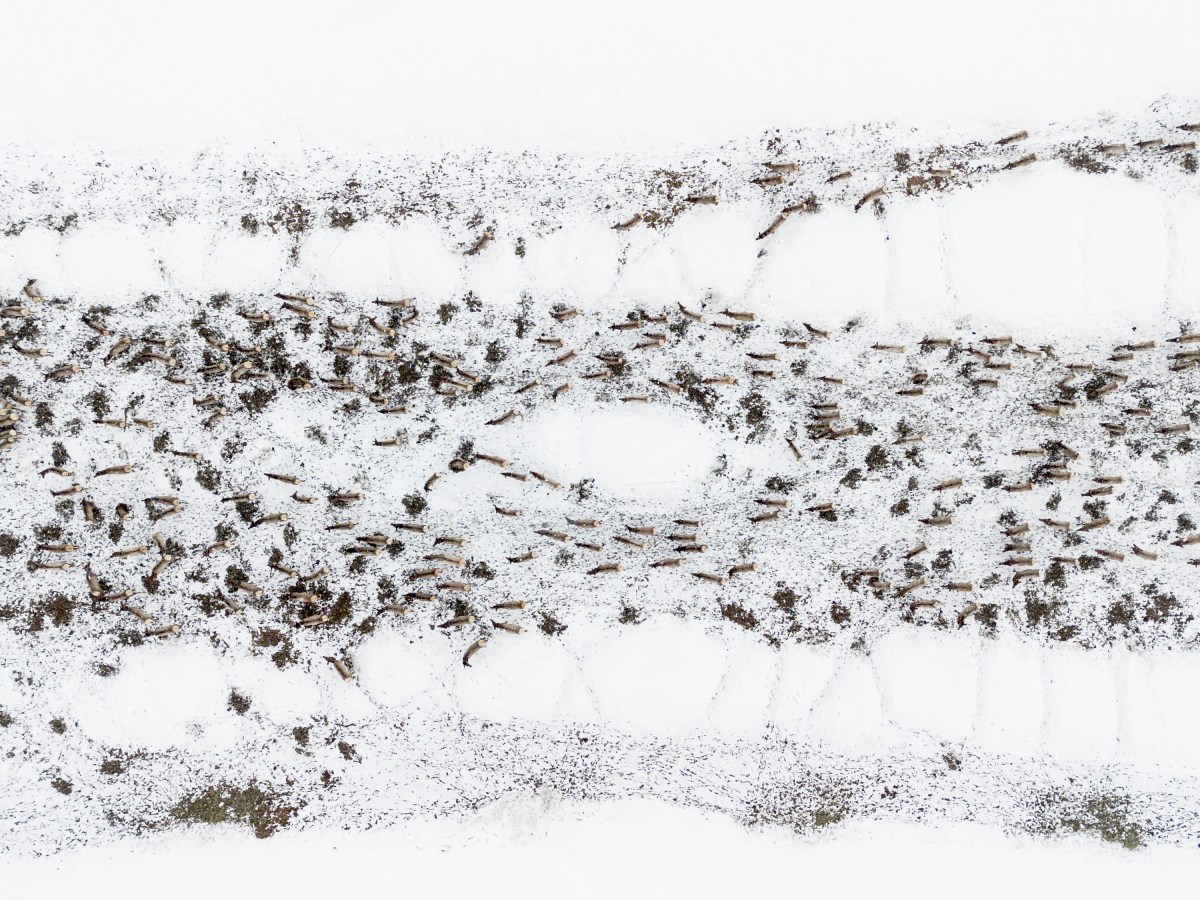
The drone must have startled the elk off the actual wide-apart feed lines to move into the center of a large meadow. Watching the Dell Creek elk over many years, this is not their typical behavior. If you look closely, you can see the feeders have scattered the hay in large separate clumps.
About twenty-five years ago, at a wildlife management conference, I discussed this issue with a former classmate and fellow wildlife manager, now deceased. At the time, he was an administrator for wildlife at Wyoming Fish and Game. Montana, where I live, had just passed a citizen’s initiative to prohibit new game farms and more closely regulate existing ones. My colleague lamented that he wished Wyoming would do the same thing and also do away with the artificial feeding grounds for big game. His concern was that a major disease outbreak was bound to occur with devastating impacts on elk specifically. Sadly, my friend’s nightmare has come about in Wyoming. I hope that the state agency and the people of Wyoming finally realize the negative product of this well-meaning, but bad solution to their elk management actions.
Technically, game farming by private entities is illegal in Wyoming. Note from Chapter 10 of the Wyoming Game & Fish Commission Regulations:
Section 6: “Illegal Importation/Possession of Warm-Blooded Wildlife. Live warmblooded wildlife imported or possessed in violation of this regulation or live warm-blooded wildlife illegally taken from another jurisdiction shall be considered illegal in the state of Wyoming and may be held in quarantine at the owner’s risk and expense and may be destroyed subject to an order from the Department. The owner or owner’s agent shall not allow said wildlife to be moved, released or allowed to escape, and shall be held subject to the order from the Department.”
Section 18, paragraph e: “Applications to possess North American elk (Cervus Canadensis) shall only be accepted from governmental entities, or any accredited college or university for education or research, or to meet Department wildlife management goals, when a need is demonstrated by the applicant. All elk shall be tested prior to importation following procedures listed in Appendix I of this regulation to determine that animals are not hybrids. Prior to issuance of a permit, the permittee shall provide the Department with test results. Only elk of the subspecies canadensis, nannodes (Tule elk) and roosevelti (Roosevelt elk) may be permitted for importation, except the Wyoming Game and Fish Commission may consider an application for importation or pssession of other subspecies of elk by governmental entities or any accredited college or university for education or research, or to meet state wildlife management goals when a need is
demonstrated by the applicant.”
It is true by any scientific metric that Wyoming’s elk feedgrounds pose the same disease and health risks of commercial game farms from the high densities and artificial feeding regimes. But science is irrelevant when politics reigns.
https://wgfd.wyo.gov/media/27666/download?inline
Dale, 25 years ago, hunters harvested 2 times as many elk in the North Jackson region, and calf to cow ratios were 3 times what they are today. The total elk population was far greater, especially the long distance migrators south yellowstone, etc.
No disease brought that destruction over 25 years. Wolves and Grizzlies did, just like the N. Yellowstone herd in Montana.
The die off has been going on for over 2 decades now, and you people keep focusing on a disease that has killed a handful of animals.
Ahhhh, so true, but we love wolves and bears so we must not even consider lots of them being a problem for the elk (and moose) herds. That leaves disease to be concentrated on.
Oh the big bad wolf.
Not a novel approach–paying ranchers and farmers for conservation efforts goes back to the American Game Policy of 1930, largely written by ecologist, conservationist, and sportsman Aldo Leopold, best known for his classic Sand County Almanac, published in 1949, as well as his textbook Game Management, published in 1933. These kinds of payment policies are described as “incentives” to achieve conservation goals. They sound good on paper, as does this project, but they generally don’t work at the large regional scales that are necessary to protect wildlife and wildlife habitat, for a number of reasons. I wrote and presented a paper in 1999 on this problem at a University of Wisconsin conference on “Aldo Leopold and Conservation on Private Lands.” I can send it to anyone who’s interested.
In these areas Wild horses should be brought in. They can graze down the infected CWD forage. Wild horses do not get CWD and if you look at CDC maps where wild horses are there are the lowest levels of CWD
Finally some common sense and realization of the contributions ranchers make when hosting the public’s elk. Tens of thousands of head of wild horses are being fed by ranchers in a multiple state region so the precedence has long been established. Imagine the difference it would have made if someone had compensated the ranchers and property owners in the two Horse Management Areas in the checker board where the wild horses are being removed because they were grazing on private land – it would have been cheaper to compensate the RSGA for hosting horses rather than removing them – and some of those horses are the wonderful curlies. But no, rather than work together, it went through Federal court where the BLM and RSGA won. And, private property owners are hosting the publicly owned grizzly bears in portions of Wyoming and Montana where again, compensation must be paid for animal damage depredation. Obviously, this is an evolving matter and its taking some time, but its starting to work itself out. A lot of the under lying principal is based on private property rights and not everyone looks at it from that perspective.
Ok, all for it. I’m also all for charging livestock growers a grazing price that at least pays for the management of said livestock growers.
Generally this looks positive — especially from this of us who have been questioning disease spread from feeding congregations for a long time. But from the perspective that CWD may have entered our ungulate herds from the co-penning of sheep — scrapie prion vectors, and mule deer in Colorado. Let’s hope cows don’t infect elk with something else.
Calf to cow ratios of 15/100 or lower is going to continue to kill of the GYE elk herds faster CWD ever could. For years now that ratio has been at that unsustainable level, and herd population continues to plummet.
Mike, in 2020 you wrote an article about the “historically slow/low harvest” , the next year it was even worse. 2022 was the only year with a mediocre harvest due to early heavy snow. Elk harvests (2020-7942021-776, 2022-1389,2023894, 2024-900) for a five year average of 950 elk harvested. less than half of the 30 year average.
You also wrote “As recently as the 1970s and ’80s, only about 50% of the herd wintered on the refuge.” Could anyone possibly ponder that after the 90s-2000s, elk started congregating more on the refuge to get away from ever encroaching wolf predation???
Mike, it doesnt take a scientist to see the plummeting herd size/calf to cow ratio of the past 20 years, and its cause. A disease known as too many unnaturally advantaged invasive wolves and a oversaturated grizzly population, not CWD.
Thousands of families have relied on the proper management of this human FOOD SOURCE. And that management has been a complete failure. The protection of predators has destroyed elk calf survival/recruitment in the GYE.
You people that defend wolf and grizzly protection then try to find something else to blame the destruction on. CWD, but it just cant move/infect elk quick enough for you to sell the lie.
For reference.
https://www.jhnewsandguide.com/news/environmental/elk-herd-grows-as-hunt-historically-slow/article_54d0f102-2bf6-5ad3-ac76-d9197ef39289.html