

Author's note:
WyoFile now provides audio versions of all articles. Feel free to send feedback to casey@wyofile.com
Author’s Note: When my dad Gus came home from the war in the South Pacific in 1946, he was a wreck. He was sick — physically, mentally and emotionally. The doctors in our hometown (there were exactly two) could help him with the physical ailments. The mental and emotional parts were much more difficult to treat, and more dangerous.
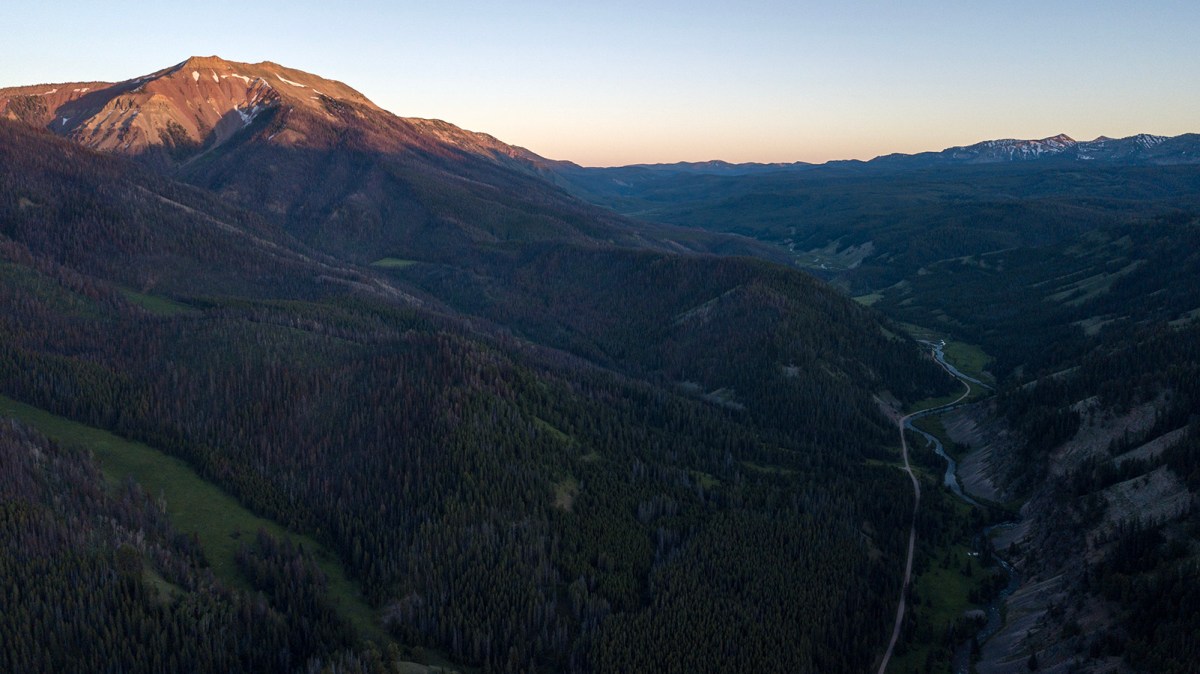
In time, he learned that the thing that brought him peace was the same thing he had always loved — time spent in the public lands of southwest Wyoming. One of his “go-to” places was the Wyoming Range, the country west of Big Piney and east of Star Valley, north of Kemmerer and south of the Hoback River. It was the same country his father had ridden when the family sheep bands summered there. It was home — a home remedy, if you will — and it was the medicine that healed him.
The Wyoming Range has always been part of our family’s history. We’ve run our sheep there. We’ve hunted and fished there. We’ve lived and died there. It forms the western boundary of what my friends jokingly refer to as the land of the Gassons — Gassonistan. They joke about it, but there’s more than a little truth to the jest. We’ve left our mark on a place or two there, but it has left an indelible mark on us.
Opinion
So I shouldn’t have been surprised when the topic of fishing comes up, our eyes turn to the Wyoming Range and to cutthroat trout. Wyoming has four subspecies of cutthroat trout: Colorado River, Bonneville, Yellowstone and Snake River cutthroats. We’ve fished for all of them, and some of us have caught all of them, an achievement referred to as a “Cutt-Slam.” You catch them, take a photo to document the catch and turn in a form with the pertinent information to the Wyoming Game and Fish Department. They send you a nice certificate that you can display to commemorate the achievement. But there is more — oh-so-much more.
It was, as most things are with our tribe, a family affair. Uncle Mark drove all the way up from Arizona pulling a camper trailer to our base camp at the Tri-Basin Divide in the Wyoming Range. This is the best of all campsites for the erstwhile cutt-slammer since you can catch three of your four cutthroats with a minimum of driving time. Or so we thought. My son-in-law James, along with my grandsons Dillon and Connon came with me from our home place at Big Sandy. It was a trip down memory lane for me, and I told them stories nonstop from Big Sandy to the head of La Barge Creek at the Tri-Basin Divide. Boys of eight or nine years love to hear stories from Grandpa.
They were like little coyote pups, just taking it all in, with eyes wide and shining like silver dollars when we rolled into Uncle Mark’s camp on the little creek below the three-way divide. I’ve always loved that place, the beginning of creeks that feed the Green, the Bear and the Snake. Depending on where any given snowflake might fall in December (or for that matter, July) it might give birth to a droplet of water that ends up in the Colorado, the Columbia or the Great Salt Lake. La Barge Meadows, the birthplace of my own natal waters, would be our first stop in the morning.
In early July, there’s still frost on the grass in the morning at the head of La Barge Creek. The boys were ready for anything, but the fish were missing. When we stopped for lunch, it was obvious that adjustments needed to be made. The big guys were surprised, the little guys were openly disappointed. We had one very small Colorado cutthroat to show for some exceedingly long hours. It was time for decisive action. We would abandon the Green River drainage and head up and over into the Greys River. With some lunch on board and a new plan, optimism rose again in the ranks. After all, fishermen — even junior-sized fishermen — are inveterate optimists. We were off again. We had a plan.
It’s about 64 miles from the Tri-Basin Divide to the mouth of the Greys River, near Alpine, Wyoming. It isn’t paved. Sometimes it’s graded, sometimes it’s not. It’s a long way on a hot afternoon with young anglers who are increasingly tired and dispirited. We’d stop for a while and fish a likely looking stretch of water. Nothing. Get back in the truck and drive. Repeat. Drive. Repeat. By late afternoon, the boys were done in. I had one ace in the hole, and it came just in time. Not every tributary of the Greys River is created equal, and this one had always been good to me. It was our last chance. We needed to pull a rabbit out of a hat here. Fortunately, the magic was still there.
I stopped at the first good deep hole with a riffle above it. We would have only a few minutes to fish before we ran out of both daylight and goodwill. It was becoming drudgery for the little guys. They weren’t smiling anymore. They were just toughing it out. I’d like to say it was on the first cast. It wasn’t. It might have been the third or fourth for Dillon. Suddenly, in the long-shadow light of that late afternoon in July, the water was churning and he was hollering for the net. I was the net man on this one, and I prayed nothing went wrong. It felt like it took hours for him to bring the fish in, but he did it. I netted it on the first shot and suddenly everything was different. We were catching fish!
In no time at all, Connor had a fish in the riffles above the bend and we were on our way. We had Snake River cutts. We celebrated with dinner in Alpine. We all ate like wolves, and we talked about the trip back to camp. The thought of replaying the long trip up the Greys didn’t sound good to anyone. So we dug out the maps and came up with Plan B. We’d drive south the length of Star Valley to the Smiths Fork Road and go back that way. It was a long way, but most of it was paved, and we wouldn’t be reminded of the day’s painful and mostly fruitless fishing. We were off.
The sun was sinking into Idaho as we left the highway and began to travel the gravel at the foot of Salt River Pass. Only 22 miles — not 64 this way — and we were ready to be back in camp. Soon it was dark, and we were counting down the miles as we went. Then somewhere around mile 19, the headlights caught the massive snowdrift blocking the road up ahead. We were out of options. We tucked our tails between our legs and headed back the way we came. Back to the highway. Trade drivers. Back through Star Valley. Trade drivers again. Back up the endless Greys River Road. We arrived in camp at the stroke of 2 a.m. I felt, as Gus would have said, like I’d been “rode hard and put up wet.”
We weren’t up at the crack of dawn. The boys slept in. The men slept in. We ate breakfast. We took showers. We planned the day with the care that Eisenhower took with Normandy. We would drop down far below our camp. We went all the way to the national forest boundary before we even tried to fish for the elusive Colorado River cutts. But at the crack of 10 a.m., bingo! Connor had one, then Dillon had one. We were halfway to a Cutt-Slam now. Morale surged, and when I asked if they wanted to head for camp or take a long drive in search of Bonneville cutts, they were ready for adventure. The family honor was at stake.
In September 1909, my grandfather Walt took a day off from his duties as a foreman for a big sheep outfit and went fishing. There were big fish there then, and he wrote in his diary that he “had a pretty good day.” It was a long, rough road into the same spot Old Walt fished a century before us. It was late afternoon when we got there, and the shadows were growing long. We worked hard for an hour before we found them. It was a pod of fish, all about the same size, holding in a deep hole in a bend below some willows. They were good fish, really good ones for our young anglers. All we had to do was figure out what was on the menu. This was the hardest fishing the little guys had encountered. These fish were completely ignoring anything on the surface, and they were in 3 to4 feet of clear water. It required a precise cast, a fast sink and the patience of Job. But if we had to stay all night and into tomorrow, we would figure out how to catch these fish.
As it turned out, all it took was a little weight and more than a little persistence. In rapid succession, Connor scored first, and then Dillion. Just as the sun was setting, we had them — two gorgeous cutthroats, each just a shade over 20 inches long. The boys were over the moon.
We came out in the dark, and we had convenience store pizza and soda for a very late dinner, but no one cared. It was still two hours to camp, but no one cared. We were all exhausted, but no one cared. We felt like kings, like conquering heroes. We had met the challenge; we had fought the good fight and had the photos to prove it. We were men of all ages, but we were men who could fish.
On the road to the home place the next morning, my mind was in other places. All the other places we wouldn’t have fished if we hadn’t been after these three specific fish. I was replaying all the conversations we wouldn’t have had if we hadn’t been in those perfect places in pursuit of those perfect fish. I was thinking about how our family had been doing this in our country for so long, and how these places and these fish had changed us.
It wasn’t about fishing, or at least not all about fishing. It was about our family, our country and our water. It was about Wyoming and love and life. It was perfect.

Yes! Thank you!
Wonderful, Walt. I think I’ve been to a few of those places, and LaBarge Meadows is a special place. My boys both saw their first moose just below the guard station. I caught a Colorado River cutt lower down and off to the south 50 years ago. And sitting on top of the Commissary looking down the Grey’s River with the Grand Teton at the far end. Amazing memories. Thanks.
Once again, a fine story. Thanks Walt.
If you fish like you write, those cutthroats don’t stand a chance. Thanks for the second best start to my day. You can probably guess the first, lol.