

Update — After announcing closure of the Union Pass Road early Monday afternoon due to the Pack Trail Fire, Sublette County Emergency Management said the road remains open. A Forest Service closure ends at the north edge of the road. As of 4:30 p.m. Tuesday, the Union Pass Road was closed again. Please see the Bridger-Teton National Forest or Shoshone National Forest websites of Facebook pages for the latest status.
Ranchers moved thousands of head of cattle off grazing ranges in the Bighorn, Shoshone and Bridger-Teton national forests as two wildfires burned thousands more acres over the weekend.
On the Bighorn outside Dayton, the Kane family drove about 1,100 cattle through burning patches of the Elk Fire to safety in a three-day operation that should see the stock home today.
On the Bridger-Teton and Shoshone national forests near Togwotee Pass and Dubois, officials closed the gravel road over Union Pass and expanded their other travel restrictions as cattle began drifting home.
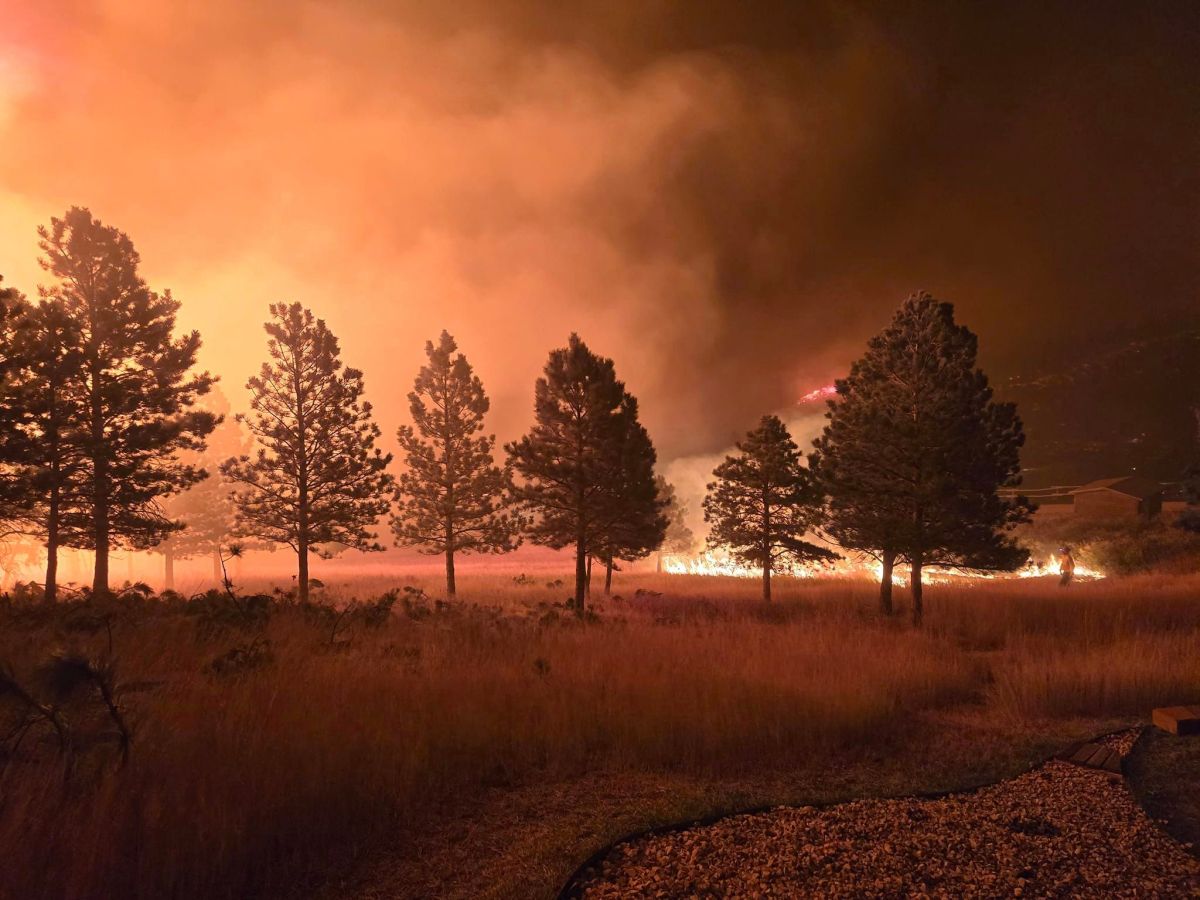
The Kane’s big drive through the Elk Fire near Dayton saw stock hop-scotching through burning meadows.
“Our cattle were trapped on the west side of the fire, we’re on the east side,” David Kane said from the saddle Monday as he approached the end of the trail at the HN Ranch outside Ranchester.
“Probably the most impressive part is how hot and dry we are this late into the fall.”
Coke Landers
“This is kind of a big deal for us,” he said. “It’s our livelihood.”
Saturday morning, his family realized the fire would threaten its cattle.
“We needed to get ’em completely out of the way,” he said. “Luckily, we found this window.”
The window — of time and space — allowed riders to herd the cattle through a maze of burned, burning and unburned country, some forested, other parts meadows. Video shot by Aiden Kane shows a cow dog doing its job amid charred grass and trees, riders guiding cattle around flaming grass.
‘We got ’em home’
“There were some places where it was fine,” David Kane said. “It had burned a day or two before.”
Despite traversing the grass fires, “we were never in any danger,” he said. No heavy timber was actively burning in Aiden Kane’s videos of the rescue drive posted on Facebook.
The Kanes picked up another ranch’s herd along the way and pushed all the cattle to near Dayton on Sunday, an amble from the home ranch.
“We got ’em home,” David Kane said.
Safe from fire, he’s now worried now about calves catching pneumonia after breathing untold quantities of ash and smoke.
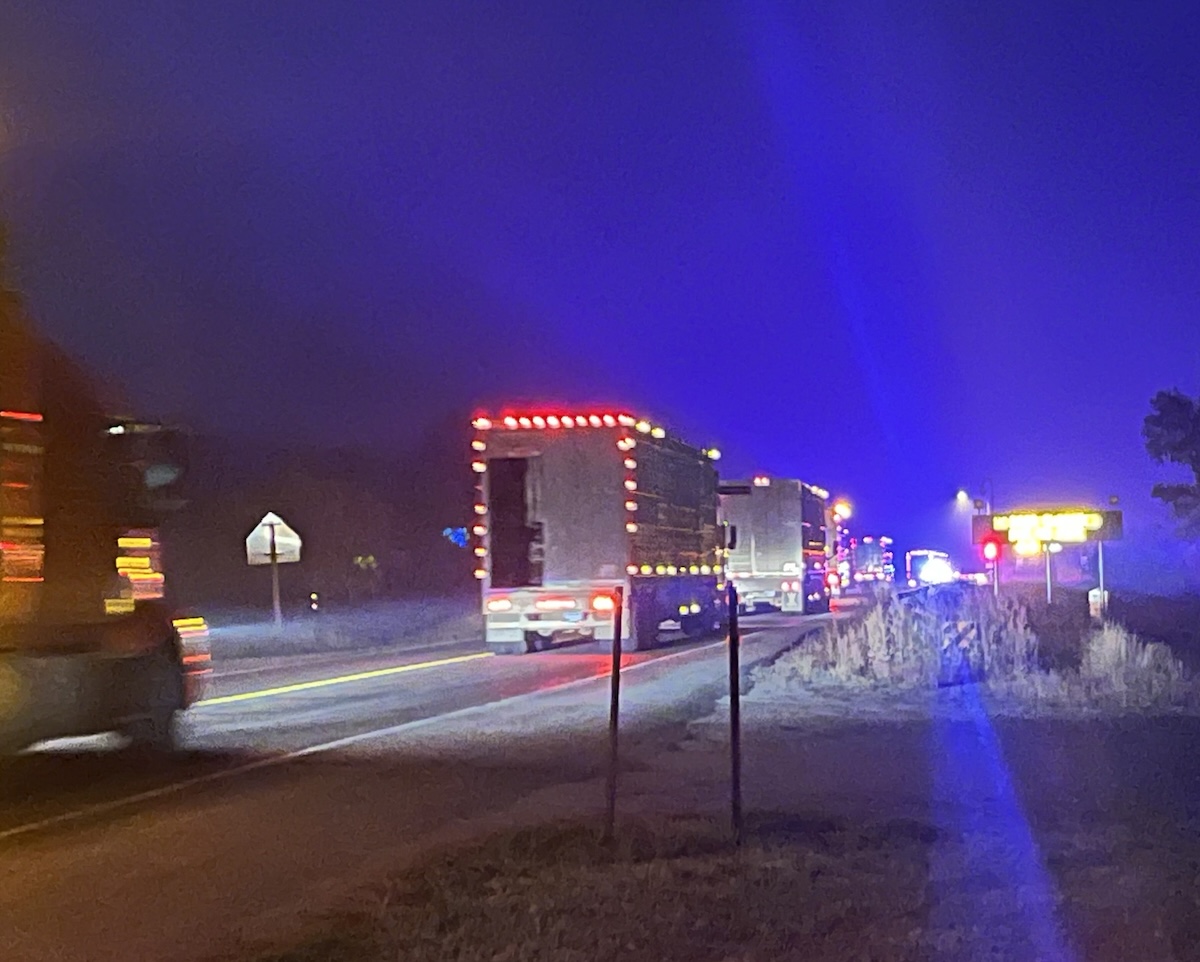
In addition to the Kanes’ drive, ranchers assembled a fleet of stock trucks to evacuate other herds.
“There was a convoy that went up yesterday,” Bighorn spokesperson Sara Evans Kirol said Monday. Wyoming Department of Transportation “was a huge player” clearing Highway 14, officially closed, for the fleet.
“They had to clear it a couple of times a day [of] logs, rocks and that kind of thing,” she said.
The trucking, plus other roundups, evacuated a few thousand more cattle off the Bighorn, she said. Some ranchers brought their own stock trucks while others, whose cattle were not in danger, pitched in with additional rigs.
“There was a lot of community support for that,” Kirol said. No losses have been reported.
‘Pretty damn impressive’
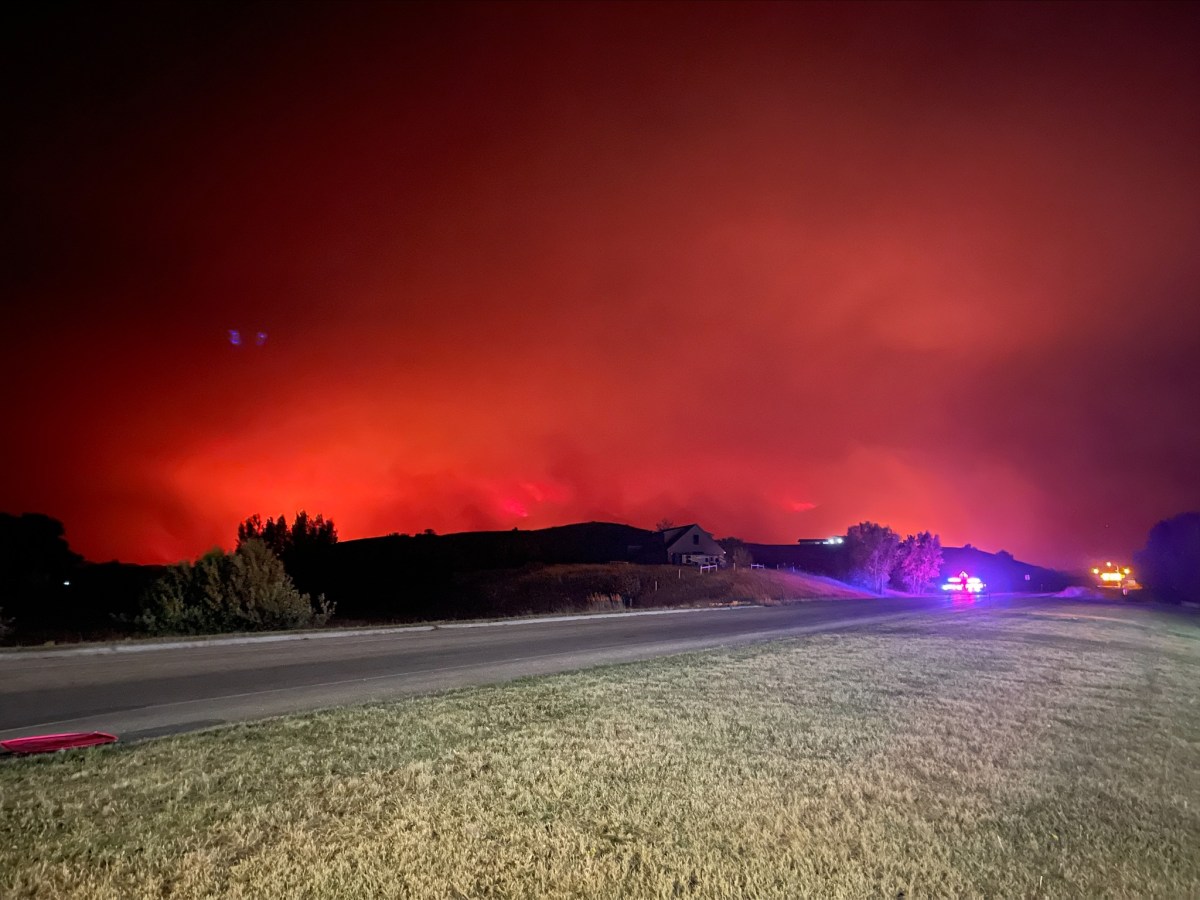
While the acreage burned by the Elk Fire remained somewhat stable over the weekend, the Pack Trail Fire on the Bridger-Teton and Shoshone national forests expanded by about 10,000 acres. On Sunday, it made a spectacular four-mile run up the Gros Ventre River drainage and toward Union Pass, sending a broad front of smoke skyward.
Officials closed the Union Pass Road on Monday afternoon. The Bridger-Teton and Shoshone expanded their other closures Sunday because of the weekend growth.
“It’s pretty damn impressive,” said Coke Landers, a representative of the Green River Drift, an association of stock growers using the Upper Green River country. “You’re looking 30 to 50 miles away and can see that smokestack.”
Cattle in the Green River Drift had started down from the Union Pass area about five days ago, Landers said Sunday. “We still have some stragglers.”
The smoke column was only one poignant milepost.
“Probably the most impressive part is how hot and dry we are this late into the fall,” Landers said, “70-80-degree days with wind — in October.”
Areas that have been grazed “slow the fire down,” he said, but some cow camps could be threatened.
“It’s not in us yet but it’s getting dang close,” he said.
The Pack Trail Fire on Togwotee between Dubois and Moran is now 58,065 acres with 563 people fighting it, federal officials said. The Elk Fire is about 73,000 acres with 680 firefighters. Lightning started both of the blazes.
Great story – right from the saddle.
Larry Skow, you are wrong. It depends on the grazing allotment. Here ours is October 15th. Some places you can decide what months you want to be there. You get a certain amount days you can graze. It also depends on range conditions. You can be moved off if the grass is gone. You’re welcome.
Having lived in Wyoming my entire life for the last 68 years, I have never experienced 80 degree temperatures in October. The Democrats are responsible for this excessive heat and the wildfires. That’s right, just ask any Republican. They will tell you that climate change is a made up hoax. Ask the Republicans’ darling, Majorie Taylor Greene why it’s hot in October and she will explain that the Biden administration is controlling the weather and that these wildfires were started by space lasers. I’m so thankful that we have such brilliant individuals and climate change deniers such as Marjorie Taylor Greene and Harriett Hageman looking after us all in Congress! Gotta make you really proud to call yourself a Republican when MTG and HH speak on these matters!
If I am not mistaken I believe grazing cattle is supposed to be removed from leased grazing acreage by Labor Day weekend. So they are month late
When cattle go on and off federal allotments is decided on a year by year by grass condition basis. This is decided by range management, so it can and does vary
You are mistaken, our permit ends October10, so we actually left 4 days early.