
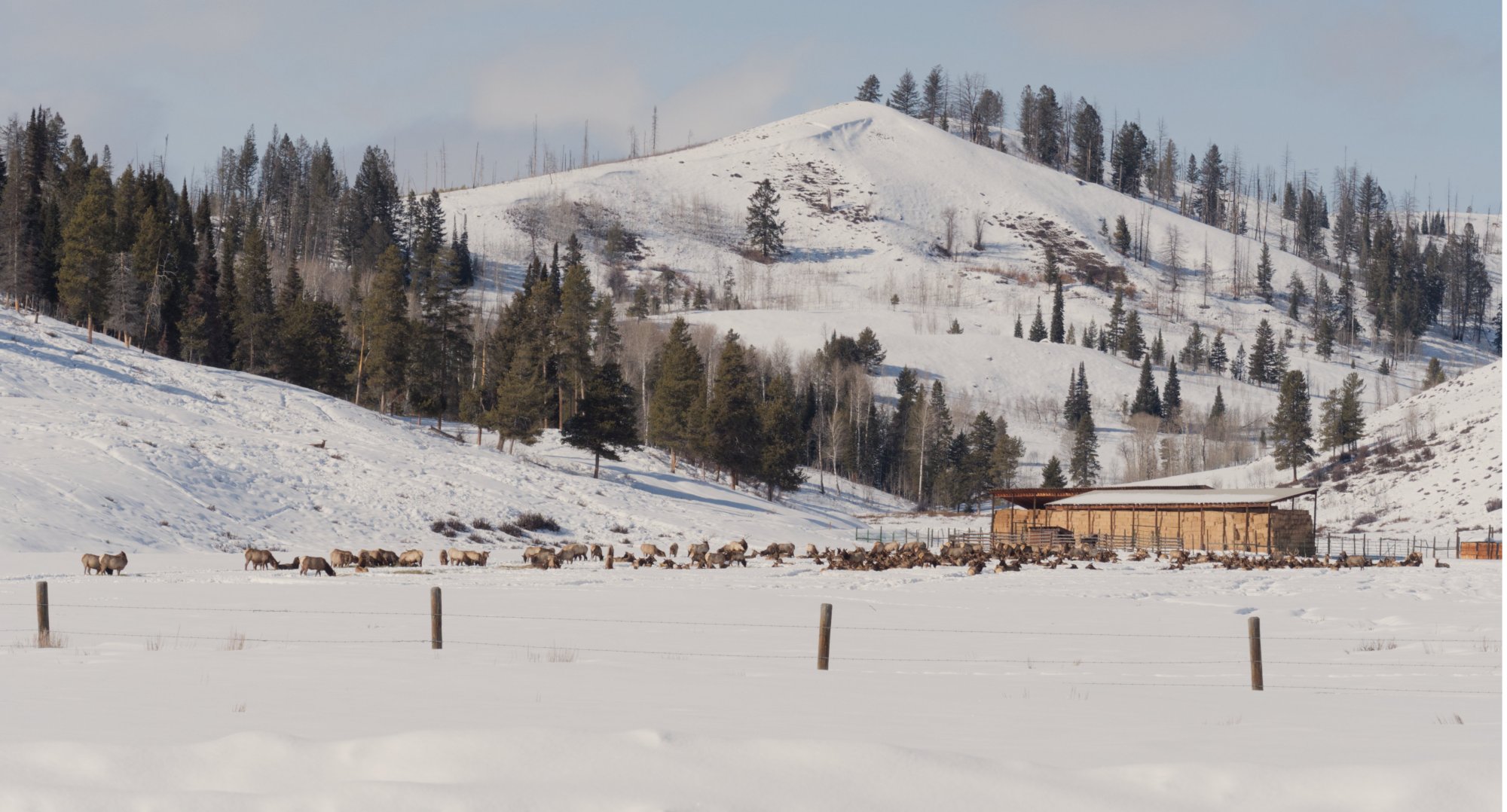

A historically mild winter has left Wyoming rangelands starved of snowmelt, and forage for wildlife is setting up to be sparse, parched and prone to catching fire.
But in the short term, animals survived what’s typically the hardest season of the year with relative ease. And there were some silver linings.
“It was a great winter for elk, and I would say it was a great winter for disease,” said Ben Wise, a wildlife disease biologist for the Wyoming Game and Fish Department’s Jackson Region.
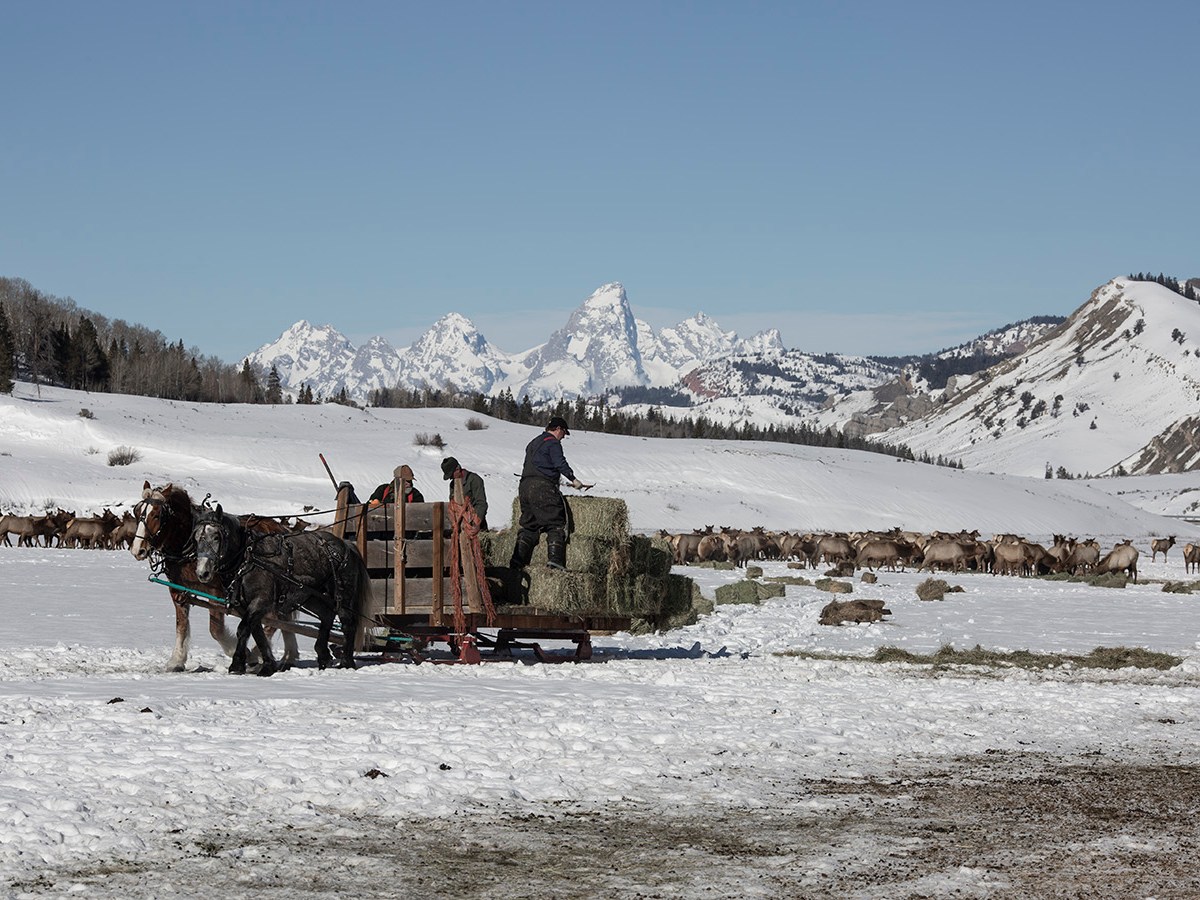
Wildlife managers like Wise had been bracing for the continued advances of chronic wasting disease into the state’s six hay-reliant elk herds. Relatively few elk congregated over hay during the winter, however, and many feedgrounds didn’t operate at all. Moreover, the spread of CWD wasn’t detected on feedgrounds. Zero infected carcasses turned up one winter after state officials found at least nine dead elk that tested positive for the always-lethal prion disease at four different feedgrounds.
A slim-to-nonexistent snowpack in the low and middle elevations enabled the feedground-reliant elk herds in Jackson Hole and Star Valley to stay “really spread out,” Wise said.
“We monitored them extensively,” he said. “They were in places we were good with having them at. Because of that, we were able to not feed the great majority of the elk in the Jackson Region.”
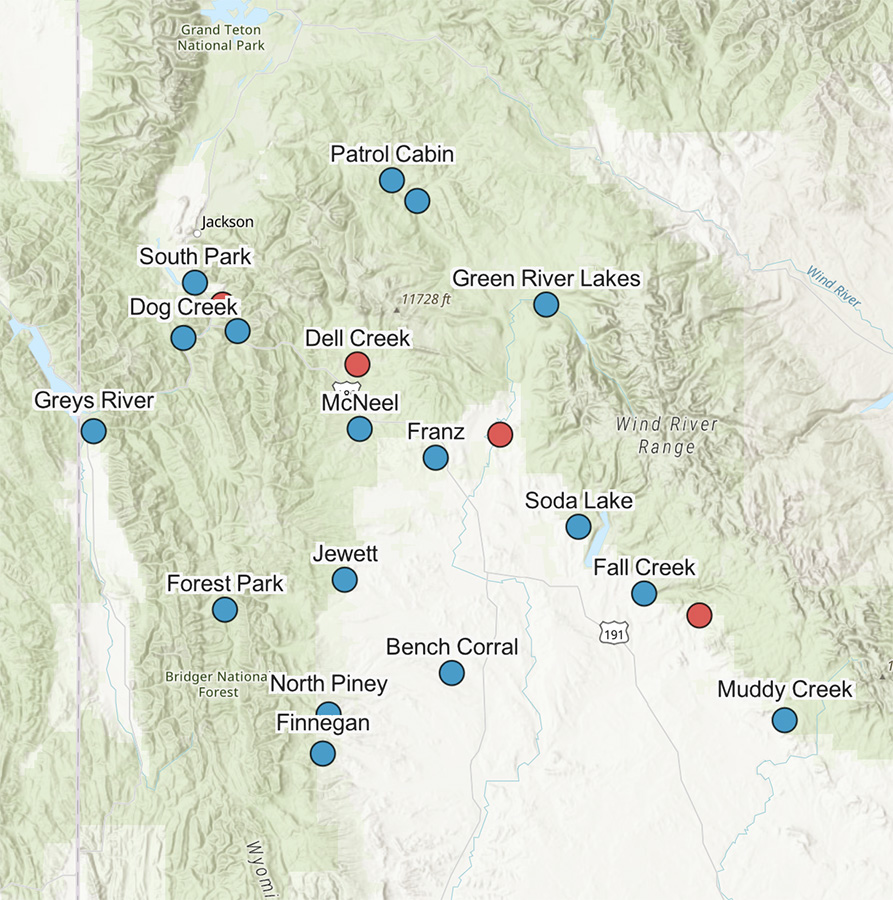
Only two state-run feedgrounds operated: Forest Park, up the Greys River, and Camp Creek, which is located south of Jackson in the Gros Ventre Range foothills.
The National Elk Refuge, operated by the U.S. Fish and Wildlife Service, also didn’t feed elk for only the 11th time in its 114-year history.
A remarkably low percentage of elk died on the state-run feedgrounds in Game and Fish’s Jackson Region. There were only two: one cow and one calf. Between those and another half dozen or so elk that were hit on the highway, none tested positive for CWD, Wise said.
The elk feeding and disease picture was more or less the same in Game and Fish’s Pinedale Region. Feeding occurred at the Green River Lakes, Black Butte, Franz, Dell Creek, McNeel and Finnegan feedgrounds, but never started at three other sites and only lasted a short duration at two more feedgrounds.
All told, 18 dead elk were discovered on Pinedale Region feedgrounds over the winter. Fifteen tested negative for CWD while three carcasses were too scavenged for tests, according to Game and Fish spokeswoman Raegin Akhtar.
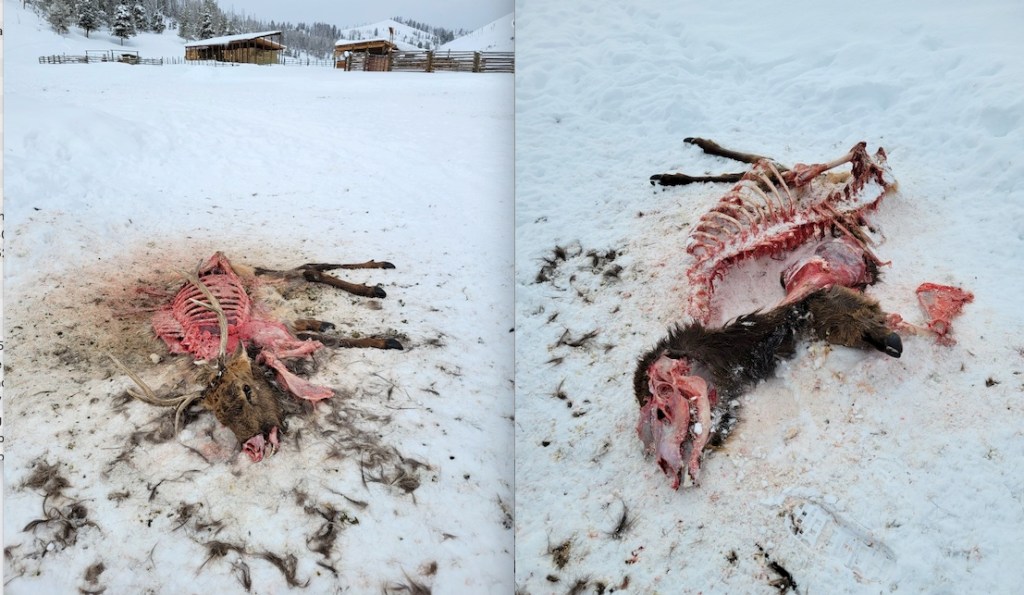
Ahead of the winter, some anticipated that CWD-infected dead elk would begin piling up on the Bondurant-area Dell Creek Feedground, which is the farthest along in the disease’s epidemic curve. Six diseased elk were found dead there in the 2024-25 winter, and two GPS-collared adult cows died in the backcountry on summer range last summer, which stoked some concern.
“I honestly thought we would have found more CWD-positive elk around Dell Creek, but we didn’t,” Wise said.
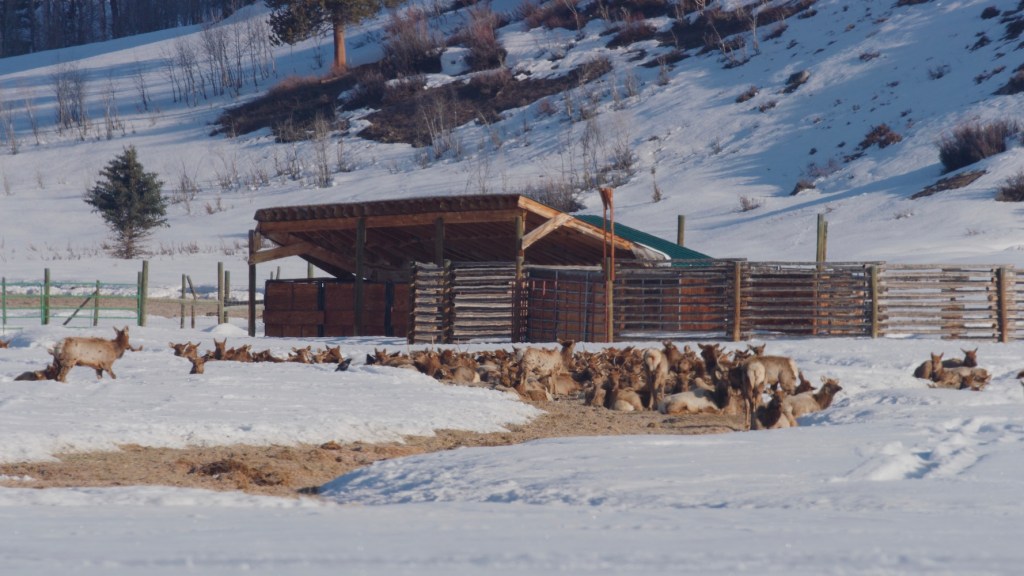
During mid-winter counts, biologists and wardens tallied 380 elk at the 35-acre Dell Creek feeding site, located in the Hoback Basin. That’s a 23% drop from the 480 counted in winter 2024-25, which itself was down from the average of 571 elk counted during the three winters that preceded Wyoming’s 2024 elk feedground plan.
It’s “hard to attribute” the reduced number to any one cause, like CWD, but Wise surmised that the light winter played a role and some elk simply ventured elsewhere.
There are methods available to test live elk for CWD at a place like Dell Creek. A newer test, known as “RT-QuIC,” allows biologists to quickly check for infectious CWD prions at low concentrations, even from live animal tissue — it’s being used currently to help monitor live animals in the catastrophically infected Project Mule Deer Herd.
One avid Wyoming elk hunter who’s taken a keen interest in CWD’s encroachment on feedgrounds has encouraged wildlife managers to employ the RT-QuIC technique at Dell Creek.
“Take the opportunity to learn as much as possible,” Jackson resident and filmmaker Shane Moore said. “We’re sort of flying blind right now.”
State wildlife officials are looking into it.
“We would like to really start focusing on Dell Creek to see what the disease dynamic is there,” Wise said. “We’re trying to see if we can get that validated for elk. It’d be nice to have a live animal test.”
Moore’s concerns are rooted in the expected outcome of feeding elk that are spreading CWD prions to each other and into the feedgrounds themselves. Infectious prions can bind with soil and grass, staying in the environment indefinitely, a trait that likely won’t bode well for animals drawn to the exact same spot year after year. Because of CWD, continued elk feeding is expected to cripple populations and hunting opportunities more in the long-term than weaning herds off of hay and alfalfa. Nevertheless, in part because of state law, Wyoming has charted a course to keep feeding elk despite the disease, albeit under the guidance of ‘action plans’ devised to slow its spread.



Less concentration of elk means less disease. Imagine that.
Again, why do not people see the correlation or lack there of CWD with elk and deer. Elk bunch up and feed on these feed grounds where they congregate. Elk that contract CWD remains much lower than Mule deer that basically do not congregate and eat on feed grounds. Why is this? It should be opposite if it remains in soil and vegetation. And here we go again with the “always lethal” term. Biologists do not know how many years an infected animal can live with CWD. Some say up to 4 years. AGE is “always lethal”.
Elk bunch up and congregate in the winter regardless of whether they are being fed or not. 100s and sometimes thousands tightly grouped during migration and wintering.
There is an appearance of an agenda regarding the feed grounds, trying to shut them down, and continually hyping CWD.