



Correction: This story was updated on Nov. 18 at 3:00 p.m. to clarify that Rocky Mountain Power has not determined whether the power interruption originated on its systems. —Ed
The massive, multi-utility power outage that left more than 100,000 customers in Wyoming, South Dakota and Montana without electricity Thursday also brought down a large portion of Rocky Mountain Power’s system in Wyoming, the company says.
Although several other utilities affected by the interruption have noted that it originated outside their systems, Rocky Mountain Power says it doesn’t know if it originated within its system.
“The cause is still unknown and is currently under investigation,” Rocky Mountain Power Senior Communications Specialist Jona Whitesides said Friday afternoon. “Given the complexity of this event, the investigation to determine the root cause and precise order of events on the system will take time.”
The company is investigating the incident internally, Whitesides added. It’s unclear how much detail it will offer to the public or when.
“The exact duration [to determine the cause] is not known at this time,” Whitesides said.
Rocky Mountain Power is the state’s largest regulated electric utility.
The Western Area Power Administration, which manages hydroelectric power and transmission lines across several western states and was impacted by the interruption, initially described the cause as “triggered by two tripped 500-kilovolt lines near Medicine Bow, Wyoming.”

The term “tripped,” in the industry, typically refers to an automatic shutoff in response to a power disruption.
The event resulted in “abnormal voltage,” the power administration added on Friday, which shut down power transmission lines in the region, where multiple utilities and rural electric co-ops share an interconnected grid.
“What we do know,” Rocky Mountain Power’s Whitesides said, “is that it impacted PacifiCorp [Rocky Mountain Power’s parent company], WAPA and Black Hills Energy, which include customers in Wyoming, South Dakota and Montana.”
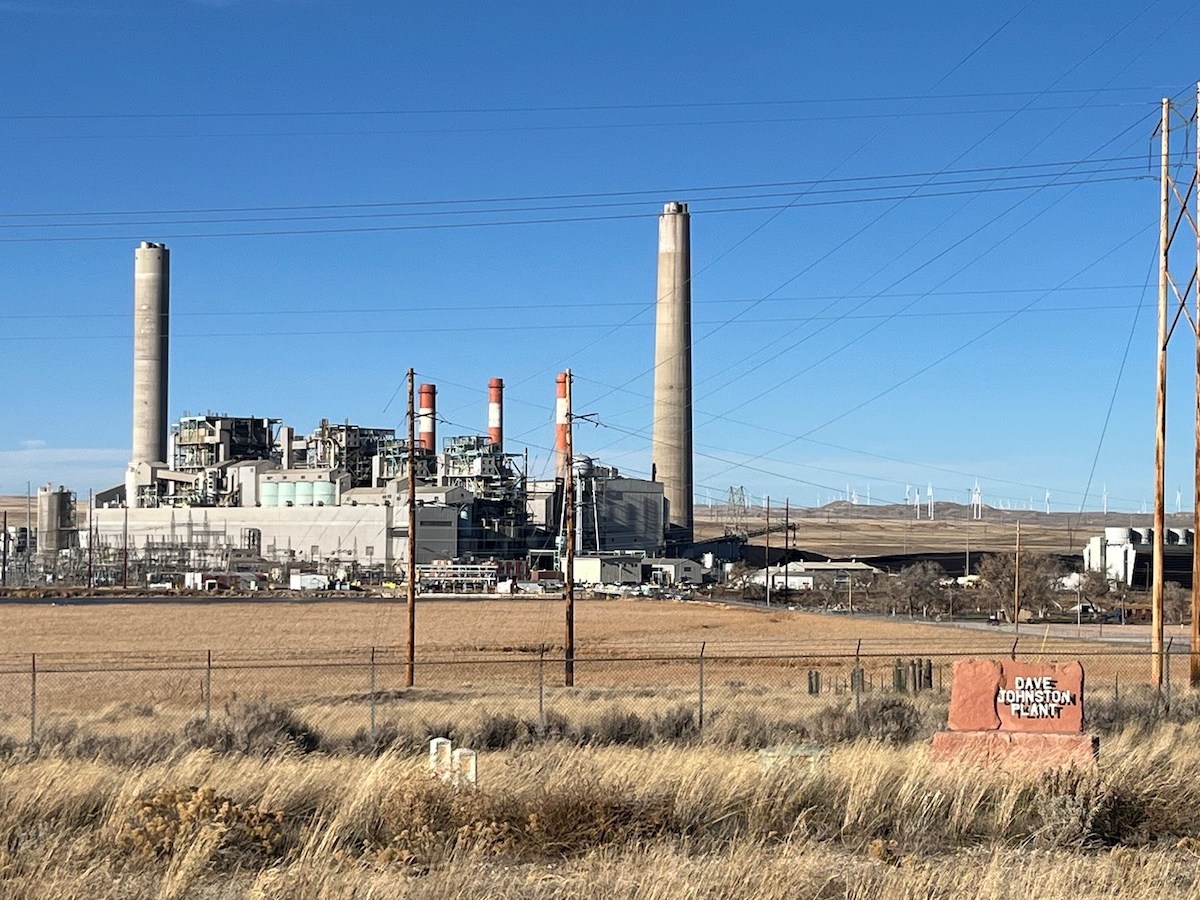
The “bulk power system” outage darkened homes and businesses throughout central and northeast Wyoming for varying lengths of time, including coal mines in the Powder River Basin, oil and natural gas refineries, and led to a fire at Rocky Mountain Power’s Dave Johnston coal-fired power plant near Glenrock.
The fire “was quickly extinguished,” Whitesides said. “Safety systems operated as designed, protecting employees and equipment. No injuries occurred and some equipment damage was reported.”
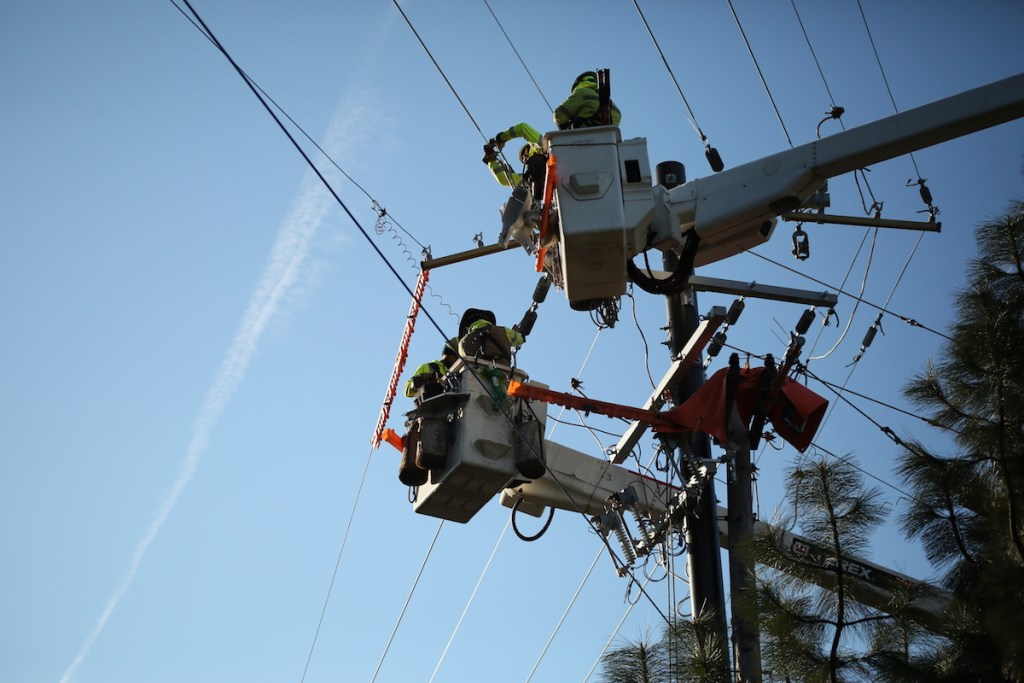
The unusual, far-reaching scale of the outage is a significant grid reliability issue, according to one industry official who spoke with WyoFile. The event could spur a federal investigation, perhaps by the Western Electricity Coordinating Council, the Federal Energy Regulatory Commission or the North American Electric Reliability Corporation, which develops and enforces grid reliability standards.
Inquiries to those agencies were not returned by press time.
“Certainly, it isn’t just going to be a blip on the radar,” Powder River Energy Corporation Vice President of Member Service Joe Roth told WyoFile. “There’s definitely going to be accountability held at one of those federal levels.”
The Wyoming Public Service Commission also requires reliability standards, according to the agency. But it’s unclear what it might require of affected utilities in terms of a report or accountability. “It appears that there may be a federal investigation into the matter,” Commission Chief Counsel John Burbridge told WyoFile.
“While state and federal agencies may choose to conduct their own reviews, at this time we have not been notified of any [outside] investigations,” Rocky Mountain Power’s Whitesides said. “PacifiCorp has submitted reports about the event to the U.S. Department of Energy, the Wyoming Public Service Commission and the North American Electric Reliability Corporation.”
At least one local emergency management coordinator expressed frustration with Rocky Mountain Power for not being responsive to questions during and immediately following the power outage and the resulting fire at the Dave Johnston power plant, which is owned and operated by the utility.
“I wish I could tell you exactly what happened there, and I honestly cannot,” Converse County Emergency Management Coordinator Russ Dalgarn told WyoFile on Friday regarding the Dave Johnston fire. “They haven’t told us anything.”
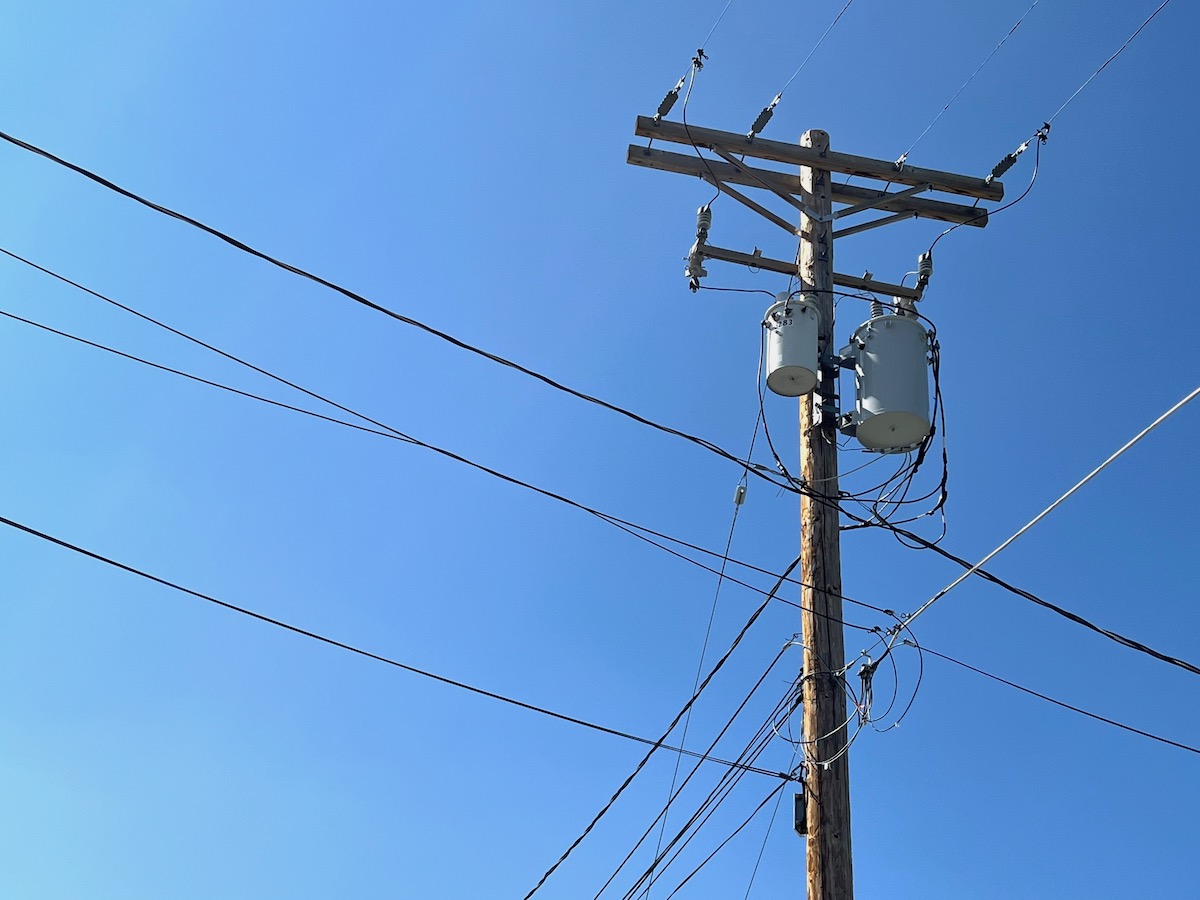
The lack of communication from Rocky Mountain Power to local responders is nothing new, Dalgarn added. The utility is “notorious” for not sharing information with local emergency responders, Dalgarn said.
Asked to respond, Whitesides said, “I am surprised by that because our relationships with state and local first responders and emergency managers have been very collaborative, and we value those relationships very much.”
Utilities affected by the widespread disruption reported that their systems automatically shut down — a built-in safety response.
“Although the sudden loss of electricity across an entire region came as a jolt to residents and businesses who operate here, the [Powder River Energy Corporation] systems that protect infrastructure and consumers performed as designed as it responded to the high and low voltage scenarios,” the company said.
The power outage began around 12:45 p.m. Thursday. Some regions saw power restored that afternoon, and electricity was restored to most of the region later that night, according to reports.
Rocky Mountain Power, Black Hills Power, and the lessers ought borrow a chapter from California. California hasn’t had a black out since 2022 – because they invested in batteries. Yes, batteries. https://www.latimes.com/environment/story/2025-10-17/california-made-it-through-another-summer-without-a-flex-alert
The grid is fragile and vulnerable. Batteries help make the grid resilient.
Bwahaha humor, I get it.
In 2003 a greater portion of the North East had a blackout tha lasted 2 hrs for some and 4 days for others. The outage extended up into Canada and tripped several power generation facilities including two nuclear plants.
For several weeks while in the news cycle talking heads and “experts” laid out all kinds of scenarios on what could have caused it. Everything from a Chokecherry tree to Sun Spots. That was my favorite, a 30 minute piece on msnbc by a fella who explained how the “magnetic yaw” from sun spots tripped Main Yankee and started the domino’s falling. I laughed for days on those thoughts.
As any investigator will tell you occasionally things are blatantly obvious. Most of the time they are not. The 2003 outage took 19 months to sort out and ended up being a faulty alarm signal in a transmission control system. BPA happily let the tin foil hats believe that Eagle poop was responsible for tripping their two 500KV lines three days in a row and several months later it proved to be a faulty reactor system in a switch yard somewhere on the way to Seattle. However I am already enjoying all the theories coming about. My favorite so far is the Northern lights.
G5